Workouts
Bayesian Curl: How to Do the Bayesian Cable Curl Properly
How to do the Bayesian curl: setup, form cues, what the research says about the stretched position, common mistakes, home band version and a simple plan.

By Jacob Chambers, Founder & Lead Reviewer · Updated 13 September 2026
We may earn a commission from qualifying purchases made through links on this page, at no extra cost to you. This never affects our ratings.
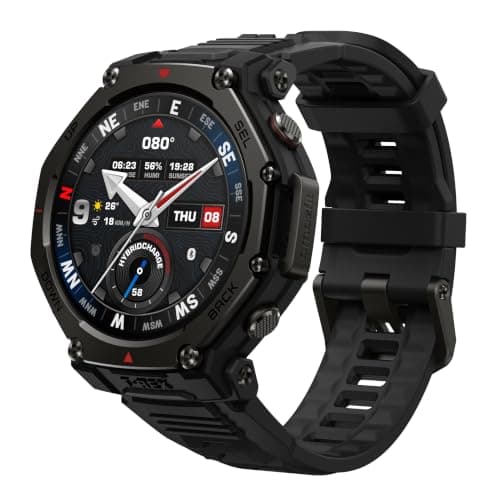
Amazfit has spent five years building watches that read well on a specification sheet and disappoint in the app. The T-Rex 3 Pro is the first one where that sentence needs qualifying. At £331.49 on Amazon UK, against Amazfit's own £399.90 list price, you get sapphire glass, a grade 5 titanium bezel, dual band GNSS from six satellite constellations, 38 hours of accurate GPS tracking and a dive certification to 45 metres. Garmin charges roughly a thousand pounds for a Fenix 8 that matches most of that, and Amazfit's version is not obviously worse hardware.
The catch is the part you can't photograph. Zepp, the companion app, is good enough now that it no longer feels like a liability, and it's still some way behind Garmin Connect on training analysis, third party integrations and the quality of the maps it renders onto your wrist.
How we review
This review draws on Amazfit's published specifications from the UK T-Rex 3 Pro product page, the consistent themes in verified owner reviews on Amazon UK, and the peer reviewed literature on wrist optical heart rate accuracy. We have not worn this watch through a training block ourselves, so every battery and GPS figure below is Amazfit's own claim and is labelled as such.
Buy this if your training goes outside and stays there: trail running, long hikes, open water, anything where you want offline maps and a battery that survives a weekend without a cable. The 48mm case is genuinely large at 14mm thick, so people with slim wrists should look at the 44mm version or accept that this thing announces itself.
Skip it if your running is a treadmill and a park loop, because you'll pay a premium for ruggedness you'll never use. Skip it too if you're deep into Garmin's ecosystem already, with years of training history, a Tacx trainer and third party apps hanging off Connect; the migration cost is real and Zepp won't replace all of it.
Check Amazfit T-Rex 3 Pro price on AmazonMost of the marketing on outdoor watches is noise. Dual band GNSS isn't. A single frequency receiver gets confused when the satellite signal bounces off a cliff, a building or wet canopy, and the track you get back shows you running through a river. Receiving two frequencies from the same satellite lets the watch identify and discard those reflected paths, which is why the T-Rex 3 Pro's traces hold up in the places cheaper watches fall apart.
Amazfit quotes 38 hours in accurate GPS mode on the 48mm and 85 hours in the long battery GPS setting, from a 700mAh cell. For context, that accurate mode figure is longer than most people will ever need in a single effort, and it means you can run every day for a fortnight on one charge if your sessions are an hour. The 44mm drops to 26 hours and a 500mAh battery, which is still plenty for a marathon.
Typical use is quoted at 25 days. Treat that as a laboratory number. Switch the always on display on, which most people do within a week of owning an AMOLED watch, and a realistic figure is somewhere between six and ten days depending on how much GPS you use.
| Display | 1.5in AMOLED, 480 x 480, up to 3000 nits |
|---|---|
| Glass | Sapphire |
| Bezel and buttons | Grade 5 titanium |
| Case body | Fibre reinforced polymer |
| Weight | 52 g without strap |
| Dimensions | 48 x 48 x 14 mm |
| Battery | 700 mAh, up to 25 days typical use |
| GPS battery | 38 h accurate mode, 85 h long battery mode |
| Positioning | Dual band, 6 satellite systems |
| Water resistance | 10 ATM, plus 45 m dive certification |
| Storage | 26 GB |
| Sport modes | 187, including HYROX and diving |
| Sensors | BioTracker 6.0 PPG, barometric altimeter, compass, gyroscope |
| Extras | Two colour flashlight, Zepp Pay NFC, Bluetooth calling |
The BioTracker 6.0 sensor is fine for what wrist optical sensors are good at, which is steady state. Research on ten commercial wearables found that optical heart rate accuracy holds up well in controlled conditions and degrades during high intensity and intermittent work, where motion artefacts corrupt the signal, and a separate review of wrist worn devices for determining exercise intensity reached the same conclusion about interval work. None of that is specific to Amazfit. It's the physics of shining a light through skin at a moving wrist.
What it means practically: trust the T-Rex 3 Pro on a long easy run, a hike or overnight resting heart rate, and pair a chest strap for anything with hard intervals in it. If you don't own one, our best heart rate monitor UK guide covers the straps worth buying.
The bezel and buttons are grade 5 titanium and the glass is sapphire, which is the pairing you normally find at twice the price. The case body underneath is fibre reinforced polymer rather than metal, and Amazfit doesn't hide this. It's the right call for the money: polymer absorbs impact better than a thin metal shell, it saves weight, and it puts the expensive materials where the scratches actually happen.
The flashlight deserves a mention because it sounds like a gimmick and isn't. Two colours, red for preserving night vision and white for seeing where you're putting your feet, plus a strobing SOS mode. On a 5am start in winter it's the feature you end up using most.
Offline maps are free and they work, with routing, rerouting when you drift off course and a POI search that finds cafes and water. The rendering is where the gap shows. Garmin draws more detail on minor paths and field boundaries, and at a glance on a wrist that detail is the difference between confidence and stopping to check your phone.
The analysis side has the same shape. Zepp gives you readiness, sleep, training load and a HybridCharge energy score, and it presents them cleanly. Garmin gives you more: acute and chronic load ratios, a more credible VO2 max model, race predictors people actually plan around, and integrations with Strava, TrainingPeaks and everything else. If you want the deeper toolkit, our COROS PACE Pro review covers the other cheap route to it, and the best Garmin watch UK guide explains which Garmin tier is worth paying for.
See current Amazfit T-Rex 3 Pro priceOn raw hardware it competes properly: sapphire glass, a titanium bezel, dual band GPS from six constellations, 38 hours in accurate GPS mode and a 45m dive certification for roughly a third of what a Fenix 8 costs. Garmin still wins on software. Connect has deeper training analysis, better map rendering and a far larger ecosystem of third party integrations, and for some people that gap is worth the extra £700.
Amazfit quotes 25 days of typical use on the 48mm, and that figure assumes light notification use with the always on display switched off. Turn the always on display on and you are looking at closer to a week. The number that matters for training is 38 hours in accurate GPS mode, which covers a 100 mile ultra or a fortnight of daily runs without a charge.
Yes to both. It carries a 10 ATM rating for swimming and a separate dive certification to 45m tested against EN13319 and ISO 6425, which is unusual at this price. Freediving and recreational scuba are both supported in the sport modes, though you still need proper dive training and a real dive computer as your primary instrument on anything serious.
Mostly. Notifications, workout syncing, offline maps and music transfer all work on iOS. The gap is Zepp Flow, the voice assistant that replies to messages hands free, which needs an Android phone. If you are on iPhone you lose that feature and nothing else of consequence.
The Pro adds sapphire glass in place of tempered glass, a grade 5 titanium bezel and buttons, the 45m dive certification, and a slightly brighter 3000 nit panel. Battery and GPS hardware are close to identical. If you are not diving and you are careful with your kit, the standard T-Rex 3 at around £215 saves you over £100 for a watch that does almost everything the same.
It works, but bank support is narrower than Garmin Pay or Apple Pay and it changes month to month. Check the current supported issuer list before you buy on the strength of contactless payment, because there is a real chance your card is not on it.
How to do the Bayesian curl: setup, form cues, what the research says about the stretched position, common mistakes, home band version and a simple plan.
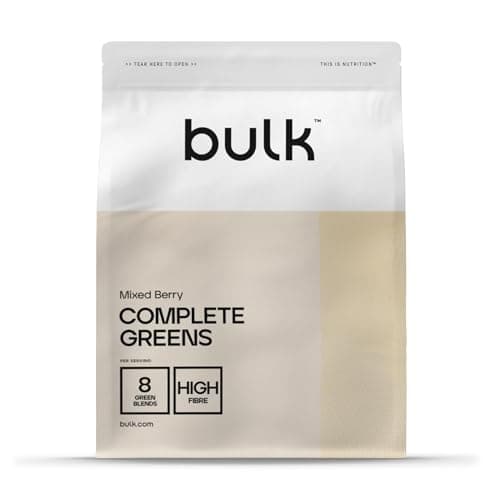
The best greens powders in the UK for 2026, from budget super greens to premium all-in-one vegetable powders, plus an honest look at whether they actually work.
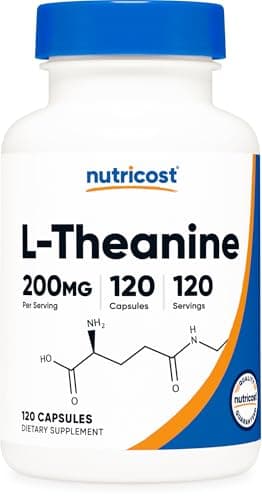
The best L-theanine supplement for UK buyers in 2026: five capsules ranked on dose and cost per day, what the research shows about sleep and caffeine, and the dose worth taking.
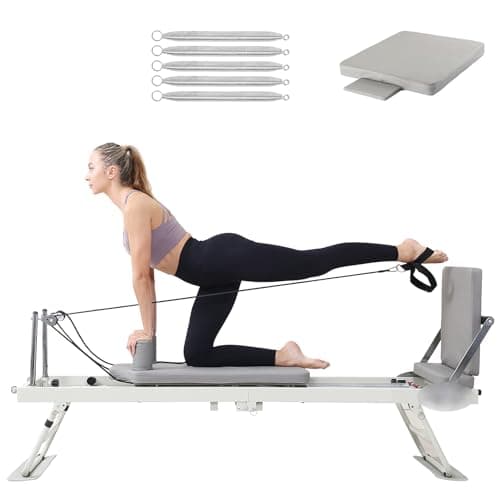
The best reformer pilates machines for home use in the UK in 2026, from a £259 foldable to a £788 wooden frame. Honest picks, real specs and how to choose a pilates machine.
Best Exercise is a participant in the Amazon EU Associates Programme, an affiliate advertising programme designed to provide a means for sites to earn advertising fees by advertising and linking to Amazon.co.uk. As an Amazon Associate we earn from qualifying purchases. This comes at no extra cost to you and never influences our independent reviews or rankings.