Home Gym
Lying Leg Curl Machine: How to Use It, Types and Buying One for Home
How to set up and use a lying leg curl machine, lying vs seated leg curl research, pin, plate-loaded and bench attachment types, and what to check before buying.

By Jack Atkins, Home Gym Equipment Specialist · Updated 30 October 2026
To build a home gym, measure your space first (floor area and ceiling height), put down proper flooring, then buy in stages: adjustable dumbbells and a bench to start, a rack, barbell and plates once you outgrow them, and cables or cardio kit last. That order keeps the spend sensible and stops you filling a room with kit that doesn't suit it. Most people in the UK can get a genuinely useful setup for around £300 and a very capable barbell gym for roughly £1,000, with prices dropping further if you're happy to buy used.
What follows is the practical version: how to measure a typical UK room, what to put on the floor, what each budget tier buys, and what to skip.
Floor area is the obvious measurement, but it's rarely the one that catches people out.
A dumbbell and bench setup fits in roughly 2m by 2m, which is a corner of a spare bedroom. A barbell setup needs far more, because a standard Olympic bar is 2.2m long and you need room either side to slide plates on. Plan on about 3m wide by 2.5m deep for a rack, bar and a little walkway. Add a rower or treadmill and you're looking at a single garage or a good-sized box room.
Mark the footprint out on the floor with masking tape before you order anything. It sounds fussy, yet it's the quickest way to find out that the door swings into the rack or the radiator sits exactly where the bench needs to go.
Most modern UK houses have ceilings of around 2.4m. Victorian and Edwardian terraces are often taller, while lofts, extensions and some garages can be lower once you account for beams, a garage door mechanism or a strip light.
Two movements decide whether your ceiling works:
If the ceiling is tight, seated dumbbell presses and landmine presses get round the overhead problem, and a doorway or wall-mounted pull-up bar at a lower height still works if you bend your knees.
Flooring protects the floor, the kit and your neighbours. It's also the step people try to skip, then regret the first time a dumbbell rolls off the bench.
Rubber tiles or mats of 15mm to 20mm thickness suit most home gyms. They spread load, stop kit sliding and take the sting out of setting weights down. A lifting area of around 2m by 2m typically costs somewhere in the region of £80 to £200 depending on thickness and whether you buy interlocking tiles or heavy rolls. EVA foam jigsaw mats are cheaper and fine for bodyweight work, but they dent under a loaded bench and tear if you drop anything heavy on them. Our gym flooring guide covers the options in more detail.
A concrete garage floor is ideal for strength, since there's nothing to break. The problems are cold and damp. Bars and plates rust in a damp UK garage over winter, so put rubber down to insulate the floor a little, keep kit off bare concrete, and consider a small dehumidifier if you see condensation. Wipe bars with a light oil now and then.
UK domestic floors are designed for spread-out loads: people, furniture and the odd bookcase. A loaded rack can put a few hundred kilos on a footprint of a square metre or two, and a dropped weight delivers a sharp impact on top of that. Dumbbells, a bench and a rower are generally fine upstairs. A rack loaded with 150kg or more of plates is a different matter, and it's worth paying a structural engineer to check the joists before you build one in a first-floor room. Placing heavy kit near a load-bearing wall and across the joists, rather than in the middle of the span, also helps.
These tiers assume new kit at typical UK prices. They're rough ranges, not quotes, because prices move with sales and stock.
That's enough to train every major muscle group, which matters because the NHS physical activity guidelines recommend strengthening activities working all the major muscle groups on at least 2 days a week. Two or three full-body dumbbell sessions a week meets that comfortably. If you're unsure whether adjustables are the right call against a fixed set, our breakdown of whether adjustable dumbbells are worth it runs the cost and space numbers.
Once dumbbell squats and deadlifts stop being heavy enough, a barbell earns its space.
If floor space is the limit, a wall-mounted folding rack does the same job and sits a few centimetres from the wall when you're done.
Only once the basics are in place does it make sense to add the big-ticket items.
Buy the things you'll use every session first: weights, a bench, flooring. Then fill gaps based on what your training actually needs, rather than what looks good in a photo of someone else's garage.
Things that are usually worth skipping or delaying:
Strength kit is about as durable as anything you can buy, so second-hand is one of the best ways to stretch a budget. Facebook Marketplace, Gumtree and eBay all have plenty of plates, racks and benches, and January (when resolutions start) and late spring (when people clear garages) tend to bring more listings.
What to check:
Collect heavy kit with a second person and a car you don't mind getting scuffed. A 20kg plate is awkward; forty of them is a morning's work.
Noise travels through shared walls and floors more than most people realise, and dropped weights are the main culprit. A few things make a real difference:
Yes, as long as you train consistently and the weights get heavier over time. A 2021 systematic review and meta-analysis of 21 trials looked at unsupervised home resistance training in adults aged 60 and over, and found it was safe and modestly improved lower-limb strength, power and balance, with adherence averaging 67%. It didn't find benefits for every measure, and the studies mostly used light equipment, so a home gym with a barbell and progressive loading gives you far more room to keep improving than the programmes in that review. The bigger risk at home is skipped sessions, which is one more argument for a gym that's ready the moment you walk in.
For more ideas on kit, layouts and what suits small spaces, start at our home gym hub.
A useful starter setup of adjustable dumbbells, an adjustable bench and some rubber flooring usually costs around £250 to £400 new. Adding a half rack, an Olympic barbell and 100kg or so of plates takes most people to roughly £900 to £1,300. Cable machines, functional trainers and cardio kit push a full build past £2,500. Buying used can cut any of these figures by a third or more.
A dumbbell and bench setup works in about 2m by 2m. A barbell setup needs more, because the bar itself is 2.2m long: plan on roughly 3m wide by 2.5m deep so you can load plates on both ends and step back out of the rack. Ceiling height matters as much as floor area if you want to press overhead or do pull-ups.
For most exercises, yes. It gets tight for standing barbell overhead presses if you're over about 1.80m tall, and for pull-ups on a rack or bar mounted high on the wall. Seated presses, landmine presses and dumbbells work around it. Measure your own reach with arms locked overhead before you buy a rack.
Dumbbells, a bench and a rower are usually fine upstairs. Heavy racks loaded with plates, and anything you might drop, are better on a ground floor or in a garage, because UK domestic floors are designed for spread-out loads, not a few hundred kilos concentrated on a small footprint. If you plan a heavy setup upstairs, ask a structural engineer to check the joists first.
Adjustable dumbbells and a sturdy adjustable bench. Together they cover pressing, rowing, squatting, lunging and hinging for most beginners and intermediates, and they fit in a spare room. A rack and barbell only become worthwhile once you're lifting heavier than dumbbells comfortably allow.
How to set up and use a lying leg curl machine, lying vs seated leg curl research, pin, plate-loaded and bench attachment types, and what to check before buying.
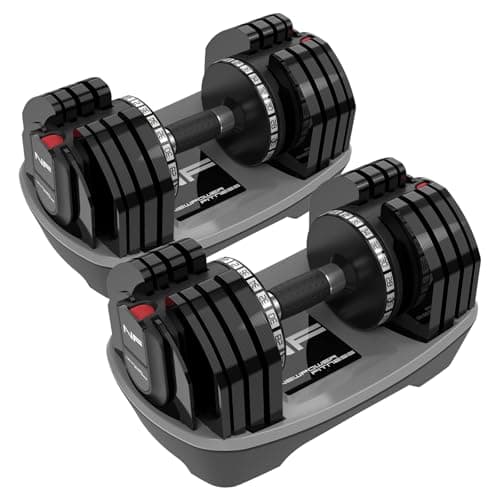
Newpower Fitness 36kg adjustable dumbbells review: 18 settings in 2kg steps, a twist-handle selector, what '36kg pair' means, and who should buy it.
How to choose a cast iron kettlebell: one-piece casting, handle diameter and finish, powder coat vs vinyl, weight tolerance, UK price per kg and which weights to buy first.
How to use a chest fly machine with proper form: seat height, handle position, elbow bend, weight to use, muscles worked, and the UK home machines that do the job.
Best Exercise is a participant in the Amazon EU Associates Programme, an affiliate advertising programme designed to provide a means for sites to earn advertising fees by advertising and linking to Amazon.co.uk. As an Amazon Associate we earn from qualifying purchases. This comes at no extra cost to you and never influences our independent reviews or rankings.