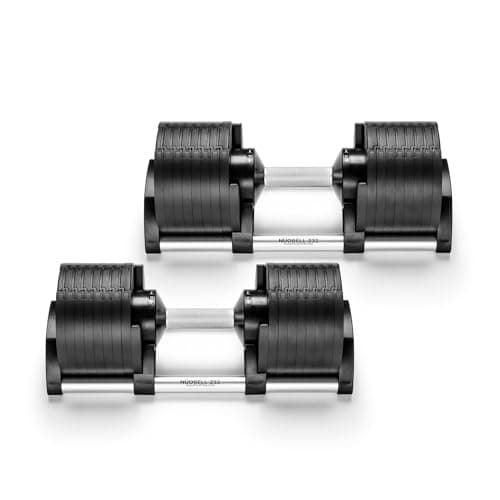
Home Gym
Best Adjustable Dumbbells UK: 6 Top Picks for 2026
The best adjustable dumbbells in the UK for 2026, from quick-dial sets to heavy 40kg and 50kg options. Budget to premium picks researched and ranked.

By Jack Atkins, Home Gym Equipment Specialist · Updated 6 August 2026
We may earn a commission from qualifying purchases made through links on this page, at no extra cost to you. This never affects our ratings.
GYM MASTER
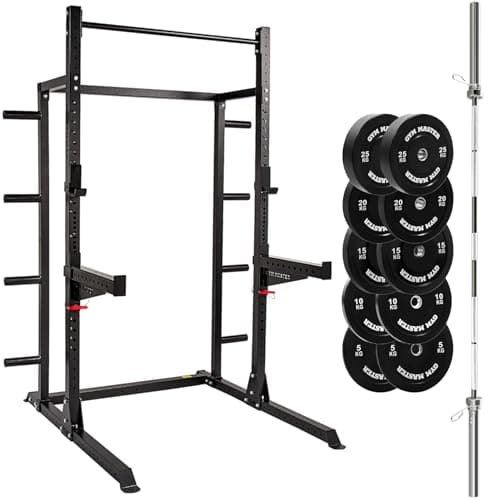
Most home gym shopping goes the same way. You budget for a rack, then discover you also need a bar, then find out that 150kg of bumper plates costs more than the rack did and weighs enough that delivery is its own problem. The GYM MASTER GM2 bundle short-circuits that by selling the lot in one order: a half rack, a bolt-on plate storage system, two safety spotters, a 6ft Olympic bar and five pairs of bumper plates from 5kg to 25kg. Around £790 gets you a working gym rather than a frame you can't use yet.
GYM MASTER has become one of the more visible home gym brands on Amazon UK, and we've already looked at both the GM1 and the GM3. The GM2 sits between them in intent: more substantial than the entry racks, less floor-hungry than a full cage, and sold here as a package rather than a starting point.
How we review
This review draws on GYM MASTER's published specifications, owner feedback on Amazon UK and our research into comparable racks at this price. We have not put this exact unit through a months-long test in our own garage, so we have stuck to what the specs and consistent owner reports support rather than inventing hands-on impressions.
Seven items, and it's worth spelling them out because the value case rests on them. The rack itself is built from 60x60mm steel with a 2.0mm wall, rated to a 350kg maximum load. Two J-cups with UHMW lining protect your bar knurling. Two GM3 safety spotter arms bolt on with a 54.5cm barbell rest, giving you something to fail into. Behind the uprights, the storage system is made from 50x50mm 14-gauge steel with four Olympic plate poles on each side.
Then the training kit: a 6ft international Olympic barbell with a 2.8cm shaft, 5cm sleeves and 25cm of sleeve length, plus 150kg of bumper plates in pairs from 5kg to 25kg. All the plates are 45cm IWF standard diameter, so the bar sits at the correct deadlift height whether you load 20kg or 100kg on it.
The number that matters on a half rack isn't the steel gauge, it's what stops the thing tipping when you rack a heavy squat carelessly. Here the answer is the storage system. Four plate poles per side, loaded with the bumpers you aren't using, put well over 100kg of ballast behind the uprights and turn a two-post frame into something that behaves like a much heavier rack. Leave the poles empty and it's a different, twitchier machine, so load them.
The 36 height positions use Westside spacing, meaning the holes are closer together through the bench press range where a couple of centimetres decides whether the J-cups are right. Laser-cut numbers next to each hole sound like a small thing until you've spent five minutes counting holes to match a spotter arm to the other side. Uprights are 60x60mm with a 2.0mm wall, which is a step below the 3mm steel on competition racks and entirely appropriate for a 350kg home rating.
| Type | Half power rack with bolt-on storage |
|---|---|
| Frame steel | 60 x 60 mm, 2.0 mm wall |
| Max load | 350 kg |
| Height | 221 cm at maximum |
| Footprint | 124 cm wide x 149 cm deep |
| Height adjustment | 36 levels, Westside spacing, laser-cut numbering |
| Included attachments | Pull-up bar, 2 GM3 spotters, 2 UHMW-lined J-cups |
| Barbell | 6 ft international, 186 cm, 2.8 cm shaft, 5 cm sleeves |
| Plates | 5 pairs bumper plates, 5 to 25 kg (150 kg total), 45 cm diameter |
| Storage steel | 50 x 50 mm, 14 gauge, 4 poles per side |
| Commercial use | Not rated |
For the lifts most people care about, this covers everything. Squats out of the J-cups with the spotters set just below your bottom position, bench press with a bench pulled in, overhead press from the rack, deadlifts from the floor with the proper 45cm plate height, and pull ups off the top bar. Set the spotter arms properly and you can train to genuine failure alone, which is the whole reason to own a rack rather than a squat stand. Done with sensible loading, a deep squat is fine for healthy knees, as a scoping review of the deep squat and the knee joint concluded, so set the safeties for the depth you actually want to hit rather than a cautious half rep.
Where a half rack shows its limits is in what it can't do. There are no rear uprights, so no place to hang bands from behind, and a bar dumped forward off a failed press has nothing to catch it beyond the spotter arms' reach. Full cages also give you a second set of J-cup positions for landmine and rack pull setups. If you train alone at loads that scare you, a cage buys peace of mind that this doesn't.
The 150kg of plates is a well-judged amount. It's enough to squat 170kg with the bar, which covers a good few years of progress for most people, and the jumps from 5kg to 25kg let you make small increases early on. You will want a bench though, since none is included, and that's another £100 or so on top.
Budget an afternoon and a second pair of hands. The rack bolts together conventionally, and GYM MASTER's instruction to leave every bolt finger-tight until the frame is square is worth following rather than skipping. Getting it wrong means unbolting the storage system to realign the uprights, which is tedious with 150kg of plates already stacked on the poles.
Space is the other planning job. 124cm wide by 149cm deep is compact for a rack with integral storage, but the 221cm height needs real ceiling clearance, and you want a metre of clear floor in front for deadlifts and walkouts. A standard UK garage handles it. A loft room with sloping ceilings will not.
At around £790, the arithmetic works out in the bundle's favour. Bumper plates alone typically run £3 to £5 per kilo in the UK, so 150kg is a meaningful chunk of that total before you count the rack, the bar and the storage. Compare the equivalent pieces bought separately and the saving is real, quite apart from the hassle of arranging three heavy deliveries.
The case weakens if you already own a bar and plates, and in that situation the bare rack or something from our best power cage guide makes more sense. It also isn't the pick for anyone who wants cable work at home, since there's no pulley here at any price. For someone starting from an empty garage who wants to squat, press and deadlift properly by the weekend, though, this is one of the better-value ways to do it. Two sessions a week on kit like this also clears the NHS recommendation for muscle-strengthening activity on at least two days a week comfortably.
It is a half rack. Two uprights carry the J-cups and spotter arms, with the storage system bolted behind for stability, so there is no second pair of uprights behind you as a full cage has. That saves floor depth and money, and it means the spotter arms are the only thing catching a failed rep.
GYM MASTER rates the frame at 350kg maximum load. That is well beyond what almost any home lifter will squat or bench, and the 60x60mm 2.0mm steel uprights feel appropriately solid. It is not rated for commercial use, so a busy garage gym with several heavy lifters is outside what the manufacturer supports.
Seven items: the GM2 half rack, the bolt-on Olympic storage system, two GM3 safety spotter arms, two J-cups with UHMW lining, a 6ft international Olympic barbell, and five pairs of black bumper plates from 5kg to 25kg. That is 150kg of plates, which is enough to squat and deadlift seriously before you buy anything else.
The rack stands 221cm at its highest setting, so you want at least 230cm of ceiling to bolt it together comfortably, and more if you want to use the pull-up bar without ducking. Standard UK ceilings of 240cm are fine. A garage with exposed joists or a loft conversion may not be.
They are 45cm IWF standard diameter, which is the important part, because it sets the bar at the right height for deadlifts. Thicknesses run from 2cm for the 5kg to 10cm for the 25kg. They are rubber bumpers rather than competition-grade, so expect a bit of bounce and some rubber smell for the first few weeks.
At around £790 for the rack, storage, bar and 150kg of bumpers, the bundle undercuts buying those pieces individually by a fair margin, and shipping 150kg of plates on its own is rarely cheap. If you already own a bar and plates, buy the bare rack instead and put the difference towards a bench.
The best adjustable dumbbells in the UK for 2026, from quick-dial sets to heavy 40kg and 50kg options. Budget to premium picks researched and ranked.
The best cable machines in the UK for 2026, from dual cable machines and functional trainers to wall-mounted and folding designs. Honest picks for any home gym and budget.
The best Garmin watch for most UK buyers in 2026 is the Forerunner 265, but not for everyone. Five models compared honestly, from the £162 Forerunner 165 to the fēnix 8.
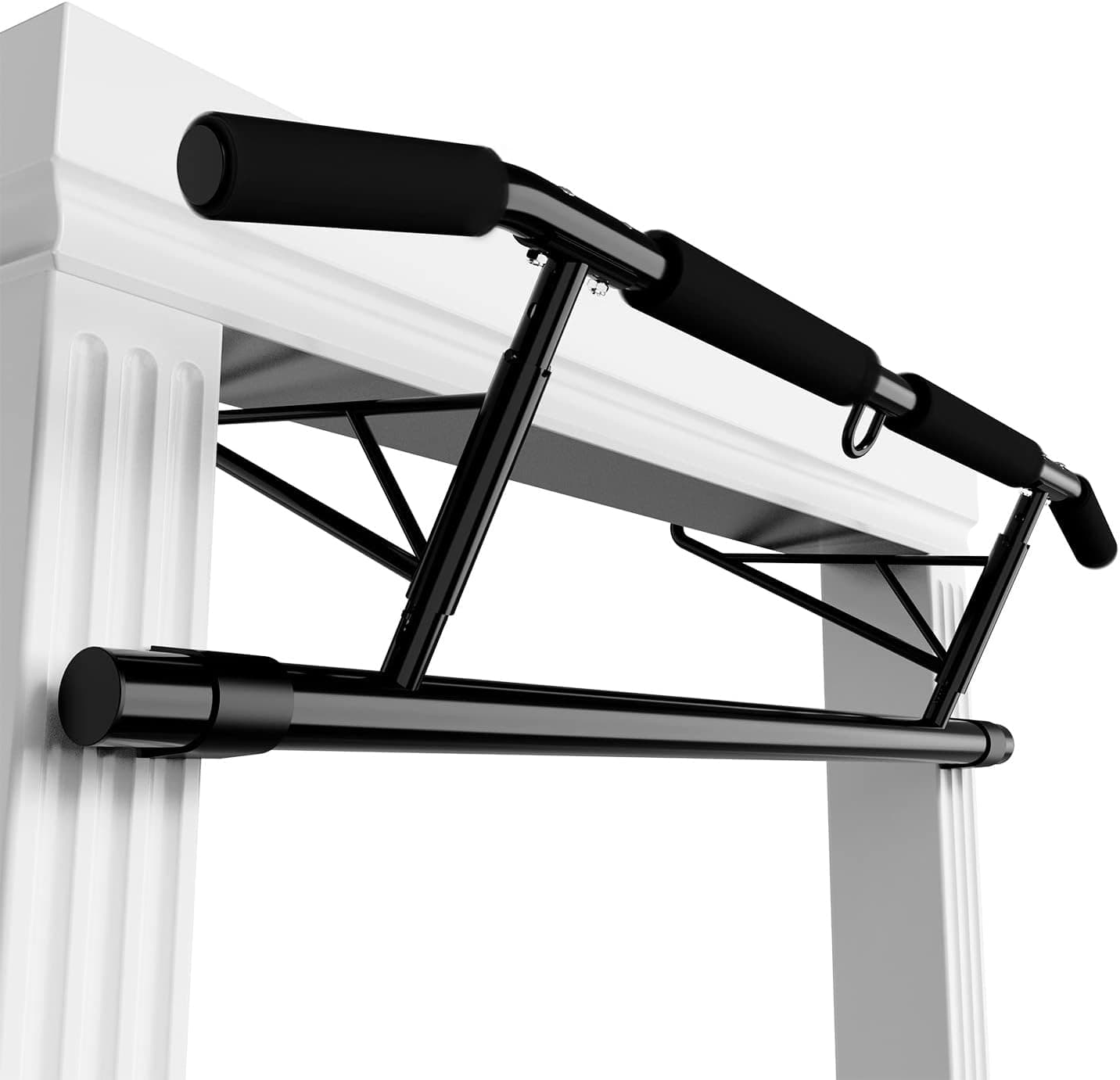
The best pull up bars in the UK for 2026: no-drill doorway bars, wall mounted pull-up bars and free standing power towers, with frame sizes, weight ratings and honest picks for every budget.
Best Exercise is a participant in the Amazon EU Associates Programme, an affiliate advertising programme designed to provide a means for sites to earn advertising fees by advertising and linking to Amazon.co.uk. As an Amazon Associate we earn from qualifying purchases. This comes at no extra cost to you and never influences our independent reviews or rankings.