Recovery
COROS vs Garmin: Which Running Watch Should You Buy in 2026?
COROS vs Garmin for UK runners: PACE 4, PACE 4 Pro, APEX 4 and NOMAD against Forerunner, fenix and Instinct on battery, maps, apps, Garmin Pay and price.

By Mike Shilling, Recovery & Training Editor · Updated 16 November 2026
We may earn a commission from qualifying purchases made through links on this page, at no extra cost to you. This never affects our ratings.
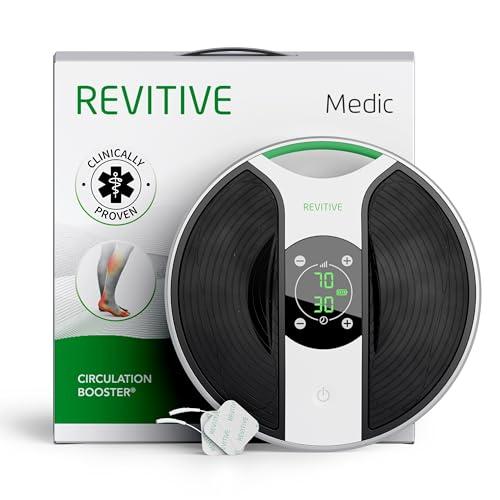
The Revitive Medic is a floor-standing foot unit that sends a mild electrical current through your soles to make your calf muscles contract, which pumps blood back up your legs while you sit still. It works best for people whose legs ache, swell or feel heavy because they don't move much: think older adults, people who sit for hours at a desk and anyone with mild circulation problems their GP already knows about. My verdict, having gone through the published trials and Revitive's own guidance, is that the Medic is the one circulation booster with real evidence behind it, but at £269.99 on Amazon it only makes sense if you'll use it nearly every day.
That evidence point matters more here than with most fitness kit. Plenty of cheap foot massagers promise better circulation, yet Revitive is one of the few brands that has put its device through randomised, sham-controlled trials, and the results are decent. They're also funded by the company that sells it, which I'll come back to.
How we review
This is a research-based review, not a hands-on test. I haven't used a Revitive Medic myself. Everything below comes from Revitive's published specifications and safety guidance, retailer spec sheets, peer-reviewed trials on footplate NMES, and patterns in verified owner feedback. Where a spec couldn't be confirmed, I've left it out.
Revitive calls its technology NMES, short for neuromuscular electrical stimulation, which is the clinical name for what most people know as EMS. You put your bare feet on two conductive pads and turn the intensity up until you feel your calves tighten. Each contraction squeezes the deep veins in your lower leg, and that squeeze is what pushes blood back towards your heart. It's the same "calf muscle pump" that walking switches on, which is why sitting all day leaves blood pooling around your ankles.
The Medic adds a second trick called IsoRocker. Once the stimulation is strong enough, the footplate tilts your feet heel to toe, roughly imitating the ankle movement of a step. Revitive says this is unique to its devices, and it's one of the clearer differences between the Medic and a flat EMS mat.
There's also a pair of TENS body pads in the box. These plug into the unit so you can use it on your lower back, shoulders or knees for pain relief rather than circulation. Revitive's own page footnotes that claim as applying "when used alongside pain medication", so treat the TENS side as a useful extra, not the reason to buy. If you've never used TENS before, our piece on whether a TENS machine can make pain worse covers the sensible limits.
The person who gets the most from a Medic is someone in their sixties or older, fairly sedentary, with legs that ache or swell by evening. It's also aimed at people with diagnosed conditions: the Amazon listing mentions peripheral arterial disease (PAD), chronic venous insufficiency including varicose veins, diabetes and recovery after surgery. If that's you, talk to your GP or vascular nurse first. Revitive positions the device as a complement to treatment, and that's the right way to see it.
It's a poor fit for fit, active people who want faster recovery after training. You already run your calf pump hard every time you exercise, and a massage gun or compression boots will do more for post-workout soreness.
Revitive is clear about three groups who shouldn't use the Medic at all:
That DVT warning deserves a moment. A calf that's suddenly swollen, hot, red or painful on one side needs a doctor the same day, not a circulation booster, because shifting a clot is the one outcome you really don't want. Revitive's guidance is to read the manual and ask a healthcare professional if you're unsure, which is good advice for anyone with heart or circulation problems.
Revitive leans heavily on its research, so it's worth reading the studies rather than the headline numbers.
The most relevant one for most buyers is a 2024 trial in BMC Geriatrics run at the University of Hertfordshire. It enrolled 129 community-dwelling adults over 65 with leg pain, cramps or tired, heavy legs, and 114 finished. Participants used foot NMES with a Revitive at home for 30 minutes twice a day for 8 weeks, against a sham device that looked the same. Both active groups beat the sham on self-reported function, leg pain, overall leg symptoms and ankle blood flow at week 8, and the improvements held at week 12. Nobody reported a device-related adverse event. The study protocol, published in 2022, describes the same design, which is a good sign that the outcomes weren't picked after the fact.
For varicose veins and chronic venous disease, a randomised trial in Phlebology split 76 patients into no NMES, 30 minutes daily or 60 minutes daily. Blood flow in the femoral vein rose in both NMES groups, but the quality-of-life and clinical severity scores only improved meaningfully in the 60-minute group after 6 weeks. In plain terms: more use, better results.
People with PAD and painful calves when walking (intermittent claudication) have a British Journal of Surgery study to look at. In its randomised part, 42 patients did supervised exercise with or without footplate NMES for 6 weeks, and the NMES group could walk about 46% further before pain started. Revitive cites this trial on its own clinical evidence page, where it presents the result as 65% further, measured against patients' own baseline.
Two honest caveats. Actegy, the company behind Revitive, funded the Phlebology trial and supplied its devices, and it funded the older-adults trial too, with one author working as a statistical consultant for it. That doesn't make the findings wrong, but independent replication would carry more weight. Second, the participants used the device more than most owners will: twice daily for 8 weeks is a real commitment. If you want the longer argument on the science, read our separate look at whether Revitive works.
The Medic is a low, wide unit that sits on the floor in front of your chair. Retailer spec sheets list it at about 1.4kg and roughly 36cm square, so it's easy to slide under a sofa between sessions. It runs on a rechargeable battery, which means no trailing cable while you use it, and the remote lets you change intensity without leaning forward. That matters more than it sounds for the older users this is designed for.
Using it is simple: sit down, put your bare feet on the pads, raise the intensity until your calves visibly contract and the IsoRocker starts moving, then leave it to run. Revitive recommends 30 minutes a day.
| Technology | Foot NMES (EMS) with IsoRocker heel-to-toe rocking |
|---|---|
| Extra pads | TENS body pads for back, shoulders and knees |
| Recommended use | 30 minutes a day |
| Intensity | 99 settings (per retailer spec sheet) |
| Power | Rechargeable battery, cordless use |
| Control | Remote control |
| Weight | Approx 1.4 kg |
| Dimensions | Approx 7.2 x 36 x 36 cm |
| Regulatory status | Class IIa medical device, MHRA registered (per Revitive) |
| Do not use with | Pacemaker or implanted device, DVT, pregnancy |
Owner feedback falls into fairly predictable camps. Plenty of buyers with swollen ankles or restless, achy legs report that the heaviness eases after a session and that they sleep better on days they use it. The common complaints are the price, a tingling sensation some people never warm to, and a lack of obvious results among buyers who used it a handful of times and then stopped. That last group is worth keeping in mind; the trials all relied on daily use.
At £269.99, the Medic sits well below Revitive's own RRP of £379.96, and Revitive's direct price was £289.96 when I checked. Revitive also offers VAT relief if you have a qualifying chronic condition, which takes 20% off when you buy direct.
Spread over time, the sums look friendlier. Use it for 30 minutes a day for two years and that's 730 sessions, or about 37p each. Stretch it to three years and you're near 25p a session. Skip half your sessions, though, and the cost per use doubles while the benefit falls away, so the real question is whether you'll stick at it.
Unbranded EMS foot mats on Amazon cost a fraction of the price and do send current through your feet. What they don't have is the trial evidence, the IsoRocker or a UK medical device registration you can point to. If you just want a cheap experiment with foot stimulation, a budget mat is a reasonable gamble. If you have a diagnosed circulation problem and your GP is on board, I'd spend the extra on the Medic, because it's the device the research actually tested. Compression boots are another route for heavy legs; our guide to compression boot benefits explains how squeezing from the outside compares with stimulating the muscle from within.
Check today's price on AmazonFor leg aches, heaviness and swelling, there's reasonable evidence that it helps. A 2024 sham-controlled trial in older adults found significantly better leg pain, leg symptoms and ankle blood flow after 8 weeks of foot NMES compared with a sham device. The caveats are that Actegy, which makes Revitive, funded that research, and the benefit depends on using it most days.
Revitive says you shouldn't use the Medic if you have a pacemaker or another implanted electronic device such as an AICD, if you're being treated for or have symptoms of deep vein thrombosis (DVT), or if you're pregnant. If you have any circulation or heart condition, check with your GP before you buy.
Revitive recommends 30 minutes a day. The main trial in older adults used two 30-minute sessions daily for 8 weeks, so the better results in the research came from fairly committed use.
Yes. Revitive describes it as a Class IIa medical device registered with the UK MHRA. That's a regulatory classification for safety and intended use, not a guarantee that it'll fix any particular condition.
The motor-driven IsoRocker, the clinical trials and the build quality are what you pay extra for. Cheap EMS foot mats deliver electrical stimulation too, but they generally have no published trials behind them and don't rock the feet, so you're taking more of a gamble on whether they'll help.
COROS vs Garmin for UK runners: PACE 4, PACE 4 Pro, APEX 4 and NOMAD against Forerunner, fenix and Instinct on battery, maps, apps, Garmin Pay and price.
Does Revitive work? What the trials show on leg blood flow and symptom relief, whether the NHS recommends it, who shouldn't use it and cheaper alternatives.
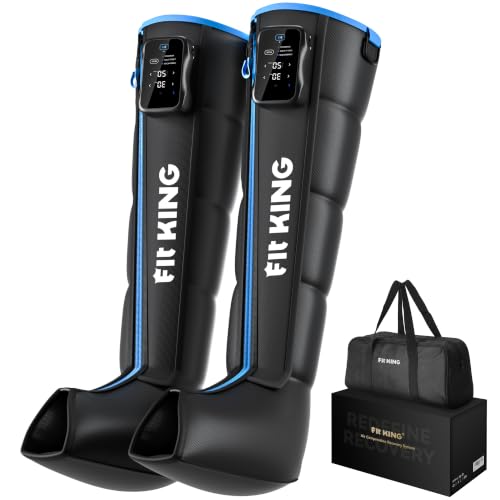
FIT KING cordless compression boots review: built-in controllers, Bluetooth sync, 50 to 150 mmHg and a 24 month warranty, weighed against a £699.99 price.
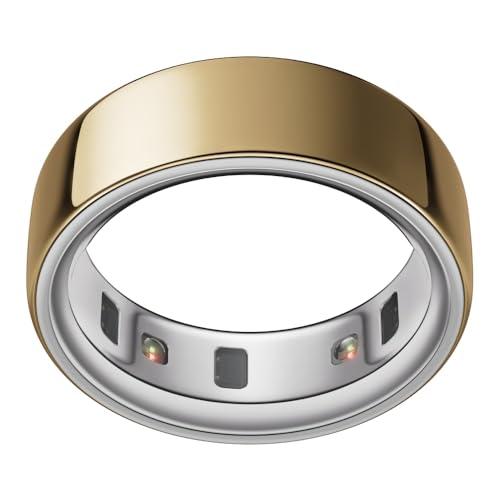
Oura Ring 4 review for UK buyers: sleep accuracy evidence, 5 to 8 day battery, the £69.99 membership, Ring 4 Ceramic, and how it compares with the Ring 5.
Best Exercise is a participant in the Amazon EU Associates Programme, an affiliate advertising programme designed to provide a means for sites to earn advertising fees by advertising and linking to Amazon.co.uk. As an Amazon Associate we earn from qualifying purchases. This comes at no extra cost to you and never influences our independent reviews or rankings.