Recovery
Compression Boots Benefits: What the Research Actually Shows
The real benefits of compression boots, judged against the research: what helps (soreness, feeling recovered), what doesn't hold up, and who should avoid them.

By Mike Shilling, Recovery & Training Editor · Updated 7 September 2026
We may earn a commission from qualifying purchases made through links on this page, at no extra cost to you. This never affects our ratings.
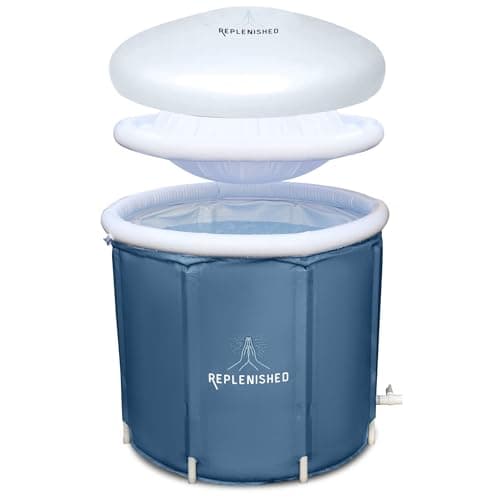
Most sub-£100 ice baths are the same barrel with a different sticker, and the thing that separates one from another is never the tub. It's the lid. Replenished has worked that out: the headline feature here is a dome-shaped inflatable thermo lid, and once you have owned a tub with a flat cover you understand instantly why that matters.
How we review
This review draws on Replenished's published specifications, the pattern of verified UK owner feedback, and straightforward thermal arithmetic for the ice figures. We have not put this exact tub through a full winter outdoors, so read anything about multi-season durability as owner consensus rather than our own measurement.
Flat inflatable lids sit slightly below the rim. Rain lands on them, collects in the middle, and the weight pushes the centre down; within a day or two you have a small pond sitting on top of your ice bath, and the cover has sunk far enough that lifting it tips all of that dirty water straight into the clean water underneath. Every owner of a cheap tub has done this at least once.
The Replenished dome inflates into a curve tall enough that rain runs off rather than pools, and there is a second elasticated waterproof cover that stretches over the whole assembly. Two covers on a £70 tub is unusual; most brands charge extra for the outer one or supply nothing at all.
Check the Replenished 370L ice bath price on AmazonIgnore 370 litres. That is the volume to the brim with nobody in it, and the figure you actually care about is how deep the water sits once an adult is sitting in the tub. Fill to roughly two thirds and the level rises to chest height when you get in, which is where you want it: shoulders submerged, head clear, hands out over the rim for the first few sessions until the cold shock response calms down.
| Quoted capacity | 370 litres |
|---|---|
| Realistic working fill | 250 to 280 litres |
| Wall construction | Insulated multi-layer, fabric outer |
| Lid | Inflatable dome thermo lid |
| Outer cover | Elasticated waterproof cover included |
| Drainage | Built-in outlet, hose compatible |
| Included | Pump, thermometer, dome lid, outer cover |
| Packed weight | Approx 3.5 kg |
| Colour | Grey |
| Typical price | £69.99 |
The insulation is the second reason this tub earns its money. A single-skin folding tub loses its cold overnight and you are back to buying ice every session, whereas an insulated wall with the dome on top will hold water near its starting temperature for two or three days in a British winter. That turns cold plunging from a daily shopping trip into a weekly refill, and the difference in whether people stick with it is enormous.
Cold water immersion after training reduces soreness and speeds up how quickly your muscles feel ready again; the temporal dynamics of muscle strength recovery after cold water immersion work is a reasonable place to see the size of that effect. Where it stops being a good idea is straight after lifting, because post-exercise cold water immersion blunts long-term strength adaptation when you do it habitually within a couple of hours of a hypertrophy session. Plunge on rest days, or hours later, or on the back of endurance work where the trade matters less.
The listing's talk of boosting metabolism and immune function is the usual cold-therapy overreach. A review of the health effects of voluntary cold water exposure found the evidence for those specific claims thin and the study quality poor, and the British Heart Foundation's guidance on cold water is worth reading first if you have any heart condition at all. Cold shock raises blood pressure and heart rate sharply in the first thirty seconds, which is the genuinely risky part of the whole practice.
Fill it, dose it with a capful of chlorine or a hydrogen peroxide splash weekly, keep both covers on, and it stays usable for around a week before the water needs changing. Skip that and you will get a slick film on the inside wall within days, and grey fabric shows it far more obviously than black does.
Setup is not five minutes the first time, whatever the box says. Threading the support bars, positioning the tub where it will stay (you cannot move it once filled) and getting the drain hose sitting somewhere sensible takes closer to twenty. Do it once, properly, on a level surface.
See today's Replenished ice bath priceThe listing quotes 370 litres as the full capacity, but you will never fill it that far. Once you allow for the water your body displaces, a realistic working fill is around 250 to 280 litres, which puts the surface at chest height when you sit down. Overfill it and you will flood the patio the first time you get in.
It sheds rain. A flat inflatable lid collects a puddle on top, the puddle gets heavier, the lid sinks into the water and then you are fishing a soggy cover out of your ice bath at 6am. The Replenished dome is inflated into a curve so water runs off the sides, and a second elasticated waterproof cover goes over the whole thing to keep leaves and grit out.
Depends entirely on your starting temperature. UK mains water in winter runs about 6 to 10C, which needs almost no ice. In August it can arrive at 18C, and dropping 250 litres from 18C to 10C takes roughly 10 to 12kg of ice. That is around six or seven supermarket bags, which is why most people plunge outdoors in the cold months and stop bothering in summer.
Yes, with the covers on, and that is the main reason to buy it. The insulated wall plus dome lid holds a filled tub cold for a couple of days in winter, so you refill weekly rather than daily. Empty it before a hard frost though, because water expanding inside the drain fitting is what kills these tubs.
There is a built-in drain outlet at the base that takes a hose, so you open it and walk away rather than siphoning or tipping 250kg of water over. Any tub without one becomes an ornament within a month, because emptying is the chore that stops people plunging, not the cold.
Up to about 6ft, comfortably, with knees bent and shoulders under. Anyone taller sits with their knees higher out of the water, which is not a problem for the recovery effect but does make the first thirty seconds feel colder on the exposed skin. Our roundup of the best ice baths in the UK covers deeper options.
The real benefits of compression boots, judged against the research: what helps (soreness, feeling recovered), what doesn't hold up, and who should avoid them.
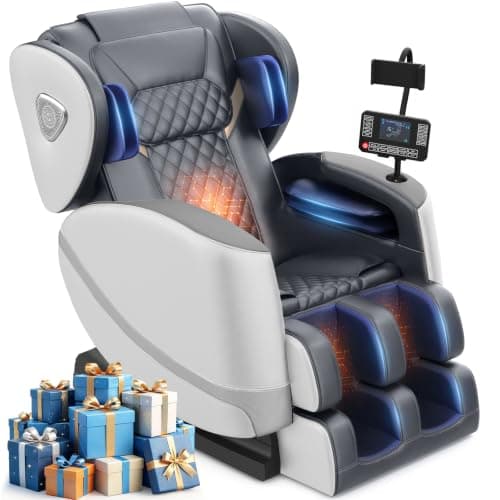
Our FURNIMAT massage chair review of the £470 zero gravity model: 14 fixed nodes, 8 airbags, heat and 165 degree recline, plus a footrest that suits shorter users.
Infrared sauna vs traditional sauna compared: heat, sweat, session length, what the research supports, home costs and safety, plus which one to pick and why.

Our yewglen massage chair review: 14 fixed rollers, 8 airbags, back and leg heat, 165 degree recline and a 175cm height cap, compared with rival budget chairs.
Best Exercise is a participant in the Amazon EU Associates Programme, an affiliate advertising programme designed to provide a means for sites to earn advertising fees by advertising and linking to Amazon.co.uk. As an Amazon Associate we earn from qualifying purchases. This comes at no extra cost to you and never influences our independent reviews or rankings.