Home Gym
Are Vibration Plates Worth It? What the Research Actually Shows
Are vibration plates worth it? Yes for balance, bone health support and low-impact warm-ups; no for weight loss or replacing strength training. The evidence.

By Jacob Chambers, Founder & Lead Reviewer · Updated 16 August 2026
We may earn a commission from qualifying purchases made through links on this page, at no extra cost to you. This never affects our ratings.
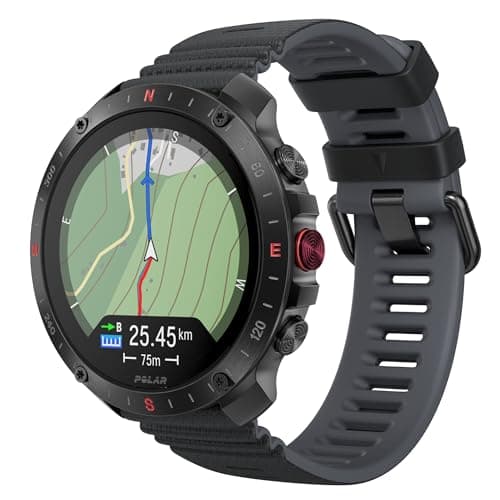
Polar has spent forty years selling heart rate technology to people who take training seriously, and the Grit X2 Pro is what happens when that expertise gets wrapped in properly premium hardware. Sapphire crystal, a stainless steel bezel, military-standard durability testing and a 1.39 inch AMOLED panel that actually looks like a 2026 product rather than a compromise. At around £481 at the time of writing, it sits directly opposite Garmin's mid-to-upper range and asks a question most buyers never seriously consider: is Garmin's ecosystem worth what you pay for it?
The honest answer is that it depends on how you train. Polar's analytics are excellent, arguably better than Garmin's at translating data into a decision about tomorrow's session. Polar's app store, third-party integrations and mapping polish are not.
How we review
This review is based on Polar's published specifications, verified owner reviews and testing from independent outlets. We have not run a months-long field test of this exact unit ourselves, so we have reported the findings that come up repeatedly across sources, the complaints included, rather than single opinions.
Trail runners, hikers, triathletes and anyone already inside the Polar ecosystem with an H10 strap in a drawer. It suits people who want a rugged outdoor watch and care more about what the training data tells them than about how many watch faces they can download.
If you want the widest possible set of golf courses, dive modes, third-party apps and payment options, buy Garmin instead. That gap is real and Polar has never closed it.
The AMOLED panel is the headline upgrade over the original Grit X Pro, and it transforms daily use. Polar quotes 15 percent more visible area than the previous generation, and the 454 by 454 resolution across 1.39 inches is sharp enough that map detail is legible rather than merely present. Outdoor brightness holds up in direct sun.
The build is the other half of the pitch. Sapphire crystal on the Sapphire edition, a stainless steel bezel, MIL-STD-810H testing and a WR100 rating that covers swimming and anything short of technical diving. It also works from minus 20 to 50 degrees Celsius, so cold-weather use is a non-issue.
Weight is the compromise. At 79 grams with the strap, or 57 without, it's heavier than most of what Garmin sells at this price. It sits fine under a jacket sleeve on a long hike; it's more noticeable overnight if you want sleep tracking, and a few owners switch to a lighter aftermarket band for that reason.
| Display | 1.39 in AMOLED, 454 x 454 |
|---|---|
| Lens | Sapphire crystal (Sapphire edition) |
| Bezel | Stainless steel |
| Weight | 79 g with strap, 57 g without |
| Battery, performance training | 43 hours |
| Battery, eco training | 140 hours |
| Battery, smartwatch mode | 10 days |
| Water rating | WR100 |
| Durability | MIL-STD-810H |
| Satellites | Dual-frequency GPS, GLONASS, Galileo, BeiDou, QZSS |
| Sensors | Elixir optical HR, wrist ECG, SpO2, skin temperature |
| Operating range | Minus 20 to 50 degrees C |
This is where Polar earns its keep. Training Load Pro splits the strain of a session into cardio, muscle and perceived load, then tells you whether you're detraining, maintaining or overreaching. Nightly Recharge combines sleep quality with autonomic nervous system recovery measured in the first few hours of sleep. The FuelWise system nags you about carbohydrate intake during long sessions, which sounds fussy until you've bonked at mile 18.
What sets it apart from Garmin's equivalent is stability. Garmin's training readiness score can swing dramatically off one poor night's sleep; Polar's outputs move more slowly and tend to reflect what your body is actually doing across a week. Neither is scientifically definitive, and both are best treated as one input alongside how you feel.
The sensor package is genuinely deep for a watch at this price. Wrist ECG, SpO2 and skin temperature all feed the recovery picture. Optical heart rate is good rather than perfect, which is true of every wrist sensor: comparison work against ECG found chest straps agreeing far more closely with the reference than wrist optical devices across a range of activities (wrist optical versus chest strap comparison). For threshold and interval work, connect a chest strap.
Free downloadable topographic maps over Wi-Fi, dual-frequency GNSS for tracking accuracy in valleys and under tree cover, turn-by-turn guidance along an imported route, plus a Komoot integration for route planning. Everything you need is present.
Everything is also a little less polished than the Garmin equivalent. Panning and zooming feels slower, route creation happens mostly on your phone rather than on the wrist, and there's no equivalent of Garmin's dynamic round-trip routing that invents a loop for you. For following a planned route on a known trail it's fine. For improvising, Garmin still wins.
At around £481 the Grit X2 Pro undercuts the flagship Garmin outdoor watches while matching most of their materials and beating some of their analytics. That's a decent argument. The counter-argument is resale value and ecosystem lock-in: Polar's smaller user base means fewer accessories, fewer third-party apps and a thinner second-hand market when you upgrade.
Worth being clear about who this doesn't suit. Casual users tracking a couple of gym sessions a week will find most of the software pointless, and our best Garmin watch UK guide or the cheaper end of the home gym category covers those needs for far less.
Any watch is only as useful as the training you put through it, and the NHS baseline of 150 minutes of moderate activity a week plus two strength sessions is the floor worth building from (UK physical activity guidelines).
It is, if you value Polar's training and recovery analysis and can live with a smaller app ecosystem than Garmin's. The hardware is excellent: sapphire glass, a bright AMOLED screen, 43 hours of GPS training battery and a wrist ECG. What you give up is third-party integrations, the depth of Garmin Connect and the enormous Connect IQ store.
Polar quotes 43 hours in performance training mode, 140 hours in eco training mode and 10 days in smartwatch mode. In practice, daily wear with a few hours of GPS training a week lands most people at five to seven days between charges, which is respectable for an AMOLED watch.
Yes. You download topographic maps for the regions you need over Wi-Fi, and they work with no phone and no signal. Turn-by-turn guidance along a route is included, though the map rendering and route-building tools are a step behind Garmin's.
Polar's Elixir optical sensor is among the better wrist-based systems, and it holds up well for steady running and cycling. Like every optical sensor it struggles with rapid intensity changes and cold weather, so pair a chest strap for interval sessions. Polar's own H10 strap is widely treated as a reference-grade option.
The Titan swaps the stainless steel bezel for titanium, dropping around 10 grams, and comes with a different strap. The internals, sensors, screen and software are identical. Unless the weight genuinely matters to you, the standard Sapphire version is the sensible buy.
Garmin for breadth, maps and the app ecosystem. Polar for training load, sleep and recovery analysis, which many long-term users find more actionable and less prone to swings. If you already own Polar sensors or use the Polar Flow platform, the Grit X2 Pro is an easy call.
Are vibration plates worth it? Yes for balance, bone health support and low-impact warm-ups; no for weight loss or replacing strength training. The evidence.
Are walking pads worth it? Who they suit, the step and calorie gains from treadmill desk research, cost per use, noise, spec limits and when to buy a treadmill.
The Arnold split explained: a 6-day chest and back, shoulders and arms, legs rotation run twice a week. Full sample week, who it suits, home and 4-day versions.
Can you run on a walking pad? Mostly no: most cap at 6km/h with short belts and no rails. Which 2-in-1 pads allow a light jog, and when to buy a real treadmill.
Best Exercise is a participant in the Amazon EU Associates Programme, an affiliate advertising programme designed to provide a means for sites to earn advertising fees by advertising and linking to Amazon.co.uk. As an Amazon Associate we earn from qualifying purchases. This comes at no extra cost to you and never influences our independent reviews or rankings.