Home Gym
How to Clean a Yoga Mat: Quick Wipe, Deep Clean and Care by Material
How to clean a yoga mat properly: a 30-second after-class wipe, a weekly clean and a deep clean, plus what's safe for PVC, TPE, natural rubber, PU, cork and cotton mats.

By Paul Kendrick, Cardio & Endurance Editor · Updated 6 November 2026
A skipping rope should usually be about your height plus 90 to 100cm if you're a beginner, which works out at roughly 8ft to 9ft 6in for most adults. The quickest check doesn't need a tape measure: stand on the middle of the rope with one foot and pull the handles straight up. If the cable reaches your armpits, the length is right for learning. Experienced skippers trim it so the cable stops at the lower chest, and anyone chasing double unders on a speed rope often goes shorter again.
Sizing charts vary between brands, sometimes by 15cm or more for the same height, so treat any chart (ours included) as a starting range and let the stand-on-it test have the final word.
These ranges are total rope length, tip to tip, including the handles. Your arm length, how you hold your hands and how high you jump all shift the ideal figure a little, which is why we've given a range rather than one number.
| Your height | Beginner (armpits) | Intermediate (lower chest) | Speed / double unders (sternum) |
|---|---|---|---|
| 150cm (4ft 11in) | 240 to 250cm (about 8ft) | 225 to 235cm (7ft 5in to 7ft 9in) | 210 to 220cm (6ft 11in to 7ft 3in) |
| 160cm (5ft 3in) | 250 to 260cm (8ft 2in to 8ft 6in) | 235 to 245cm (7ft 9in to 8ft) | 220 to 230cm (7ft 3in to 7ft 7in) |
| 170cm (5ft 7in) | 260 to 270cm (8ft 6in to 8ft 10in) | 245 to 255cm (8ft to 8ft 4in) | 230 to 240cm (7ft 7in to 7ft 10in) |
| 180cm (5ft 11in) | 270 to 280cm (8ft 10in to 9ft 2in) | 255 to 265cm (8ft 4in to 8ft 8in) | 240 to 250cm (7ft 10in to 8ft 2in) |
| 190cm (6ft 3in) | 280 to 290cm (9ft 2in to 9ft 6in) | 265 to 275cm (8ft 8in to 9ft) | 250 to 260cm (8ft 2in to 8ft 6in) |
| 200cm (6ft 7in) | 290 to 300cm (9ft 6in to 9ft 10in) | 275 to 285cm (9ft to 9ft 4in) | 260 to 270cm (8ft 6in to 8ft 10in) |
Fixed-length ropes are mostly sold in whole feet. If you fall between two sizes and you're new to skipping, buy the longer one.
Why brand charts disagree
Some brands quote the cable length only, others measure handle tip to handle tip, and handles range from about 10cm to 18cm each. Two "9ft" ropes can therefore differ by 20cm in practice. Read how the maker measures before comparing numbers, and if the listing doesn't say, assume you'll need to adjust it.
This takes 30 seconds and beats any chart, because it accounts for your actual body and the actual rope in your hand.
Some very experienced competitive skippers go lower than the sternum, but they also keep their hands tight to their hips and jump only a few centimetres off the floor. Copy their rope length without copying that technique and you'll just whip your toes.
A rope that's too long hits the floor well in front of you, slows down and forces you to jump higher or swing your arms wider to clear it. A rope that's too short is worse: it clips your heels or toes, and you'll start hunching your shoulders and pulling your hands up to make room, which tires your neck and wrecks your rhythm.
Getting it right matters because skipping is properly hard work. The NHS lists skipping alongside running and swimming as a vigorous-intensity activity, and 75 minutes of vigorous exercise a week gives similar health benefits to 150 minutes of moderate activity. You only bank that if you can actually keep the rope turning for more than 20 seconds at a time, and a badly sized rope is the most common reason beginners can't.
The research on skipping is mostly in younger people. A 2023 meta-analysis of 15 trials and 1,048 children aged 10 to 12 found that jumping rope improved speed, strength, coordination and balance compared with regular PE lessons, although it made no meaningful difference to body composition. That second finding is worth knowing: skipping is a good conditioning tool, not a magic fat burner on its own.
Most speed and PVC ropes adjust in the handle, using either a screw cap or a small grub screw that clamps the cable. The exact design differs, but the process is similar.
Some ropes have a stopper or ferrule that slides along the cable rather than a screw. Follow the maker's instructions for those, as crimped ends can't always be reused.
PVC ropes are the standard beginner choice. They're light enough to turn fast but heavy enough to feel through your hands, which helps timing. Size them by the beginner column, and trim later.
Beaded ropes use hard plastic segments on a cord. The beads hold their arc well and don't tangle, which makes them good for learning and for outdoor surfaces. They're adjusted by removing beads rather than cutting, so changes come in steps of roughly 2 to 3cm. Most people run them at the long end of the range because the beads hit harder if they catch your shins.
Speed cable ropes are thin coated steel on bearing handles. They're the shortest-sized ropes and the least forgiving, because the cable is so light you get almost no feedback about where it is. Only drop to the sternum length once your singles are consistent.
Weighted ropes use a thick, heavy rope (often 0.5kg to 1.5kg or more) and are often sold at a fixed length because you can't cut them easily. Size these generously, as the slow turn gives you more time and extra clearance helps. We cover the trade-offs in our guide to the weighted skipping rope.
Cordless ropes have short tethered weights instead of a full rope, so length doesn't matter. They're useful in low-ceilinged flats but won't teach you timing.
If a sore shin or calf is your main complaint rather than tripping, the rope probably isn't the culprit. Look at your volume, surface and footwear first, and read our guide to shin splints before you push through it.
For most people, an adjustable PVC or coated cable rope is the right buy: it fits anyone in the house and you can shorten it as your skill improves. Fixed ropes are fine once you know your number. Our best skipping rope UK roundup compares speed, weighted, beaded and cordless options at different prices, and flags which ones adjust easily.
Once you've got the length sorted, skipping slots neatly into home circuits alongside burpees and battle ropes for short, hard conditioning work.
As a starting point, a beginner's rope should be about your height plus 90 to 100cm in total, so a 170cm person would use roughly 260 to 270cm. Experienced skippers usually go 15 to 30cm shorter than that, and people training double unders on a speed rope shorter still. Use the stand-on-it test to fine tune, because brands measure length differently.
Stand on the middle of the rope with one foot, keep the cable straight and pull the handles up beside your body. For a beginner the top of the cable, where it meets the handles, should reach your armpits. Experienced skippers often prefer it at the lower chest, and speed rope users around the bottom of the sternum.
Too long is the safer mistake for a beginner. A slightly long rope gives you more clearance, so you trip less while you learn the timing. A rope that's too short catches your feet constantly and pushes you to hunch over. Once your timing is solid you can take a few centimetres off at a time.
Usually they're sized the same way or a little longer. Heavy ropes turn slowly and benefit from extra clearance, and most come at a fixed length (often around 274cm, or 9ft) because the thick rope can't be trimmed. Check the maker's height range before you buy rather than assuming one size fits.
A 6ft (183cm) person learning to skip will usually suit a rope of around 275 to 285cm, which most brands sell as a 9ft or 9ft 6in rope. A more experienced skipper of the same height might cut it down to 255 to 265cm, and a speed rope for double unders could sit near 240 to 250cm.
How to clean a yoga mat properly: a 30-second after-class wipe, a weekly clean and a deep clean, plus what's safe for PVC, TPE, natural rubber, PU, cork and cotton mats.
How to use lifting straps properly, step by step. Lasso wrapping, figure 8 and closed-loop straps, how many wraps, which way the tail goes, and when not to strap.
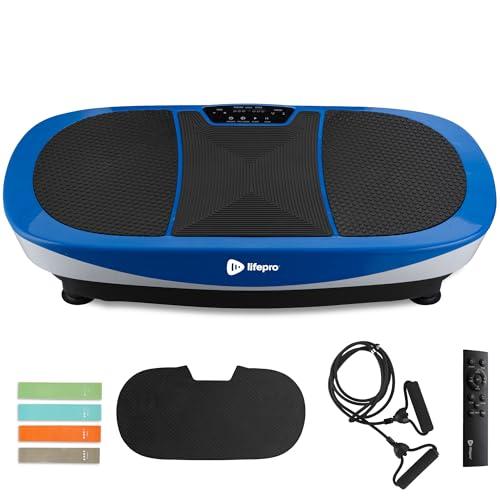
Our LifePro Rumblex Max review covers the triple motor 4D vibration, 99 speeds, 16 programmes and 226kg rating, how it compares with the Rumblex Plus and 4D Pro, and what the research supports.
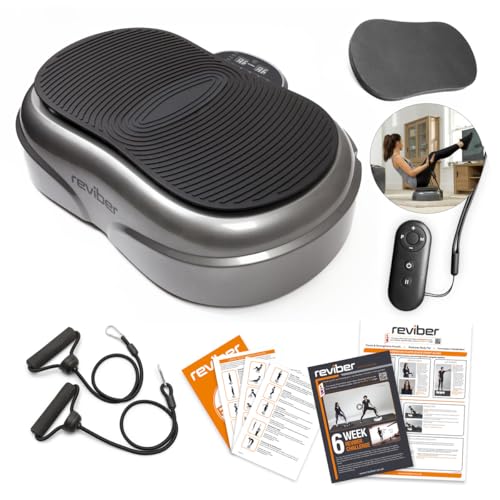
Our Reviber Fusion vibration plate review: 14mm oscillation, a 500W motor, 20 levels and a 5 year motor guarantee, plus the low weight limit and what the research says.
Best Exercise is a participant in the Amazon EU Associates Programme, an affiliate advertising programme designed to provide a means for sites to earn advertising fees by advertising and linking to Amazon.co.uk. As an Amazon Associate we earn from qualifying purchases. This comes at no extra cost to you and never influences our independent reviews or rankings.