Home Gym
How Long Should a Skipping Rope Be? Sizing Chart by Height
How long should a skipping rope be? A height to rope length chart in cm and feet, the stand-on-it test, and how to shorten an adjustable rope properly.

By Jack Atkins, Home Gym Equipment Specialist · Updated 6 November 2026
To clean a yoga mat, wipe both sides with a soft cloth and a few drops of mild washing-up liquid in warm water, go over it again with a cloth dampened in plain water, then hang it to air dry out of direct sunlight. That's it for most mats most of the time. The bit that trips people up is the material: a cheap PVC mat will put up with vinegar and a scrub, while a natural rubber or PU-topped mat can lose its grip, crack or stain if you treat it the same way. Below is the routine we'd follow, then the specifics for each type of mat.
Do this after any session where you've sweated on the mat. It stops oils building up, which is what makes a mat go slick and start to smell.
Hands and feet first
The cleanest mat is one you don't put dirt on in the first place. Wash your feet and hands before you practise, skip moisturiser for an hour beforehand, and the mat needs far less work. Liforme specifically warns against practising with freshly applied oily creams, as they can stain the surface.
If you practise three or more times a week, give the mat a proper going-over once a week. Lay it flat on a clean floor or in an empty bath, then:
Every few months, or when a mat smells even after a weekly clean, it's worth a deeper session. For PVC and TPE mats, you can lay the mat in a bath with a few centimetres of lukewarm soapy water, scrub gently with a soft brush, rinse with the shower head and hang it up. Keep the water shallow and the soak short (5 minutes, not an hour).
For natural rubber, PU-topped and cork mats, skip the bath entirely. Liforme's own care guide suggests a "very heavily diluted" solution of water with bicarbonate of soda or white vinegar, wiped over with a soft cloth and dried flat, and it recommends this no more than every 3 to 6 months (Liforme mat care guide). That's a sensible ceiling for any premium rubber mat.
Not sure what yours is made of? Check the label or the product listing. If it's a cheap, slightly shiny mat with a uniform foam feel, it's probably PVC. If it smells faintly of rubber and is heavy for its size, it's natural rubber.
The most forgiving. Closed-cell PVC doesn't absorb much sweat, so soap and water, a vinegar spray, or even an occasional antibacterial wipe won't hurt it. A soft brush is fine for textured surfaces. Avoid harsh solvents and bleach, which can make the surface tacky.
TPE is lighter and spongier than PVC, and more prone to tearing at the edges. Clean it the same way (mild soap or diluted vinegar) but use a cloth rather than a brush and don't scrub hard. TPE also softens with heat, so keep it well away from radiators.
This is where most of the damage happens. Open-cell rubber is grippy precisely because it absorbs a little moisture, which also means it absorbs smells and cleaning products. Our rules:
These have a polyurethane top layer bonded to a rubber base, and the PU is what gives that sticky, sweat-proof grip. Wipe only. Liforme recommends 3 to 5 pumps of its cleaner on a damp sponge, a 30-second wait, a wipe with a clean damp sponge and drying flat, or a small drop of dish soap in plenty of water if you don't have the branded product (Liforme mat care guide). It also says to dry it away from direct sunlight and roll it colour side out. Don't fold a PU mat; creases can stay permanently.
Cork is fairly low-maintenance. Wipe it with a damp cloth and a drop of mild soap, dry it straight away and don't soak it, because water can get under the cork layer and weaken the bond with the rubber or TPE backing. Most cork mats grip better when slightly damp, so a quick mist before class is fine.
Jute mats usually have a PVC or rubber backing, so treat them like a hybrid: spot-clean the fibres with a damp, soapy cloth and avoid saturating them. Cotton yoga rugs (the woven Mysore-style kind) are the one category that often goes in the washing machine, usually cold and gentle. Follow the label, and dry them flat or on a line rather than in a tumble dryer, which can shrink them.
For most mats, no. The drum folds and twists the mat, and that can tear TPE, crack rubber, peel a PU top off its base or split cork. The heat from a warm wash makes it worse. The exceptions are cotton rugs and a small number of thin PVC mats where the manufacturer explicitly allows it. If the care label doesn't say "machine washable", treat it as a hand-clean-only mat.
Drying is where a clean mat either stays fresh or starts to smell. Hang it over a shower rail, a clothes airer or two chair backs so air reaches both sides. A flat lay on a towel works too if you flip it halfway through.
Never tumble dry a yoga mat, and never put it on a radiator or in front of a heater. Heat warps PVC and TPE and cracks natural rubber. Direct sun is just as bad for rubber and PU, though a few minutes of light won't ruin it. The rule we'd stick to: it doesn't get rolled up until it's dry all the way through, which can take a few hours for a thick rubber mat after a deep clean.
It smells. Clean it with soapy water, then dry it unrolled for a full day. A light sprinkle of bicarbonate of soda left for 15 minutes and wiped off can help on PVC and TPE. If a rubber mat still smells after that, it's probably absorbed sweat deep into the material and won't fully recover.
It's slippery. The usual culprits are soap residue, skin oils or moisturiser, so a thorough rinse with a damp cloth often fixes it. Brand-new PVC mats can be slick from the factory finish; a gentle scrub and a few weeks of use usually break that in. If your hands still slide in a hot class, a yoga towel on top is the cheaper fix compared with a new mat.
If you use studio or gym mats, wipe them before and after use, and take your own if you can. The NHS notes that athlete's foot spreads through walking barefoot where someone else has it, especially in changing rooms and showers, and advises against sharing towels (NHS athlete's foot guidance). A barefoot yoga class isn't a changing room, but the same logic makes a personal mat and a quick wipe a sensible habit.
Cleaning only gets you so far. It's time for a new mat when:
A cheap PVC or TPE mat might last a year of regular use, while a good rubber or PU mat looked after properly should give you several. If yours is past saving, our guide to the best yoga mats in the UK compares grip, thickness and materials, and our best exercise mats round-up covers thicker mats for floor work and HIIT. If the mat lives on a hard floor in a home gym, proper gym flooring under it stops it creeping and protects the floor.
For most mats, a few drops of mild washing-up liquid in warm water on a soft cloth is the safest everyday cleaner. Wipe the whole surface, follow with a cloth dampened in plain water to lift any soap residue, then let it air dry. A diluted white vinegar spray works well on PVC and TPE, but go easy with it on natural rubber and PU-topped mats and check the maker's care advice first.
Generally no. Rubber, TPE, PU-topped and cork mats can tear, delaminate or lose their grip in a drum. The exceptions are cotton yoga rugs and a few thin PVC mats where the manufacturer explicitly says machine washing is fine, usually on a cold, gentle cycle with no spin. If the label doesn't say yes, hand clean it.
Give it a quick wipe after every sweaty session, a proper clean with soapy water about once a week if you practise several times a week, and a deep clean every few months or when it starts to smell. Liforme, for example, suggests its deeper clean should be no more often than every 3 to 6 months.
Usually it's sweat and skin oils trapped in the surface, made worse by rolling the mat up while it's still damp. Open-cell natural rubber mats hold onto smells the most. Clean it, then always let it dry fully, unrolled, before you store it. New rubber mats also have a natural rubbery smell that fades over a few weeks of airing.
Occasionally on PVC, but not as a habit. Many wipes contain alcohol, oils or fragrance that can dry out rubber, leave a slippery film or stain PU tops. A mild soap solution cleans just as well for day-to-day use and is far kinder to the grip.
Hang it over a shower rail, a clothes airer or the back of a chair, or lay it flat on a towel, somewhere well ventilated and out of direct sunlight. Never tumble dry it or drape it on a radiator, as heat warps and cracks most mat materials. Don't roll it up until it's completely dry on both sides.
How long should a skipping rope be? A height to rope length chart in cm and feet, the stand-on-it test, and how to shorten an adjustable rope properly.
How to use lifting straps properly, step by step. Lasso wrapping, figure 8 and closed-loop straps, how many wraps, which way the tail goes, and when not to strap.
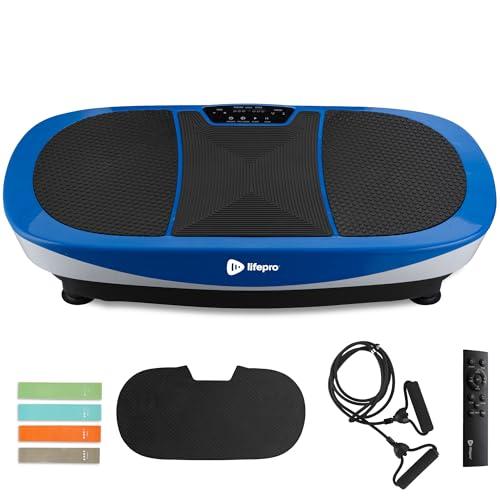
Our LifePro Rumblex Max review covers the triple motor 4D vibration, 99 speeds, 16 programmes and 226kg rating, how it compares with the Rumblex Plus and 4D Pro, and what the research supports.
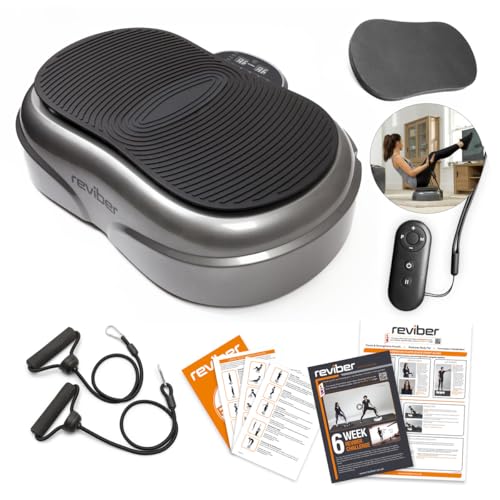
Our Reviber Fusion vibration plate review: 14mm oscillation, a 500W motor, 20 levels and a 5 year motor guarantee, plus the low weight limit and what the research says.
Best Exercise is a participant in the Amazon EU Associates Programme, an affiliate advertising programme designed to provide a means for sites to earn advertising fees by advertising and linking to Amazon.co.uk. As an Amazon Associate we earn from qualifying purchases. This comes at no extra cost to you and never influences our independent reviews or rankings.