Home Gym
How Long Should a Skipping Rope Be? Sizing Chart by Height
How long should a skipping rope be? A height to rope length chart in cm and feet, the stand-on-it test, and how to shorten an adjustable rope properly.

By Nadia Popescu, Strength & Conditioning Writer · Updated 6 November 2026
To use lasso lifting straps, put each hand through its loop so the tail crosses your palm and exits by your thumb, lay the tail under the bar, wrap it around the bar in the direction your fingers curl (one and a half to two turns), then grip over the top and roll the bar towards you to tighten. Figure 8 straps work differently: one loop sits on your wrist and the other wraps under the bar and back over your hand, locking you on. Use either only for heavy pulling sets where your grip gives out before the muscle you're training. Below is each method in order, with the mistakes that make straps feel fiddly or slip.
How we wrote this
This guide is based on standard coaching practice, the published research on straps and the manufacturers' own instructions. We haven't run a lab test of our own, and where the research is thin we say so.
Lasso straps are the common type: a length of cotton, nylon or leather with a sewn loop at one end. Most pairs on Amazon are this design, and they're the ones to learn first.
To release, open your hand and let the bar roll away from you; the strap unwinds on its own. That ease of release is the main reason lasso straps suit most lifters.
If you'd like a no-padding pair that's been a strongman staple for years, the IronMind Strong-Enough straps are a 19 inch nylon lasso design that wraps thin and tight. Padded options and budget cotton pairs are covered in our best lifting straps UK roundup.
Quick check before every heavy set
Tail out by the thumb, wrap going the same way as your fingers, no more than two turns. If all three hold, the strap won't slip.
Figure 8 straps are a single piece of heavy webbing sewn into two loops, one above the other. Once you're in, grip barely matters, which is why strongmen use them for max deadlifts and why they're the wrong tool for anything you might need to drop.
Sizing matters with figure 8s because nothing adjusts. Brands like CERBERUS sell them in four sizes, and the CERBERUS Elite figure 8 straps are a common pick for heavy deadlifts and shrugs. Measure your wrist against the brand's size chart rather than guessing, since a loop that's too big lets the bar sit low in your fingers.
To get out, set the bar down fully, then slide your hand back out of the lower loop. You can't just open your hand. That's the whole point, and the whole risk.
Closed-loop (or Olympic) straps are a short fixed loop of webbing, often with no padding at all. Put your hand through the loop so it rests on your wrist, then wrap the hanging part of the loop around the bar once and grip over it. They're quick to get on and quick to escape, which is why weightlifters use them for snatch pulls and high pulls. They don't give the security of a lasso wrapped twice, so for very heavy deadlifts most people prefer a lasso or a figure 8.
Straps earn their place when your hands give out before the muscle you're actually trying to work. That usually means:
The research backs the basic idea. In a 2023 study of ten trained women doing 3 sets to failure at 80% of their 1RM deadlift, straps let them perform significantly more reps with no drop in bar speed, and grip strength fell less across the sets (Trahey et al., 2023). The limits matter, though. A 2026 review of the strap research found they can help maximal strength and how secure the grip feels, but no consistent effect showed up for general pulling and back exercises, and there's no evidence yet on long-term muscle or strength gains from training with them (Martins et al., 2026). So straps buy you extra reps on heavy, grip-limited sets. They don't magically recruit more back muscle.
Warm-ups. Your warm-up sets are light enough to hold, so hold them. That's free grip training you'd otherwise skip.
Cleans and snatches, unless you know how to bail. If a clean goes wrong you need to let go of the bar fast. A loose lasso or closed-loop strap can be released by an experienced lifter; a figure 8 can't be released at all. If you're still learning the power clean, learn it strapless.
Competition training. Tested powerlifting and Olympic weightlifting don't allow straps, so if you compete, keep your heaviest deadlift singles and a good share of your volume strapless. Some strongman deadlift events do allow straps, so check the rules for your federation.
Pressing and squatting. Straps do nothing for a bench press or squat. If your wrists hurt on those, you want wrist wraps, which are a different product.
The real risk with straps isn't injury, it's that your grip quietly stops keeping up. A sensible split is to go strapless until grip is the thing failing, then strap the last one or two heavy sets. Add some direct grip work once or twice a week: farmer's carries, dead hangs from a bar and the moves in our forearm exercises guide all count. Our guide on how to improve grip strength sets out a fuller plan.
A light coat of chalk is also worth trying before you reach for straps. It won't save you on a 250kg rack pull, but it often fixes the bar sliding out on moderate sets.
Tail on the wrong side. Covered above, and it's still the number one problem. Thumb side, every time.
Too many wraps. Three or four turns feels secure but makes the bar sit away from your palm. Two turns is the ceiling.
Wrapping too far down the hand. The wrist loop should sit on the wrist, not on the base of your palm. Too low and the strap pulls on your hand rather than your wrist, which defeats the point.
Strapping one hand and fumbling the other. Wrap the first hand, hold the bar lightly with it so the wrap doesn't unwind, then do the second. On a deadlift from the floor, wrap with the bar settled and your hips high, then drop into position.
Using figure 8s for everything. They're brilliant for a top set of deadlifts and annoying for anything with multiple setups, like rows or pulldowns. Many lifters own a pair of each.
With a lasso strap on, the loose tail should run across your palm and come out by your thumb, not your little finger. If it points towards your little finger, you've got the straps on the wrong hands, so swap them over. From there the tail goes under the bar and wraps around it in the same direction your fingers curl.
One and a half to two full turns is right for most people. Fewer than that and the strap can slip on heavy sets; much more and you build a thick wad of fabric between your palm and the bar, which makes the grip feel fat and less secure. If you have tail left over after two turns, your straps are on the long side.
No. Do your warm-up sets with your bare hands and only strap the heavy working sets where your grip would fail before your back or legs. Many lifters strap only the last one or two sets of deadlifts, rows or shrugs. Keeping plenty of strapless work in your week stops your grip strength falling behind your pulling strength.
They're more secure, not better overall. Figure 8 straps lock your wrist to the bar so firmly that grip almost stops being a factor, which suits maximal deadlifts, rack pulls and heavy shrugs. The downside is you can't let go quickly. Lasso straps let you unwind and drop the bar, so they're the better all-rounder for rows, pulldowns and general gym use.
Only if you already know how to bail out of a missed lift with them on. Olympic lifters use short closed-loop or loose lasso straps for snatch pulls and some snatches, but they practise releasing the bar. Never wear figure 8 straps for any lift where you might need to dump the bar, because you physically can't let go.
Not in training. They're a tool for letting your back, hips and legs take more load than your hands can hold. They aren't allowed in tested powerlifting or Olympic weightlifting competition, so if you compete you need to keep heavy strapless work in your programme.
How long should a skipping rope be? A height to rope length chart in cm and feet, the stand-on-it test, and how to shorten an adjustable rope properly.
How to clean a yoga mat properly: a 30-second after-class wipe, a weekly clean and a deep clean, plus what's safe for PVC, TPE, natural rubber, PU, cork and cotton mats.
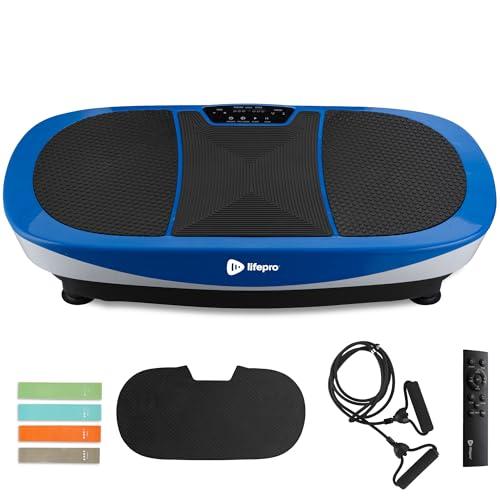
Our LifePro Rumblex Max review covers the triple motor 4D vibration, 99 speeds, 16 programmes and 226kg rating, how it compares with the Rumblex Plus and 4D Pro, and what the research supports.
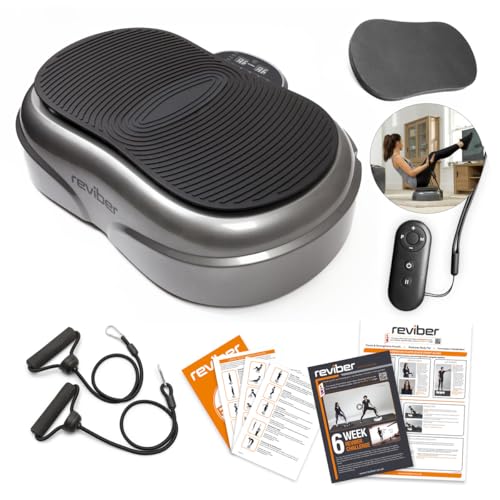
Our Reviber Fusion vibration plate review: 14mm oscillation, a 500W motor, 20 levels and a 5 year motor guarantee, plus the low weight limit and what the research says.
Best Exercise is a participant in the Amazon EU Associates Programme, an affiliate advertising programme designed to provide a means for sites to earn advertising fees by advertising and linking to Amazon.co.uk. As an Amazon Associate we earn from qualifying purchases. This comes at no extra cost to you and never influences our independent reviews or rankings.