Recovery
Obqer 2 Person Steam Sauna Review: More Steam for Less Money
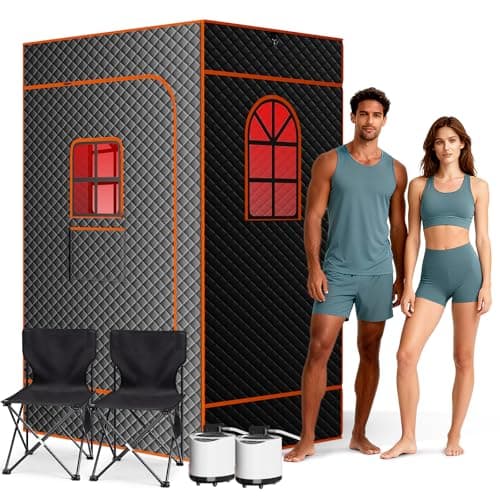
An honest Obqer 2 person portable steam sauna review: two 1200W generators, 9 heat levels, a 120 x 90cm footprint and £212.99 price, compared with Manastin and SereneLife.

By Mike Shilling, Recovery & Training Editor · Updated 24 October 2026
To use a portable steam sauna, stand the tent on a flat, hard floor with a towel under the generator, fill the pot with distilled water, plug it straight into a wall socket and let it pre-heat for 10 to 15 minutes. Then sit inside for 10 to 15 minutes on your first go, building to 20 to 30 minutes once you know how your body handles wet heat. Drink before and after, cool down slowly, and dry the tent out properly every single time, because a damp tent folded away is how these things end up smelling like a changing room.
That's the short version. The detail matters more than it does with an infrared tent, because you're running a boiling-water appliance in a fabric box, and most of the problems owners hit come from setup and drying rather than the sauna itself.
You want a flat, hard floor: laminate, tiles or vinyl. Carpet is a bad idea since condensation runs down the walls and pools at the base, and a carpet underlay will hold that water for days. A bathroom or kitchen is ideal; a spare bedroom works if you put a waterproof mat down first.
Put a folded towel or absorbent mat under the generator. It sits on the floor, it gets hot, and the hose joint can drip, so keeping it on a towel protects the floor and gives you an early warning if something's leaking.
Leave a bit of clearance around the tent. You'll want to unzip it quickly if you feel unwell, and you can't do that if it's wedged against a wardrobe.
Distilled water is the safe default, especially in hard water areas such as London, the South East and much of the Midlands. Hard tap water leaves limescale on the heating element, and a scaled element takes longer to produce steam and runs hotter than it should.
If you'd rather use tap water, filtered water from a jug is a reasonable middle ground, but then you need to descale. Every three to four weeks of regular use, empty the pot, fill it with a 50:50 mix of white vinegar and water (or a citric acid kettle descaler), leave it unplugged for an hour, then rinse it out twice. Check your manual first; a few manufacturers specify their own method.
Don't add essential oils to the generator pot. They can gum up the element and the hose, and most manuals say so explicitly. If you want a scent, put a drop on a cloth inside the tent instead.
Fill to the marked line and no further. Most single-tent generators hold 2 to 4 litres; the SereneLife portable steam sauna has a 4 litre boiler, which comfortably covers a 30 minute session. Overfilling can push boiling water up the hose rather than steam, and that hose is pointing at your feet.
Never refill a hot generator
Switch off, unplug and let the pot cool before topping it up. Opening a boiling pot to add cold water is the most common way people scald their hands with these units.
Start at 10 to 15 minutes for the first week, at a medium heat. If you feel fine afterwards, add five minutes a session until you reach 20 to 30 minutes. That's where most people settle, and it's roughly the range that crops up in the Finnish sauna research. Going past 30 minutes doesn't buy you anything obvious and makes dehydration far more likely.
A tent won't feel like a spa steam room, and it won't feel like a Finnish sauna either. Most home units quote a ceiling of around 45 to 54C, against 80 to 100C in a traditional sauna. A commercial steam room usually runs cooler than that, around 40 to 50C, but at 100% humidity across the whole room.
The big difference is your head. In most portable tents your head sticks out of the top, so you don't breathe the steam the way you would in a gym steam room. That's good for comfort and bad if you were buying it for your sinuses. Our sauna vs steam room guide explains why wet heat at 50C feels hotter than dry heat at the same reading.
You'll sweat heavily, often more than in a dry sauna, because the humid air stops sweat evaporating and cooling you. Drink a glass or two of water in the hour before you get in, keep a bottle within reach, and drink again afterwards. If you've trained hard beforehand, add some salt or an electrolyte drink.
Cooling down should be gradual. Sit with the tent open for a couple of minutes, then have a lukewarm shower rather than a cold plunge if you're new to heat; a sudden cold shock straight after can make some people lightheaded. Know the warning signs listed in the NHS guidance on heat exhaustion and heatstroke: headache, dizziness, feeling sick, cramps and confusion. Any of those means the session's over.
A steam generator draws 1000 to 1600W, about the same as a kettle, except it runs for half an hour beside a pool of condensation. Treat it with the same respect.
Heat puts real strain on your circulation. Your heart rate climbs and your blood vessels widen to shed heat, which drops your blood pressure. For most healthy adults that's fine. For some people it isn't.
Speak to your GP before using a steam sauna if you're pregnant, have any heart condition, have high blood pressure or take medication for it, have low blood pressure or a history of fainting, or have kidney problems that limit how much you drink. Diabetes with poor sensation in the feet is another reason for caution, since you may not notice a hot hose.
Never use one after drinking. Alcohol and heat together widen blood vessels further and dull your sense of when to get out, which is a bad combination in a zipped tent. Children shouldn't use them.
The long-term Finnish data is encouraging for healthy people: in a cohort of 2,291 middle-aged men followed for 26 years, those who used a sauna three to seven times a week had a lower risk of sudden cardiac death than those who went twice or less, and the lowest risk sat with men who were both fit and frequent sauna users (Laukkanen et al., 2018). That's an observational study of traditional dry saunas in Finland, though, not proof that a steam tent in your bathroom protects your heart.
Post-workout is when most people want to use a steam sauna, and it's a sensible time. Wait 10 to 15 minutes after training so your heart rate settles, have a drink, then get in. Keep it to 15 to 20 minutes after a hard session, as you're already partly dehydrated.
Heat after exercise feels great on stiff muscles and seems to support training adaptations such as heat tolerance. It's weaker on actually reducing next-day soreness. There's more on timing in our guide to using a sauna after a workout.
This is the part people skip, and the reason so many second-hand tents smell.
After every session:
Once a week, wipe the inside with a mild solution of water and a splash of white vinegar, and wash any removable floor mat. Only fold the tent away when it's bone dry, which can take several hours. If you see black spots, deal with them straight away with a diluted mould spray, rinse, and dry fully.
Sit on a towel every time, too. A study of a boils outbreak in an Alaskan village linked steam bath use to the infections and found that routinely sitting on a towel reduced the risk (Landen et al., 2000). That was a shared communal bath, not a home tent, but warm damp surfaces grow bacteria anywhere.
Sitting in it for 45 minutes on day one. The generator can run that long; you shouldn't.
Using hard tap water and never descaling. Steam output drops off within a couple of months and people assume the unit has failed.
Running it off an extension reel. It's the easiest way to trip a breaker or melt a plug.
Packing it away damp. Mould in the seams is very hard to remove completely.
Getting straight out and standing up quickly. Blood pressure dips in the heat, and that's when people go lightheaded.
Using it hungover or after a few drinks.
For a healthy adult building up to regular use:
| Week | Sessions | Time per session | Heat |
|---|---|---|---|
| 1 | 2 | 10 to 15 minutes | Medium |
| 2 | 3 | 15 to 20 minutes | Medium to high |
| 3 onwards | 3 to 4 | 20 to 30 minutes | Whatever feels comfortable |
Put at least one session after a training day and one on a rest day. Descale monthly if you use tap water, and do the full vinegar wipe-down at the end of each week. If you're still choosing a tent, the best home sauna UK roundup covers steam and infrared models side by side.
Start with 10 to 15 minutes for your first few sessions, then build to 20 to 30 minutes over a couple of weeks if you feel fine. There's no prize for going longer. Most home generators hold enough water for 45 minutes or more, so the reservoir won't stop you; your own judgement has to.
Distilled or deionised water is the better choice if you live in a hard water area, which covers much of England. It stops limescale building up on the heating element and slowing the generator down. Filtered or soft tap water is fine for most people as long as you descale the pot every few weeks.
Most single-person tents top out around 45 to 54C, with SereneLife quoting 50C and Manastin around 54C. That's well below a Finnish sauna at 80 to 100C, but the air is close to saturated, so it feels much hotter on the skin than the number suggests.
Avoid it. Generators draw 1000 to 1600W, which is kettle territory, and they run for half an hour in a damp room. Plug straight into a wall socket, never a coiled extension reel, and give two-generator tents a socket each.
Unzip it fully after every session, wipe the floor and the inside of the walls with a towel, empty any water left in the generator, and leave the tent open to air for at least a few hours before you fold it. Mould grows when people pack a damp tent away the same evening.
Check with your GP first if you're pregnant, have a heart condition, high or low blood pressure, take blood pressure medication, or have a history of fainting. Never use one after drinking alcohol, and stop straight away if you feel dizzy, sick or confused.
An honest Obqer 2 person portable steam sauna review: two 1200W generators, 9 heat levels, a 120 x 90cm footprint and £212.99 price, compared with Manastin and SereneLife.
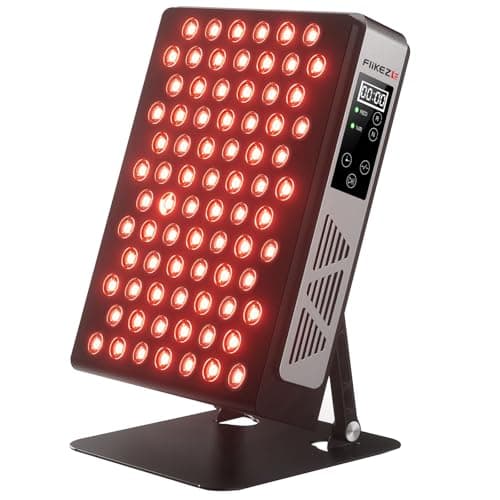
FliKEZE red light therapy review: 78 quad chip LEDs, 630 to 850nm, a 134 mW/cm² claim at 6 inches, five intensity levels and how it compares at £249.99.
How to use a red light therapy panel properly: the right distance and session time, how often, before or after training, eye safety and how to work out your dose.
The real benefits of compression boots, judged against the research: what helps (soreness, feeling recovered), what doesn't hold up, and who should avoid them.
Best Exercise is a participant in the Amazon EU Associates Programme, an affiliate advertising programme designed to provide a means for sites to earn advertising fees by advertising and linking to Amazon.co.uk. As an Amazon Associate we earn from qualifying purchases. This comes at no extra cost to you and never influences our independent reviews or rankings.