Home Gym
Fitbit vs Apple Watch: Which Should You Buy in 2026?
Fitbit vs Apple Watch for UK buyers: battery, price, Google Health Premium, GPS, accuracy research and apps compared, with a straight answer on which to buy.

By Jacob Chambers, Founder & Lead Reviewer · Updated 7 October 2026
Most Olympic trap bars (hex bars) from established brands weigh between 21kg and 27kg empty, with 25kg the most common listed figure. That's the honest headline, but it hides a lot of spread: there's no weight standard for trap bars the way there is for a 20kg Olympic barbell, and some budget bars on Amazon UK weigh under 15kg. One 2" bar we checked is listed at just 14.5lb, about 6.6kg. So the only safe answer for your own training is the published weight of the exact bar you own.
Below are the real published weights for trap bars sold in the UK, why they vary so much, and how to count the weight when you log a trap bar deadlift.
We pulled these figures from each manufacturer's Amazon UK listing or the brand's own spec page. We haven't weighed these bars ourselves, so treat them as the maker's stated weight. Where the listing gives pounds, we've converted to kilos.
| Trap bar | Type | Plate size | Listed bar weight | Listed sleeve length |
|---|---|---|---|---|
| JX Fitness Olympic Trap Bar | Closed | 2" Olympic | 14.5lb (about 6.6kg) | 10" (about 25cm) |
| SPORTNOW Olympic Trap Bar | Closed, with side feet | 2" Olympic | 12.5kg | Not stated |
| Mirafit Standard 1" Shrug Bar | Closed | 1" standard | 16kg | 29cm |
| RIP X Olympic Open Trap Bar | Open, rotating sleeves | 2" Olympic | About 21kg | 24.5cm |
| Bells of Steel Open Trap Bar | Open, rotating sleeves | 2" Olympic | 47lb (about 21.3kg) | Not stated |
| Mirafit Olympic 2" Trap Bar | Closed | 2" Olympic | 25kg | 29.5cm |
| Strongway Olympic Trap Hex Bar | Closed | 2" Olympic | About 25kg | Not stated |
| METIS Olympic Hex Bar | Closed, dual height handles | 2" Olympic | 27kg | Not stated |
| Rogue TB-2 Trap Bar | Closed, two sets of handles | 2" Olympic | 60lb (about 27.2kg) | 16" (about 40.6cm) |
Two things jump out. First, the established brands cluster tightly: every bar from Mirafit, Strongway, METIS, Bells of Steel, RIP X and Rogue sits between roughly 21kg and 27kg. Second, the cheapest 2" bars are a different animal entirely, at less than half that weight, with short sleeves and lower stated capacities to match (JX Fitness lists a 400lb, roughly 181kg, limit).
The 20kg assumption
Plenty of people log trap bar deadlifts as if the empty bar weighs 20kg, the same as a men's Olympic barbell. Not one bar in our table is listed at 20kg. On a 25kg Mirafit you'd under-record every session by 5kg; on a 12.5kg SPORTNOW you'd be flattering yourself by 7.5kg.
If you're choosing a bar rather than weighing one, our best trap bar guide goes through the strengths and weak spots of the main UK options.
A straight Olympic barbell is a solid shaft with two sleeves. A trap bar is a welded hexagon (or a hexagon with one side missing) plus handles plus sleeves, and every one of those parts can be built light or heavy. The weight differences mostly come down to four things.
Sleeve length. Longer sleeves mean more steel, and they're also the feature that decides how much you can actually load. Rogue's 16" loadable sleeves on a 60lb frame are the extreme here; the JX Fitness bar's 10" sleeves help explain why it weighs so little. If you use thick bumper plates, sleeve length matters far more than the bar's weight, because short sleeves run out of room long before you reach the stated capacity.
Tube thickness and steel quality. Budget frames use thinner tubing. That makes them lighter and cheaper to ship, but it's also why their capacity ratings tend to be lower. The 25kg to 27kg bars are heavier partly because they're built to take 270kg to 300kg plus.
Open vs closed frames. You might expect an open bar to be lighter because a side of the hexagon is missing. In practice the open frames need extra bracing to stay rigid, and the two in our table carry extras like built-in deadlift jacks and rotating sleeves. Both still land at about 21kg, a few kilos lighter than the heavy closed bars but nowhere near the budget ones.
High and low handles. Dual height bars add a second set of grips, which is more steel welded on. The METIS (27kg) and Rogue TB-2 (60lb) both have two handle heights and both sit at the top of the range. That raised grip is genuinely useful, since it shortens the range of motion for taller lifters or anyone working around a stiff lower back, but you pay for it in weight.
Your lift is the bar plus everything on it. That sounds obvious, yet it's the most common source of muddled numbers in home gyms, partly because the bar weight isn't stamped on most hex bars.
Here's how that looks in practice for a 100kg trap bar deadlift on three different bars:
| Bar | Bar weight | Plates needed | Per side |
|---|---|---|---|
| Mirafit Olympic | 25kg | 75kg | 37.5kg |
| RIP X Open | About 21kg | About 79kg | About 39.5kg |
| SPORTNOW Olympic | 12.5kg | 87.5kg | 43.75kg |
That last row is awkward on most plate sets, which is one practical argument for a heavier bar with a round number. A 25kg bar gives you 25kg, 50kg, 75kg and 100kg totals with sensible plate pairs, and if you're short on plates, a decent set of weight plates in 1.25kg and 2.5kg jumps keeps your progressions small.
Load the same plates on a 25kg trap bar and a 20kg Olympic barbell and the trap bar lift is 5kg heavier before you've changed anything else. So if you're comparing numbers between the two, compare totals, never plates.
Then there's the lift itself. Most people can pull more with a trap bar because you stand inside the frame and the load sits in line with your hips rather than out in front of your shins. In a study comparing hexagonal and conventional barbell deadlifts, eleven men who were practised at both lifts had an average hex bar one-rep max of 194kg against 183kg for the conventional deadlift, roughly 6% heavier. At 90% of their max they also moved the hex bar about 15% faster and produced 28% more power through the same bar displacement. It's a small study of trained young men, so don't expect your own gap to match it exactly, but the direction is consistent with what lifters report.
The practical upshot for programming:
Assuming every bar is 20kg. Covered above, but it's the big one. Over a training block it can make your progress look better or worse than it really is.
Comparing your number to someone else's on a different bar. A friend's 120kg on a 27kg METIS and your 120kg on a 16kg standard shrug bar aren't the same plate loading, but they are the same total. Make sure you're both counting the bar.
Ignoring 1" vs 2" sleeves. The Mirafit Standard shrug bar takes 1" plates, and Olympic 2" plates won't fit it. Check sleeve size before you buy a bar to match your plates, or you'll end up buying adaptors.
Buying a featherweight bar to lift heavy. The very light bars carry lower capacities and shorter sleeves. If you already pull 150kg plus, a bar under 15kg is the wrong tool even though its empty weight looks beginner-friendly.
The empty bar is a perfectly good first session. On a 21kg to 25kg bar, do 3 sets of 8 with just the bar to learn the setup: feet in the middle of the frame, handles centred in your grip, chest up, push the floor away. Add 5kg to 10kg a session while the reps stay clean, and slow down to 2.5kg jumps once the bar starts moving slowly.
For general strength, 3 to 5 sets of 3 to 6 reps works well once a week or twice a week. For muscle and conditioning, 3 sets of 8 to 12 at a lighter load does the job. Loaded carries are a good finisher with the same bar; our farmer's carry guide covers how to set that up.
If you're stuck on a very light budget bar, you'll outgrow the empty-bar stage quickly. That's no problem, since you'll just be adding plates sooner. Just make sure you're logging the true total so the numbers still mean something when you upgrade.
Most Olympic trap bars from established brands weigh between 21kg and 27kg. The Mirafit Olympic and Strongway Olympic bars are listed at 25kg, the METIS hex bar at 27kg and the Bells of Steel and RIP X open bars at about 21kg. Budget bars can be much lighter: the SPORTNOW Olympic bar is listed at 12.5kg and the JX Fitness bar at 14.5lb (about 6.6kg). There's no standard weight, so check the listing for your exact bar.
Not necessarily. A men's Olympic barbell is built to a 20kg standard, but trap bars have no equivalent rule. Of the bars we checked, none was listed at exactly 20kg; they ranged from about 6.6kg to 27kg. Assuming 20kg can leave your logged numbers several kilos out in either direction.
Yes. The bar is part of the load you lift, so your trap bar deadlift is the bar weight plus every plate and collar on it. A 25kg bar with a 20kg plate on each side is a 65kg lift, not 40kg. Spring collars are light enough to ignore, but competition-style lock jaw or steel collars can add 0.5kg to 2.5kg a pair.
There's simply more steel in it. A hex frame needs a welded hexagon around you, two sets of handles on many models, plus two loading sleeves, and all of that adds up. Longer sleeves, thicker tubing and features like built-in deadlift jacks or rotating sleeves push premium bars towards 25kg to 27kg.
Most people can. In a 2017 study of eleven trained men, the group's hex bar one-rep max averaged 194kg against 183kg for the conventional deadlift, about 6% heavier, and they moved 90% loads faster with the hex bar. Your own gap depends on your build and how much you've practised each lift.
Fitbit vs Apple Watch for UK buyers: battery, price, Google Health Premium, GPS, accuracy research and apps compared, with a straight answer on which to buy.
Every common leg machine at the gym named and explained: what each one trains, a beginner leg machine workout, and which leg machines make sense for a home gym.
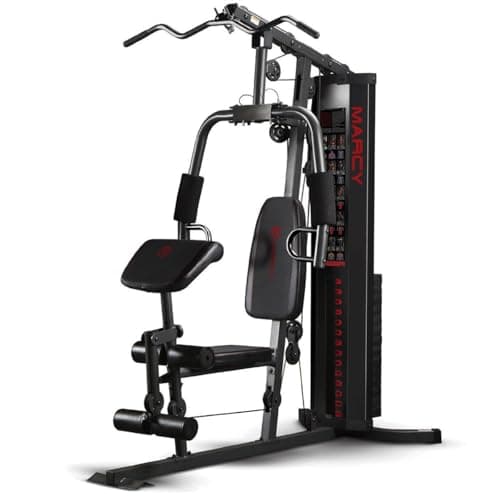
Our Marcy HG3000 multi gym review: the 68kg stack versus the 90kg claim, pec dec, preacher pad, leg extension, 210cm height, £599 price and who it suits.
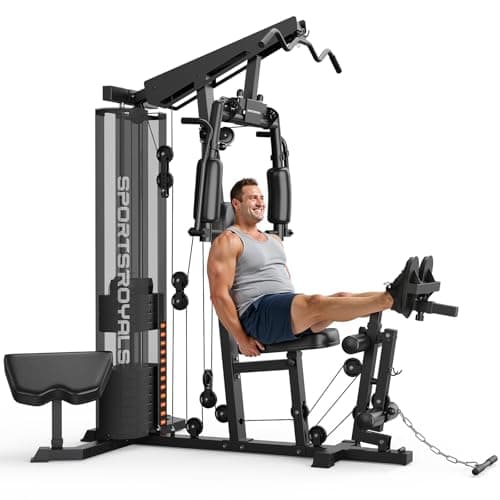
SPORTSROYALS home gym review: the 68kg stack, leg press and chest fly stations, 191 x 131cm footprint, 142kg build, £759.99 price and who it suits in the UK.
Best Exercise is a participant in the Amazon EU Associates Programme, an affiliate advertising programme designed to provide a means for sites to earn advertising fees by advertising and linking to Amazon.co.uk. As an Amazon Associate we earn from qualifying purchases. This comes at no extra cost to you and never influences our independent reviews or rankings.