Home Gym
Belt Squat Machine: Types, UK Prices and What to Look For
A buyer's guide to the belt squat machine: lever arm, platform and rack attachment types, UK price bands, footprint, loading pins and who actually needs one at home.

By Jack Atkins, Home Gym Equipment Specialist · Updated 24 November 2026
Spotter arms are short steel safety arms that pin into the front uprights of a squat stand, half rack or power cage and stick out towards you, so a failed squat or bench press lands on them instead of on you. You need them if you lift a barbell alone. They're the cheapest form of rack safety and the most flexible, but they're also the shortest, which means your setup has to be right for them to do their job.
How we put this together
This guide is research-based. We worked from manufacturer listings, UK retailer pages, our existing rack coverage and the complaints that come up again and again in lifting forums. We haven't physically tested the spotter arms mentioned here, and prices are rough guides from 24 November 2026.
Racks catch a dropped bar in one of three ways, and the type you can use depends mostly on the frame you own.
Spotter arms mount on the front uprights only. They're typically somewhere around 40cm to 75cm long, and because they don't need a rear upright they're the only option on squat stands and most half racks. On a full cage they let you lift outside the frame, which some people prefer for benching.
Pin or pipe safeties are long steel bars that run through both the front and back uprights inside a cage. They're very strong and cheap, but they clang loudly and chew up the knurling on your bar over time.
Strap safeties are thick nylon straps slung between front and rear uprights. They're quieter, they don't damage the bar, and they catch anywhere along their length, so a missed rep that drifts forwards or backwards still lands safely. The catch is that they need a full four-post cage of matching depth, and they cost more.
So, spotter arms vs safety straps? Inside a cage, straps win on noise and coverage. Spotter arms win on versatility, because they fit frames that straps can't, and that's the only choice you get on a stand. If you're still picking a frame, our best power cage UK guide shows which cages ship with which safeties.
The barbell bench press is the lift that worries people most, and with good reason. A forensic paper on weightlifting deaths described two cases in central New York where a barbell compressed the lifter's neck, and noted at least 11 similar deaths reported to the US Consumer Product Safety Commission between 1999 and 2002 (Jumbelic, Journal of Forensic Sciences, 2007).
Non-fatal injuries follow the same pattern. A study of almost a million estimated weight training injuries seen in US emergency departments from 1990 to 2007 found that free weights caused 90.4% of them, and that weights dropping on the person was the most common way people got hurt (Kerr, Collins and Comstock, American Journal of Sports Medicine, 2010). Spotter arms exist to break that link between a missed rep and a weight landing on your body.
In a home gym you usually can't dump a squat backwards the way you might in a big commercial gym with space behind you, so properly set safeties are often your only exit.
Spotter arms are sold against a rack standard, and none of the common standards are interchangeable. Write these numbers down before browsing.
Measure the outside of the upright with a tape or calipers. UK home racks mostly use 50x50mm (budget and compact frames), 60x60mm (a lot of mid-range UK brands) or 75x75mm (heavier, commercial-style racks). A 75mm arm won't slide onto a 50mm tube, and a 50mm arm on a 60mm upright simply won't go on. Some racks use rectangular 50x75mm tubes; check which face the arm mounts to, because listings don't always say.
The pin on the arm has to match the hole in your upright. Heavier racks tend to use 25mm (1 inch) holes, lighter ones often use around 16mm (5/8 inch), and plenty of budget racks sit somewhere in between. A pin much thinner than the hole lets the arm rattle and droop, which is tolerable on a band peg and not on the thing catching 100kg.
Standard spacing is around 50mm (2 inch) between hole centres. Westside spacing tightens that to around 25mm (1 inch) through the bench zone. That matters a lot for spotter arms, because the difference between "just below my chest" and "too high to touch my chest" is often less than 5cm. If your spotters use two pins, their pin gap has to match your rack's spacing too, or they won't seat.
For more on matching kit to your frame, our rack attachments guide covers the same measurements for dip bars, landmines and the rest.
The rule is the same for both lifts: set the arms just below the lowest point the bar travels on a good rep, then test with an empty bar.
Squat. Squat to your full depth with an empty bar on your back. The arms should sit a couple of centimetres below where the bar ends up. If you clip them on every rep, drop them a hole. If you miss a rep, sit down into the bottom position, keep your chest up and let the bar settle onto the arms before you slide out from under it. Lifters who squat below parallel often need the arms lower than they expect, and hip-dominant lifters who lean forwards need to check the bar doesn't overshoot the tips.
Bench. Lie on the bench in your normal arched setup and lower the empty bar to your chest. The arms should catch the bar just above that point, with enough room that you can flatten your back, drop the arch and slide the bar off your chest onto them. This is where Westside spacing earns its keep, because one 50mm hole either way can leave you with arms that are useless or in the way.
Check the bench position each time you move it, too. Shifting the bench forwards or back changes where the bar comes down relative to the arms.
Forum threads about spotter arms keep coming back to two complaints, and both are fair.
Short reach. Arms on cheaper squat stands are often 50cm or shorter. Miss a squat forwards (the bar drifting over your toes as your hips shoot up) and it can land on the very end of the arm or past it altogether. Longer arms help, and so does practising a controlled bail: sit straight down rather than folding.
The bar rolling off. Flat arms set too low let the bar drop further, hit harder and bounce. Some cheaper designs have no lip at the end at all. Look for an upturned end or raised stop, set the arms as high as your range allows, and if yours are flat and short, treat them as a backup rather than something to fail onto every session.
Two smaller points: the cheapest arms use thin plate steel that can flex under a heavy drop, and foam or UHMW lining (the plastic strips some brands fit) is worth having to protect your bar.
Spotter arm prices in the UK split roughly into three tiers at the time of writing:
Most rack makers sell arms that are designed for their own frame first, so if your rack's brand offers them, start there. You'll avoid the fit lottery entirely. If you're buying a cage and want the arms included, the Body-Solid PPR1000 power rack review is worth reading, and the rest of our home gym guides cover benches, bars and flooring.
If you squat or bench with a barbell on your own and train anywhere near failure, yes. Spotter arms catch the bar when a rep stalls, so you can lower it onto steel instead of getting pinned. If you always lift with a partner or keep every set well short of failure you can get away without them, but most home lifters train alone, and that's exactly who they're for.
Spotter arms are short steel arms that pin into the front uprights and stick out forwards, so they work on squat stands, half racks and the outside of a cage. Safety straps hang between the front and rear uprights inside a full power cage. Straps are quieter and kinder to your bar, and they catch along their whole length, but they only work inside a four-post cage of the right depth.
No. They have to match your upright tube size (usually 50x50mm, 60x60mm or 75x75mm), the hole diameter (often 25mm or 1 inch on heavier racks, smaller on budget ones) and, for two-pin designs, the hole spacing. Measure all three on your own rack before you order.
Set them a couple of centimetres below where the bar sits at the bottom of your deepest squat. Test with an empty bar: squat to full depth and the bar should just clear the arms. Too high and you'll clip them on every rep; too low and a failed rep drops further, harder and with more chance of rolling.
It can, if the arms are short, flat and set too low, or if you miss forwards past their tips. Look for arms with a raised lip or upturned end, keep the bar over the arms as you bail, and set them high enough that the bar only drops a short distance.
A buyer's guide to the belt squat machine: lever arm, platform and rack attachment types, UK price bands, footprint, loading pins and who actually needs one at home.
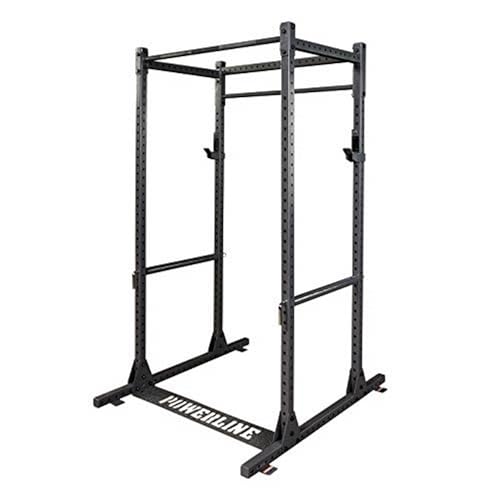
Body-Solid PPR1000 review: 2in 14-gauge steel, 700lb capacity, 211cm height, pipe-and-pin safeties, the add-on system and how it compares at around £419.
What height bench for hip thrusts, how dedicated hip thrust benches compare with a flat bench, plyo box or sofa, the features worth paying for and UK prices.
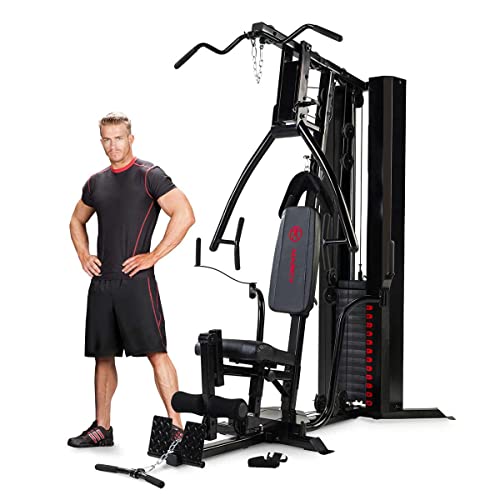
Our Marcy HG5000 review: the 90kg stack versus the 106kg claim, independent chest press and pec dec, 211cm height, 135kg user limit and £699 price.
Best Exercise is a participant in the Amazon EU Associates Programme, an affiliate advertising programme designed to provide a means for sites to earn advertising fees by advertising and linking to Amazon.co.uk. As an Amazon Associate we earn from qualifying purchases. This comes at no extra cost to you and never influences our independent reviews or rankings.