Home Gym
Belt Squat Machine: Types, UK Prices and What to Look For
A buyer's guide to the belt squat machine: lever arm, platform and rack attachment types, UK price bands, footprint, loading pins and who actually needs one at home.

By Jack Atkins, Home Gym Equipment Specialist · Updated 24 November 2026
The best hip thrust bench height for most people is around 40cm (roughly 38cm to 45cm), because that puts the edge of the bench just under your shoulder blades while your hips can sink close to the floor at the bottom of each rep. You don't need a dedicated hip thrust bench to do the exercise; a stable flat bench, a plyo box or even a firm sofa will work for lighter loads. A purpose-built glute bench earns its place when you hip thrust heavy and often, because it stays put, pads your back properly and makes loading a barbell much less of a faff.
This page is about the kit. For technique, cues and programming, our hip thrust guide covers the exercise itself.
Bench height matters more than any other feature, and it comes down to geometry rather than preference.
At the top of a hip thrust you want your torso and thighs roughly in a straight line, your shins close to vertical and the bench contact point sitting under the bottom of your shoulder blades (the scapulae). If the bench is too high, the edge digs into your neck or upper traps and you can't get much range before your hips hit the bench height. Too low, and your hips touch the floor before your glutes have stretched, so every rep becomes a shortened half-rep and the bench edge tends to slide up to your mid-back.
Around 40cm is the common recommendation because it works for an average-height adult. Treat it as a starting point:
A quick check: sit on the floor with your back against the bench. If the edge lands just below your shoulder blades, you're in the right zone. If it's at your neck, it's too tall; if it's at your waist, too short. A stack of rubber gym mats or a couple of bumper plates under your feet and bum can raise you a few centimetres when a bench is slightly high, although adding height under a bench that's too low is the safer fix.
You've got four realistic options at home, and the right one depends mostly on how much weight you're moving.
Dedicated hip thrust bench. Usually a short, low padded box or a steel frame around 40cm high, sometimes with a wider pad, band pegs and a foot plate. It's the most comfortable and the most stable choice, and it's built for one job. That's also the downside: it takes up floor space for a single exercise unless you buy a combo unit.
Flat or adjustable weight bench. The best value if you already own one or want a bench for pressing too. Most sit at roughly 42cm to 45cm, which is fine for many people. The problem is that benches are designed to resist downward force, not the backward shove a hip thrust creates, so a light bench can scoot away mid-set. Turn it side-on and brace the far side against a wall or a loaded rack. If you're buying a bench anyway, our best weight bench UK guide lists stable options, and a folding weight bench can do the job if space is tight, though lighter frames are more prone to tipping.
Plyo box. A 3-in-1 wooden or steel box set on its lowest side is often close to 40cm to 50cm and very stable, because it's a solid box rather than four legs. Soft foam boxes compress a little under heavy loads but feel kinder on your back. We cover the options in our best plyo box UK guide.
Sofa or bed edge. Fine for bodyweight work, banded reps or the single-leg hip thrust. Once you add a barbell, the cushions squash, the height drops and the frame can shift, so we wouldn't load one heavily.
Not every add-on matters. These are the ones that change how the bench feels in use.
Firm, wide back pad. You want dense foam that doesn't fold over the edge as you thrust, and a pad at least 30cm or so deep so your back has room to pivot. A rounded or bevelled edge is more comfortable than a sharp box corner.
Stability and anchoring. This is the big one. Look for a wide footprint, rubber feet or a non-slip base, and ideally a way to stand on or anchor the bench. Some dedicated benches put a foot plate on the floor in front, so your own bodyweight pins the bench down as you push.
Band pegs. Hooks or posts low on each side let you loop a resistance band over your hips for banded hip thrusts, either on their own or on top of a barbell. They're cheap to include and genuinely useful at home where heavy plates are limited.
Foot plate. A raised or angled plate gives a consistent foot position and stops trainers slipping on smooth floors. It's a nice extra rather than a must.
Bar holders or hooks. On some higher-end benches, these let you rest the bar at hip height so you don't have to roll it over your legs each set. Handy above around 80kg; overkill before then.
Storage and weight. A 60cm bench tucks away easily, while longer models give you room to sit on the bench for other movements. Check the stated max load too, because cheaper home benches aren't always rated for commercial use.
Whatever bench you use, get a thick bar pad. A dedicated thick-foam hip thrust pad makes heavy sets far more bearable on your hip bones, and it costs a fraction of the bench.
How we research equipment
We didn't physically test hip thrust benches for this guide. The heights, features and prices come from manufacturer and UK retailer listings we checked on 24 November 2026, plus published research on the hip thrust itself. Prices move, so treat the figures below as a rough guide.
When we looked at UK retailers, prices fell into three rough bands:
Buy a dedicated hip thrust bench if hip thrusts are a weekly staple, you're loading a barbell past roughly bodyweight, and your current bench slides or sits at an awkward height. It also helps if you train in a garage or spare room where setting up a bench against a wall every session is annoying.
Skip it if you already own a stable flat bench at around 40cm to 45cm, or if most of your glute work is glute bridges, bands and single-leg variations. The hip thrust does light up the glutes: a study of trained women found the barbell hip thrust produced higher gluteus maximus EMG activity than the back squat at 10RM loads (Contreras et al., 2015). But higher activation didn't translate into more growth in a later 9-week trial, where hip thrust and back squat training produced similar glute hypertrophy and the squat group grew more quad and adductor muscle (Plotkin et al., 2023). So the bench is a comfort and convenience purchase, not a requirement for building glutes.
If you train at a gym with a Smith machine, the Smith machine hip thrust is another way to get a fixed bar path, and our hip thrust alternatives cover options that need no bench at all.
Somewhere around 38cm to 45cm suits most adults, and 40cm is the figure you'll see most often. The right height lets the bench edge sit just below your shoulder blades while your hips almost touch the floor at the bottom. Shorter lifters usually prefer the lower end and taller lifters the upper end.
Yes, as long as it's stable and roughly the right height. Most flat benches stand around 42cm to 45cm, which works for many people. Push it lengthways against a wall or a heavy rack so it can't slide back, because a sliding bench is the main thing that goes wrong.
For bodyweight or banded hip thrusts, a firm sofa is fine. It gets sketchy once you add a heavy bar, because cushions compress, the frame can shift and the height is often too low. If you're loading past light dumbbells, use a proper bench or box.
Basic dedicated hip thrust benches from UK retailers run roughly £45 to £150, with sale prices pulling some models under £50. Combo benches that add a GHD or other functions sit around £250 to £300. Plate-loaded hip thrust machines start well above £1,000.
No. A training study comparing hip thrusts with back squats found similar glute growth in both groups, so the hip thrust isn't the only route. A dedicated bench just makes hip thrusting more comfortable and quicker to set up, which helps if it's a staple of your training.
A buyer's guide to the belt squat machine: lever arm, platform and rack attachment types, UK price bands, footprint, loading pins and who actually needs one at home.
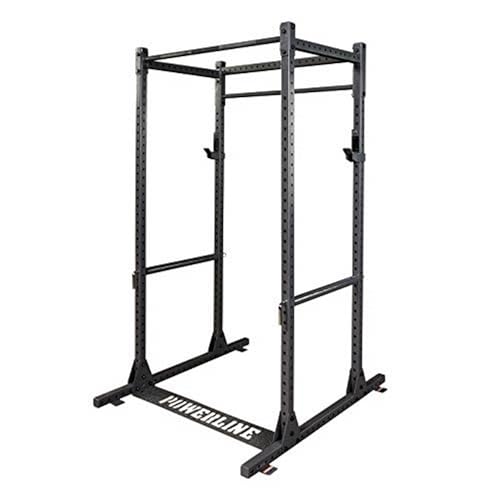
Body-Solid PPR1000 review: 2in 14-gauge steel, 700lb capacity, 211cm height, pipe-and-pin safeties, the add-on system and how it compares at around £419.
Spotter arms explained: how they differ from pin and strap safeties, how to check tube size, hole diameter and spacing, the right height for squat and bench, and UK prices.
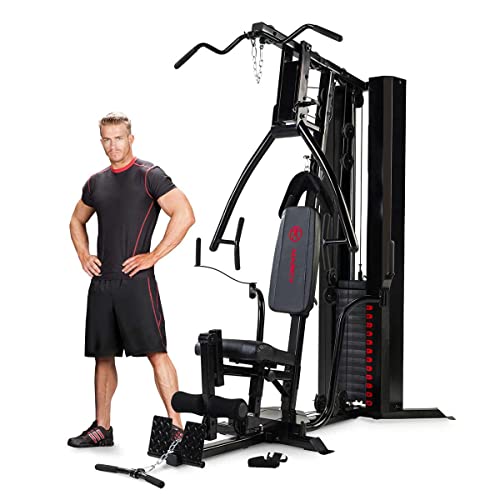
Our Marcy HG5000 review: the 90kg stack versus the 106kg claim, independent chest press and pec dec, 211cm height, 135kg user limit and £699 price.
Best Exercise is a participant in the Amazon EU Associates Programme, an affiliate advertising programme designed to provide a means for sites to earn advertising fees by advertising and linking to Amazon.co.uk. As an Amazon Associate we earn from qualifying purchases. This comes at no extra cost to you and never influences our independent reviews or rankings.