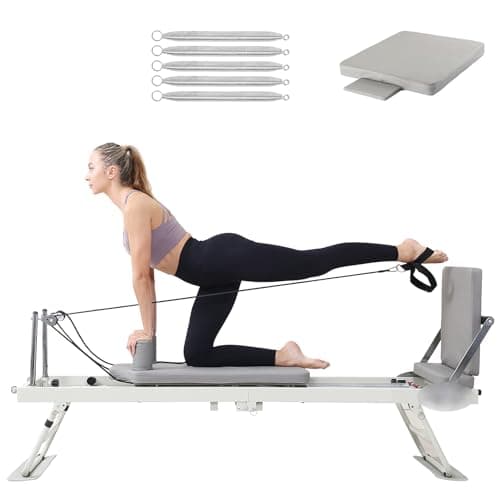
Home Gym
Best Reformer Pilates Machine UK 2026: 6 Foldable Home Picks
The best reformer pilates machines for home use in the UK in 2026, from a £259 foldable to a £788 wooden frame. Honest picks, real specs and how to choose a pilates machine.

By Jack Atkins, Home Gym Equipment Specialist · Updated 2 August 2026
We may earn a commission from qualifying purchases made through links on this page, at no extra cost to you. This never affects our ratings.
GYM MASTER
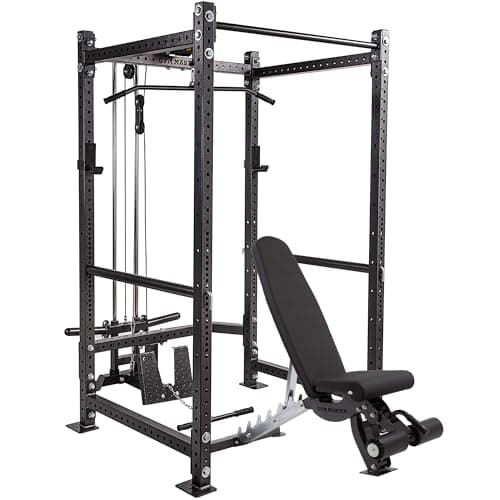
Buying a power rack, a cable system and an adjustable bench separately in the UK is an expensive way to fill a garage. GYM MASTER's answer is the GM3 package: an 11-gauge bolt-down rack with a dual pulley tower and an FID bench, sold as one £799.99 line item on Amazon UK. On paper that undercuts the equivalent kit from the specialist British strength brands by a few hundred pounds.
The honest headline is that it mostly delivers, with one condition attached that will disqualify a good number of buyers before they read any further. The GM3 has to be bolted to the floor. Not "should be", not "recommended for heavy use". GYM MASTER specifies it, each foot carries three 11mm holes for the anchors, and the rack is not designed to be a free-standing unit you can shuffle around the room.
How we review
This review is based on GYM MASTER's published specifications for the GM3 package, the repeated themes in verified owner feedback, and comparison against the rest of the UK rack market at this price. We have not run a multi-year hands-on endurance test of this exact unit, so we've reported consistent findings and stated the specification limits plainly rather than guessing at long-term durability.
Garage gym owners on a concrete slab, principally. If you have a solid floor you can drill into, a ceiling above 220cm, and roughly 1.8 by 1.4 metres of floor to give it, this is one of the better value strength setups on Amazon UK right now. It suits the lifter who wants to squat, bench, press and pull in one station without adding a separate lat tower later.
It's the wrong buy if you're upstairs on floorboards, if you rent and can't drill, or if you want something you can fold flat between sessions. In those cases a wall-mounted folding rack or a squat stand makes far more sense; our best squat rack UK guide covers the alternatives.
The frame is where the money went, and the gauge tells you most of what you need. At 3.0mm 11-gauge steel with a 400kg rating, the GM3 sits in the same structural bracket as racks costing a few hundred more, and comfortably above the 2mm 14-gauge tubing you find on sub-£400 cages. The gunmetal powder coat is even and holds up to plates being knocked against it.
The details are better than expected at this price. The J-cups are laser cut with UHMW plastic liners, which means your barbell knurling survives contact with them rather than being slowly ground flat, and that's a genuine mark of a considered design rather than a spec-sheet number. Safety bars use a pin-and-pipe design, which is the right choice for a home rack: they're quick to reposition and they don't rattle in the uprights the way cheap flip-down arms do.
Adjustable uprights and an integrated pull-up bar round it off. The foot plate is 30cm high and 35cm wide, giving you a usable step for high pull-up bar work.
| Price | £799.99 at the time of writing |
|---|---|
| Frame | 3.0mm 11-gauge steel, gunmetal finish |
| Rack load limit | 400 kg |
| Cable system load | 180 kg, 2in Olympic weight poles |
| Bench | FID, flat / incline / decline, 350kg rating |
| Rack height | 206 cm |
| Footprint | Up to 178cm deep x 133cm wide |
| Width between uprights | 110 cm |
| Plate loading space | 24 cm per side |
| Included attachments | Pull-up bar, 2 safety bars, 2 J-cups, straight bar handle, wide lat bar |
| Bolt down required | Yes, 3 x 11mm holes per foot |
The dual pulley tower is the reason to choose the GM3 over a plain cage, and it's also the biggest compromise. It's plate loaded, taking standard 2in Olympic plates on weight poles, rather than using a selectorised stack with a pin.
In practice that means lat pulldowns, cable rows, triceps pushdowns, face pulls and cable flies all work properly, with a 180kg ceiling that nobody reading this will trouble. What it also means is that moving from a heavy pulldown to a light face pull involves sliding plates off a pole rather than moving a pin, which slows down supersets and drop sets. If circuit-style training is your thing, factor that in.
The bundled attachments cover the essentials: a straight bar handle and a wide lat pulldown bar. You'll probably want to add a rope and a single D-handle before long, and those are cheap.
Including an FID bench in the package is what tips the value calculation. It adjusts through flat, incline and decline, rates to 350kg, and measures 125.5cm long with a 69.5cm base width and a 46cm pad height when flat. That pad height is standard and works for most people's leg drive on a bench press.
Adjustable inclines matter more than people assume. A 2020 study measuring EMG activity at five bench angles found upper chest activation peaked at 30 degrees while the middle and lower portions were highest flat, so having both settings on the same bench genuinely changes what you can train. Our chest exercises guide sets out how to build a session around that.
Set aside a full afternoon and find a second pair of hands. The rack, the tower and the bench arrive as separate flat-packed elements, the uprights are heavy, and getting the cable tower squared up before final tightening is the fiddly part. Owners consistently report the instructions as adequate rather than good.
Then the bolting. You need a hammer drill, appropriate concrete anchors, and a floor you're allowed to drill. Do not skip it, and do not run the rack unbolted "just for a while": the safety bar system is designed around a fixed frame. If your floor is timber, this rack is not for you.
Priced against the UK market, £799.99 for a bolt-down 11-gauge rack plus a 180kg cable tower plus an FID bench is strong. Assembling the same three items from a specialist British brand typically lands past £1,100, and often past £1,300 once you add the lat attachment. What you give up is the weight stack, the commercial rating and the longer warranties those brands offer.
Two sessions a week on this covers the muscle-strengthening side of the NHS guidance for adults, which asks for work across all the major muscle groups on at least two days a week alongside cardio, and the WHO makes the same case for strength training in its physical activity fact sheet. A rack in the garage removes most of the excuses.
If the cable side is what you're really after and you'd rather not drill, our best cable machine UK guide covers freestanding options, and best power cage UK compares the cages on their own.
Yes, and this is the single most important thing to know before ordering. GYM MASTER specifies that the GM3 must be bolted to the floor, and each foot has three 11mm holes for the job. That rules it out for anyone on a suspended timber floor upstairs, and it means renters need to think hard. On a concrete garage slab it's a straightforward afternoon with a hammer drill and appropriate anchors.
The £799.99 package covers the GM3 power rack itself, the dual cable pulley system and a GM3 FID bench. Inside the rack you get a pull-up bar, two pin-and-pipe safety bars, two laser-cut J-cups with UHMW liners, a straight bar handle and a wide lat pulldown bar. Weight plates and a barbell are not included, which is worth budgeting another £250 or so for.
The rack itself is rated to 400kg, the cable pulley system to 180kg, and the FID bench to 350kg. Those are sensible numbers for a home setup and well beyond what most people will ever load. GYM MASTER explicitly states it is not suitable for commercial use, so a gym or a PT studio should look at a heavier-gauge frame.
The rack stands 206cm tall, so you want at least 220cm of ceiling to use the pull-up bar without scraping your head, and more if you're tall. Total footprint runs to roughly 178cm deep by 133cm wide including the cable tower, with 110cm of clear width between the uprights. That's a garage or a dedicated room rather than a corner of a bedroom.
For £799.99 you get a bolt-down 11-gauge rack, a 180kg cable system and an adjustable bench in one delivery. Buying those three separately from a UK strength brand would typically run past £1,100. The compromises are the plate-loaded cable system rather than a weight stack, the bolt-down requirement, and a warranty picture that is thinner than the premium brands.
Plates. The GM3's pulley system takes standard 2in Olympic plates on weight poles rather than using a selectorised stack, so changing weight between lat pulldowns and cable rows means sliding plates on and off. It keeps the price down considerably and the pulley ratio is honest, but it is slower than a pin-loaded stack if you superset.
The best reformer pilates machines for home use in the UK in 2026, from a £259 foldable to a £788 wooden frame. Honest picks, real specs and how to choose a pilates machine.

The best adult weighted blankets in the UK for 2026, with honest picks for hot sleepers, heavier users and daytime use, plus how to choose the right weight and what the research shows.
Are vibration plates worth it? Yes for balance, bone health support and low-impact warm-ups; no for weight loss or replacing strength training. The evidence.
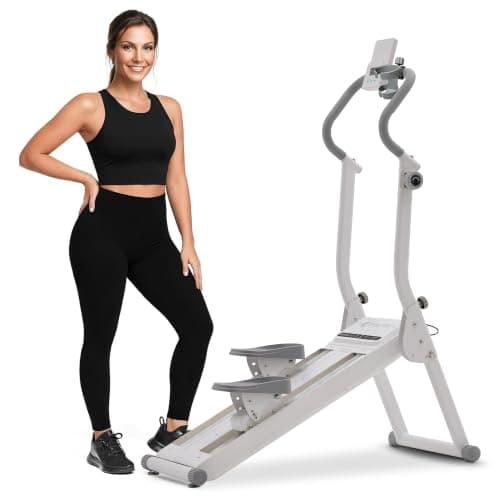
Our ExacMe magnetic stair climber review covers its 16 magnetic resistance levels, 48cm stride, 158kg user limit, app and noise claims, and who should buy it.
Best Exercise is a participant in the Amazon EU Associates Programme, an affiliate advertising programme designed to provide a means for sites to earn advertising fees by advertising and linking to Amazon.co.uk. As an Amazon Associate we earn from qualifying purchases. This comes at no extra cost to you and never influences our independent reviews or rankings.