Home Gym
Best Adjustable Dumbbells UK: 6 Top Picks for 2026
The best adjustable dumbbells in the UK for 2026, from quick-dial sets to heavy 40kg and 50kg options. Budget to premium picks researched and ranked.

By Jack Atkins, Home Gym Equipment Specialist · Updated 25 October 2026
We may earn a commission from qualifying purchases made through links on this page, at no extra cost to you. This never affects our ratings.
GYM MASTER
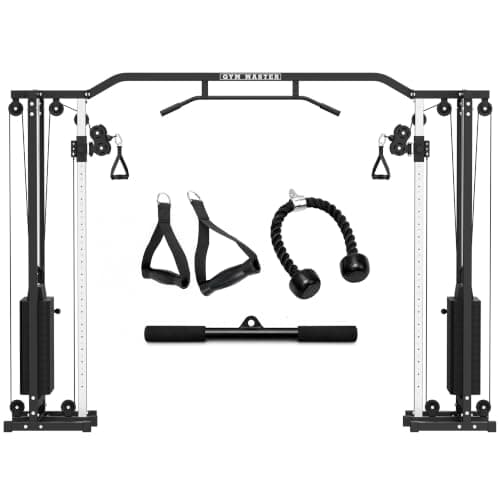
GYM MASTER sells two cable crossovers on Amazon UK that look almost identical in photos, and the one reviewed here costs about £100 more. That extra money buys one thing: pulleys that slide. Instead of a fixed high and fixed low pulley on each tower, this version gives you 20 pulley heights per side, from floor to overhead. My view is that the upgrade is worth paying for if you want chest-height and shoulder-height cable work, and not worth it if you mostly do pulldowns, pushdowns and low rows, because the cheaper model already covers those and adds a pull up bar.
Everything else is broadly shared: two 90kg selectorised stacks for 180kg total, a 50 x 50mm 16-gauge steel frame, a 212.5cm height, a 120kg user limit and a home-use-only rating. The plates are concrete-filled rather than cast steel, which I'll come back to, and GYM MASTER doesn't publish a pulley ratio for this model, which is the biggest gap in the listing.
Check GYM MASTER Adjustable Pulley Cable Crossover price on AmazonHow we review
This review is research-based. We've worked from GYM MASTER's published Amazon listing and dimensions, compared it line by line with the fixed-pulley model we've already covered, and drawn on general owner-feedback patterns for this style of home cable machine. We haven't tested this unit in person, so we don't make claims about how it feels in use beyond what the specs and repeated owner reports support. Prices were correct on 25 October 2026 and change often.
This is the part most people searching for this machine actually need, because the two listings use nearly the same name. Our review of the fixed-pulley GYM MASTER cable crossover covers the cheaper one in depth. Here's how they line up on paper:
| Price (Oct 2026) | £479.99 adjustable vs £379.99 fixed |
|---|---|
| Pulley positions | 20 heights per tower vs fixed high and low only |
| Pulley ratio | Not stated vs 2:1 stated |
| Weight stacks | 2 x 90 kg concrete-filled on both |
| Pull up bar | Not listed vs integrated |
| Attachments | 3 (tricep rope, straight bar, straps) vs 5 (bars, stirrups, rope, chains) |
| Width | 289 cm vs 251 cm |
| Height | 212.5 cm vs 212 cm |
| Max user weight | 120 kg on both |
So who should pay the extra £100? Anyone whose training plan includes movements that want the cable at chest or shoulder height. Standing cable presses, woodchops from mid-height, Pallof presses, face pulls set exactly at eye level and mid-cable flyes for the middle of the chest all need a pulley in the middle of the tower. On the fixed model you can fudge some of these by kneeling or sitting, but it's a workaround, and the angle is never quite right. The cable fly is the clearest example: being able to run it high-to-low, mid and low-to-high from the same machine is the whole appeal of a crossover.
Who should save the £100? Lifters who already own a rack and mostly want lat pulldowns, triceps pushdowns, seated rows and curls. Those all run from the top or bottom pulley, which the cheaper machine has. You also keep a pull up bar and two extra attachments, and the frame is 38cm narrower, which matters more in a garage than people expect.
It suits a home lifter with a garage or a large spare room who wants one frame to handle most cable work, and who'll actually use the middle of the tower. Rehab and prehab work also fits well here, since resistance is easy to adjust in small jumps and the mid-height position covers a lot of rotator cuff and anti-rotation drills.
It's the wrong buy if your room is under about 3.2m wide once you allow space to step out with handles, if you're over 120kg, or if you want a pull up station in the same footprint. It also isn't the cheapest way in: our best cable machine UK guide covers wall-mounted and single-stack options that take far less room.
The listing describes the stacks as "concrete-filled plates". That's a steel or metal shell with a concrete core, and it's common on budget home machines. The weight is real, so there's nothing dishonest about the 90kg per side. The differences show up elsewhere.
Concrete is roughly a third the density of steel, so a 90kg concrete-filled stack is physically taller and thicker than a cast steel stack of the same weight. That's part of why this frame stands 212.5cm tall. Individual plate weights also tend to vary more, because the fill isn't as uniform as a machined steel plate, so two plates marked the same may differ by a small amount. You won't notice on a lat pulldown; you might on a very precise single-arm progression. And if a shell gets cracked or dented, the core can crumble and shed dust into the guide rods. Treat the stack with a bit of care and don't drop the pin from height.
For the use this machine is built for, which is accessory work for the chest, back, shoulders and arms, none of that is a dealbreaker. It's the main reason the machine costs £479.99 rather than several times that.
GYM MASTER lists the cheaper model as 2:1, meaning you feel roughly half the stack weight at the handle but get double the cable travel. On this adjustable model, the listing says nothing about ratio. Sliding-carriage designs are often 2:1 as well, but I can't confirm that here and I'm not going to guess.
Why it matters: on a 2:1 machine, a full 90kg stack feels like roughly 45kg at the handle before friction, which is plenty for flyes and rows but light for heavy seated rows or pulldowns from a strong lifter. On a 1:1 machine you'd feel close to the full stack, with shorter cable travel. If your plans depend on heavy pulling, ask the seller via Amazon's questions section before ordering.
The steel spec is identical to the fixed-pulley version: 50 x 50mm box section, 1.5mm wall (16 gauge), black powder coat. That's a home-grade frame, fine for regular training and explicitly not for commercial use. Owners of this style of GYM MASTER machine consistently report that assembly is a two-person, several-hour job, and that you should leave bolts finger-tight until the frame is square.
The adjustable carriages add moving parts. Pop-pin pulley carriages are easy to use, but they're also the bit that can rattle if a pin or bushing is loose, so check them after the first few sessions and again a month in.
Space is the real constraint. At 289cm wide, roughly 61cm deep and 212.5cm tall, this needs a wall almost three metres long with clearance either side, plus room in front to stand and work. Measure before ordering, and measure to the lowest obstruction above, not the ceiling's highest point.
| Type | Dual-tower cable crossover with adjustable pulleys |
|---|---|
| Weight stacks | 2 x 90 kg concrete-filled plates, 180 kg total |
| Pulley positions | 20 per tower, floor to overhead |
| Pulley ratio | Not stated by manufacturer |
| Attachments | Tricep rope, straight pull bar, power straps |
| Frame | 50 x 50 mm, 1.5 mm (16 gauge) steel, powder coated |
| Dimensions | 289 cm W x approx 61 cm D x 212.5 cm H |
| Max user weight | 120 kg |
| Use rating | Home use only |
A cable machine doesn't replace a barbell. What it does is let you add sets for muscles that free weights train awkwardly, like the rear delts, mid-back and the lower chest, with constant tension through the range. That extra volume has a real payoff: a 2019 trial in trained men found that higher weekly set volumes produced more muscle growth than lower volumes, even though strength gains were similar (Schoenfeld et al., Medicine and Science in Sports and Exercise). Cables are an easy, low-fatigue way to add those sets.
The NHS also recommends muscle-strengthening activity working all the major muscle groups on at least two days a week. A dual-stack crossover makes that easy to hit at home without queuing for the one cable station at your gym.
If you want to compare a rival, our RIP X cable crossover review covers another 180kg home crossover, listed at £379.99 when we checked.
See the GYM MASTER Adjustable Pulley Crossover on AmazonThe cheaper model (around £379.99) gives each tower a fixed high and a fixed low pulley, a stated 2:1 ratio, a pull up bar and five attachments. This one (around £479.99) lets you slide each pulley to any of 20 heights, which opens up mid-height presses, chops and chest-height flyes. The listing doesn't mention a pull up bar, only three attachments ship, and the frame is 289cm wide rather than 251cm.
GYM MASTER doesn't state one in the Amazon listing. The fixed-pulley model is clearly listed as 2:1, which roughly halves the weight you feel at the handle. Until the ratio is confirmed for this model, don't assume the 180kg figure tells you what you'll feel on a fly or a row; ask the seller before you buy if it matters to you.
Not for most home users. The plates are steel shells filled with concrete, so the resistance is real, but concrete is far less dense than cast steel or iron. That makes each 90kg stack bulkier, the individual plate weights can be less precise, and a cracked shell can leak dust over time. For flyes, pulldowns and rows it's a fair trade at this price.
The frame is 289cm wide, roughly 61cm deep and 212.5cm tall. Add space either side to step out with a handle, and leave headroom above the top of the towers so the pulleys and cables aren't fouling a light fitting or garage door track. A single garage usually works; a box room usually doesn't.
No. It's two 90kg stacks, one per tower, for 180kg total. The listing also says at least the first two plates on each tower must be selected before use, so the lightest setting isn't zero. The user weight limit is 120kg.
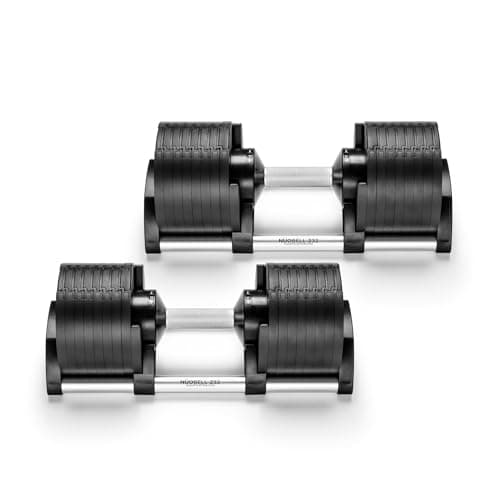
The best adjustable dumbbells in the UK for 2026, from quick-dial sets to heavy 40kg and 50kg options. Budget to premium picks researched and ranked.
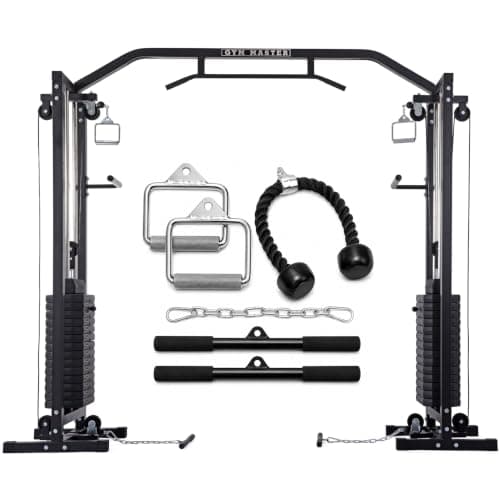
The best cable machines in the UK for 2026, from dual cable machines and functional trainers to wall-mounted and folding designs. Honest picks for any home gym and budget.

The best Garmin watch for most UK buyers in 2026 is the Forerunner 265, but not for everyone. Five models compared honestly, from the £162 Forerunner 165 to the fēnix 8.
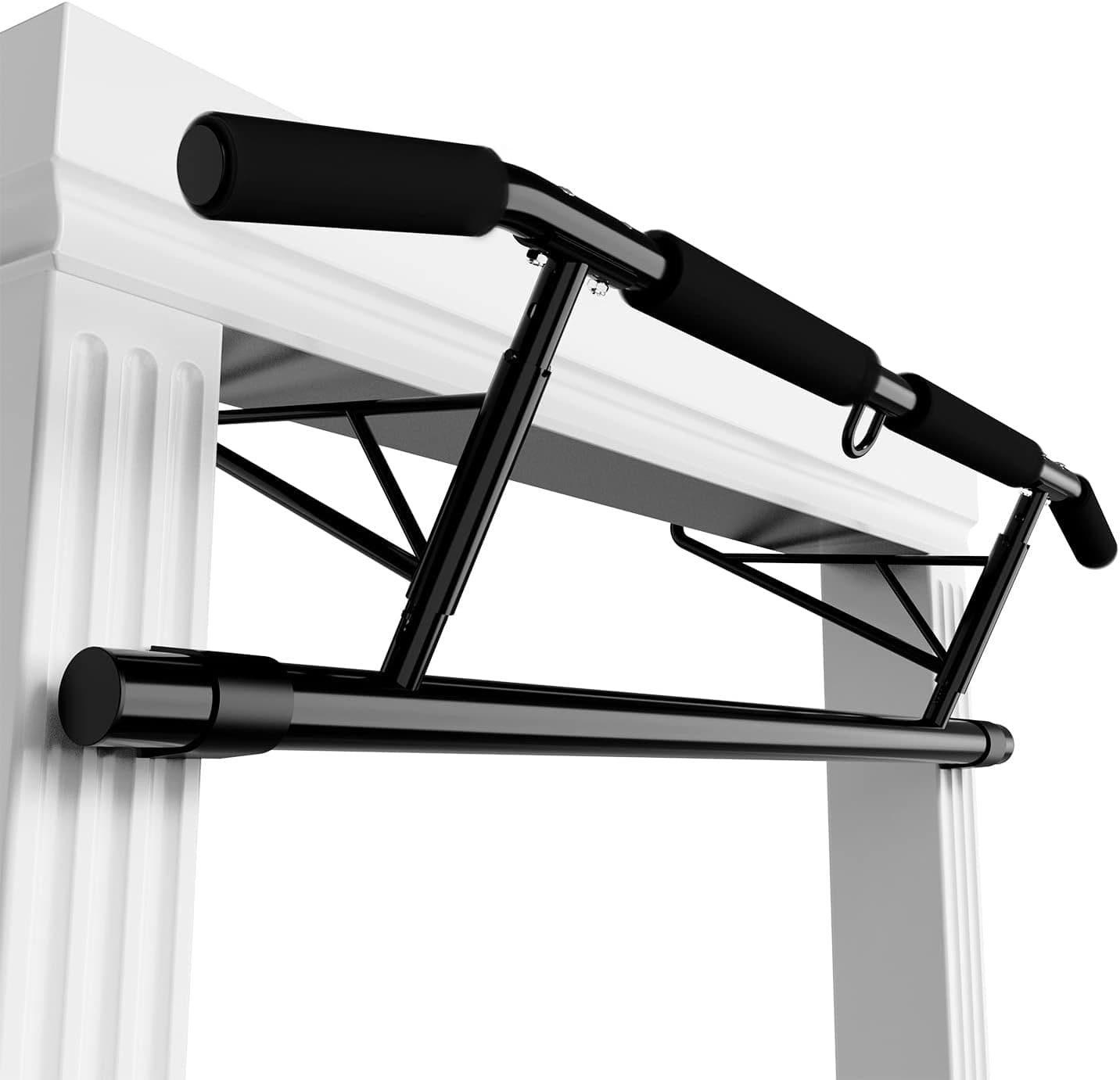
The best pull up bars in the UK for 2026: no-drill doorway bars, wall mounted pull-up bars and free standing power towers, with frame sizes, weight ratings and honest picks for every budget.
Best Exercise is a participant in the Amazon EU Associates Programme, an affiliate advertising programme designed to provide a means for sites to earn advertising fees by advertising and linking to Amazon.co.uk. As an Amazon Associate we earn from qualifying purchases. This comes at no extra cost to you and never influences our independent reviews or rankings.