Recovery
How to Use a Massage Chair: Settings, Session Length and How Often
How to use a massage chair properly: first session settings, how long to sit in one, how often, zero gravity, airbags, heat, after training and who to avoid.

By Mike Shilling, Recovery & Training Editor · Updated 8 August 2026
We may earn a commission from qualifying purchases made through links on this page, at no extra cost to you. This never affects our ratings.
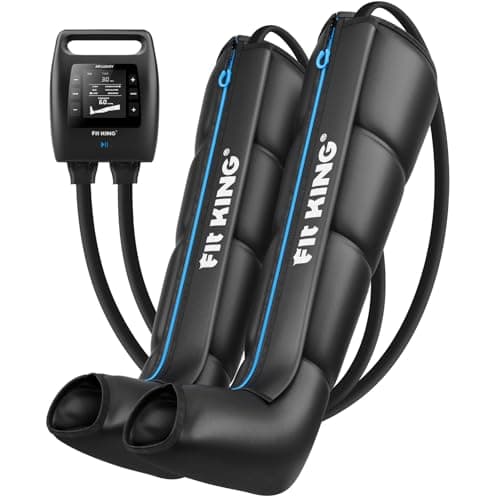
Recovery boots used to mean a £1,000 system with a control unit on the end of a hose. The FIT KING FT-109A is part of the wave that killed that arrangement: the pump is built into the boot, the battery is in there too, and there is no cable at all. At around £285 it sits in the awkward middle of the market, well above the £80 knock-offs and well below Normatec, and it is probably the most sensible place in that range to spend money.
What it does not do is escape the awkward question hanging over the whole category. Compression boots feel good. Whether they do anything measurable is a lot less settled than the marketing suggests, and this review takes that seriously rather than skating past it.
How we review
This review is built on FIT KING's published specifications, the consistent themes across verified owner reviews, and the peer-reviewed literature on intermittent pneumatic compression. We have not run a long-term hands-on test of this exact unit, so we report repeated findings rather than one-off opinions, and we say plainly where the evidence for the category runs out.
Four independent chambers wrap the foot, calf, knee and thigh, and inflate in sequence from the bottom up, which is the standard sequential compression pattern. The zone control is the part that matters day to day: you can run the whole leg, or isolate the calf, or work one leg only. Anyone who has come back from a run with one dead calf will appreciate that more than another mode setting.
Pressure runs from 40 to 150 mmHg across 12 levels, with three massage modes and ten session lengths from 15 to 60 minutes. The 150 mmHg top end is genuinely uncomfortable and few people will live there. FIT KING also fits a sensor system that adjusts inflation volume to the size of your leg rather than pumping to a fixed volume, which is a real quality-of-life feature on a boot that has to fit a wide range of calves.
Sizing is where these live or die. FIT KING sizes by user height rather than calf or thigh circumference, and the Medium listed here covers roughly 176cm to 189cm. If you fall outside that, buy the size that matches you, because a boot sized for someone taller puts the knee chamber over your thigh and the whole sequential pattern lands in the wrong place. Owners who report a poor experience almost always turn out to have ordered the wrong length.
The boots themselves are a soft, quilted fabric with a full-length zip. Getting in on your own is fine but not elegant; sitting on the floor and zipping from ankle upward is the least awkward method. Once they are on, the dual-layer airbags inflate and deflate quickly, which FIT KING claims is around 40 percent faster than typical boots, and the practical effect is that a 30 minute session includes more compression cycles rather than long dead air.
Noise is the honest downside. The pump is inside the boot, roughly 20cm from your ear if you are lying down, and it is audible. You can watch television over it. You cannot sleep through it. The whole unit weighs about 4.5kg packed and comes with a carry bag, which makes it genuinely portable in a way corded systems never were.
| Model | FT-109A |
|---|---|
| Zones | 4, independently controlled (foot, calf, knee, thigh) |
| Pressure range | 40 to 150 mmHg, 12 intensity levels |
| Modes | 3 massage modes |
| Session lengths | 10 options, 15 to 60 minutes |
| Battery | 2500 mAh, 3 to 4 hours of use, rechargeable |
| Power | Fully cordless, no external control unit |
| Sizing (this listing) | Medium, approx 176 to 189 cm user height |
| Packed weight | Approx 4.5 kg |
| Included | Remote control, carrying bag |
| Warranty | FIT KING states 24 months |
Compression boots are sold on recovery. Here is what the research actually found.
A randomised controlled trial published in BMC Sports Science, Medicine and Rehabilitation in 2021 tested intermittent pneumatic compression and intermittent negative pressure against placebo in recreationally active men after eccentric muscle-damaging exercise. Neither treatment reduced the loss of muscle function or the perception of soreness up to 48 hours afterwards (BMC Sports Sci Med Rehabil, 2021). That is a null result on the exact claim the category is built on, in the exact scenario buyers care about.
The broader literature is mixed rather than uniformly negative. Some trials report short-term reductions in perceived soreness, and compression garments as a class fare better than pneumatic devices in meta-analysis. But "you feel less sore for a while" is a smaller claim than "you recover faster", and the second one is not well supported.
Where compression is genuinely established is clinical. The NHS lists compression garments as a core part of managing lymphoedema, alongside skin care, movement and specialised massage. That is a different application with different evidence behind it, and it is not a reason to treat a fitness boot as a medical device. If you have unexplained leg swelling, a suspected clot, an active infection or heart failure, talk to a GP before using one.
So why buy them? Because 30 minutes with your legs up and something rhythmic squeezing them is a pleasant, low-effort recovery ritual that gets people to actually sit still after training. That has value even if the mechanism is nothing more than enforced rest. Just spend the money with your eyes open.
Against the Hyperice Normatec 3, the FIT KING gives up app control, refinement and brand support, and costs a fraction as much. The Normatec's pressure control is more precise and the fabric is better, but the underlying job, sequential air compression up the leg, is the same. If you are choosing between them on evidence, there is nothing to separate them, because the evidence does not distinguish between devices.
Against cheap sub-£100 boots, the FIT KING wins on cordless operation, zone independence and the sensor-based fit. Those are the three things that make the difference between a device you use twice and one you use weekly.
Against a foam roller and a massage gun, which cost a tenth as much between them, the boots win only on effort required. That is not nothing, but be honest with yourself about whether passive is what you need.
At around £285 they are roughly a third the price of the premium systems and do the same mechanical job: sequential air compression up the leg, cordless, with independent zone control. If you want compression boots and you are not a professional athlete, this is the sensible tier to buy at. Just be clear that the research on compression for recovery is mixed, so buy them for how they feel, not for a promised performance gain.
FIT KING sizes by height rather than leg circumference. The Medium listed here suits roughly 176cm to 189cm, and there are shorter and longer options in the range. Get this wrong and the chambers sit over the wrong part of the leg, which is the single most common complaint about any boot system. Measure before you order.
It runs from 40 to 150 mmHg across 12 intensity levels. The top end is genuinely firm, firm enough that most people never use it. Level 6 to 8 is where most sessions sit. There are three massage modes and ten session lengths from 15 to 60 minutes.
FIT KING quotes 3 to 4 hours of use from the 2500 mAh battery, which in practice is roughly six to eight 30 minute sessions between charges. The cordless design is the main reason to pick this over cheaper mains-powered boots, because it means you can use them on the sofa or in the car after a race.
The honest answer is that the evidence is weak. A 2021 randomised controlled trial in BMC Sports Science, Medicine and Rehabilitation found intermittent pneumatic compression did not reduce loss of muscle function or pain perception up to 48 hours after damaging exercise. Some people report they feel better after a session, which is worth something, but do not expect a measurable performance effect.
Compression is a mainstream treatment for lymphoedema, but pneumatic compression is not appropriate for everyone. If you have deep vein thrombosis, an active infection in the leg, heart failure, or unexplained swelling, speak to your GP before using a machine like this. Boots bought as fitness equipment are not medical devices.
How to use a massage chair properly: first session settings, how long to sit in one, how often, zero gravity, airbags, heat, after training and who to avoid.
Is a vibrating foam roller worth the extra money? What the research shows on range of motion, pain and DOMS, who should pay more, and what to look for.
How to use a portable steam sauna tent at home: setup, which water to use, pre-heat time, how long to sit in it, cleaning to stop mould, and who should check with a GP first.
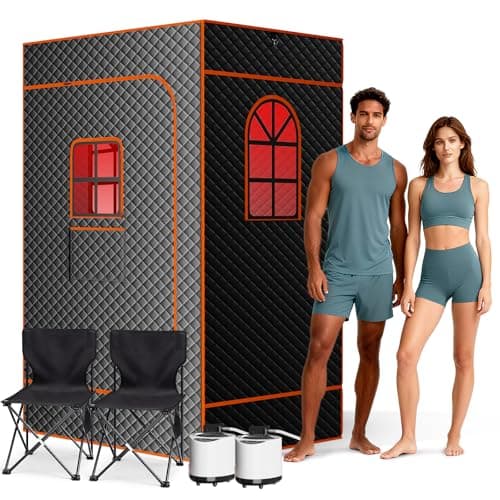
An honest Obqer 2 person portable steam sauna review: two 1200W generators, 9 heat levels, a 120 x 90cm footprint and £212.99 price, compared with Manastin and SereneLife.
Best Exercise is a participant in the Amazon EU Associates Programme, an affiliate advertising programme designed to provide a means for sites to earn advertising fees by advertising and linking to Amazon.co.uk. As an Amazon Associate we earn from qualifying purchases. This comes at no extra cost to you and never influences our independent reviews or rankings.