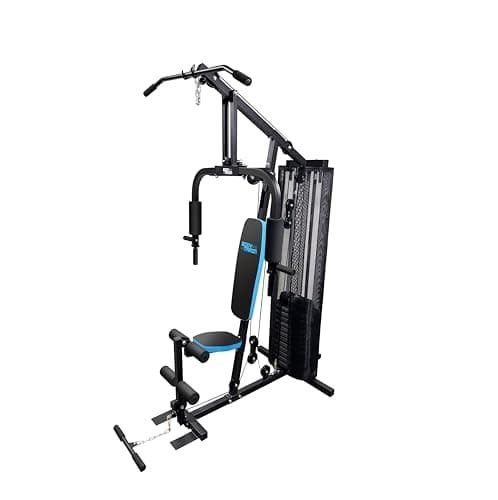
Home Gym
BodyTrain Advanced Single Station Multi Gym Review: 72kg for Under £300
Our BodyTrain multi gym review: the 72kg shrouded stack, 12.5lb jumps, stations, 213cm height, lifetime frame warranty and £283.99 price against rivals.

By Jack Atkins, Home Gym Equipment Specialist · Updated 3 November 2026
The cable machine attachments you'll use most are a pair of single D-handles, a tricep rope, a straight bar and an ankle strap. Between them they cover well over 30 exercises, cost roughly £40 to £70 bought separately, and fit almost any cable station because everything connects with the same carabiner clip. The rest (V-bar, EZ bar, MAG grips, stirrups, belts) are useful upgrades once you know what you're short of.
We haven't hands-on tested the products named below. This guide is built from manufacturer specs, the published research on handle type, and what owners tend to report after a few months of use.
On a cable machine the handle decides two things: where your hands sit and which way your palms face. Change either and the same pulley turns a row into a face pull, or a pushdown into an overhead extension. That's the whole appeal of cables in a home gym, and the reason a cheap station like the ones in our best cable machine UK guide can do more than a rack of fixed machines.
It matters less than people think for the target muscle, though. A study comparing a standard handle with two ball-grip options during the triceps pushdown found no difference in triceps activity, only in the forearm muscles. So buy attachments for comfort, range of motion and the exercises they open up, not because a rope "hits the long head" better.
The workhorse. It's a D-shaped steel loop, usually with a rubber or knurled sleeve that rotates on the bar so your wrist can turn freely through the rep. You want two, because so many cable moves are done one arm at a time or with both sides of a crossover.
A length of braided nylon rope, normally 60cm to 90cm, folded through a central eyelet with rubber or steel end stops. The rope lets your hands travel apart, which is why it's the default for the tricep pushdown. It's also the only sensible handle for face pulls and the kneeling cable crunch, where you hold the rope beside your head. Overhead extensions and the cable pull-through round it out. Ropes with a single swivel eyelet twist far less than the cheap fixed-ring versions.
A 50cm to 120cm steel bar with a central swivel. Short ones (around 50cm) suit straight-bar curls and pushdowns; longer ones double as a lat bar. Use it for the straight-arm pulldown, heavier pushdowns and upright rows. If you can only afford one bar, get a 90cm to 120cm one so it covers pulldowns too.
Same idea as the straight bar, with the zig-zag bends of an EZ curl bar. The angled grip takes pressure off the wrists and elbows, which is worth paying for if a straight bar makes your forearms ache on curls. It also works for reverse curls and lying cable extensions. Expect to pay £20 to £40.
A short bar with two parallel handles roughly 10cm to 15cm apart, palms facing each other. It's the classic handle for the seated cable row and the close-grip lat pulldown, and some people prefer it to a rope for pushdowns because you can load it heavier. The triangle version (a steel loop rather than a bar) does the same job and costs less.
These are the long bars for pulldowns: wide straight lat bars, angled bars with bent ends, and MAG-style neutral grips that hold your palms facing at shoulder width. They're specialist kit, and we've covered every type, plus the research on grip width, in our lat pulldown attachment guide. The short version: one study found an overhand grip produced more lat activity than an underhand grip regardless of width, so a basic straight lat bar gets you most of the way.
A padded neoprene or nylon cuff with a D-ring that wraps around your ankle with Velcro. It turns the low pulley into a leg machine: glute kickbacks, hip abduction, adduction and standing hamstring curls. Look for a double-strap closure and a steel D-ring stitched (not riveted) into the webbing. Buy two if you want to do both legs without swapping.
A D-handle's older cousin: a rigid triangular frame with a rotating grip. It feels more stable than a nylon-strap D-handle on heavy presses and rows, and the frame stops the cable rubbing your wrist. Use it for the cable chest press, single-arm rows and crossovers. Some brands sell stirrups and D-handles as the same thing, so read the photos rather than the name.
Any D-handle works for the Pallof press, but a few brands sell a dedicated rotational handle: a short bar or a ring you grip with both hands. It keeps your hands together and centred, which suits anti-rotation work and the cable woodchop. Nice to have, not essential.
A padded belt with a chain or strap that clips to the low pulley. It's used for cable hip thrusts, pull-throughs and belt squats with no load on your spine. If you already own a dip belt for weighted dips, it usually does this job too.
If you've just bought a cable station and it came with a single handle (most do), this is the order we'd spend in:
A V-bar comes fifth if you do a lot of rowing. After that, buy for a specific exercise rather than a full set.
Bundled sets often work out cheaper than buying those pieces separately, and two current listings are in stock at the time of writing. The Fitarc set is around £40 and the COSTWAY 3/4-piece set (V-handle, tricep rope and D-handles depending on the option) is around £43. Check exactly which pieces your chosen variant includes before you order, because both brands sell several bundle sizes on the same page.
Check the Fitarc cable attachment set on Amazonaround £40 Check the COSTWAY cable attachment set on Amazonaround £43Attachments don't have brand-specific fittings. Nearly every cable machine, from a selectorised gym stack to a rack-mounted pulley, ends in a ball stop and a loop that takes a carabiner, and every handle has an eyelet the carabiner passes through. So compatibility comes down to the clip.
Check the clip, not the handle
Use a steel carabiner with a screw-lock gate and a printed load rating. Climbing-style aluminium keyring clips are the usual failure point, and a gate that pops open mid-set sends the handle back at you. Check the gate opening is wide enough to take both the cable loop and the attachment's eyelet at once, which is where thick-eyelet bars sometimes catch out cheap clips.
Swivel eyelets matter more than people expect. A rope or long bar on a fixed ring will twist the cable during rows and pulldowns; a swivel lets it turn, which saves the cable and keeps the bar level. Look for a ball-bearing swivel on bars over 90cm.
Steel vs aluminium. Solid steel with chrome or zinc plating is the safe default. It's heavier, it doesn't flex, and the eyelet weld is the part to inspect: you want a clean, continuous weld rather than a spot weld. Aluminium handles are lighter and some lifters like them for flys, but cheap aluminium bars can bend at the eyelet under a heavy stack.
Knurling. Medium knurling on bars helps on heavy rows and pulldowns. Aggressive knurling on a pushdown bar will chew your palms for no benefit, so lighter or smooth is fine there.
Rubber and foam. Rubber sleeves give a grippy, washable surface and last for years. Foam is softer but tears and soaks up sweat; on a D-handle you use daily it'll look tired within months. Rotating sleeves (where the grip spins on the frame) are worth having on D-handles and stirrups.
Rope. Braided nylon with moulded rubber ends outlasts ropes with screw-on metal end caps, which can loosen.
These are typical Amazon and UK retailer prices at the time of writing. Brand names cost more than generic, and commercial-grade kit can double these numbers.
| Single D-handle (pair) | £10 to £20 |
|---|---|
| Tricep rope | £8 to £20 |
| Straight bar (50cm to 120cm) | £15 to £45 |
| EZ / cambered bar | £20 to £40 |
| V-bar or triangle | £12 to £30 |
| MAG-style grip | £40 to £120 |
| Ankle strap (each) | £8 to £15 |
| Hip / dip belt | £15 to £35 |
| 4 to 6 piece bundle | £30 to £60 |
Buying a 10-piece set because it's cheap per item tends to backfire: you get two or three pieces you'll use and a drawer of clips with no load rating. Buy the core four, then fill gaps.
The second mistake is ignoring bar length. A 50cm straight bar is too short for proper wide pulldowns, and a 120cm bar is awkward for curls in a narrow space. If you train in a garage with a single pulley tower, measure the clearance either side before ordering anything over a metre.
Buy a pair of single D-handles, a tricep rope, a straight bar of around 90cm to 120cm and an ankle strap. Those four cover pressing, flys, rows, curls, pushdowns, face pulls, crunches and most leg isolation work. A close-grip V-bar is the best fifth purchase if you row or do pulldowns a lot.
Almost all of them do, because attachments connect with a carabiner or snap hook clipped through an eyelet, not a brand-specific fitting. The thing to check is the clip itself: the gate opening has to be wide enough for the attachment's eyelet and the cable end. Swivel eyelets help on ropes and long bars so the cable doesn't twist.
Solid steel with chrome or zinc plating is the safer choice for a home gym. It's heavier and won't flex under a stacked pulley. Aluminium handles feel lighter in the hand, which some people like for flys and lateral raises, but cheap aluminium bars can bend at the eyelet. Avoid unbranded attachments with no stated load rating.
Neither is better for growth. Research on handle types during the triceps pushdown found similar triceps activity across different handles, with the differences showing up in the forearm muscles. Pick the rope if you like spreading your hands at the bottom, and the V-bar or straight bar if you want to push more weight.
In the UK, a pair of basic D-handles runs about £10 to £20, a tricep rope £8 to £20, a straight or EZ bar £20 to £50, and an ankle strap £8 to £15 each. Bundled sets of 4 to 6 pieces sit around £30 to £60 on Amazon. Specialist MAG-style grips and commercial-grade bars can cost £60 to £150 each.
Yes, as long as the pulley ends in a standard carabiner or cable eyelet, which nearly all rack-mounted lat and low-row units do. Wall-mounted DIY pulleys and loading-pin systems use the same clip, so the same set of handles will move between machines.
Our BodyTrain multi gym review: the 72kg shrouded stack, 12.5lb jumps, stations, 213cm height, lifetime frame warranty and £283.99 price against rivals.
What a cable crossover machine is, how it differs from a functional trainer, what 177kg stacks really mean, the ceiling height you need and UK price bands.
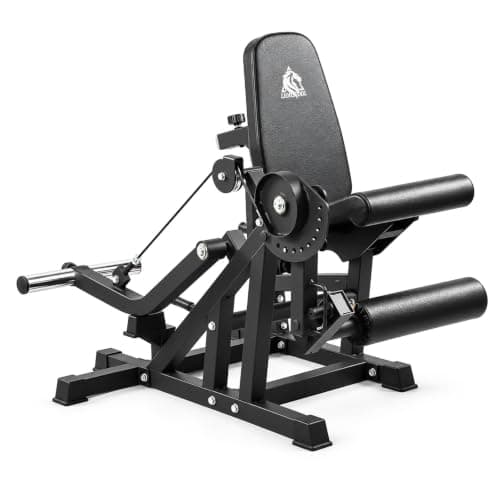
LIONSCOOL leg extension machine review: the V4.0's cable system, 400lb capacity, lying leg curl, 1.65m footprint and what the £429.99 price really buys you.
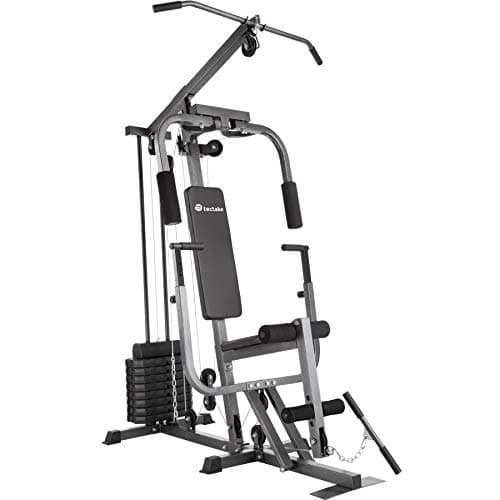
Our tectake multi gym review: chest press, fly, lat pulldown and leg extension, 4.5kg block steps, 150kg load limit, 203cm height and the missing stack weight.
Best Exercise is a participant in the Amazon EU Associates Programme, an affiliate advertising programme designed to provide a means for sites to earn advertising fees by advertising and linking to Amazon.co.uk. As an Amazon Associate we earn from qualifying purchases. This comes at no extra cost to you and never influences our independent reviews or rankings.