Home Gym
Cambered Bar Explained: Squat, Bench and Swiss Bar Types
What a cambered bar is, the three main types (cambered squat bar, bowed bench bar, cambered Swiss bar), what each one does, how much they weigh and how to buy one.

By Jack Atkins, Home Gym Equipment Specialist · Updated 15 August 2026
We may earn a commission from qualifying purchases made through links on this page, at no extra cost to you. This never affects our ratings.
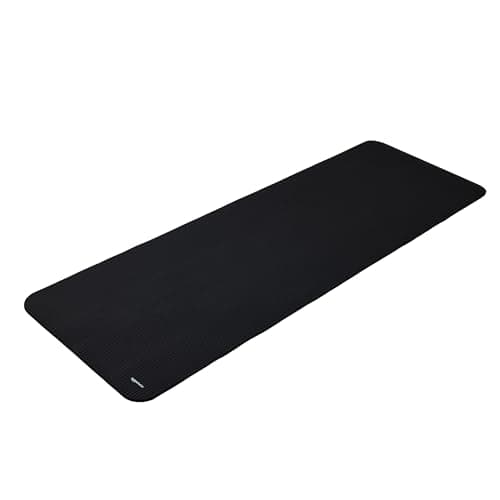
Buy the wrong exercise mat and you will know within about ninety seconds of your first plank. Too thin, and your elbows and knees take a hammering on the floor beneath. Too soft, and the thing bunches up under you every time you shift position, which turns a set of mountain climbers into a wrestling match with your own kit. The mat market is also confusing on purpose: the same 183 x 61cm slab of foam gets sold as a yoga mat, a Pilates mat, a fitness mat and an exercise mat depending on which listing you land on.
What actually separates them is thickness and material. If most of your training happens on your back, your knees or your forearms, you want 10mm or more of NBR or TPE foam. If you spend your session standing up, a thick mat is a liability. Here are five mats on Amazon UK that get the balance right for different kinds of home training, with the honest weaknesses of each.
How we chose
We researched the most popular exercise mats on Amazon UK rather than testing every one in a long-term hands-on trial. Picks are based on owner feedback patterns, published specifications and how each mat suits a specific type of training. Every price and specification below was correct at the time of writing and will change, so check the current listing before you buy.
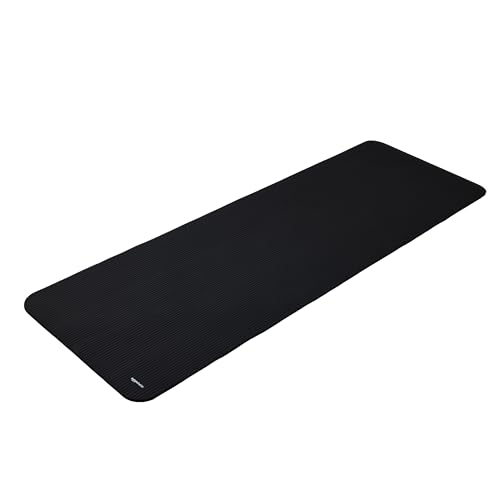
Ignore the "yoga mat" label on the box. At 10mm thick and 183 x 61cm, this is a general-purpose exercise mat that happens to be sold under a yoga name, and for around £18 it does the job most people actually need. The foam is soft enough that kneeling lunges and glute bridges stop being unpleasant on a wooden floor, and it rolls up small enough to live behind a sofa rather than in a cupboard.
Owners consistently praise the cushioning and the price. The complaints are equally consistent, and they are the ones every foam mat attracts: it slides on laminate until you break it in, it smells of new foam for the first week or so, and the surface picks up dents from anything left sitting on it. Roll it up after each session and it stays flat for years. Leave a dumbbell on it overnight and you have a permanent divot.
For most people doing bodyweight circuits, core work and stretching at home, this is the mat to buy first. Spend the money you saved on resistance bands instead.
Check price on Amazon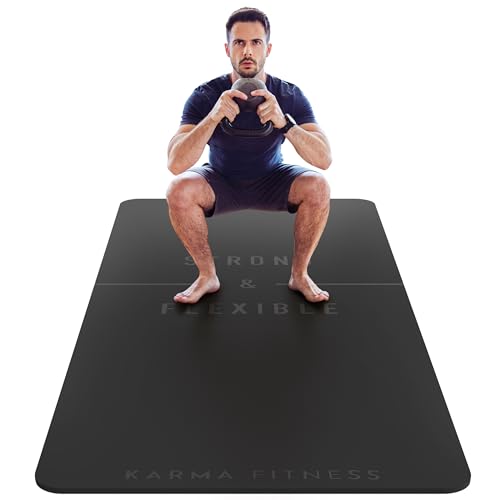
Standard mats are 60cm wide, which is fine until you try a bear crawl, a Turkish get-up or anything that involves your arms travelling sideways. At 80cm, the Karma Fitness mat is a third wider, and that extra 20cm changes what you can train on it. It is also double-layered TPE rather than NBR foam, which means it holds its shape under repeated pressure instead of slowly compressing into a pancake.
The diamond texture on both faces grips better than any of the cheap foam mats here, so it is the one I would pick for anything involving jumping or fast direction changes. At around £40 it costs more than double the Amazon Basics mat, and the extra width means it does not roll as small, so storage is a genuine trade-off in a small flat. If you train in a shed or a spare room and leave your mat out, that hardly matters.
Check price on Amazon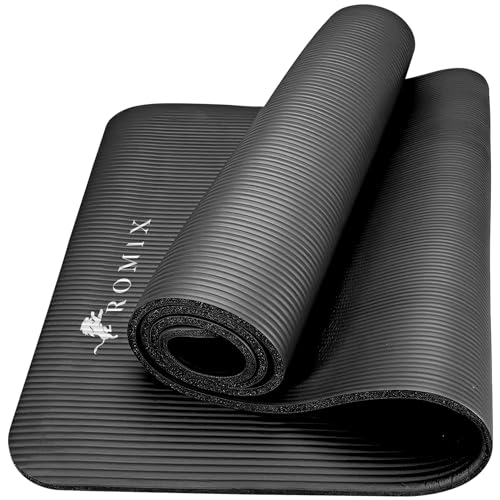
Concrete garage floor? Tiled kitchen? This is the mat. At 15mm the ROMIX gives you half again the padding of a standard 10mm mat, and for anyone doing rehab work, long stretching sessions or a lot of supine core training, that difference is felt immediately in the tailbone and the shoulder blades. It measures 180 x 60cm and ships with a carry bag and strap, which is more than most mats at this price bother with.
The thickness cuts both ways. Standing on 15mm of memory foam feels unstable, so single-leg work, balance drills and anything explosive are worse on this mat than on a thinner one. It is also bulkier rolled up. Buy it if your floor is hard and your training is mostly horizontal; skip it if you do a lot of standing work. Pair it with a foam roller and you have a decent recovery corner for under £40 total.
Check price on Amazon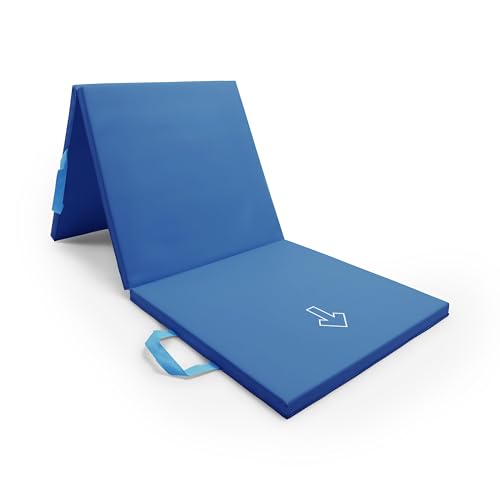
Rolled mats have one irritating habit: they never lie completely flat, and the corners curl for the first several months. A tri-fold mat solves that by folding into three flat panels instead, so it drops open and stays open, and it slots down the side of a wardrobe rather than standing in a corner like a rolled carpet. For anyone training in a shared living room, that matters more than the spec sheet suggests.
The high-density foam is firmer than the NBR mats above, which suits press ups and planks better than it suits lying stretches. Watch the fold lines: on any tri-fold mat they are the weak point, and heavy repeated use eventually shows there first. Around £25 is fair for the convenience.
Check price on Amazon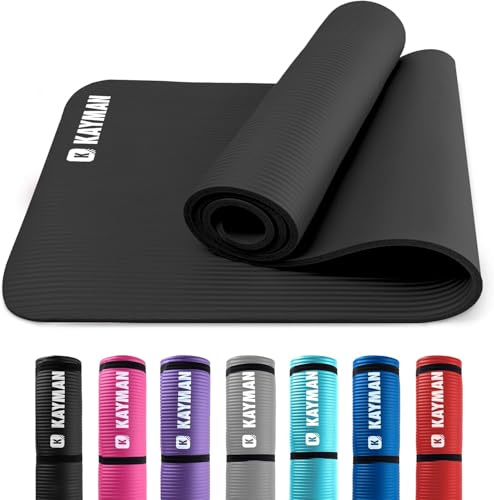
Under a tenner, 183 x 60cm, 6mm of NBR foam with a ribbed non-slip surface. There is not much to say about the KAYMAN except that it does the basics and costs less than a takeaway. The 6mm thickness sits between a yoga mat and a proper exercise mat, so it grips better than the thick foam mats when you stand on it, while still taking the edge off floor work.
It will not cushion your spine on concrete, and at this price the foam is not going to last a decade of daily use. As a first mat, a second mat to leave at the office, or something to keep in the car boot, it earns its place. Anyone doing serious floor volume should go thicker.
Check price on AmazonMatch thickness to your training, not to a number. The NHS recommends muscle-strengthening work covering all major muscle groups on at least two days a week, and for most people at home that means floor work: planks, bridges, dead bugs, press ups. If that describes your sessions, 10mm to 15mm is right. If you are mainly doing standing dumbbell work or balance training, thick foam actively works against you and 4mm to 6mm is the better call.
Size matters more than people expect. A 183cm mat suits anyone up to roughly 6ft; taller trainers end up with their head or heels off the end during lying work. Width is the bigger constraint though, and the jump from 60cm to 80cm opens up crawling patterns, wide-stance work and anything where your arms sweep out to the side.
NBR is soft and cheap; TPE is dense and lasts. NBR foam gives you the most cushioning per pound spent, and it is what almost every budget mat uses. It also dents, tears at the edges over time and compresses permanently under sustained pressure. TPE costs more, springs back, and survives being trodden on in trainers. Neither loves being stored in direct sunlight.
Think about the floor underneath. No mat fixes a bad surface. If you are dropping dumbbells or doing repeated jumping, proper gym flooring protects both your floor and your joints far better than adding foam thickness, and the British Heart Foundation's guidance on staying active is a good reminder that consistency beats kit. A mat on top of interlocking tiles is the setup most home gyms end up with.
Give a new mat a week. Fresh NBR foam smells, and it slides. Both problems fade. Unroll it and leave it out for a few days, wipe it down with soapy water, and it settles into something far more usable than it felt out of the packaging.
For general home workouts, 10mm is the sweet spot. It takes the sting out of kneeling and lying on a hard floor without wobbling under you when you stand up for a lunge or a press. Go to 15mm if you spend most of your session on your back or knees and your floor is tile or concrete, and drop to 4mm to 6mm if you mainly do standing work or balance drills where a soft mat works against you.
Yoga mats are usually 4mm to 6mm of grippy PVC or rubber, built so your hands and feet do not slide during standing poses. Exercise mats tend to be 10mm or more of NBR or TPE foam, built to cushion your spine, hips and knees during sit ups, planks and floor work. If you do both, a 10mm mat is the fairest compromise, though it will feel spongy in a long balance hold.
NBR foam is cheaper, thicker and softer, so it is the better pick for cushioning during floor work. TPE is denser, springier and holds its shape longer under repeated pressure, which is why the pricier mats use it. NBR mats also tend to dent permanently if you leave weights or furniture on them, so roll yours up between sessions.
Yes, but pick your mat carefully. Thick foam mats compress under jumping and can roll or shift, which is a genuine trip hazard during burpees. A wider, denser mat like a TPE model grips better and stays put. If you jump a lot, rubber gym flooring underneath is a better long-term answer than a thicker mat.
Most slipping comes from the floor, not the mat. Foam mats slide on laminate and polished tile far more than on carpet, so either put a strip of rubber flooring or a rug underneath, or choose a mat with a textured underside. Wiping the mat down with a damp cloth to remove factory release agent also helps a new mat grip properly for the first few weeks.
Wipe it with a damp cloth and a little washing-up liquid after sweaty sessions, then hang it over a door or radiator until it is fully dry. Avoid alcohol wipes and harsh cleaners, which break down foam and leave NBR crumbling at the edges within months. Never put a foam mat in the washing machine.
What a cambered bar is, the three main types (cambered squat bar, bowed bench bar, cambered Swiss bar), what each one does, how much they weigh and how to buy one.
What a landmine attachment is, the rack-mounted, plate-post and floor platform types, how to check bar and rack fit, safety tips, and the best exercises to do.
What a safety squat bar is, how much it weighs, how it changes your squat compared with a straight bar, who it suits and what to check before buying one in the UK.
What a Swiss bar (football or multi-grip bar) is, how much it weighs, why the neutral grip suits sore shoulders, the best exercises and what to check when buying.
Best Exercise is a participant in the Amazon EU Associates Programme, an affiliate advertising programme designed to provide a means for sites to earn advertising fees by advertising and linking to Amazon.co.uk. As an Amazon Associate we earn from qualifying purchases. This comes at no extra cost to you and never influences our independent reviews or rankings.