Home Gym
Are Vibration Plates Worth It? What the Research Actually Shows
Are vibration plates worth it? Yes for balance, bone health support and low-impact warm-ups; no for weight loss or replacing strength training. The evidence.

By Jacob Chambers, Founder & Lead Reviewer · Updated 29 July 2026
We may earn a commission from qualifying purchases made through links on this page, at no extra cost to you. This never affects our ratings.
Reformer pilates went from niche to everywhere in about four years, and the waiting lists at UK studios went with it. A home reformer sidesteps the queue and the £25 drop-in fee, and the machines that used to cost £2,000 now start at £259. What has not changed is that the cheap end and the serious end are genuinely different products, and a lot of listings blur that line on purpose. This guide picks six machines that are actually worth your money on Amazon UK right now, says plainly who each one suits, and flags the compromises before you find them yourself.
How we chose
We researched the reformers currently in stock on Amazon UK rather than running our own long-term hands-on test of each machine. Specs come from manufacturer listings, and our shortlist weighs spring count, carriage length, weight capacity, folded size and owner feedback. Prices and availability were checked on 29 July 2026 and will move, so confirm the current details before buying.
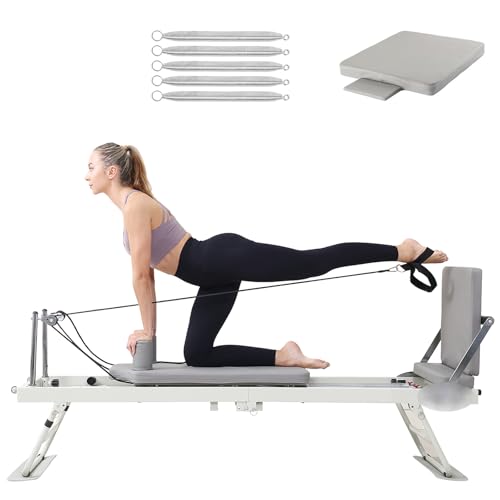
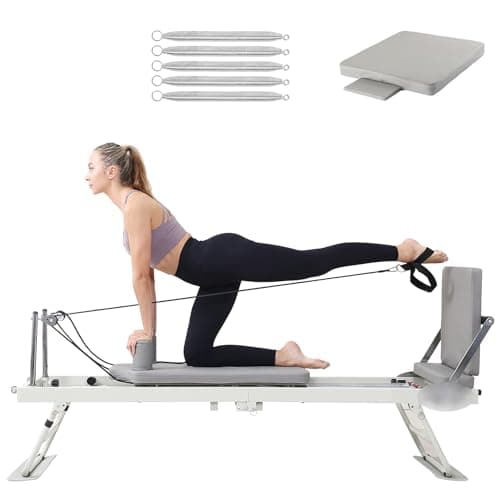
Five alloy springs at £259 is the spec that wins this. Most machines under £300 ship with four, and the fifth spring is what lets you go properly heavy on footwork without maxing the whole rack. The reinforced carbon steel frame is rated to 300lb (roughly 136kg), the carriage rides on foam padding under PU leather, and a springboard comes in the box for jumping work rather than as a £70 add-on.
Storage is the other reason it tops the list. Folded and stood on end it takes up about two square feet, which genuinely does fit behind a door or down the side of a wardrobe. It arrives 90% assembled, so the setup is a ten minute job with the supplied manual, and the moving wheels mean you can drag it out of a corner without help. The compromises are the ones you would expect at this price: the glide is smooth rather than silky, the spring changeover is fiddlier than a studio machine, and the shoulder rests have fewer positions than pricier models.
Check price on Amazon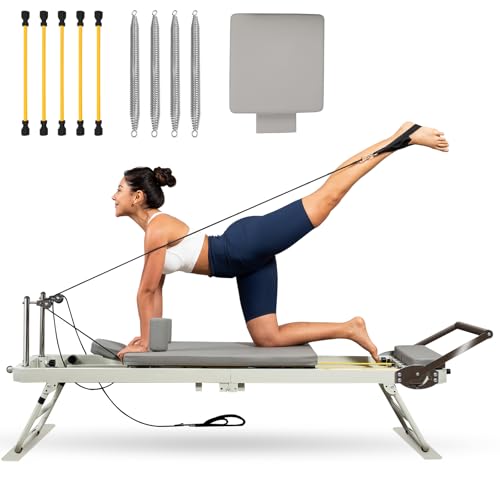
TODO publishes the numbers most brands hide, and they stack up well. Four springs at 22lb each plus five cords at 13lb each gives 153lb of adjustable resistance, the frame is rated to 400lb, and the carriage runs on eight wheels rather than the usual four. You also get a jump board included, three pulley heights and four foot bar angles, which is a wider adjustment range than the price suggests.
Read the height guidance before you order, though, because it matters more here than anywhere else on this list. TODO specifies users between 4ft and 5ft 9in, and the shoulder pads only have two positions. If you are taller than that, you will be cramped at the top of footwork and the machine will feel short. For anyone inside that range wanting the most resistance options per pound, this is the pick.
Check price on Amazon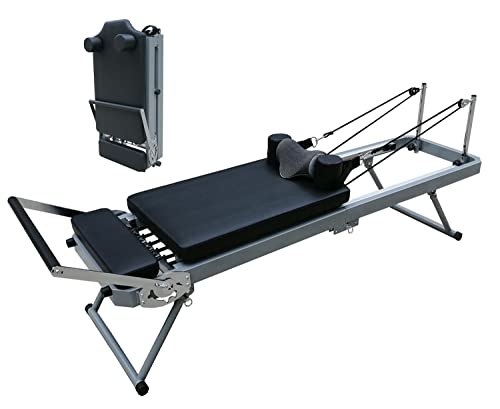
Most home reformers sit low, and getting up off one repeatedly is the thing that quietly puts older users off. The nexace answers that with a carriage 18.1 inches off the floor, which is roughly chair height, so you sit down onto it rather than lowering yourself to it. Combine that with the upgraded aluminium sliding rail and a noticeably thicker cushion, and it is the friendliest machine here for anyone with dodgy knees or hips.
Give nexace credit for honesty: the listing itself says this is a beginner machine and tells you not to buy it if you want studio-grade tension. It recommends users between 145cm and 170cm, supports up to 135kg, and weighs about 30kg, which is worth knowing before you plan to shift it alone. Warranty runs to 90 days on parts and a year on the frame. Buy it for accessibility, not for maximum load.
Check price on Amazon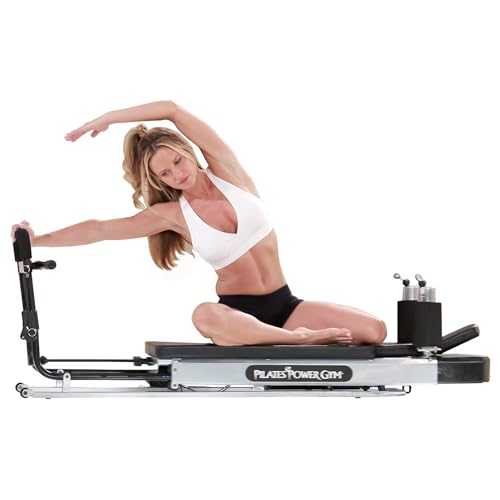
This one works differently from a classical reformer, and that is the point. Rather than a long flat bed, the Pilates Power Gym uses an inclined carriage with three height elevations and four tension cords, giving 48 resistance combinations from a frame that is about 125cm long and 30cm wide. Gravity does part of the work, so the resistance curve changes as you raise the deck.
It ships fully assembled, which no other machine here manages, and it takes users up to 6ft 4in and 300lb. A push up bar and foot strap attachments come included, so it doubles as light upper body kit. The trade-off is real: if you attend classical reformer classes and want the same exercises at home, the geometry is different enough that some moves do not carry over. For a spare bedroom where a two metre bed will never fit, it is the sensible compromise.
Check price on Amazon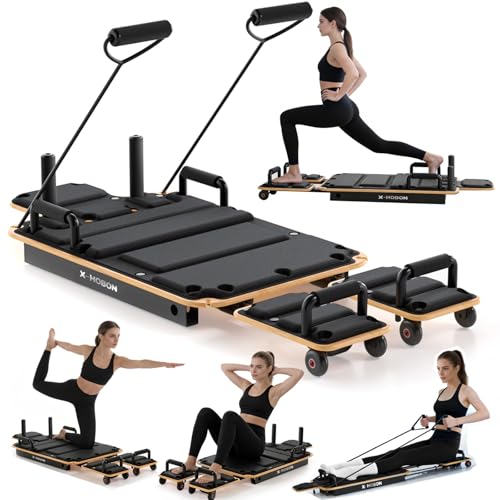
A board is not a reformer and anyone telling you otherwise is selling something. What the X-HOBON is instead is a maple deck with steel sliding rails, quiet PU wheels and clip-on resistance bands, weighing 16.5lb and measuring 42.9 by 17.7 inches. It slides under a bed. That is the whole argument for it, and for a lot of flats it is a winning one.
Within its limits it does good work: rows, lunges, bridges, planks and ab roll-outs all run on the sliding track, with thick EVA pads for knees and elbows and bands you can reposition or swap to change the load. Assembly needs no tools. What you lose is the spring feel, the foot bar, the long carriage travel and most of the classical exercise repertoire. Think of it as a serious core sliding trainer at £339 rather than a cheap reformer.
Check price on Amazon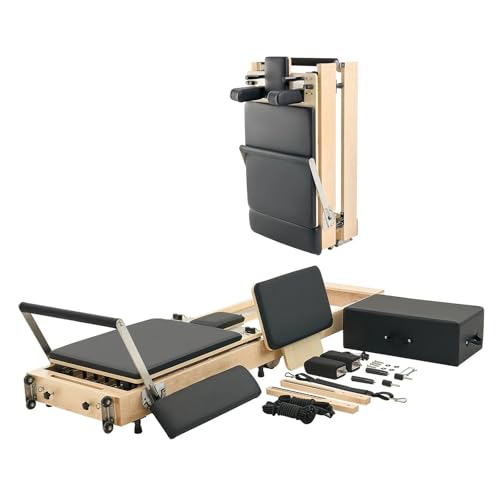
Wood is not just for looks. A hardwood frame damps the vibration you feel through a steel one, and on a machine you spend 45 minutes lying on, that difference is obvious within a session. The SWACCH pairs it with black upholstery, five springs, smooth-rolling wheels and a folding mechanism, so it stores away despite the studio looks.
The bundle is what closes the gap to a £1,500 machine. A jumping board and a sitting box both come in the box, and buying those separately for a cheaper reformer typically costs £150 or more, which narrows the real price difference considerably. At £788 it is three times the GRDSGRD, and you should only pay that if you will use it several times a week for years. Stock on this one runs thin, so check availability rather than assuming.
Check price on AmazonMeasure the space first, twice. The listed frame length is not the space you need. Add roughly 40cm at the head end for the pulley ropes and your arms, and leave half a metre at one side to mount and dismount. A 78 inch reformer wants about 2.4 metres of clear floor in practice.
Count the springs, then check they are colour coded. Four springs is workable and five is comfortable. What matters as much is knowing which spring is which tension, because every reformer routine you will follow online calls springs by colour.
Be honest about your height. This is the single most common regret. Carriage travel and shoulder rest spacing are sized around a height range, and a machine built for someone 5ft 4in will feel wrong at 6ft regardless of how good it is otherwise.
Decide whether you want the jumpboard now. Cardio jumpboard work is the bit most people add after three months, and retrofitting a board that fits your specific machine is harder than it should be. Two of the picks here include one.
Better than the wellness marketing around it deserves, as it happens. A systematic review of randomised controlled trials found that pilates improves core muscle activation in chronic low back pain and is not inferior to equivalently dosed exercise, while beating no exercise (systematic review of pilates and core muscle activation). In older women, a randomised trial comparing pilates against conventional resistance training found both improved trunk strength and balance (pilates versus resistance training in older women).
Where the claims get overcooked is fat loss. Reformer work is resistance training at a modest intensity, so treat it as strength and mobility rather than a cardio session, and pair it with the NHS guidance of at least 150 minutes of moderate activity plus two strengthening days a week (UK physical activity guidelines). If you want the cardio half at home too, our best walking pad guide covers the quietest way to do it in a flat.
A reformer also pairs well with kit you may already own. Band work carries over directly, so our best resistance bands guide is worth a look, and a decent yoga mat makes the mat pilates half of your week far less miserable on a hard floor. For everything else that goes in a spare room, browse the home gym section.
It pays for itself quickly if you already go to reformer classes. A single studio class in most UK cities costs £20 to £30, so a £259 machine breaks even inside three months of twice-weekly sessions. The catch is that nobody corrects your form at home, so most people get the best of both worlds by keeping the odd studio class and doing the volume at home.
Budget for a footprint of roughly 2m by 0.6m in use, because the carriage and foot bar add length beyond the frame itself. You also need clear space at the head end for the pulleys and about half a metre at the sides to get on and off. Every machine here folds, and the GRDSGRD packs down to around two square feet standing up.
A reformer uses a wheeled carriage that glides on rails against spring resistance, which is what gives it that smooth loaded feeling. A pilates board is a flat sliding platform with resistance bands instead of springs. Boards cost less and store flat under a bed, but the resistance curve is not the same and the exercise list is shorter.
Four is the practical minimum and five gives you enough combinations for real progression. Springs are usually colour coded by tension, and you load one to five of them depending on the exercise. Footwork wants heavy springs, arm work wants light ones, so a machine with only two or three springs runs out of range fast.
The £250 to £400 machines are genuinely usable, but they are not studio kit. Expect a shorter carriage, a rougher glide after a year of heavy use and springs that need occasional retensioning. If you are over about 5ft 10in or want to do jumpboard work several times a week, spend more or accept you will outgrow it.
The evidence is reasonably encouraging. A systematic review of randomised trials found pilates improves core muscle activation in people with chronic low back pain, and performs at least as well as equivalently dosed exercise. If your back pain is new, severe or comes with leg symptoms, see a physio before you buy anything.
Are vibration plates worth it? Yes for balance, bone health support and low-impact warm-ups; no for weight loss or replacing strength training. The evidence.
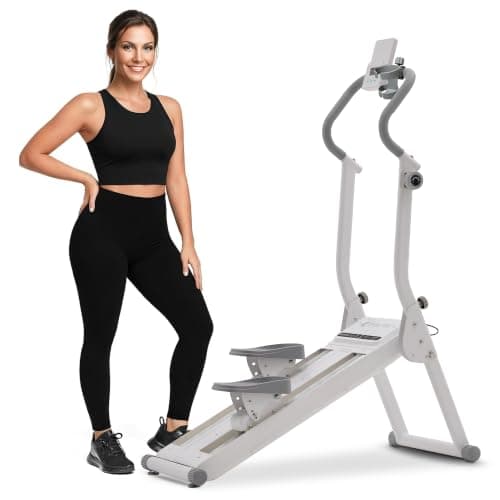
Our ExacMe magnetic stair climber review covers its 16 magnetic resistance levels, 48cm stride, 158kg user limit, app and noise claims, and who should buy it.
What a cambered bar is, the three main types (cambered squat bar, bowed bench bar, cambered Swiss bar), what each one does, how much they weigh and how to buy one.
What a landmine attachment is, the rack-mounted, plate-post and floor platform types, how to check bar and rack fit, safety tips, and the best exercises to do.
Best Exercise is a participant in the Amazon EU Associates Programme, an affiliate advertising programme designed to provide a means for sites to earn advertising fees by advertising and linking to Amazon.co.uk. As an Amazon Associate we earn from qualifying purchases. This comes at no extra cost to you and never influences our independent reviews or rankings.