Rowing Machines
JLL R200 Rowing Machine Review: Amazon's Best-Selling Rower
An honest JLL R200 rowing machine review: magnetic resistance, folding frame, 100kg limit and monitor, plus how it compares with the newer JLL rowers on sale now.

By Paul Kendrick, Cardio & Endurance Editor · Updated 24 November 2026
We may earn a commission from qualifying purchases made through links on this page, at no extra cost to you. This never affects our ratings.
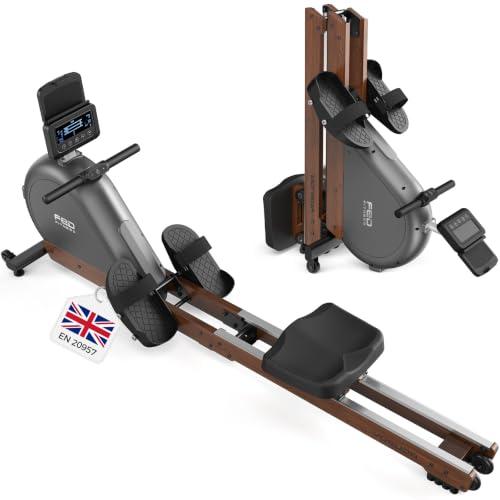
The YOSUDA RM11 is a wooden magnetic rowing machine, and that combination is rarer than it should be. Most wooden rowers on Amazon UK are water rowers (including YOSUDA's own wood rowing machine, which has a 22 litre tank), and most magnetic rowers are steel and plastic. The RM11 pairs an FSC-certified solid wood frame with a 32-level magnetic brake, double aluminium slide rails, a folding frame and Bluetooth, for around £279.99 at the time of writing (24 November 2026).
My view: it's a well-specified rower for the money, especially if you're tall or want something that looks like furniture without the slosh of a water tank. The listing has gaps, though, and one of them is the weight limit, which YOSUDA gives as two different numbers.
How we review
We haven't physically tested the YOSUDA RM11. This review is research-based: we worked from the Amazon UK listing, YOSUDA's published claims and how the RM11 compares on paper with rowers we've already covered. Where YOSUDA doesn't publish a figure (flywheel weight, machine weight, folded size), we say so rather than guess.
YOSUDA now sells several rowers in the UK, and the names blur together on Amazon. To be clear about which one this page covers:
So the RM11 sits between them. It costs roughly the same as the water version, and it does the same job as the cheap magnetic one, only with twice the levels, a longer rail, a higher weight rating and a frame you might not mind leaving out in the lounge.
Check the YOSUDA RM11 price on Amazonaround £280The frame is the selling point. YOSUDA describes it as FSC-certified solid wood, and the listing's colour field says black, which most likely refers to the metal parts and seat since the wood shows in the product shots. Wood on a magnetic rower is mostly about looks; it doesn't change how the stroke feels the way a water tank does. If you've been put off water rowers by the size, the weight of a filled tank or the noise of the water, this is the way to get the furniture look without them.
Underneath the seat run two aluminium slide rails rather than the single beam most budget rowers use. Two rails should spread the load and cut side-to-side wobble on the seat, which matters more as you get heavier or row harder. The seat itself measures 32 x 26 x 4.5cm and runs on double-layer bearings, according to YOSUDA.
The rail is 135cm long, and YOSUDA rates it for users from 1.55m up to 2.00m. That's the RM11's clearest advantage over YOSUDA's cheaper magnetic rower, which runs out of rail at around 188cm. If you're 6ft 3in or above, a lot of £150 to £250 rowers simply won't let you reach full leg extension at the catch, so this alone could decide it for you.
Amazon's dimensions for the assembled machine work out at roughly 193.5cm long, 54cm wide and 72cm high. It folds, but YOSUDA doesn't give the folded footprint, and it doesn't list how much the machine weighs either. Four transport wheels should make it easy enough to wheel into a corner.
| Resistance type | Magnetic, 32 levels |
|---|---|
| Maximum resistance | Up to 60kg (YOSUDA's claim) |
| Level control | Buttons on the handle |
| Frame | FSC-certified solid wood |
| Slide rails | Double aluminium, 135cm |
| User height | 1.55m to 2.00m |
| Max user weight | 182kg (title) or 180kg (bullets) |
| Assembled size | Approx 193.5 x 54 x 72cm |
| Folded size | Unpublished |
| Machine weight | Unpublished |
| Flywheel weight | Unpublished |
| Monitor | Self-powered backlit LCD, 7 metrics |
| Connectivity | Bluetooth (Kinomap and Zwift named) |
| Seat | 32 x 26 x 4.5cm, double-layer bearings |
| Certification claimed | TÜV, EN 20957 |
| Warranty | 2 years on spare parts |
| Price | Around £279.99 at the time of writing |
The Amazon UK title says 182KG. Three bullets later, in the section about its TÜV EN 20957 certification, YOSUDA says the RM11 is designed for users up to 180kg. Those two numbers can't both be the tested figure.
In practice the gap is small, and both are high ratings for a home rower; plenty of rivals stop at 120kg to 150kg. But a weight limit is a safety figure, and when a listing gets it wrong in one place you're entitled to wonder what else is loose. If you weigh anywhere near 180kg, treat 180kg as the real limit and get YOSUDA to confirm it before ordering. For everyone else, it's a sign to read the manual rather than the marketing. We also couldn't find a certificate to back the TÜV claim, so it stays a claim.
Magnetic resistance works by moving magnets closer to a spinning flywheel; nothing touches, so it's quiet and the levels stay consistent from session to session. Our magnetic rowing machine guide covers how this differs from air and water in more detail.
What's useful on the RM11 is where the controls sit. You change level with buttons on the handle, so you can step up for an interval and back down for recovery without letting go or reaching for the console. On cheaper rowers with a dial by the flywheel, that usually means stopping.
Thirty-two levels sounds like a lot, and it is. More steps mostly give you finer gaps between them, which helps if you're progressing slowly or doing structured intervals. They don't automatically mean a harder top end. YOSUDA quotes up to 60kg of resistance, but brands measure that number in different ways, so use it to compare levels on this machine rather than against a Concept2 or another magnetic rower. Most people will spend most sessions in the lower half.
One unknown is the flywheel weight. A heavier flywheel usually gives a smoother, more continuous pull through the drive, and YOSUDA doesn't say how heavy this one is. Its 16-level budget model lists 5.4kg; we'd expect the RM11's to be at least that, but that's an assumption, not a spec.
The backlit LCD shows seven metrics, and the listing names scan, strokes, time, distance and calories (the other two aren't listed). It's described as self-powered, which suggests rowing powers it and you won't need a socket nearby; YOSUDA doesn't go into detail.
Bluetooth is there, along with a tablet holder. The listing names Kinomap and Zwift. Kinomap supports rowing machines, so that's the realistic option for video routes and structured sessions. Zwift is built around cycling and running, and we couldn't confirm that it supports this rower, so don't buy the RM11 for Zwift alone.
If you just want to log time and distance, the console is enough. If you want detailed pace splits, power and stroke-by-stroke data, no £280 rower really gives you that; an air rower with a proper performance monitor is the better route.
Rowing is a sensible home cardio choice, and the evidence supports it in plain terms. A 2023 study in the International Journal of Environmental Research and Public Health put post-menopausal women through ten weeks of indoor rowing, three 30-minute sessions a week, and found improvements in peak oxygen uptake, cardiac output and heart rate recovery. Three half-hour sessions also go a fair way towards the NHS guideline of 150 minutes of moderate activity a week.
Technique matters more than the machine. A 2023 scoping review of low back pain in rowing found good evidence that prolonged ergometer use, along with a history of back pain, is a risk factor for low back pain in rowers. That's an argument for building time on the machine gradually and learning the drive sequence (legs, then body, then arms) before chasing the top levels.
Against YOSUDA's own wood water rower at around £300, the RM11 trades water's sound and building resistance for quiet, repeatable levels and handle controls. You'd pick the water version for the feel; you'd pick the RM11 for flats, early mornings and interval work.
The MERACH wood rowing machine is the other obvious rival: also wooden, also foldable, but it's a water rower at around £350 with a basic monitor. The RM11 undercuts it by around £70 and gives you finer control over resistance.
And against the budget YOSUDA magnetic rower at £160, you're paying roughly £120 more for the wood frame, double the levels, a two-year parts warranty instead of one, and room for rowers up to 2m. For anyone over 6ft 2in, that upgrade isn't optional.
If the RM11 suits your space and height, check the current price below, since Amazon prices change often.
Check the YOSUDA RM11 price on Amazonaround £280No. The YOSUDA wood rowing machine we reviewed earlier is a water rower with a 22 litre tank. The RM11 uses magnetic resistance instead, so it's quieter and has set levels (32 of them) rather than resistance that builds the harder you pull. They share the wooden look and similar pricing, and that's about it.
It depends which part of the listing you read. The Amazon UK title says 182kg, while the certification bullet says the machine is designed for users up to 180kg. Either figure is generous for a home rower, but if you're near the top of that range, assume 180kg and ask YOSUDA to confirm in writing before you buy.
YOSUDA says the 135cm slide rail suits users from 1.55m to 2.00m tall. That's a much higher ceiling than YOSUDA's cheaper 16-level magnetic rower, which tops out around 188cm, so the RM11 is the better YOSUDA pick for taller rowers.
The listing names both. Kinomap supports rowing machines over Bluetooth, so that's the safer bet. Zwift is built mainly around cycling and running, and we couldn't confirm a supported rowing mode for this machine, so don't buy it on the strength of Zwift alone.
The listing describes the backlit LCD monitor as self-powered, which suggests the rowing motion powers the console and you won't need a mains socket nearby. YOSUDA doesn't explain the details, so check the manual on delivery.
An honest JLL R200 rowing machine review: magnetic resistance, folding frame, 100kg limit and monitor, plus how it compares with the newer JLL rowers on sale now.
Rowing machine vs treadmill for a home gym: muscles worked, joint impact, calories, footprint, noise, running specificity and running costs, with a verdict by goal.
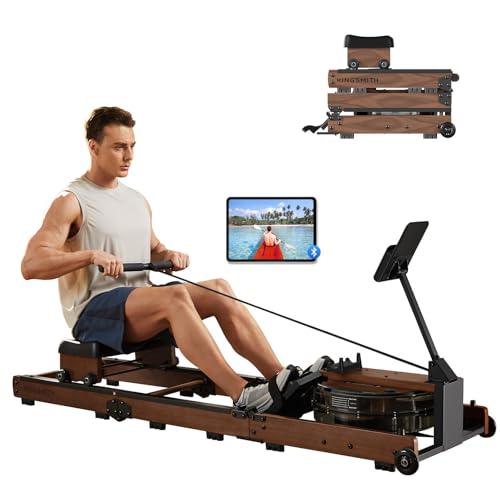
KINGSMITH water rowing machine review: triple-fold frame, 5-level water resistance, 180kg limit, Kinomap support and £499 price, plus the trade-offs to know.
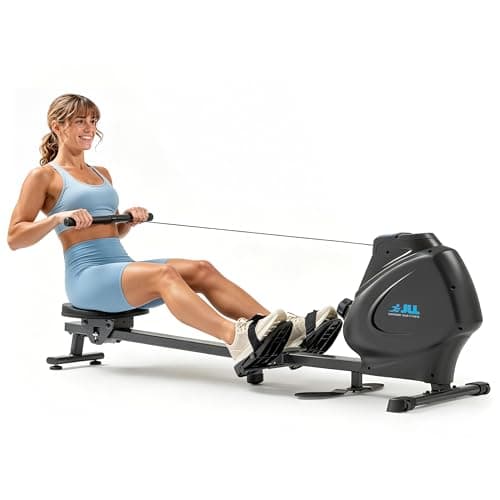
An honest JLL folding magnetic rowing machine review: how this JLL rowing machine's 16 magnetic levels, standing footplates, SunnyFit app and 130kg limit compare with JLL's water rower, the R300 and the MERACH.
Best Exercise is a participant in the Amazon EU Associates Programme, an affiliate advertising programme designed to provide a means for sites to earn advertising fees by advertising and linking to Amazon.co.uk. As an Amazon Associate we earn from qualifying purchases. This comes at no extra cost to you and never influences our independent reviews or rankings.