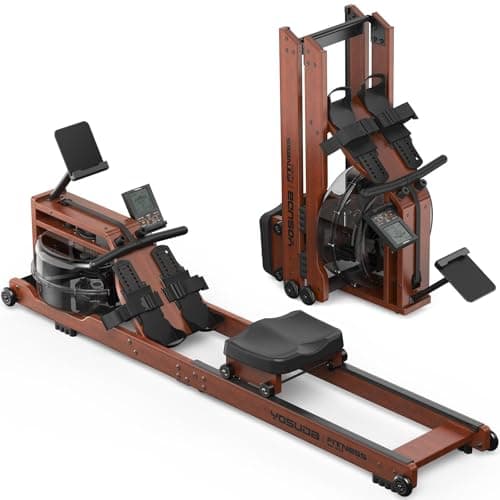
Wooden water rowers have always been the ones people actually want in a living room, and always the ones that cost too much to justify. YOSUDA's version undercuts that problem hard: FSC-certified beech, a 22 litre tank, a 182kg user rating and a fold-flat design, for around £300. The established wooden brands start well north of that, and our WaterRower A1 review covers what a couple of hundred pounds more buys you.
What YOSUDA has done is sensible. The frame, the tank and the paddle design are where the money went. The console is where it didn't.
How we review
We researched YOSUDA's published specifications, patterns in verified owner reviews and how this rower compares with others at the price. We have not spent months rowing on this exact machine, so nothing here is presented as a long-term hands-on test. Prices and specs were correct at the time of writing.
The frame and the tank
Beech is the right wood for this job: dense, stiff and stable enough that the rail doesn't flex under a hard leg drive. YOSUDA sources it FSC certified, which means the timber comes from responsibly managed forests rather than being an unverified claim on a box. The rating is a generous 182kg user capacity, so this isn't a machine that feels borrowed from someone lighter than you.
The tank holds 22 litres, which is large for the price, and drives a four-blade paddle rather than the two-blade design common on cheaper water rowers. More blades move more water per stroke, so the resistance builds sooner in the drive and the catch feels firmer. Water resistance is self-regulating: pull twice as hard and you get roughly four times the resistance, which is why a water rower suits everyone in a household without anyone adjusting anything.
Pros
FSC-certified beech frame that looks like furniture rather than gym kit
22 litre tank with a four-blade paddle gives a firm, realistic catch
182kg user weight capacity, well above most rowers at this price
Folds 180 degrees to stand vertically, cutting the footprint by around 60%
Arrives 98% assembled, so setup is roughly 10 minutes
Two-year replacement parts service from YOSUDA
Cons
Console shows time, distance and calories but no split time or stroke rate
186cm rail limits rowers much over 190cm tall
Resistance can only be changed by adding or removing water
Water needs a purification tablet and an occasional change
Heavy to stand upright once the tank is full
Wood needs keeping away from radiators and damp, unlike a steel rower
How it rows
A four-blade paddle in 22 litres of water gives a heavier stroke than most sub-£300 rowers manage, and that changes the workout. The catch loads immediately instead of feeling vague for the first few inches, and finishing a stroke properly means driving with your legs rather than yanking with your arms. That's the correct order, and it's why rowing recruits so much of the body at once: EMG work on muscle synergies during maximal ergometer rowing shows a coordinated pattern running from the legs through the trunk to the arms, with three synergies explaining most of the movement.
The noise is the part nobody warns you about, and it cuts both ways. Water rowers make a distinct swoosh on every stroke, which is pleasant and rhythmic in a way a magnetic rower's whirr isn't, but it's not quiet, and 25 minutes of it at 6am carries through a wall. Anyone in a flat should think about that before choosing water over magnetic.
Resistance changes only by adjusting the water level. Filling the tank further makes every stroke heavier; draining some makes it lighter. That's a job for setup day rather than something you do mid-session, so if you want to move between an easy warm-up and a hard interval, you do it by pulling harder rather than by changing a setting.
YOSUDA foldable wood rowing machine key specs
Resistance type
Water, 22 litre tank, 4-blade paddle
Frame
FSC-certified beech wood
Rail length
186 cm, suits users up to approx 190 cm
Max user weight
182 kg
Folding
180 degree vertical fold, transport wheels
Console
LCD showing distance, time and calories
Connectivity
Bluetooth to fitness apps, tablet holder
Assembly
98% pre-assembled, around 10 minutes
Water maintenance
Change roughly every 90 days
Price at time of writing
£299.99
The console is the weak point
Time, distance and calories. That's what you get, plus Bluetooth to fitness apps and a holder for the tablet you'll probably watch instead. For someone rowing 20 minutes a few times a week to stay fit, it's enough information.
For anyone who wants to train properly, it isn't. The metric that matters in rowing is the 500m split, because it's the only number that tells you whether this stroke is faster than the last one, and stroke rate is how you learn to row long and strong instead of short and frantic. Neither appears here. That's the gap between £300 and the £900 or so a Concept2 with a PM5 costs, and it's a real one. If structured rowing sessions with split targets are the plan, our best rowing machine UK guide points at machines that support that.
Space, folding and maintenance
Folding is well judged. The rail pivots up through 180 degrees so the machine stands against a wall taking roughly 60% less floor space, and transport wheels at the front make shuffling it about manageable. Do the folding with an empty or partly filled tank the first few times, because 22 litres is 22 extra kilos in the highest part of the machine and it's an awkward lift.
Maintenance is light but non-zero. Drop a purification tablet in when you fill it, top up occasionally, and change the water once or twice a year. The wood wants normal furniture treatment: away from a radiator, out of a damp garage, wiped down when you've sweated on it. Anyone planning to keep a rower in an unheated garage should buy steel and magnets instead.
Assembly is genuinely quick. YOSUDA ships it 98% built, so it's a matter of attaching a few parts and filling the tank, and 10 minutes is a fair estimate. Rowing three or four times a week on it clears the NHS target of 150 minutes of moderate activity a week without much effort, and it does so with far less joint loading than running.
Value
£300 for a wooden water rower with a 22 litre tank is the story here. Comparable wooden machines from established brands cost two to three times as much, and while they offer better consoles and longer warranties, the frame and the rowing feel are closer than the price gap suggests. Our best water rowing machine UK guide puts it in context against those alternatives.
Two people should look elsewhere. Anyone over roughly 190cm, because the 186cm rail will cut the stroke short. And anyone who wants to train to numbers, since the console won't support it. Everyone else gets a good-looking, quiet-enough, folding rower for the price of a mid-range magnetic one.
For the money, yes. You get an FSC-certified beech frame, a 22 litre water tank with a four-blade paddle, a 182kg user capacity and vertical folding, all for around £300. Wooden water rowers from the established brands start at two to three times that. The compromise is the console, which counts time, distance and calories but does not give you the split and stroke rate data a Concept2 PM5 does.
How does resistance work on a water rower?
By how hard you pull. Water resistance rises with the square of your speed, so a gentle stroke is easy and a hard one bites immediately, which is what makes rowing on water feel realistic. You can change the baseline by adding or removing water from the tank, but there is no dial to twist mid-session the way a magnetic rower has.
Does the YOSUDA rowing machine fold up?
It folds 180 degrees to stand vertically, and YOSUDA claims that saves up to 60% of the floor space. Transport wheels at the front let you tip and roll it to a wall. Standing it up is a two-handed job with a full 22 litre tank, so pick your spot before you fill it.
How tall can you be to use it?
The rail is 186cm long, and YOSUDA suggests it suits users up to about 190cm. Taller rowers will run out of slide at the catch, which shortens the stroke and takes some of the leg drive out of it. If you are over 6ft 2in, measure carefully or look at a longer-railed rower.
How often do you change the water?
YOSUDA suggests every 90 days. In practice you drop a purification tablet in when you fill it and top it up rather than emptying it, and a full change once or twice a year keeps the tank clear. It is less maintenance than people expect, though it is more than a magnetic rower asks for, which is none.
Is a water rower better than a magnetic one?
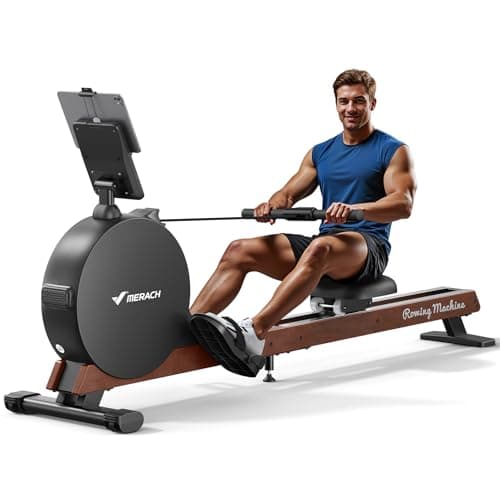
Water rowers feel closer to rowing on a river and make a pleasant swooshing noise instead of a mechanical whirr. Magnetic rowers are quieter, cheaper, need no maintenance and let you set an exact resistance level. Choose water for the feel and the look, magnetic for practicality and a smaller budget.
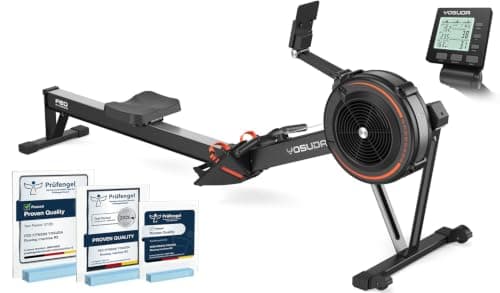
What an air rowing machine is, how fan resistance and the damper really work, why gyms use them, the downsides (noise, size) and what to look for before you buy.
What a magnetic rowing machine is, how eddy-current resistance works, the real pros and cons versus air and water, and what to check before you buy one.
Our YOSUDA R2 air rowing machine review covers the 32-blade fan, 10-level damper, self-powered monitor, 158kg limit and how it compares with a Concept2.
Best Exercise is a participant in the Amazon EU Associates Programme, an affiliate advertising programme designed to provide a means for sites to earn advertising fees by advertising and linking to Amazon.co.uk. As an Amazon Associate we earn from qualifying purchases. This comes at no extra cost to you and never influences our independent reviews or rankings.