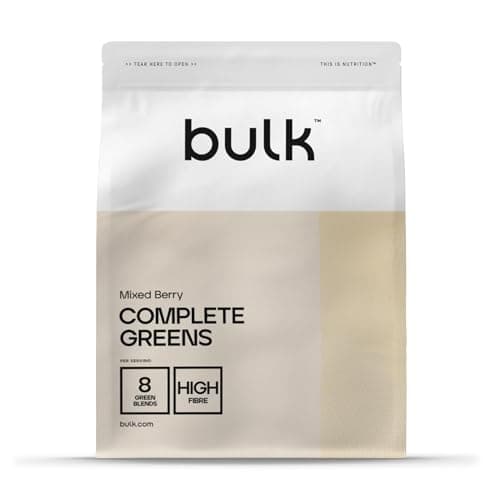
Nutrition
Best Greens Powder UK 2026: Super Greens and Vegetable Powders Compared
The best greens powders in the UK for 2026, from budget super greens to premium all-in-one vegetable powders, plus an honest look at whether they actually work.

By Declan Hallwood, Nutrition & Supplements Editor · Updated 6 October 2026
We may earn a commission from qualifying purchases made through links on this page, at no extra cost to you. This never affects our ratings.
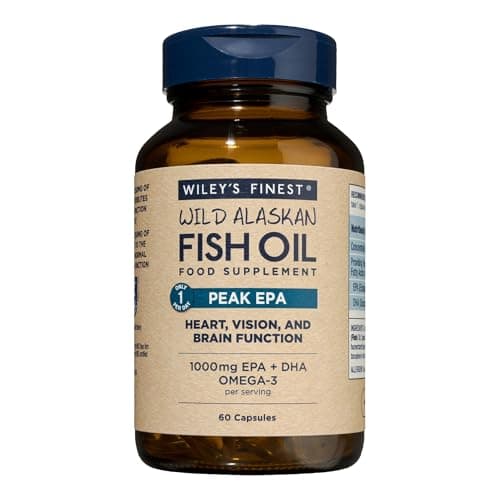
Wiley's Finest Peak EPA is a high-strength fish oil that packs 1,000mg of omega-3 into a single softgel, weighted heavily towards EPA at 750mg with 250mg of DHA. It is aimed at anyone who wants a serious EPA dose without swallowing a handful of weak 1000mg capsules: lifters and runners chasing the recovery and anti-inflammatory angle, and older buyers taking omega-3 for general heart health. The short verdict? It is one of the easiest ways to hit a genuinely useful omega-3 intake in the UK, let down mainly by the cheaper ethyl ester oil form and a price well above budget fish oils. One honest caveat up front: the evidence for omega-3 specifically speeding exercise recovery is still mixed, so buy this for reliable, high-dose omega-3 rather than a guaranteed performance edge.
What you are paying for is concentration. Most fish oil on the shelf shouts a big "1000mg" on the front, but that number measures the oil, not the omega-3 inside it, and a standard capsule hides only about 300mg of EPA and DHA between them. Peak EPA flips that: the headline 1,000mg is the omega-3, delivered in one softgel, and three quarters of it is EPA. If you have ever squinted at a label trying to work out what you are actually swallowing, that clarity alone is worth something.
How we review
This review is based on extensive research of verified owner reviews, trusted expert testing and Wiley's Finest's published specifications and nutritional information. We have not run our own long-term blood-level study of this exact batch, so we report only consistent, repeated findings (both the praise and the complaints) rather than one-off opinions, and we back the health and dosing claims with cited research.
This suits anyone who has decided omega-3 is worth taking and wants to hit a proper dose simply. One softgel a day covers it, which beats counting out four budget capsules to reach the same EPA. It is a sensible pick for hard trainers who want the anti-inflammatory side of omega-3, for people whose diet is light on oily fish, and for older buyers taking it for heart and joint reasons. The EPA-heavy split makes it less ideal if your priority is DHA, the fraction most linked to brain, eye and pregnancy needs; a balanced or DHA-led oil fits that job better. It is fish oil too, so vegans and vegetarians should look elsewhere, which I cover below.
Check price on AmazonThe active oil is concentrated omega-3 from Wild Alaskan Pollock, caught in US waters and certified by the Marine Stewardship Council as sustainably sourced. Wiley's Finest refines it in its own facility, which is a reassurance point on a shelf full of white-label tubs. Per softgel you get 750mg EPA and 250mg DHA, and the softgel shell itself is fish (tilapia) gelatin rather than beef or pork, with mixed tocopherols added to keep the oil fresh.
The one spec worth understanding is the oil form. Peak EPA softgels use a concentrated ethyl ester (EE) oil, which is how most high-concentration fish oils are produced because it lets them pack more EPA and DHA into a small capsule. Triglyceride-form oils absorb a little better and tend to repeat less, so the brands that use them advertise it in large letters. Ethyl ester is not a flaw, it still raises your omega-3 levels, but it is a fair reason the premium triglyceride oils charge more, and it is the honest trade-off here. Take the softgel with a meal containing some fat and you close most of that absorption gap.
| Omega-3 per softgel | 1,000 mg (750 mg EPA, 250 mg DHA) |
|---|---|
| Serving size | 1 softgel daily |
| Softgels per bottle | 60 (approx 2 months) |
| Oil form | Concentrated ethyl ester (EE) |
| Fish source | Wild Alaskan Pollock, MSC-certified |
| Softgel shell | Fish (tilapia) gelatin |
| Free from | Gluten, dairy and GMOs |
| Freshness | Mixed tocopherols added |
| Vegan friendly | No (fish oil and fish gelatin) |
In daily use the appeal is how little thinking it needs. You take one softgel with a meal and you are done, having swallowed more EPA and DHA than four or five standard capsules would give you. For context, the NHS advises eating at least one 140g portion of oily fish a week for long-chain omega-3, noting it "can help to prevent heart disease" (NHS on fish, shellfish and omega-3). Plenty of us never manage that weekly portion, and a daily high-strength softgel is a straightforward way to top up the EPA and DHA a fish-light diet misses.
What you should not expect is a dramatic, feel-it-today effect. Omega-3 works quietly over weeks by shifting the fatty-acid make-up of your cells, so judge it over a couple of months, not by day three. On the recovery question that draws a lot of lifters to fish oil, the research is genuinely unsettled. A 2026 mini-review of omega-3 and exercise-induced muscle damage found that fish oil reduced soreness and inflammatory markers in several trials, yet others saw no difference, and the authors concluded that the best dose and EPA-to-DHA ratio "cannot be determined" from the current evidence (omega-3 and exercise-induced muscle damage, Frontiers in Nutrition 2026). My take is to treat reduced soreness as a possible bonus rather than the reason to buy, and to value the supplement for the reliable omega-3 intake it guarantees.
Side effects are usually limited to the odd fishy aftertaste, and most Peak EPA owners report even that is rare, which tracks with it being a fresh, concentrated oil rather than a cheap one on the turn. If your stomach is sensitive, take it with your largest meal. Store the bottle away from the hob and bin any fish oil that smells strongly rancid, because oxidised oil is what causes the unpleasant repeat and does you no favours.
Peak EPA looks expensive next to a 90p-a-month bargain tub, and then you read the labels. A budget 1000mg capsule gives you roughly 300mg of actual omega-3, so matching one Peak EPA softgel means taking three or four of them, and suddenly the cheap tub is not cheap per milligram at all. At around £27 for 60 softgels, Peak EPA works out competitively on the number that counts, which is EPA and DHA delivered per day. You are paying a small premium for the concentration, the single-softgel convenience and the sustainable sourcing, not for a marketing gimmick.
Where it stops being the obvious buy is if you want DHA-led omega-3 or you avoid fish entirely. For the DHA priority, a balanced oil serves you better. For the plant-based route, algae oil is the equivalent, and we have reviewed the Opti3 vegan omega 3 and Omvits vegan omega 3, both of which make more sense inside a vegan bodybuilding diet than any fish oil. Omega-3 is also a sensible thing to stack with the basics; if you are still sorting your protein, our best protein powder UK guide covers that, and Peak EPA slots neatly alongside it in a daily routine.
Check price on AmazonYes, if you want a high dose of EPA without swallowing a pile of weak capsules. One softgel gives you 1,000mg of omega-3, 750mg of it EPA, which is several times what a standard 1000mg fish oil capsule delivers. The oil is in the cheaper ethyl ester form rather than triglyceride, and it costs more than budget fish oils, but on actual EPA and DHA per day it is strong value.
Each softgel provides 750mg EPA and 250mg DHA, so 1,000mg of combined omega-3. The serving is one softgel a day, and the 60-count bottle lasts about two months. That EPA-heavy split is the point of the product: it is built for people who specifically want EPA rather than a balanced EPA and DHA oil.
The softgels use a concentrated ethyl ester (EE) oil. Triglyceride-form oils tend to absorb slightly better, so brands that use them say so loudly, but ethyl ester still works and is how most high-concentration fish oils are made. Taking Peak EPA with a meal that contains some fat improves how much you absorb.
Most owners report little to no repeat, which is normal for a concentrated, fresh fish oil rather than a cheap one that has started to oxidise. If you are prone to reflux, take it with food and store the bottle somewhere cool. Any fish oil that smells strongly rancid should be binned, not swallowed.
On the number that matters it is far stronger. A typical 1000mg fish oil capsule carries only about 180mg EPA and 120mg DHA, so roughly 300mg of actual omega-3, whereas one Peak EPA softgel gives you 1,000mg. You pay more per bottle, but per milligram of EPA and DHA it is often cheaper than the bargain tubs.
No. It is fish oil from Wild Alaskan Pollock, and the softgel shell is made from fish gelatin, so it suits neither vegans nor vegetarians. If you avoid animal products, an algae-oil supplement is the equivalent, and we have reviewed a couple of the better ones.
The best greens powders in the UK for 2026, from budget super greens to premium all-in-one vegetable powders, plus an honest look at whether they actually work.
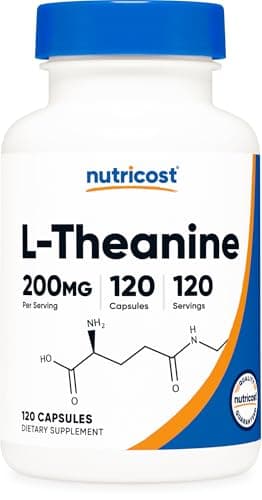
The best L-theanine supplement for UK buyers in 2026: five capsules ranked on dose and cost per day, what the research shows about sleep and caffeine, and the dose worth taking.
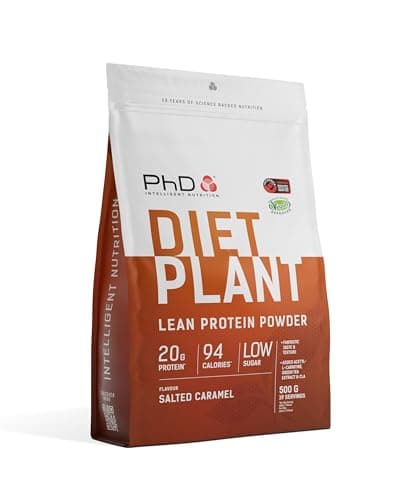
The best protein shakes for weight loss in the UK, and how to spot the healthiest protein powder for a diet: low-calorie, high-protein picks to curb hunger, plus how to use them.
Active calories vs total calories explained: what Apple Watch, Garmin, Fitbit and Whoop count, how accurate they are, and how many to eat back for weight loss.
Best Exercise is a participant in the Amazon EU Associates Programme, an affiliate advertising programme designed to provide a means for sites to earn advertising fees by advertising and linking to Amazon.co.uk. As an Amazon Associate we earn from qualifying purchases. This comes at no extra cost to you and never influences our independent reviews or rankings.