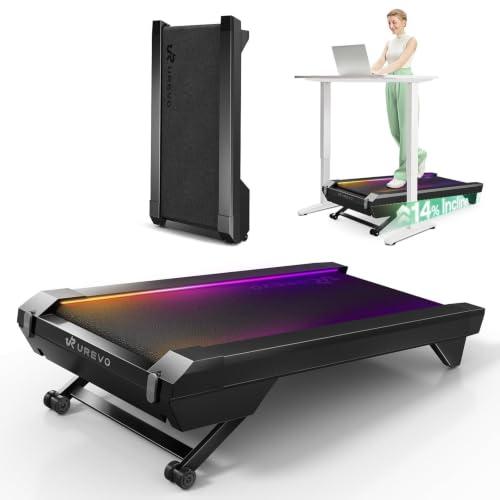
Treadmills
UREVO CyberPad Review: A 14% Incline Walking Pad for the Office
Our UREVO CyberPad review: 14% auto incline, brushless motor, desk remote and app at £399.99. A steep, quiet walking pad, but not a running treadmill.

By Paul Kendrick, Cardio & Endurance Editor · Updated 20 November 2026
A treadmill belt that slips is almost always too loose. The fix is to unplug the machine and tighten both rear roller bolts a quarter turn each, equally, then test and repeat until the slipping stops. If that doesn't cure it, the next suspects are a dry deck that needs lubricating, a worn running belt or deck, a stretched drive belt between the motor and the front roller, or a worn front roller. Most people never get past the first step, because tension is the cause in the large majority of cases.
That said, "slipping" means different things to different people, and the symptom tells you a lot about where to look.
Two rules before you touch anything. Switch the treadmill off at the wall and pull the plug before you check tension, lift the belt or put a hand anywhere near the rollers. And never adjust the bolts while someone is standing or walking on the belt; the only time the belt should be moving during this job is when you run it empty at a slow walking speed to check your adjustment.
Sole's own maintenance guidance says to power the machine down and unplug it before any belt work (Sole: how tight should a treadmill belt be). Keep fingers, loose clothing and pets well clear of the rear roller whenever it turns.
Spend a minute diagnosing before you reach for the Allen key. These three symptoms get lumped together as "slipping", but they have different causes.
The belt hesitates or jerks each time your foot lands. This is true slipping. The motor keeps turning, but the belt briefly stops or slows under your weight, so you feel a lurch on every stride. It's usually a loose running belt, sometimes a dry deck. If it's worse when you run than when you walk, that fits: harder foot strikes put more drag on the belt.
The belt drifts to one side. That's a tracking problem, not tension. One rear bolt is tighter than the other, the treadmill isn't level, or the belt has stretched unevenly. Sole's guide to belt drift recommends levelling the machine first, then tightening the bolt on the side the belt is moving towards by a quarter turn while it runs at 1 to 2 mph (Sole: belt slipping to one side). A treadmill sitting on deep carpet can also go out of level, which is one reason we cover using a treadmill on carpet separately.
The speed surges, or the belt slows and then catches up. If the belt stutters even when nobody is on it, or the speed rises and falls on its own, look beyond the running belt. A stretched drive belt under the motor hood, a failing roller bearing or a motor control fault can all cause it. A tension tweak won't fix any of those.
A handy check for the drive belt, if you're comfortable removing the motor cover with the machine unplugged: a belt that slips while the front roller keeps turning points to the running belt, whereas a front roller that stops along with it points to the drive belt.
You'll need the hex key that came with the treadmill (most use one) and about 15 minutes.
Don't chase it too far
If you've added a full turn on each side and it still slips, stop tightening. An over-tight belt adds friction, loads the roller bearings and makes the motor work harder, and Sole notes that excessive strain can damage the belt or burn out the motor. At that point the problem is probably lubrication or wear, not tension.
Lubricate the deck. A dry deck makes the belt grab and release under your foot, which feels exactly like a loose belt. Unplug the machine, lift the belt edge and feel the deck underneath; if it's dry with no slick residue, it needs silicone. Our guide on how to lubricate a treadmill walks through it. Over-lubricating does the opposite job and can make the belt slip on the rollers, so go easy.
Inspect the belt and deck. Flip up the belt edge and look at the underside. Shiny, glazed patches, frayed edges, cracks or lots of black dust under the machine all suggest the belt is worn out. A worn deck, often visible as a smooth groove where your feet land, will keep causing drag however tight the belt is.
Check the drive belt. On machines with a separate drive belt (many compact folding treadmills and walking pads use a direct drive instead), that belt runs from the motor pulley to the front roller under the hood. It stretches over time. Tensioning it usually involves adjusting the motor mount, and because you're working next to the motor and electronics, this is a job for a technician unless your manual walks you through it.
Listen to the front roller. Grinding, rumbling or a roller that feels rough when spun by hand points to worn bearings. A worn front roller can also lose grip on the belt. Rollers can be replaced, but the part and labour add up.
If you've tensioned, lubricated and the belt still slips, or the underside is visibly worn, it's time for a replacement belt or an engineer. Prices vary so much by model that we won't quote a single figure; a belt for a budget folding machine can be under £100, while belts for premium treadmills cost considerably more, and an engineer visit adds a call-out fee on top. Get the part number from the manufacturer's parts store using your serial number rather than buying a generic belt by size.
Do the maths before booking anyone. On a sub-£300 treadmill, a new belt plus fitting can get uncomfortably close to the price of a new machine, especially if the deck is worn too. On a well-built mid-range or premium treadmill, a belt is routine maintenance and well worth doing. If you are replacing the whole thing, our treadmills hub and best treadmills for home use guide cover what's worth buying now, with an eye on build quality that keeps this kind of problem away for longer.
A few habits cut the chances of slipping coming back: check tension every couple of months, lubricate on your manual's schedule, keep the machine level, and put it on a treadmill mat to keep dust and carpet fibres out of the belt.
The most common reason is a running belt that has stretched and lost tension, so the rear roller can't grip it when your foot lands. A dry deck can cause the same stutter because friction drags the belt back. Less often the culprit is a worn belt or deck, a stretched drive belt under the motor cover, or a worn front roller.
Tight enough that it doesn't hesitate under your foot strike, but no tighter. A common manufacturer guideline is that you should be able to lift the belt a few inches off the deck at its midpoint with the machine switched off; Sole, for example, suggests about 3 to 4 inches. Your own manual's figure takes priority because it varies by model.
On most treadmills, turning both rear roller bolts clockwise tightens the belt. A few older manuals for some brands specify the opposite for certain steps, so check yours. Whatever the direction, turn both bolts by the same amount, a quarter turn at a time.
Yes, and it's a common mistake. An over-tight belt adds friction, makes the motor work harder and puts extra load on the roller bearings. It can even cause slipping of its own. If the belt barely lifts off the deck, back both bolts off a quarter turn.
If the motor, deck and rollers are healthy, a new running belt is usually far cheaper than a new treadmill. It stops making sense on a budget machine where the belt plus an engineer's visit approaches the cost of a replacement, or when the deck is also badly worn.
Our UREVO CyberPad review: 14% auto incline, brushless motor, desk remote and app at £399.99. A steep, quiet walking pad, but not a running treadmill.
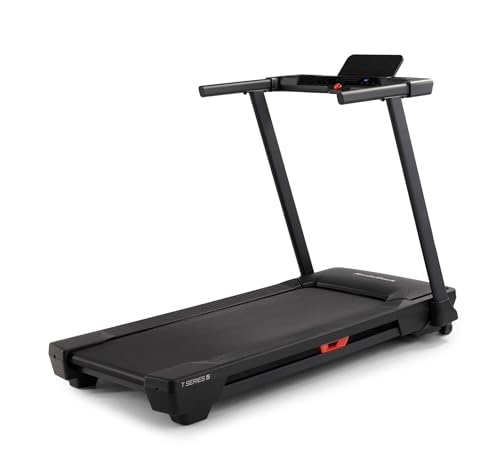
Our NordicTrack T Series 5 review covers the 46 x 140cm belt, 16 km/h top speed, 10% incline, iFIT costs and warranty, and when the bigger T Series is the better buy.
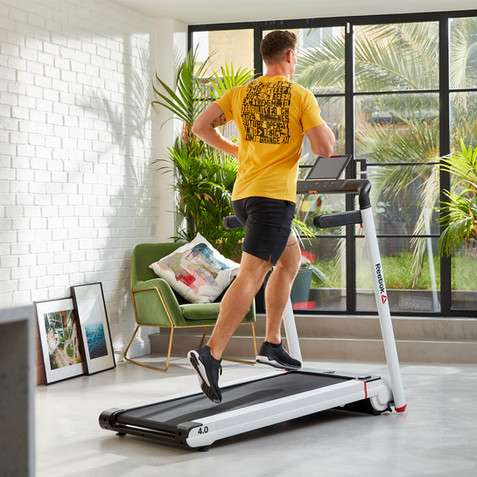
An honest Reebok i-Run 4.0 treadmill review: 16 km/h top speed, 120kg user limit, 125 x 46cm belt and a 10-year motor warranty. Who the iRun 4.0 suits and where it falls short.
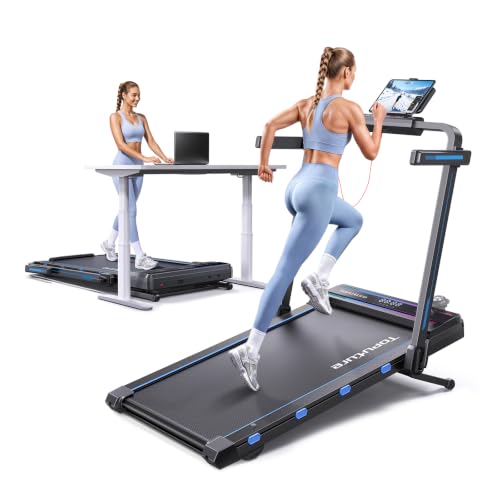
Our Toputure 16% incline treadmill review: 9-level auto incline, 3.0HP motor, 14km/h, 110 x 42cm belt and 150kg limit for £369.99, plus its real limits.
Best Exercise is a participant in the Amazon EU Associates Programme, an affiliate advertising programme designed to provide a means for sites to earn advertising fees by advertising and linking to Amazon.co.uk. As an Amazon Associate we earn from qualifying purchases. This comes at no extra cost to you and never influences our independent reviews or rankings.