Smith Machine Bar Weight: How Much Does a Smith Bar Weigh?
By Jack Atkins, Home Gym Equipment Specialist · Updated 8 October 2026
A Smith machine bar doesn't have a standard weight. Depending on the machine, the effective starting weight is commonly somewhere around 6kg to 20kg, and a counterbalanced bar on a commercial machine can feel close to zero. Whether your machine has a counterweight matters most; friction in the bearings matters a little; and the angle of the rails, angled (often around 7 degrees) or vertical, matters less than most people think. So "what does the Smith bar weigh?" really means "what does this Smith bar weigh?", and the answer is in the manual or on your own scale.
That's frustrating if you want a single number for your log, but it's also fixable in about five minutes. Below is what changes the figure, how to measure your own and how to handle Smith numbers next to your free barbell lifts.
Smith machine bar weight at a glance
Machine type
Typical effective bar weight
What's going on
Counterbalanced commercial Smith
close to 0kg up to about 10kg
A cable and counterweight offset most of the bar's mass
Non-counterbalanced Smith (common at home)
roughly 15kg to 20kg+
You lift the bar's full mass, plus a little bearing friction
Lightweight or compact home Smith
roughly 6kg to 15kg
Lighter bar, often no counterweight
Free Olympic barbell, for comparison
20kg
Fixed by competition standard
These are typical ranges, not specs for any particular model. Treat them as a starting guess and measure your own.
Counterbalanced vs non-counterbalanced
A counterbalanced Smith machine runs a cable from the bar over pulleys at the top of the frame to a hidden weight, usually inside one of the uprights. That weight pulls up on the bar while gravity pulls it down. If the bar itself is 25kg and the counterweight is 18kg, you're only moving the 7kg difference. Some gyms set the counterweight so high that an unloaded bar almost floats.
Without a counterweight, there's nothing to cancel out. You lift whatever the steel bar, hooks and bearing blocks weigh. Most home Smith machines are built this way because a counterbalance adds cost, cables and maintenance, and that's why a home Smith bar often feels heavier than the one at the gym.
The confusing part is that the bar's actual mass and its effective weight are two separate numbers. A manufacturer might quote the bar at 20kg, but if a counterweight takes off 12kg, you're lifting 8kg. The effective figure is the one that belongs in your log.
Angled vs vertical rails
Some Smith machines run the bar on vertical rods; others tilt them, often by about 7 degrees, so the bar travels slightly forwards or backwards as it rises. People often assume the angle makes the bar lighter, and technically it does, though only by a whisker.
Gravity acts straight down, so on a tilted rail you only push against the part of the bar's weight that lies along the rail. At 7 degrees that's the bar's weight multiplied by the cosine of 7 degrees, roughly 0.993. On a 20kg bar the difference is about 150g. You'd struggle to notice it.
What the angle does change is the path. A bar that drifts back as it rises suits a squat with the feet slightly forward (our Smith machine squat guide covers foot position), and a bar that drifts towards your face changes how a Smith machine bench press lines up with your chest. Same load, different lift.
Friction: the other small factor
Every Smith bar slides on bearings or bushings, and they resist movement in both directions. On the way up, friction makes the bar feel a touch heavier; on the way down, a touch lighter. Linear ball bearings on a clean rod keep this small. Worn nylon or brass bushings, or a bar loaded unevenly so it twists on the rods, can make it noticeable. It's another reason two machines with the same quoted bar can feel different.
Home Smith machines we've reviewed
We checked our own reviews for a published bar weight before writing this page, and none of the home machines we've covered quote one:
Marcy SM-4903: no starting bar weight in the listing either, which we flag in the Marcy SM-4903 review.
Strongway multi gym Smith machine: the listing covers the 177kg stacks and 350kg frame rating, but not the bar itself. Our Strongway Smith machine review has the rest.
That's common in this price bracket, and it's why we'd rather tell you to weigh the bar than guess a figure. If you're still choosing, our best Smith machine UK guide compares the home models worth buying, and it's worth asking the seller for the bar weight before you order.
How to measure your own Smith bar
You can't use the usual trick of weighing yourself with and without the bar, because the bar is attached to the frame. These two methods work instead.
Bathroom scale method
Raise the scale. Put a bathroom scale on a sturdy box, step or flat bench under the bar, so the bar can sit on it a few centimetres above the safety stops.
Lower the bar onto it. Unhook the empty bar and lower it gently onto the centre of the scale, keeping it level. Let go completely.
Read the number. Wait for it to settle. That reading is the effective weight, counterbalance included.
Repeat a couple of times. Lift the bar off and set it down again; bearing friction can hold the bar up slightly, so average two or three readings.
Luggage scale method
A digital luggage scale works well and doesn't need a box. Hook it around the middle of the empty bar, unhook the bar from the frame and lift it slowly and steadily along the rails. Note the reading mid-lift. Then lower it slowly and note that reading too. The upward number includes friction working against you and the downward one has friction helping, so the average of the two is a fair effective weight.
Write it on the frame
Once you've got a figure, stick a strip of tape on the upright with the effective bar weight and the date. If you ever service the bearings or change the counterweight, measure again.
Should you count the Smith bar in your log?
Count it if you know it. Your total is the effective bar weight plus the plates on both sides, so a bar measured at 8kg with a 20kg plate each side is a 48kg lift. That's the honest number, and it makes your progress readable if you ever move house or change machine.
If you don't know the figure, log plates only and write "plates only" next to it. What wrecks a training log is switching conventions halfway through, or comparing a counterbalanced gym Smith with an unbalanced home one as if they were the same lift. Either way, note the machine.
Comparing Smith numbers with a free barbell
Don't expect them to match, even after you've accounted for the bar. The machine holds the bar's balance and path for you, and that shifts what you can lift in different directions for different exercises.
In a study of 16 men and 16 women, Cotterman and colleagues (2005) found squat one-rep maxes were higher on the Smith machine than with free weights, while bench press maxes were higher with free weights. They even published a conversion for the bench: Smith bench 1RM equals 0.95 times the free-weight bench 1RM, minus 6.76kg. A separate study of 12 trained men (Saeterbakken et al., 2011) found barbell chest press loads were around 3% higher than on the Smith machine.
Neither study measured bar weight on your machine, of course, so use them as a sense of direction rather than an exact formula. In practice: your Smith squat will probably flatter you and your Smith bench probably won't. A Smith machine shoulder press sits in the same camp as the bench, since the bar balance it removes is a big part of what makes a standing barbell press hard.
The good news is that progress on a Smith machine is still real progress. A 2023 meta-analysis found free-weight and machine training built strength and muscle about equally overall, although strength gains showed up most clearly on the type of equipment people trained with. That specificity is one more reason to keep the two sets of numbers in separate columns.
Common mistakes
Assuming the bar is 20kg because the gym's free bars are. A counterbalanced Smith might be a quarter of that.
Crediting the angle with a big weight change. At 7 degrees it's under 1%; the counterweight is what makes the difference.
Comparing gym and home Smith numbers. Different counterweights, different bearings, different numbers. Measure both if you train on both.
Forgetting the bar exists on light lifts. On a 10kg shoulder press, an unknown bar weight can be most of the load.
There's no standard figure. Most Smith bars have an effective starting weight somewhere around 6kg to 20kg, and counterbalanced commercial machines can bring that close to zero. The only reliable way to know is to check the manual or a label on the frame, or measure it yourself with a bathroom or luggage scale.
Is a Smith machine bar 20kg like an Olympic bar?
Usually not. A free Olympic barbell is 20kg because it's built to a competition standard. A Smith bar is a different object: it's fixed to the frame, often carries hooks and bearing blocks, and may be offset by a counterweight. Some home Smith bars weigh close to 20kg, but plenty feel far lighter, so don't assume.
Do you count the Smith machine bar when logging lifts?
Yes, if you know its effective weight. Add it to the plates and write down which machine you used. If you don't know the figure, log plates only and note that you did, then stick with that convention. Consistency on the same machine matters more than the exact number.
Does the angle of a Smith machine change the bar weight?
Only slightly. On a 7 degree angled rail, the force you push against along the rail is about 99% of the bar's weight, so the difference is well under 1%. The angle changes the bar path and how the lift feels much more than it changes the load.
Why is my Smith machine squat higher than my barbell squat?
The machine balances the bar for you, so you can push more of your effort straight into the lift, and a counterbalanced bar may weigh less than you think. In one study of 32 adults, Smith squat maxes came out higher than free-weight squats while bench maxes went the other way, so the two sets of numbers don't transfer one to one.
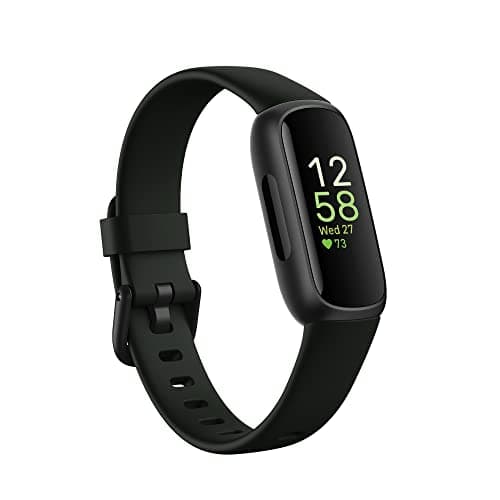
An honest Fitbit Inspire 3 review covering its AMOLED screen, 10-day battery, sleep and heart rate tracking, connected GPS, the Premium paywall and who should buy it.
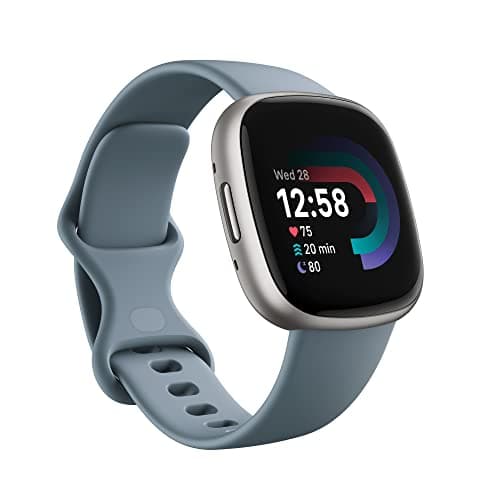
Our Fitbit Versa 4 review covers built-in GPS, 6+ day battery, Google Maps and Wallet, the lost third-party apps and Wi-Fi, and who should buy it at £179.
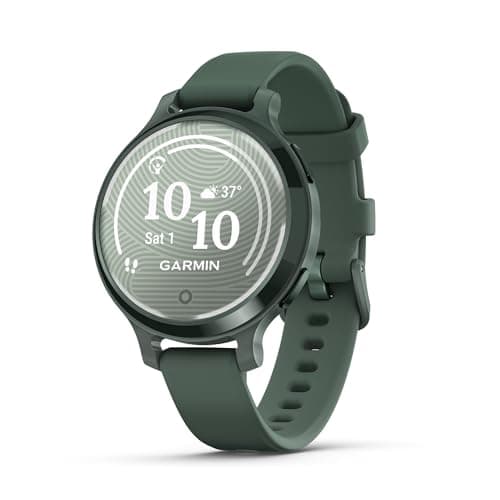
An honest Garmin Lily 2 Active review: built-in GPS on a 38mm, 29g case, 9 day battery, Garmin Pay, and the greyscale screen and missing music storage to weigh against the price.
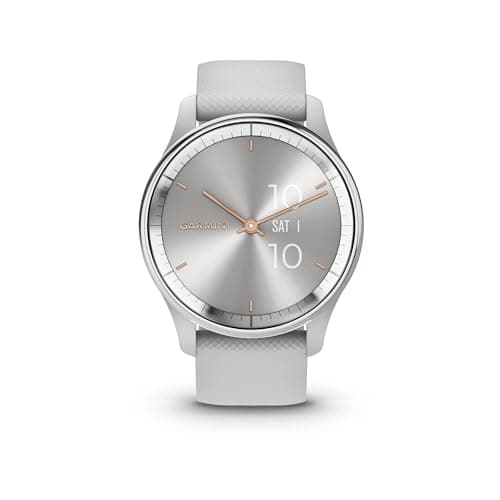
Garmin vivomove Trend review for UK buyers: analogue hands over a hidden touchscreen, Body Battery, Garmin Pay, Qi charging, and the 5 day battery and missing GPS to weigh up at £232.
Best Exercise is a participant in the Amazon EU Associates Programme, an affiliate advertising programme designed to provide a means for sites to earn advertising fees by advertising and linking to Amazon.co.uk. As an Amazon Associate we earn from qualifying purchases. This comes at no extra cost to you and never influences our independent reviews or rankings.