Treadmills
Are Walking Pads Worth It? An Honest UK Verdict
Are walking pads worth it? Who they suit, the step and calorie gains from treadmill desk research, cost per use, noise, spec limits and when to buy a treadmill.

By Paul Kendrick, Cardio & Endurance Editor · Updated 4 October 2026
We may earn a commission from qualifying purchases made through links on this page, at no extra cost to you. This never affects our ratings.
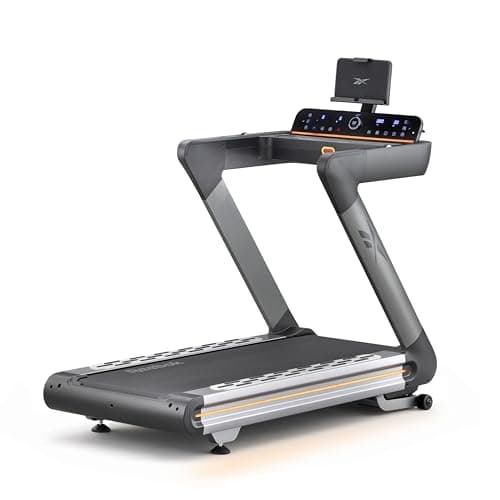
Most treadmills under £1,500 use a DC motor because it is cheaper, and most of them sag noticeably once you have been running for half an hour. The Reebok Z-Tech does not, because Reebok fitted a 5.0HP AC motor, and that decision cascades through the rest of the machine: a 150kg user rating, a 128kg frame, a 25-year frame warranty and a price that lands at £1,399 rather than £549. That is the whole pitch, and it is a good one for a specific person. It is a waste of money for everyone else, so this review spends as much time on who should not buy it.
How we review
This review draws on Reebok's published specifications for the Z-Tech, the Amazon UK listing and consistent themes in owner feedback for comparable AC-motor home treadmills. We have not run our own months-long endurance test of this exact machine, so we report verifiable specs and repeated findings rather than one-off impressions. Price and availability were checked on 29 July 2026.
Runners. Specifically, runners who train at home several times a week, or households where more than one person uses the machine, or anyone above about 100kg who has watched a budget treadmill struggle. Those are the cases where an AC motor and a 150kg rating stop being a spec sheet line and start being the difference between a machine that lasts five years and one that limps after eighteen months.
If you walk, this is overkill by a wide margin. Everything useful about the Z-Tech is headroom, and headroom you never touch is money spent on nothing. Our best home treadmill for walking guide covers that use case far more sensibly, and a walking pad does it for under £300. Running three times a week rather than six? The Reebok I Run 4.0 treadmill gets you most of the way there for a fraction of the outlay.
AC and DC motors fail differently. A DC motor is fine for the first twenty minutes and then heat builds, output drops and the belt starts feeling like it is dragging, which is exactly the complaint that fills the one-star reviews of cheap treadmills. An AC motor delivers power far more consistently over a long session and tolerates a heavier user doing it every day.
Reebok pairs the 5.0HP AC unit with a speed range of 1 to 20kph (0.6 to 12.4mph). Twenty is fast enough for genuine interval work, and the bottom end of 1kph means it doubles as a very slow walking desk machine if you want it to. The 128kg machine weight is part of the same story: mass is what stops a treadmill shaking itself apart when someone lands hard on it at 16kph.
| Motor | 5.0 HP AC |
|---|---|
| Speed range | 1 to 20 kph (0.6 to 12.4 mph) |
| Incline | 18 levels, powered |
| Running deck | 55 cm x 154 cm (22 x 61 in) |
| Cushioning | Energy Transfer Cushioning |
| Console | LED with 40 workout options, tablet holder |
| App support | Kinomap (60-day trial), Zwift, Reebok Console via Bluetooth |
| Max user weight | 150 kg (331 lb) |
| Machine weight | 128 kg |
| Dimensions | 171.5 cm L x 85 cm W x 156.5 cm H |
| Warranty | 25 years frame, 10 years motor, 2 years parts and labour |
A 55 by 154cm belt is the specification that separates running treadmills from walking ones, and plenty of machines at this price still ship 45cm belts. The extra width matters more than people expect once you are tired, because that is when your foot placement wanders. Height-wise, anyone up to around 6ft 2in has room to run at pace; taller runners doing genuine speed work should try one first, since 154cm is adequate rather than roomy at the top of that range.
Reebok's Energy Transfer Cushioning does what all deck cushioning does, which is absorb some of the impact your knees would otherwise take. Treat it as a comfort feature rather than an injury-prevention guarantee, and remember that treadmill running and outdoor running are not biomechanically identical.
Eighteen powered incline levels is the feature most buyers will get the most out of, and not for the reason they expect. Grade transforms the energy cost of walking: a study comparing 20% grade incline walking against level-grade jogging at matched calorie intensity found the incline walk achieved the same energy expenditure at a lower perceived exertion for some measures (incline walking versus level jogging). Another looked at the 12-3-30 protocol and measured roughly double the metabolic cost of flat walking at a 10% grade (metabolic responses to the 12-3-30 treadmill workout).
Which is to say: if you want fat loss and your joints do not fancy running, the incline gets you there without the impact. That is also the case for spending on a machine with 18 powered levels rather than three manual ones.
The mild irritation is that Reebok publishes level counts, not gradients, so you cannot compare its top incline to a NordicTrack's stated 12% or 15%. The listing also contradicts itself on programme count, saying 36 pre-set programmes in the title and 40 workout options in the specification detail. Neither affects how it runs, but sloppy listings are worth noticing when you are spending £1,399.
The console is LED, not a screen, and that is a deliberate choice rather than an oversight. Reebok assumes you will bring your own tablet and run Zwift or Kinomap on it, with a 60-day Kinomap trial included. Compared to a NordicTrack with a bolted-on HD display, you lose the polish and you gain the freedom to switch apps and never pay a subscription tied to the hardware. If a big built-in screen is what you want, our NordicTrack Commercial 1750 review covers that approach.
On value the Z-Tech is one of the stronger cases at its price, mostly on warranty. Twenty-five years on the frame and ten on the motor is a manufacturer betting its own money that the machine lasts, and that matters more than any spec on the box. It's also why the Z-Tech tops our best Reebok treadmill comparison, ahead of the older Jet 100 and the cushioned FR30z. Regular running of this kind sits well past the NHS target of 150 minutes of moderate activity a week, which the British Heart Foundation also frames around consistency rather than intensity. Stock has been running low on this ASIN, so check current availability. For the wider market, see our best treadmills for home use guide and the treadmills section.
For sustained running, yes. DC motors are cheaper and quieter at low speeds but they heat up and lose output on long sessions, which is why budget machines feel like they sag 30 minutes into a run. An AC motor holds its power delivery far more consistently, and it is the single biggest reason a treadmill survives daily use by a heavier runner. It is also why this machine costs £1,399 rather than £500.
The belt is 55cm wide by 154cm long, or roughly 22 by 61 inches. That is a proper running deck rather than a walking one. Anyone up to about 6ft 2in can run at pace without shortening their stride, and taller runners doing genuine speed work will want to try before buying, since 154cm is adequate rather than generous at the very top of the height range.
It does. Reebok lists compatibility with Zwift, Kinomap (with a 60-day free trial included) and the Reebok Console app over Bluetooth. Note the machine's own display is an LED console, not a tablet screen, so you run the apps on your own phone or tablet in the holder rather than on the treadmill itself.
150kg, which is 331lb, and that is genuinely high for a home treadmill. Combined with the AC motor and the 128kg machine weight, it is one of the few sub-£1,500 machines a heavier runner can use daily without pushing it past its rating.
18 levels of powered incline. Reebok publishes the level count rather than a percentage gradient, so treat the top end as steep hill walking rather than a specific number. Even moderate grades sharply increase the energy cost of walking, so the incline is where most of this treadmill's fat-loss value actually lives.
If you run regularly and want a machine that lasts, yes. The AC motor, 150kg user rating and 25-year frame warranty are specs you normally pay closer to £2,000 for. If you mainly walk, you are paying for headroom you will never use, and a £400 folding treadmill or a walking pad will serve you just as well.
Are walking pads worth it? Who they suit, the step and calorie gains from treadmill desk research, cost per use, noise, spec limits and when to buy a treadmill.
Can you run on a walking pad? Mostly no: most cap at 6km/h with short belts and no rails. Which 2-in-1 pads allow a light jog, and when to buy a real treadmill.
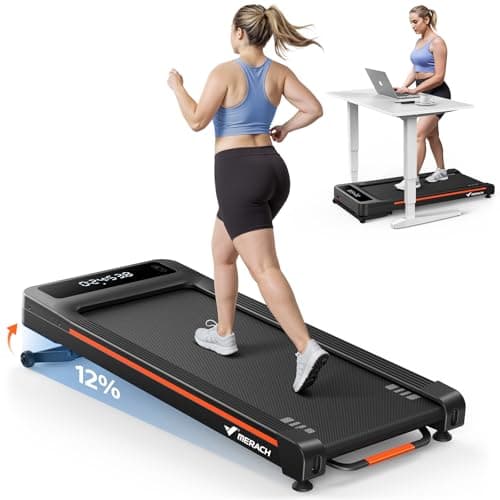
An honest MERACH 12% auto incline walking pad review: 400lb limit, 42cm belt, 6km/h top speed, no fold, no handrail, and why the sprint claims don't hold up.
Most walking pads take 100 to 120kg, mid-range models 120 to 136kg and heavy-duty pads 150 to 180kg. What the limit covers and how much headroom to leave.
Best Exercise is a participant in the Amazon EU Associates Programme, an affiliate advertising programme designed to provide a means for sites to earn advertising fees by advertising and linking to Amazon.co.uk. As an Amazon Associate we earn from qualifying purchases. This comes at no extra cost to you and never influences our independent reviews or rankings.