Treadmills
Treadmill Mat: Do You Need One, What Size and How Thick?
Do you need a mat under a treadmill? When it matters on carpet and hard floors, how to measure for the right size, 4mm vs 6mm vs rubber, and walking pad mats.

By Paul Kendrick, Cardio & Endurance Editor · Updated 2 November 2026
A commercial treadmill is one built and warrantied for gym use: dozens of different people running on it every day, often from early morning to late at night. In practice that means an AC drive motor, a 152 x 56cm deck, large rollers, a user limit around 180kg and a manufacturer warranty that explicitly covers commercial settings. Most home users don't need one, and a strong home treadmill gets you 90% of the feel for a fraction of the price, the space and the electrical hassle.
The term gets muddied by marketing, so this guide sets out what the label actually means, what each class costs in the UK, and which home machines come closest.
There's no single spec that flips a treadmill into the commercial category. It's the combination of drive system, frame, components and, above all, what the manufacturer will warranty it for. The European fitness equipment standard (EN ISO 20957) splits machines into classes for this reason: home use, professional or commercial use, and institutional use with controlled access. A brand rating a treadmill for gym use is putting its warranty budget behind that claim.
Gym treadmills almost always use AC motors. They cope with long continuous running and frequent speed changes without overheating, which matters when a machine goes from a 4km/h walker to a 16km/h sprinter with no rest in between. Life Fitness lists its Integrity series with a 4 HP AC motor rated at 8 HP peak, which is typical of the class.
Home treadmills mostly use DC motors, rated in continuous horsepower (CHP). A good home DC motor of 3 to 4 CHP is plenty for one household, and it runs quietly on a normal plug. Ignore peak horsepower figures on cheap machines; continuous rating is the number that tells you what the motor will sustain.
The commercial standard running surface is 152 x 56cm (60 x 22 inches). That's long enough for a full sprinting stride at speed and wide enough that a tired runner doesn't clip the side rails. The Life Fitness Integrity uses exactly that size, with 9cm (3.5 inch) precision-crowned rollers front and back.
Roller size is an underrated spec. Bigger rollers turn more slowly for a given belt speed, which reduces wear on the bearings and the belt, and the belt wraps around them with less stress. Commercial decks are also thicker and are often reversible or replaceable as a service item, because a gym expects to swap them during the machine's life.
Integrity machines are rated for users up to 400lb (around 181kg) and the frames weigh roughly 193 to 197kg. Compare that with good home treadmills, which tend to land between 136kg and 150kg for user weight. A heavy frame is the reason gym treadmills feel so planted when you run hard. It's also why they don't fold.
This is the clearest dividing line. A commercial warranty covers the machine in a gym, hotel or studio. A home warranty covers it in a home and usually nowhere else. Light commercial sits in between: machines meant for hotel gyms, office gyms, physio clinics and small studios, where use is regular but nowhere near a 24-hour gym's footfall. Their warranties typically cover commercial settings with limits on hours or usage, so read the terms.
Here's the bit people miss when they buy an ex-gym machine. Commercial treadmills draw a lot of current and are often specified for their own circuit. Life Fitness asks for a dedicated circuit on the Integrity (its listed figure is a US 120V, 20A spec, and it notes voltage varies outside the US), and its installation material asks for a single breaker per treadmill. UK retailers list some Matrix commercial treadmills as needing a 20A dedicated, non-looped circuit. A typical UK house runs its sockets on a shared ring, so plugging a gym treadmill into the wall next to the TV isn't the same thing. Get an electrician to look at the model's installation manual before the machine arrives.
| Motor | Home: DC, 2 to 4 CHP. Commercial: AC, around 4 HP continuous |
|---|---|
| Running surface | Home: 127 to 152cm long. Commercial: 152 x 56cm |
| Max user weight | Home: roughly 110 to 150kg. Commercial: around 180kg |
| Machine weight | Home: 70 to 150kg. Commercial: close to 200kg |
| Folding | Home: usually. Commercial: no |
| Power | Home: standard 13A plug. Commercial: often a dedicated circuit |
| Warranty scope | Home: domestic use only. Commercial: gym and studio use |
NordicTrack sells a Commercial range in the UK, including the Commercial 1250 and the Commercial 1750. Neither is a commercial treadmill in the sense a gym would use the word, and NordicTrack doesn't claim they are where it counts. Its UK warranty information says products are covered in a "private, domestic, non-fee paying environment", and the warranty terms exclude non-home use, including commercial, professional, rental or institutional settings.
That isn't a knock on the machines. Register within 28 days and NordicTrack's UK page lists an upgrade to a lifetime frame, a 10-year drive motor warranty (parts only) and 2 years parts and labour, which is solid for home kit. The 1250 has a 3.6 CHP motor, a 152 x 51cm deck and a 136kg user limit; the 1750 has a 56cm-wide deck and a 15% incline. They are premium home treadmills with a misleading surname. Just don't put one in a garage gym you rent out to clients, a block of flats' shared gym or a PT studio and expect the warranty to stand behind it.
New, full commercial. UK retailers list current Matrix and Life Fitness gym treadmills with touchscreen consoles at roughly £12,000 to £20,000, and the higher end of the range goes past that. You're paying for the console and the brand's service network as much as the frame.
New, light commercial. Machines aimed at hotels, offices and small studios start around £3,000 and run to about £5,000. Check whether a listed price includes VAT, since commercial suppliers often quote ex VAT.
Refurbished. Ex-gym treadmills from big brands are the classic route for home buyers. European refurbishers list Life Fitness 95T units in the €4,000 to €4,600 range with new parts and a warranty; UK refurbishers price in a similar ballpark, while older consoles and lesser-known brands go for less. As-seen units from gym clear-outs can be cheap, but you are buying worn bearings, an old deck and no support.
If you go refurbished, ask what was replaced (belt, deck, drive belt, bearings), how long the warranty runs, who services it in your area, and whether parts for that model are still in production. Delivery is a real cost too: a 200kg machine needs a team and sometimes a ground-floor room.
For most people, no. The reasons are practical, not snobbish. A gym treadmill is designed for 50 people a day, and your household might be two. You'll pay for durability you never use, lose the ability to fold it away, and possibly need new wiring. It's also loud in the way AC machines can be, with a hum that a garage absorbs better than a first-floor bedroom.
There are exceptions. If you're a heavy runner over 140kg, a home treadmill's user limit may not cover you, and a commercial frame solves that. If you train for marathons and log 80km a week on the belt, or several people in the house run daily, a refurbished gym machine on a ground floor can make sense. The same goes for a small business, a PT studio or a shared residential gym, where a home warranty simply won't apply.
Everyone else should put the money into a top-tier home treadmill, a decent treadmill mat and some basic maintenance, such as lubricating the belt on the schedule the manual sets. Running on it consistently does more for your fitness than any spec sheet; the NHS asks adults for at least 150 minutes of moderate activity a week, and a reliable machine at home makes that easy in January.
Look for a 152 x 56cm deck, a continuous motor of 3.5 CHP or more, a user limit of 136kg or higher and a long motor and frame warranty. Two machines on Amazon UK tick most of those boxes.
The Sole F80 is the closest thing to a gym feel in a folding home treadmill. It has a 3.5 HP continuous motor, a full 152 x 56cm deck, a 150kg user limit and a lifetime frame, 10-year motor, 5-year parts and 3-year labour warranty. There's no compulsory subscription, which suits runners who just want to run. It's heavy, and the console is plain next to NordicTrack's screens.
Check Sole F80 price on AmazonThe Commercial 1250 pairs a 3.6 CHP motor with a 12% incline, a minus 3% decline and adjustable deck cushioning, plus a 10-inch iFIT touchscreen. Its deck is 51cm wide rather than 56cm, and the best features need an iFIT membership. If interactive classes keep you on the belt, it's the better buy; if you only care about hardware, the Sole edges it.
Check NordicTrack 1250 price on AmazonThe Commercial 1750 adds the wider 56cm deck, a 15% incline and a 14-inch screen, but it was showing as unavailable on Amazon UK when we checked, so read our review and buy it direct if you prefer it. For more options across budgets, see our best treadmills for home use and the full treadmills hub.
Quick rule of thumb
If the warranty says domestic use only, it's a home treadmill, whatever the badge says. If you're one household and under 136kg, a premium home machine will outlast your motivation. If you're running a business, buy a machine whose warranty names commercial use.
A commercial treadmill is built and warrantied for gym use, meaning many different users running on it for most of the day. That usually means an AC motor, a 152 x 56cm (60 x 22 inch) running surface, large rollers, a user limit around 180kg, a frame weighing close to 200kg and a warranty that explicitly covers commercial settings. A home treadmill is designed for a household's use, typically has a DC motor, and its warranty usually excludes any non-home use.
No. Commercial is part of the model name, not a usage rating. NordicTrack's own UK warranty pages say its products are covered for use in a private, domestic, non-fee paying environment and exclude commercial, professional, rental and institutional use. It's a well built home treadmill, and should be judged as one.
New gym treadmills from Life Fitness or Matrix with a touchscreen console are commonly listed by UK retailers at £12,000 to £20,000. Light commercial machines aimed at hotels, offices and small studios start nearer £3,000. Refurbished ex-gym machines sell for a fraction of new, often a few thousand pounds, and as-seen units from gym clear-outs go for less but without a warranty.
You can, but check three things first. It will weigh close to 200kg and won't fold, so measure doorways and stairs and think about floor loading upstairs. Many commercial machines want a dedicated, non-looped electrical circuit rather than a normal 13A wall socket, so speak to an electrician. And make sure the ceiling gives you enough headroom when the deck is at full incline.
It can be very good value if it comes from a reputable refurbisher with a new belt and deck, a serviced motor and a written warranty. An ex-gym treadmill has already done a lot of miles, so the refurbishment and the warranty are what you are paying for. Avoid as-seen units unless you can service them yourself, and check that parts for that model are still available.
Do you need a mat under a treadmill? When it matters on carpet and hard floors, how to measure for the right size, 4mm vs 6mm vs rubber, and walking pad mats.
Buying a treadmill with a screen in the UK? Built-in touchscreens vs a tablet with Kinomap or Zwift, iFIT and Peloton costs, auto incline and lock-in risk.
Non-electric treadmills explained: cheap flat manual models vs £2,000+ curved self-powered machines, how each compares with motorised ones, and who should buy.
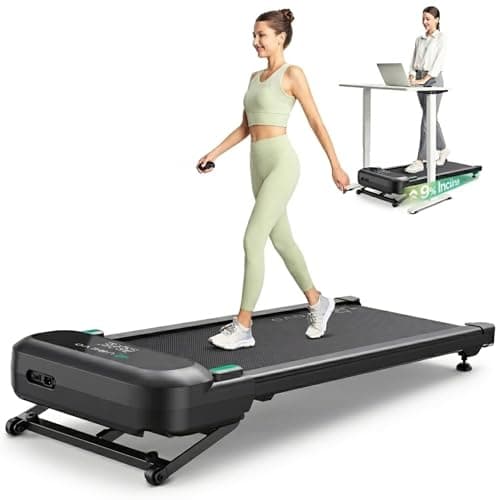
Our honest UREVO SpaceWalk 5L walking pad review: 9% auto incline, dual brushless motor, 136kg limit and a narrow 40x100cm deck, for £349.99 on Amazon UK.
Best Exercise is a participant in the Amazon EU Associates Programme, an affiliate advertising programme designed to provide a means for sites to earn advertising fees by advertising and linking to Amazon.co.uk. As an Amazon Associate we earn from qualifying purchases. This comes at no extra cost to you and never influences our independent reviews or rankings.