Workouts
Bayesian Curl: How to Do the Bayesian Cable Curl Properly
How to do the Bayesian curl: setup, form cues, what the research says about the stretched position, common mistakes, home band version and a simple plan.

By Jacob Chambers, Founder & Lead Reviewer · Updated 20 August 2026
We may earn a commission from qualifying purchases made through links on this page, at no extra cost to you. This never affects our ratings.
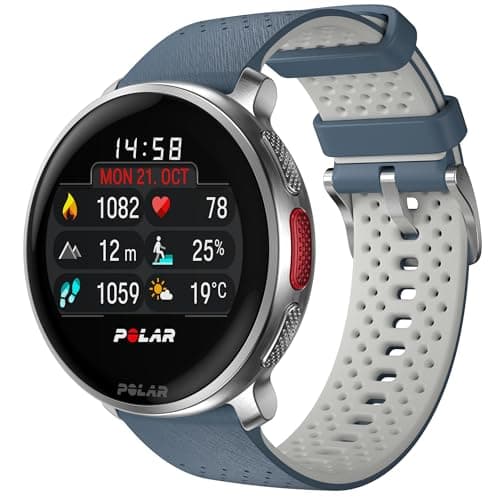
Polar has always been the training company that happened to make watches, and the Vantage V3 leans into that harder than any model before it. The sensor stack on the back, which Polar calls Elixir, reads your heart's electrical signal, blood oxygen and skin temperature, and it pipes all of it into recovery scores rather than leaving you to interpret graphs. For an athlete who plans a week around how recovered they are, that's a more useful watch than most.
It's also around £396 on Amazon UK, and at that money it's competing with watches that do more of everything else. There's no contactless payment, no app store, no meaningful phone integration beyond notifications. Polar decided what this watch is for and refused to pad the spec sheet, which is admirable right up until the moment you compare feature lists.
How we review
This review draws on Polar's published specifications, verified owner reviews, peer-reviewed validation research on Polar's optical sensors and independent long-term testing. We have not run our own season-long test of this exact unit, so we report only findings that recur across sources, criticisms included. Note that several early-firmware complaints from launch have since been patched.
Endurance athletes who train by feel and want data that tells them when to back off. Polar's recovery suite, nightly recharge, sleep staging, the orthostatic test and training load balance, is the most coherent implementation on any watch, and the V3's health sensors feed straight into it.
Triathletes get the full multisport handling, and anyone doing long days out gets maps and a battery that stretches. If you mostly want a watch that looks smart, handles messages and tracks the occasional 5k, this is far too much watch and the wrong sort of expensive.
Check the Polar Vantage V3 price on AmazonPolar's fourth-generation optical array sits under a bank of extra sensors, and the useful part is what the watch does with the readings rather than the readings themselves. Take an ECG in the morning, add the overnight SpO2 and skin temperature trend, and the V3 turns it into a readiness figure that actually changes what you do that day.
Set expectations on the ECG, though. It records a 30 second trace you can share with a clinician, and it does not screen for atrial fibrillation the way an Apple Watch or a Garmin does. Polar is careful about this and so are we: it is a data-gathering tool, not a diagnostic one, and anything that concerns you belongs in front of a GP.
The optical heart rate is the awkward bit. Testers report it locking on perfectly for a hard interval session and then drifting badly on an easy run the next day, which is the pattern that annoys people most because you can't predict it. Validation work on Polar's wrist sensors puts the mean absolute error at roughly 6.4 beats per minute with a percentage error near 6.8 percent, and shows the accuracy swinging widely depending on the activity (Polar wrist sensor validation, JMIR Cardio 2025). Pair Polar's own H10 chest strap and the problem disappears, which rather proves the point.
| Display | 1.39 in AMOLED touchscreen, 454 x 454 |
|---|---|
| Case | 47.3 mm diameter, 13.5 mm thick |
| Weight | 57 g with strap, 39 g without |
| Materials | Aerospace aluminium case and bezel, Gorilla Glass |
| Water resistance | WR50 |
| Battery, training performance mode | Up to 43 hours |
| Battery, training eco mode | Up to 140 hours |
| Battery, smartwatch mode | Up to 10 days |
| Satellites | Dual-frequency L1 + L5, GLONASS, Galileo, BeiDou, QZSS |
| Storage | 32 GB with free offline maps |
| Sensors | Gen 4 optical HR, ECG, SpO2, skin temperature, barometer, compass |
| Battery capacity | 488 mAh lithium-polymer |
Polar's first proper mapping attempt is better than a first attempt has any right to be. You get free global downloads, two levels of detail, contour lines that make sense on a hill, and 32GB to store it all. On unfamiliar trails it does the job.
Where it trails Garmin is in the route-following details rather than the maps themselves. Early testers found the watch dropped the trace of where they'd already been the moment they wandered off course, which is precisely when you want it, and route loading during an activity was unstable at launch. Firmware has moved on considerably since, so treat those reports as history rather than a current spec, but the polish gap with Garmin is still there.
Forty three hours of training in performance mode is a real number in normal use. The eco setting stretches to 140 hours if you accept less frequent GPS sampling, and ordinary wear with sleep tracking gets you around ten days.
The exception is the always-on display. Turn that on, add dual-frequency GPS, and a long day out will drain it far faster than the headline suggests: one reviewer flattened it inside a twelve hour hike configured that way. Leave the display in raise-to-wake for anything long and the numbers hold up.
At around £396 the V3 lands in a difficult spot. The Polar Vantage M3 gives you the same training platform, dual-frequency GPS and maps for roughly £150 less, and for most runners that's the better transaction. A Suunto Race S undercuts both while matching the map story. Garmin's mapping watches cost more and give you payments, apps and a slicker phone experience along with it.
What you can't buy elsewhere is Polar's recovery science, which remains the reason people stay in this ecosystem for a decade. If that's what you're after, add the chest strap the wrist sensor keeps wanting, and check our best heart rate monitor guide before you commit.
See today's Polar Vantage V3 priceWhichever watch you end up with, the numbers only help if they push you out of the door: 150 minutes of moderate activity a week remains the UK baseline, and everything else is refinement (NHS physical activity guidelines for adults).
If you care about recovery and training load more than gadgets, yes. Polar's sleep, nightly recharge and orthostatic test data is the most useful in the business, and the V3 adds ECG, blood oxygen and skin temperature on top. If you want maps as good as Garmin's, third-party apps or contactless payments, your money goes further elsewhere.
Very good in open country and under tree cover, thanks to dual-frequency reception on both the L1 and L5 bands. City centres are its weak spot: reviewers testing it between tall buildings recorded noticeable offsets where Garmin and Suunto rivals held the line better. For most road running and cycling it is more than accurate enough.
Elixir is Polar's sensor package on the back of the watch, combining a fourth-generation optical heart rate array with electrodes for a wrist ECG, an SpO2 reader and a skin temperature sensor. It feeds the recovery metrics rather than existing for its own sake, which is the point: the data goes into nightly recharge and training readiness scores instead of sitting in a graph you never open.
Polar quotes 43 hours of training in performance mode, up to 140 hours in the power-saving eco setting, and around 10 days in smartwatch mode. Run it with the always-on display and dual-frequency GPS together and that drops sharply, so a long day in the hills needs the display setting turned down.
Yes, with 32GB of storage and free downloadable maps that include contour detail. They are a genuine feature rather than a token one, though the implementation is younger than Garmin's and route following is less refined.
The M3 is the sensible buy for most runners: same core Polar training platform, dual-frequency GPS, maps, and roughly £150 less. The V3 adds ECG, SpO2, skin temperature, an aluminium case and a bigger battery. Pick the V3 if the health sensors and battery matter, otherwise the M3 covers the training side for far less.
How to do the Bayesian curl: setup, form cues, what the research says about the stretched position, common mistakes, home band version and a simple plan.

The best greens powders in the UK for 2026, from budget super greens to premium all-in-one vegetable powders, plus an honest look at whether they actually work.
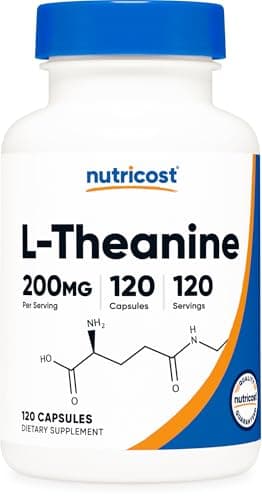
The best L-theanine supplement for UK buyers in 2026: five capsules ranked on dose and cost per day, what the research shows about sleep and caffeine, and the dose worth taking.
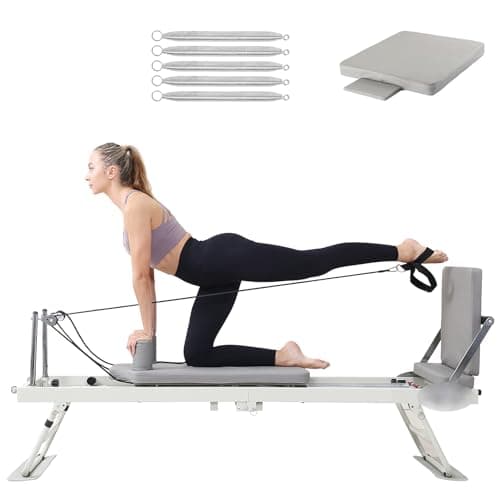
The best reformer pilates machines for home use in the UK in 2026, from a £259 foldable to a £788 wooden frame. Honest picks, real specs and how to choose a pilates machine.
Best Exercise is a participant in the Amazon EU Associates Programme, an affiliate advertising programme designed to provide a means for sites to earn advertising fees by advertising and linking to Amazon.co.uk. As an Amazon Associate we earn from qualifying purchases. This comes at no extra cost to you and never influences our independent reviews or rankings.