Cross Trainers
Marcy NS1000 Review: A Compact Fan Bike With Moving Arms
Our Marcy NS1000 cross trainer and exercise bike review: air resistance, dual action arms, 7 seat heights, 110kg limit and basic LCD, plus who should buy it.

By Paul Kendrick, Cardio & Endurance Editor · Updated 29 July 2026
We may earn a commission from qualifying purchases made through links on this page, at no extra cost to you. This never affects our ratings.
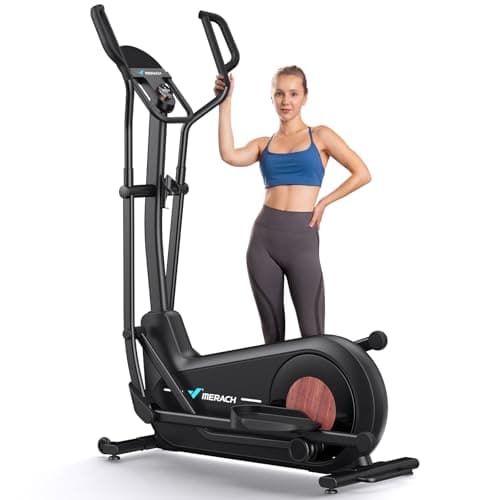
Cross trainers are the machine people buy when their knees have opinions about running, and most of the sub-£600 ones make a poor case for themselves with a stride so short it feels like pedalling a shopping trolley. MERACH went after that specific complaint with a 47cm stride, then added a self-generating power system so the thing works in a garage with no socket. At £519.99 that is a genuinely interesting combination. It also carries one marketing claim that is plainly untrue, which is worth getting out of the way early.
How we review
This review is based on MERACH's published specifications, the Amazon UK listing and consistent themes in owner feedback across comparable magnetic ellipticals. We have not run our own long-term hands-on test of this machine. Where a manufacturer claim does not stand up, we say so. Price and availability were checked on 29 July 2026.
Stride length is the single specification that determines whether a cross trainer feels like exercise or like a punishment. Cheap machines run 33cm to 40cm, which chops your gait into a short shuffle and gets uncomfortable inside ten minutes for anyone with normal length legs. MERACH quotes 47cm (18.5 inches) and specifies a suitable user height range of 1.5m to 2.2m, which is unusually broad.
The practical effect is that your hip and knee travel through something closer to a walking or jogging range, so you can hold a session for 40 minutes without your form degrading. That is the whole game with low-impact cardio: the machine only helps if you actually stay on it.
No plug is a bigger deal than it sounds. Home cardio equipment usually ends up in the one room with a spare socket, which is rarely the room you want it in. A self-generating machine powers its own console and resistance system from your pedalling, so a garage, a shed, a conservatory or a garden room all become viable. There are no batteries to replace either.
The trade-off is minor: the display comes alive when you start moving rather than sitting there ready, and it goes dark shortly after you stop. Anyone used to a mains machine will notice for about two sessions and then forget about it.
| Stride length | 47 cm (18.5 in) |
|---|---|
| Resistance | 16 levels, electromagnetic |
| Flywheel | 8 kg (17.6 lb) |
| Power | Self-generating, no mains connection |
| Max user weight | 180 kg (400 lb) |
| Suitable user height | 1.5 m to 2.2 m |
| Dimensions | 148.8 cm L x 56.6 cm W x 165.3 cm H |
| Console | LCD showing time, distance, calories and speed |
| Assembly | 80% pre-assembled, under 20 minutes quoted |
| Stability | 4 individually adjustable stabilisers |
MERACH states an operating noise level below 20 dB. For scale, 20 dB is roughly leaves rustling, and quieter than a whisper at a metre. No machine carrying a moving human being hits that, and repeating the number would be doing you a disservice. The honest version is that magnetic resistance with no drive belt and sealed bearings is genuinely quiet, quiet enough to run with the television on at normal volume, which is what most people actually want to know.
The second claim is a stated 30% increase in fat-burning efficiency from the multi-grip design. There is no published basis for that figure and the mechanism does not really exist as described. Using the handles does recruit more upper body, which raises total energy expenditure a bit; it does not make fat oxidation 30% more efficient.
What the research does support is the low-impact case. Elliptical exercise produces smaller vertical pedal reaction forces and lower loading rates than running, at the cost of greater hip flexor and knee extensor moments (joint loading during elliptical exercise), and comparisons of treadmill, elliptical and stepper work show they can be programmed to similar physiological demands (physiological responses across treadmill, elliptical and stepper). Use it consistently and it will get you to the NHS target of 150 minutes of moderate activity a week without the pounding.
The 8kg flywheel is the honest weakness. A longer stride wants more rotating mass to smooth out the dead spots at the ends of the arc, and 8kg is modest for a 47cm machine; expect the motion to be good rather than the glassy smoothness of a commercial elliptical with a 20kg wheel. Adjusting resistance at a flywheel knob rather than console buttons is the other small annoyance, since it interrupts an interval rather than letting you change on the fly.
Connectivity is the clearest gap. There is an LCD showing time, distance, calories and speed, and that is the whole story: no listed Bluetooth, no Zwift, no Kinomap. If virtual routes are what keeps you on a machine, this is the wrong one and our best cross trainer UK guide covers connected alternatives. If you would rather have a podcast and a stride that fits your legs, the trade is a good one.
Five hundred and twenty pounds buys a lot of cross trainer here. The comparable machines in our best cross trainer guide at this price mostly run shorter strides, lower weight capacities and mains power, and MERACH's own track record on Amazon UK is solid across its treadmill and rower lines. Against a Reebok GX50 or a JLL CT300, the MERACH wins on stride and weight capacity, and loses on brand familiarity. Reebok's much cheaper ZR8 cross trainer shows what the extra money actually buys here: eight resistance levels against MERACH's range, a shorter stride and a 100kg user limit. If you are still deciding between machine types entirely, our rowing machine versus cross trainer comparison is the place to start.
The machine powers its own console and resistance system from the motion of your pedalling, so there is no mains cable and no batteries to change. Practically, it means you can put it in a garage, a shed or a garden room with no socket nearby. The only catch is that the display wakes up once you start moving rather than being on before you step on.
For anyone over about 5ft 8in, yes, noticeably. Budget cross trainers commonly use a 33cm to 40cm stride, which forces a short choppy step that feels nothing like walking or running. At 47cm (18.5 inches) your hips and knees move through a range closer to a natural gait, which is more comfortable and lets you work harder before your form falls apart.
No, and that claim should not have made it onto the listing. Twenty decibels is quieter than a whisper in a library, which no moving machine with a person on it achieves. What is true is that magnetic resistance with no drive belt is genuinely quiet, and owners of comparable magnetic ellipticals consistently describe them as television-friendly. Expect quiet, not silent.
The machine measures 148.8cm long by 56.6cm wide by 165.3cm tall. Add about half a metre behind and at each side and you want roughly 2m by 1.5m of clear floor. It is not foldable, but transport wheels let you tip and roll it against a wall between sessions.
MERACH lists an LCD display showing time, distance, calories and speed, and does not list Bluetooth or app connectivity for this model. Treat it as a machine that shows you numbers rather than one that syncs anything. If Zwift or Kinomap integration matters to you, look elsewhere in the range.
Measurably so. Research on elliptical exercise found smaller pedal reaction forces and lower loading rates than running, though it comes with greater hip flexor and knee extensor moments. That makes it a sensible option if impact is the thing keeping you from cardio, but it is not a free pass if you have existing knee problems.
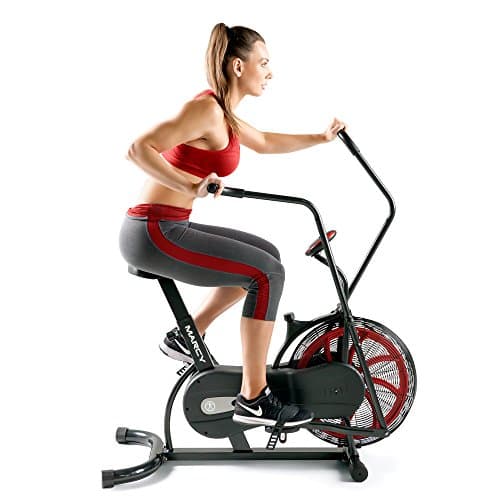
Our Marcy NS1000 cross trainer and exercise bike review: air resistance, dual action arms, 7 seat heights, 110kg limit and basic LCD, plus who should buy it.
Cross trainer vs exercise bike compared on muscles, calories, joint impact, space, noise and price, with a straight verdict on which suits your home and goals.
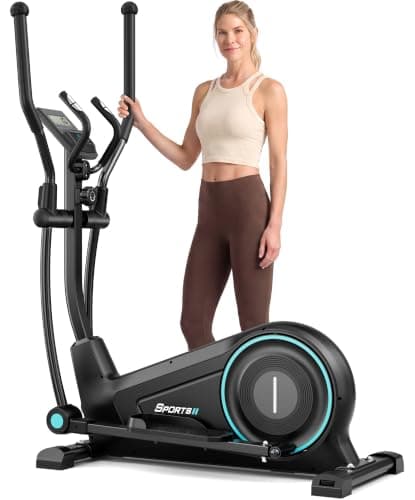
THERUN cross trainer review: 8kg flywheel, 16 magnetic levels and rear drive for £269.99, plus its short 38cm stride, 120kg limit and doubtful 20dB claim.
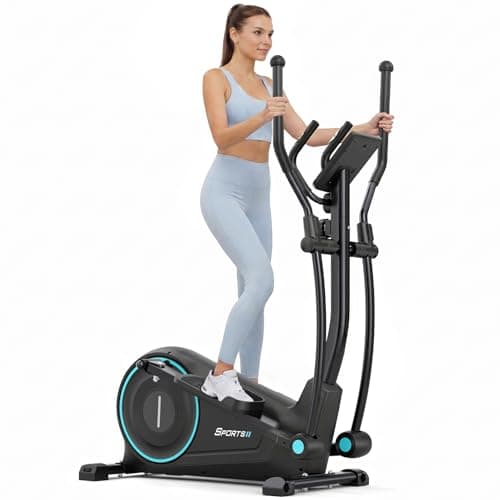
An honest Dripex cross trainer review: the 38cm stride, 8kg flywheel, 16 magnetic levels, 120kg limit, the quiet claims and who this £230 elliptical suits.
Best Exercise is a participant in the Amazon EU Associates Programme, an affiliate advertising programme designed to provide a means for sites to earn advertising fees by advertising and linking to Amazon.co.uk. As an Amazon Associate we earn from qualifying purchases. This comes at no extra cost to you and never influences our independent reviews or rankings.