Cross Trainers
Under Desk Elliptical: Do They Actually Work?
Do under desk ellipticals work? What the research says on calorie burn and sitting less, motorised vs manual models, desk clearance, noise and who should buy one.

By Paul Kendrick, Cardio & Endurance Editor · Updated 28 October 2026
We may earn a commission from qualifying purchases made through links on this page, at no extra cost to you. This never affects our ratings.
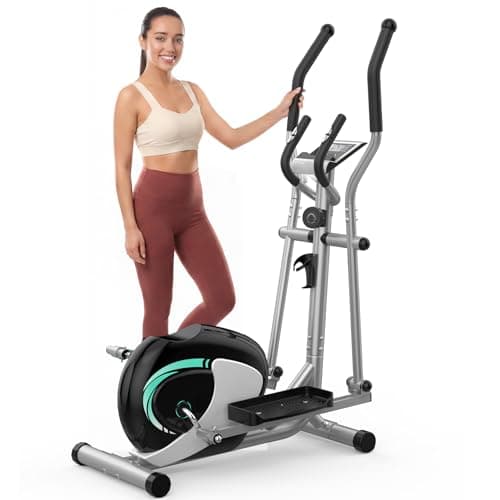
At around £199.99 at the time of writing, this is the cheapest cross trainer Dripex currently sells on Amazon UK, and it's a perfectly usable machine for steady, low-impact cardio in a small flat. The trade-offs are a light 6kg flywheel and a listing that never states the stride length, which matters more on an elliptical than almost any other spec.
So who should buy it? Shorter users who want quiet cardio for a modest outlay, and who mostly train at a steady pace. If you're over about 5ft 10in, or you want to hammer intervals at high resistance, spend a bit more.
It's also easy to confuse with two other Dripex machines we've already covered. The Dripex magnetic cross trainer has an 8kg flywheel and a published 38cm stride for about £30 more, and the Dripex 3-in-1 is really a cardio climber. This one sits underneath both of them on price.
How we review
We haven't used this machine ourselves. This review is based on Dripex's Amazon UK listing and product data, how the published specs compare with the other cross trainers we've reviewed at similar prices, and the common patterns in owner feedback on budget magnetic ellipticals. Where the listing leaves something out, such as stride length, we say so rather than guess a number.
Buy it if you're roughly 5ft 9in or shorter, weigh well under 120kg, and need something that fits in a bedroom or the corner of a living room. It's also a sensible pick if you're coming back from a running injury or a sore knee and want to keep your fitness ticking over without impact.
Skip it if you're tall. Dripex says it suits users up to 185cm, but with no published stride we can't tell you whether a 6ft person will glide or shuffle, and on a machine that's only 100cm long, shuffling is the more likely outcome. Skip it too if you want programmes, app connectivity or Bluetooth; the listing mentions none of those, just an LCD and a phone holder.
If the shorter-user profile fits you, the price is hard to argue with:
Check price on Amazon£199.99The flywheel is the heavy disc that keeps the pedals turning between pushes. On a cross trainer the weight of that disc (and how the gearing multiplies it) decides how smooth the motion feels. A heavier flywheel stores more momentum, so the pedals carry through the top and bottom of each stroke where your legs aren't pushing much. A lighter one lets the pedals slow in those spots, and you notice it as a slight hitch or a "lumpy" circle.
Dripex calls the 6kg flywheel "newly upgraded" and says the internal magnetic drive is smoother than external systems. Magnetic over friction is a genuine improvement for quietness and consistency, but it doesn't change the physics of mass. Most budget ellipticals we've looked at carry 6 to 8kg, and the better-regarded home machines usually sit higher. At 6kg this is at the bottom of the usual range.
What does that mean for you? At a brisk, steady cadence on low or middle resistance, you probably won't care: momentum from your own pace covers for the light flywheel. The hitch shows up when you slow right down, or crank the resistance into the top few levels and grind. If your plan is 30 minutes at a comfortable effort while watching TV, it's fine. If you want sprint intervals at level 14 to 16, an 8kg or heavier machine will feel noticeably better.
Stride is the distance your foot travels front to back on each step, and it's the spec that decides whether an elliptical feels natural. Most adults are comfortable from about 40cm upwards, and taller users want 46cm or more. Short strides feel like marching on the spot.
Dripex doesn't list a stride for this model, in the bullets or in the product data. That's an odd omission, because it's on the listing for the 8kg Dripex (38cm). We won't invent a figure. What we can say is that the whole machine is about 100cm long, which is compact for a cross trainer, and compact frames almost always mean short strides. Our working assumption is that this is a short-stride machine, probably no longer than its pricier sibling, but that's an inference rather than a measurement.
Here's the practical upshot. If you're under about 5ft 8in you're unlikely to be bothered. If you're taller, either ask the seller for the stride figure before you order, or buy with a clear plan to use Amazon's returns window if the motion feels clipped in the first few sessions.
The frame is steel and Dripex rates it for users up to 120kg and from 140 to 185cm tall. Amazon's product data gives the assembled dimensions as roughly 100cm long, 53cm wide and 162cm tall. The listing doesn't give the machine's own weight, though the built-in transport wheels mean you can tip it and roll it into a corner after a session.
| Price | Around £199.99 at the time of writing |
|---|---|
| Resistance | Magnetic, 16 levels |
| Flywheel | 6kg, internal, bidirectional |
| Stride length | Not published |
| Max user weight | 120kg |
| User height (listed) | 140 to 185cm |
| Dimensions (L x W x H) | Approx 100 x 53 x 162cm |
| Display | LCD: time, speed, distance, calories, pulse, odometer |
| Heart rate | Hand pulse sensors |
| Extras | Device holder, bottle holder, transport wheels, anti-slip pedals |
| Programmes / app | None listed |
The 120kg limit deserves a sentence of its own. It's the same as the 8kg Dripex but lower than the 3-in-1's 150kg, and as a rule we'd want 15 to 20kg of headroom between your weight and the rated maximum on any budget machine. Bigger users should look elsewhere.
The LCD covers the usual readouts, and the hand pulse sensors work the way they do on every cross trainer: you have to hold the static grips, so you lose the upper-body work while you check, and the reading is approximate. If heart rate zones matter to your training, pair the machine with a chest strap or a watch. The phone holder is a small but useful touch for following a video or a podcast.
Magnetic resistance doesn't rub anything, so the main sources of noise on a machine like this are the pedal linkages and your own feet. Dripex describes it as "whisper-quiet", which is marketing, but owners of budget magnetic ellipticals generally report they're fine for evening use in flats as long as everything is tightened properly after assembly. Squeaks that develop over time are almost always a loose bolt or a pivot that needs a drop of lubricant.
Put it on a mat. That protects the floor, cuts down any transmitted rumble to the flat below and stops the machine creeping on laminate. Leave some space in front and behind for the moving pedal arms, and check your ceiling height: you'll be standing on pedals several centimetres off the ground, and the handles move through a wide arc.
A cheap elliptical earns its place if you actually use it, and steady sessions are exactly what this one does best. The NHS recommends at least 150 minutes of moderate activity a week, and five 30-minute sessions on a cross trainer covers that without the joint loading of running.
The physiological return isn't second-rate either. A study comparing treadmill, elliptical and stepper exercise in trained runners found no difference in oxygen uptake, heart rate or fuel use between the three at matched workloads, and concluded the elliptical is a suitable substitute for running when load needs to come down (Bosch et al., 2021). That was on lab machines rather than a £200 home unit, but the principle carries over: steady elliptical work is real cardio.
To get the most from it, push and pull through the handles rather than resting your arms on them, and use the reverse direction for a few minutes each session to shift more of the effort onto the back of your legs. Our guide to cross trainer muscles worked explains how the motion splits between legs and upper body, and if you're still deciding on a machine type, our elliptical vs treadmill comparison covers the trade-offs.
The cleanest way to think about the three is by flywheel and stride. This compact model has a 6kg flywheel, no published stride and a £200 price. The Dripex magnetic cross trainer steps up to 8kg with a 38cm stride for about £230, which buys you a smoother stroke and a known quantity on stride. The 3-in-1 is a different kind of machine, built around a climbing motion with a 150kg limit.
For most people choosing between the two conventional ellipticals, we'd spend the extra £30 on the 8kg version. Two more kilograms on the flywheel is the single biggest upgrade to how a budget cross trainer feels, and knowing the stride before you buy removes the main risk. Pick this compact one if £200 is a hard ceiling, or if the dimensions suit your room better.
Check price on Amazon£199.99For steady, low-impact cardio in a small room, it's a reasonable buy at around £200. You get 16 magnetic resistance levels, hand pulse sensors and a footprint of roughly 100 x 53cm. The 6kg flywheel is on the light side, so expect a slightly less fluid stroke at low cadence than heavier machines, and the stride length isn't published.
It's a separate, cheaper listing. The Dripex magnetic cross trainer we reviewed has an 8kg flywheel and a published 38cm stride for around £230, while the Dripex 3-in-1 is a cardio climber with a steeper stepping motion and a 150kg limit. This compact model drops to a 6kg internal flywheel and doesn't state its stride.
Dripex doesn't list it, which is unusual and worth noticing. Given the 100cm overall length, we'd expect a short stride in line with other compact ellipticals, but we can't give you a number. If stride matters to you, ask the seller before buying or check the returns window.
It's enough for easy and moderate sessions. Heavier flywheels carry more momentum, which smooths out the dead spots at the top and bottom of each pedal stroke. With 6kg you'll feel those spots more at slow speeds and when you push hard on the higher levels.
Dripex rates it for users from 140 to 185cm tall (about 4ft 7in to 6ft 1in) and up to 120kg. We'd treat the top of that height range cautiously until the stride length is confirmed, and leave some margin under the weight limit for long-term durability.
Do under desk ellipticals work? What the research says on calorie burn and sitting less, motorised vs manual models, desk clearance, noise and who should buy one.
An honest review of the Reebok ZR8 elliptical cross trainer: build, magnetic resistance, stride length, who it suits and whether it's still worth the money in 2026.
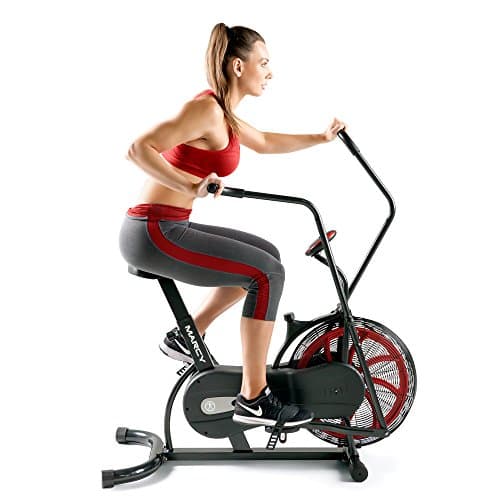
Our Marcy NS1000 cross trainer and exercise bike review: air resistance, dual action arms, 7 seat heights, 110kg limit and basic LCD, plus who should buy it.
Cross trainer vs exercise bike compared on muscles, calories, joint impact, space, noise and price, with a straight verdict on which suits your home and goals.
Best Exercise is a participant in the Amazon EU Associates Programme, an affiliate advertising programme designed to provide a means for sites to earn advertising fees by advertising and linking to Amazon.co.uk. As an Amazon Associate we earn from qualifying purchases. This comes at no extra cost to you and never influences our independent reviews or rankings.