Cross Trainers
Dripex Compact Elliptical Review: A £200 Cross Trainer With a 6kg Flywheel
Dripex compact elliptical cross trainer review: the 6kg flywheel, 16 magnetic levels, 120kg limit, missing stride spec and who this £200 machine really suits.

By Paul Kendrick, Cardio & Endurance Editor · Updated 29 October 2026
We may earn a commission from qualifying purchases made through links on this page, at no extra cost to you. This never affects our ratings.
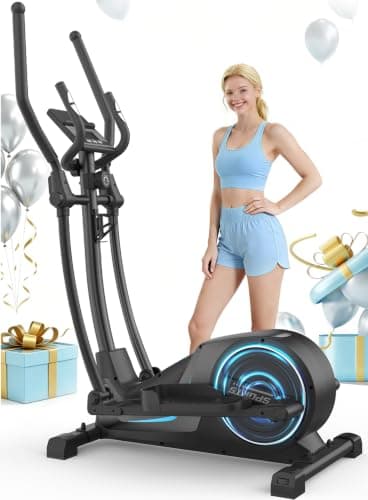
The Cowmew cross trainer is a compact magnetic elliptical selling for £249.99 on Amazon UK, with an 8kg flywheel, 16 resistance levels and a 150kg user limit. Those are good numbers at this price; they match the Neezee 3-in-1 almost line for line and cost £20 less. What Cowmew doesn't tell you is the stride length, and on a cross trainer that's the spec that decides whether the motion feels like walking or shuffling.
We rate it 3.9 out of 5. It's a sensible budget machine with a strong frame rating, held back by an unpublished stride, a manual resistance knob and an app it won't name.
How we review
This review is based on Cowmew's Amazon UK listing and images, the specifications Cowmew publishes, comparisons with the other budget cross trainers we've reviewed between £230 and £300, and published research on elliptical training. We haven't used this machine ourselves. Where Cowmew leaves a spec out, we say so rather than guess, and where a claim can't be checked we treat it as marketing.
Buy it if you're of average height or shorter, you want low-impact cardio at home, and you'd rather not spend more than £250. Your feet stay on the pedals throughout, so there's no landing shock, which makes it a good fit for heavier beginners, anyone easing back after knee or shin trouble, and people in upstairs flats who can't run on a treadmill without a complaint from below.
The 150kg limit widens that group. Plenty of cross trainers at this price stop at 110kg or 120kg, and a frame that isn't working near its ceiling every session tends to stay quieter and last longer.
Skip it if you're tall. Without a published stride length there's no way to know how a 188cm rider will get on, and compact frames almost always have short strides. Our best cross trainer UK guide covers the longer-stride options.
If the profile fits, the price is the easy part to check.
Check the Cowmew cross trainer price on Amazon£249.99Cowmew describes a thickened steel frame rated to 150kg, with an 8kg flywheel that it calls precision balanced. We can't measure the balancing claim, but an 8kg flywheel on a machine this size is a fair spec. It's the same weight you'll find on the Neezee, the Dripex 3-in-1 and the Aeriflo M100, and it's heavier than the 5.5kg unit on the YOSUDA folding cross trainer. A heavier flywheel carries more momentum through the top and bottom of each stride, so the motion feels like a loop rather than a series of pushes. At 8kg you'll notice a little choppiness on the hardest levels, and very little at a steady pace.
Resistance is magnetic: magnets move closer to or further from the flywheel without touching it, so there's nothing to wear out, no squeal and only a low whirr. Sixteen levels gives a usable spread, from an easy warm-up spin to something that'll make your thighs burn in a one-minute interval.
The catch is how you change it. The 16 levels are set with a manual turn knob, not buttons on the console, so the machine can't adjust resistance for you during a programme and an app can't control it either. For steady sessions that doesn't matter; you set the knob and go. For interval work it means reaching forward to twist a dial mid-effort, which is clumsier than pressing a button. Most cross trainers under £300 work this way, so it's a limitation of the price bracket more than a Cowmew failing.
| Resistance | Magnetic, 16 levels (manual knob) |
|---|---|
| Flywheel | 8 kg |
| Maximum user weight | 150 kg |
| Stride length | Not published |
| Dimensions | Approx 100cm L x 54cm W x 162cm H |
| Console | Distance, speed, calories, time, odometer, heart rate |
| Heart rate | Hand-grip pulse sensors |
| Connectivity | Bluetooth to an app (not named) |
| Handles | Moving main handles, lower static handles |
| Extras | Anti-slip pedals, bottle holder, device mount, transport wheels |
| Price | £249.99 on Amazon UK (29 October 2026) |
This is the part of the listing we'd most like to see fixed. Stride length is the distance your foot travels from the front of the ellipse to the back, and it's the single biggest factor in whether a cross trainer feels natural. Full-size home machines tend to sit between 45cm and 50cm. Compact ones are usually much shorter: the Dripex 3-in-1 is 29cm, the YOSUDA 38cm, the Aeriflo M100 42cm.
Cowmew publishes nothing. Going by the footprint, which is identical to the Neezee's and only 100cm long, we'd expect it to land in the low to mid 30s of centimetres, but that's an inference from the frame size and we'd treat it as one. A short stride works well enough for most people up to about 175cm to 180cm. Above that, your hips don't extend fully, the steps get choppy and the glutes do less of the work.
So we're counting it as a con for anyone over about 183cm. If you're that tall, either ask the seller for the figure through Amazon before you order, or buy something with a published long stride, such as the MERACH long stride cross trainer at 47cm.
The display shows distance, speed, calories, time, a cumulative odometer and heart rate from pulse sensors on the handlebars. That's the standard budget set. Hand-grip heart rate drifts when your hands move or get sweaty, so treat it as a ballpark; if you train by heart rate zones, a chest strap or watch is far more reliable. Calories on any cross trainer without a power meter are estimates, useful only for comparing your own sessions with each other.
The handle layout is sensible. The long main handles move with the pedals and bring your arms, shoulders and back into the work, and the lower static handles let you hold on for a legs-only session or a steadier interval. Enlarged anti-slip pedals, a bottle holder and a phone or tablet mount round it out; the mount is probably the most used feature on the whole machine if you watch something while you train.
Then there's the app. The listing says the Cowmew connects over Bluetooth to an app but doesn't name it, and that matters. The Neezee and the Aeriflo both name Kinomap and Zwift, so you know before you pay that route videos and tracking will work. With the Cowmew you're buying on trust. Combined with the manual knob, the app can at most read your data, not control the resistance. If app training is a big reason you're buying, ask the seller which apps it supports, and if the answer is vague, spend the extra £20 on the Neezee.
The low-impact case is well supported. A study of 18 trained runners found that oxygen use, heart rate and fuel burning didn't differ between a treadmill and an elliptical at matched workloads of 60%, 70% and 80% of peak, and the authors concluded ellipticals are a suitable substitute for running when you need to cut the load. Because your feet never leave the pedals, the strain on joints is lower too: one study measuring foot loading found the whole foot carried roughly 70 to 81% of body weight across a range of resistance and incline settings, whereas each running stride lands with a multiple of it.
For the bigger picture, the NHS physical activity guidelines recommend at least 150 minutes of moderate activity or 75 minutes of vigorous activity a week for adults. Five 30-minute sessions on a cross trainer at a pace where you can talk but not sing covers the moderate target, and you can do them in front of the television without waking anyone. If you're deciding between machines rather than models, our elliptical vs treadmill comparison goes through the trade-offs in more detail.
The listed dimensions are about 100cm long, 54cm wide and 162cm tall. It doesn't fold, so you need a permanent spot, plus around 50cm of clearance at the sides and back for the handles and for stepping on. Check the ceiling too: the pedals raise you well off the floor at the top of the ellipse, so anyone tall in a loft room may find their head closer to the ceiling than they'd like. Transport wheels on the front make it easy enough to roll out of the way for hoovering.
Cowmew is a newer brand on Amazon UK. We reviewed its 20% incline treadmill a few days ago and liked the spec for the money, but the same caveat applies here: there's little long-term UK ownership history and no track record yet of how warranty claims are handled. The cross trainer listing points we checked don't spell out the warranty term, so confirm it on the listing and register the machine as soon as it arrives.
The obvious rival is the Neezee 3-in-1 at around £269.99. The two share the same footprint, flywheel, resistance levels and user limit, so you're choosing between £20 off with the Cowmew and named Kinomap and Zwift support plus a 3 year warranty with the Neezee. If you'll use apps or you want long cover, the Neezee is worth the difference. If you just want to pedal and watch Netflix, the Cowmew is the better buy.
The Dripex 3-in-1 at about £280 is a sturdier-feeling cardio climber, but its published 29cm stride is short and it costs £30 more. The YOSUDA at £275.99 folds away to about 2 sq ft, which the Cowmew can't do, though its 5.5kg flywheel is lighter. If you can stretch to around £300, the Aeriflo M100 gives you a published 42cm stride with the same 8kg flywheel and 150kg rating, and for a taller user that certainty is worth the extra £50.
If the Cowmew's trade-offs work for you, it's the cheapest way into this spec that we've found.
See today's Cowmew cross trainer priceFor the money, yes. At £249.99 it has an 8kg magnetic flywheel, 16 resistance levels and a 150kg user limit, which matches or beats most cross trainers under £300. The weak points are an unpublished stride length, a manual resistance knob rather than console buttons, and a young brand with little UK ownership history.
Cowmew doesn't publish it. Frames with this 100 x 54cm footprint usually have strides in the low to mid 30s of centimetres, which feels fine for most people up to average height and choppy for taller users. If you're over about 183cm, buy a machine with a published stride of 42cm or more.
Cowmew rates it for users up to 150kg. That's higher than many budget cross trainers, where 110kg to 120kg limits are common, and it means most people won't be running the frame close to its ceiling every session.
The listing says it connects to an app over Bluetooth but doesn't name the app. That's a red flag if apps are the reason you're buying, because rivals like the Neezee name Kinomap and Zwift outright. If you want app training, ask the seller which apps it supports before ordering.
They look very closely related. Both list an 8kg flywheel, 16 levels, a 150kg limit and the same 100 x 54 x 162cm dimensions, which points to a shared factory design. The Neezee costs about £20 more but names its apps and carries a 3 year warranty, so the extra money buys certainty.
The listed footprint is about 100cm long by 54cm wide and 162cm tall. Leave at least 50cm of clear space around it for the moving handles and to get on and off, and check your ceiling height, because the pedals raise you well off the floor at the top of the stride.
Dripex compact elliptical cross trainer review: the 6kg flywheel, 16 magnetic levels, 120kg limit, missing stride spec and who this £200 machine really suits.
Do under desk ellipticals work? What the research says on calorie burn and sitting less, motorised vs manual models, desk clearance, noise and who should buy one.
An honest review of the Reebok ZR8 elliptical cross trainer: build, magnetic resistance, stride length, who it suits and whether it's still worth the money in 2026.
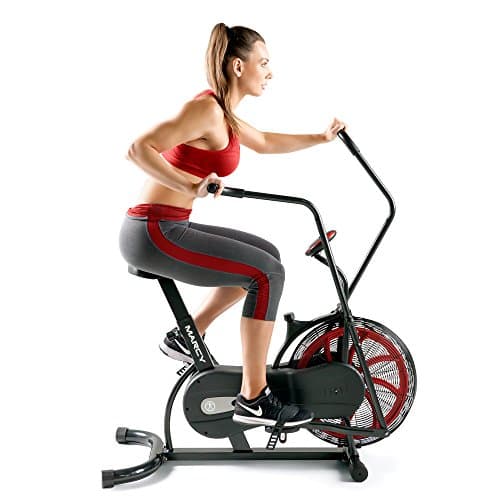
Our Marcy NS1000 cross trainer and exercise bike review: air resistance, dual action arms, 7 seat heights, 110kg limit and basic LCD, plus who should buy it.
Best Exercise is a participant in the Amazon EU Associates Programme, an affiliate advertising programme designed to provide a means for sites to earn advertising fees by advertising and linking to Amazon.co.uk. As an Amazon Associate we earn from qualifying purchases. This comes at no extra cost to you and never influences our independent reviews or rankings.