By Paul Kendrick, Cardio & Endurance Editor · Updated 26 October 2026
Under desk ellipticals work, but only for a narrow job: they get your legs moving while you sit, which breaks up long stretches of sitting and adds a small, steady calorie burn. They won't get you fit the way a run, a proper cross trainer session or a weights workout will, and the motorised versions that dominate Amazon UK move your legs for you, which shrinks the benefit further.
That split between motorised and manual is the single most useful thing to understand before you buy. The rest (desk height, chair, noise) decides whether you'll actually use it after the first fortnight.
The short answer: a sitting-less tool, not a workout
The honest framing is NEAT, non-exercise activity thermogenesis: the calories you burn through everything that isn't formal exercise. Fidgeting, pacing on phone calls and walking to the kettle all count. An under desk elliptical adds to that pile.
The NHS advises adults to break up long periods of sitting with light activity, and that's the gap these machines fill. Its physical activity guidelines still ask for 150 minutes of moderate activity a week plus strength work on two days, and gentle seated pedalling at your desk doesn't tick either box for most people.
What the research says
There's more science on desk pedalling than you'd guess, mostly from US labs studying office workers.
Calorie burn. In a 2017 study, 20 adults in their late 60s pedalled a portable seated elliptical while reading, watching TV and using a computer. At their own pace with no resistance, they burned about 1.44 extra calories a minute over sitting still; with an external pace and added resistance, about 2.19. Scale that up and you get roughly 86 to 131 extra calories an hour. The authors compared an hour of self-paced pedalling to walking about 1.6 miles.
A 2014 review of workstation alternatives puts plain sitting at about 1.2 calories a minute and pedal or treadmill desks at roughly 2 to 4. Standing desks and stability balls barely moved the number. So pedalling does something; standing on its own does very little.
Blood sugar after meals. A small pilot study had 12 overweight office workers pedal a desk at a light, self-chosen pace for two hours after a standard meal. They needed noticeably less insulin to manage the meal than when they sat at a normal desk (peak insulin of 42.1 against 66.9), though their actual glucose readings didn't differ. Twelve people is tiny, so read it as promising rather than settled.
Note what every one of these studies has in common: the participants did the pedalling. None of them tested a motor turning the pedals.
Ignore the console calories
Cheap under desk ellipticals don't measure your heart rate or the force you put through the pedals, so the calorie number on the display is a guess from speed and time. On a motorised machine it's close to meaningless, because the motor is doing most of the work the formula assumes you're doing.
Motorised vs manual: the distinction that matters most
Walk through the Amazon UK listings and most "under desk ellipticals" in the £70 to £150 bracket turn out to be motorised. You plug them in, pick a speed from 1 to 12, and the pedals move whether you push or not.
Motorised (passive) models suit people who can't easily drive the pedals themselves: older users, people recovering from surgery or injury with a physio's blessing, or anyone whose main aim is keeping blood moving through stiff legs during a long day. That's a legitimate use. If you rest your feet on the pedals and let the motor work, though, you're burning very little beyond sitting. You can push along with the motor to add effort, but there's no resistance setting to work against, so you can't progress.
Manual (resistance) models have no motor. Your legs drive the flywheel against magnetic or friction resistance, usually with a dial for 8 levels or so. This is the type the research above used, and it's the one that genuinely raises your calorie burn. They're quieter, they don't need a socket, and they're often cheaper.
If you're a reasonably fit office worker wanting to burn more, buy manual. If the user is your 78-year-old dad who struggles to walk to the end of the garden, a motorised one makes more sense.
Will it fit under your desk?
This is where a lot of returns come from. Before buying, take two measurements:
Floor to the underside of the desk. Compact ellipticals typically stand around 25 to 30cm at the top of the pedal stroke, so that's the minimum gap you need, more if there's a crossbar or drawer.
Top of your thigh to the underside of the desk while sitting in your normal position. Your knee rises as the pedal comes up, so you want several centimetres of space at that point. On a standard 72 to 75cm desk most people of average height are fine; tall users and anyone with a low or shallow desk often aren't.
An elliptical lifts your knees less than a pedal bike, which is the main reason people choose one. Check the product's listed dimensions carefully, because sellers don't always say which figure is the height.
Your chair matters as much as the machine
Office chairs on castors roll backwards the moment you push a pedal. You'll spend the day scooting after the machine. Lock the castors if you can, put the chair on a rug, or use a fixed-leg chair. A non-slip mat under the elliptical helps too, and most budget models include rubber feet that only half do the job on laminate.
Noise
Manual magnetic models are close to silent at desk pace; you'll hear a faint whir. Motorised ones add motor hum. The MERACH listing claims under 15dB, which would be quieter than a whisper and is hard to take at face value for any motor, so assume you'll hear it in a quiet room. For video calls, a soft rhythmic sound under the desk is rarely picked up by a headset mic, but test before your first big meeting.
Two motorised models worth knowing about
Both of these are motorised, powered machines. The listings say so plainly, so buy them for gentle, assisted leg movement rather than calorie burning.
MERACH Under Desk Elliptical (around £99.99 at the time of writing). A 60W motor, 12 manual speeds, 12 auto programmes, forward and reverse, plus a remote so you don't have to bend down. MERACH markets it squarely at seniors, office workers and leg rehab. Amazon's item data lists it at 42 x 40 x 21cm, so measure your clearance against the tallest figure to be safe.
TODO Mini Under Desk Elliptical (around £75.99 at the time of writing). Smaller and lighter at 38.6 x 30 x 15cm and about 4.6kg, with 12 speeds, 12 preset programmes, a remote and an auto shut-off timer you can set from 1 to 30 minutes. It arrives mostly assembled: clip on the pedals and plug it in. The lower profile makes it the better bet for tight desks.
Under desk elliptical vs under desk bike vs walking pad
Under desk bike. A circular pedal stroke, usually with proper magnetic resistance. It raises your knees higher, so it needs more clearance, but it's the better choice if you want to work hard. Our best under desk bike guide covers the quiet magnetic options and how they fit under real desks.
Under desk elliptical. Flatter stroke, smoother on the knees, fits under more desks. Mostly motorised at the cheap end, so check before you buy.
Walking pad. You need a standing desk, but walking burns more than seated pedalling, and you're on your feet. The walking pad under desk guide explains how to set one up and build up time without your typing falling apart. If you're unsure whether one would earn its floor space, read are walking pads worth it first.
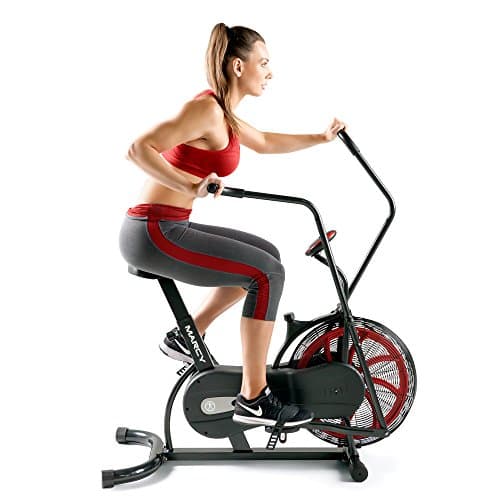
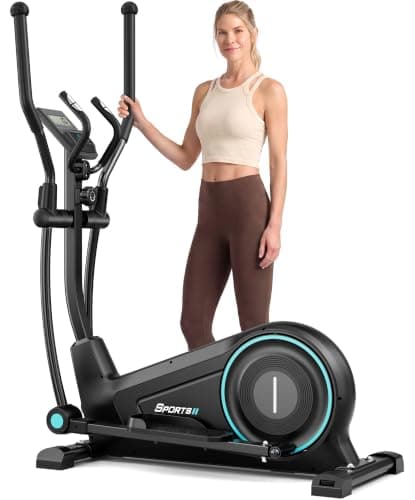
For a full workout rather than background movement, a standing cross trainer or exercise bike is in a different league. Our cross trainer vs exercise bike comparison helps you choose between them.
Who should buy one?
Buy a manual under desk elliptical if you work from home, sit for six or more hours a day, don't have room or budget for a standing desk and walking pad, and want to add some movement without stopping work.
Buy a motorised one if the user has limited mobility or strength, is recovering from an operation (check with your physio first), or simply wants circulation help for stiff legs while watching TV.
Skip both if you were hoping to replace the gym, lose weight quickly or train for an event. Put the money towards a proper cross trainer or a pair of good walking shoes instead.
They work as a way to break up long periods of sitting and add a little low-intensity movement to your day. In one study, older adults burned about 1.4 extra calories a minute pedalling a portable elliptical at their own pace while seated. They are not a substitute for proper cardio or strength training, and motorised models that move your legs for you do even less.
How many calories does an under desk elliptical burn?
Expect roughly 80 to 130 extra calories an hour if you are doing the pedalling yourself, based on research with a portable seated elliptical. Self-paced, no-resistance pedalling sat near the bottom of that range and paced pedalling with added resistance near the top. A motorised machine moving your legs passively will burn less, and the calorie figures on the console are estimates, not measurements.
Can you lose weight with an under desk elliptical?
Only slowly, and only if it adds movement you would not otherwise do. An extra 100 calories a day adds up over months, but it is easily wiped out by one biscuit. Treat it as a bonus on top of walking and real exercise, not the main plan.
How much space do I need under my desk?
Measure from the floor to the underside of your desk and from the seat of your chair to the underside of the desk. Most compact models stand around 25 to 30cm at the top of the pedal stroke, and your knees rise as you pedal, so you need several centimetres of clearance above your thighs at that point too. A standard 72 to 75cm desk usually works; a low desk or a drawer unit often does not.
Is an under desk elliptical better than an under desk bike?
An elliptical's flatter, gliding stroke lifts your knees less, so it fits under more desks and feels smoother on the knees. A pedal bike usually offers clearer resistance settings and a harder workout for the money. If clearance is tight, pick the elliptical; if you want to work harder, pick a bike with magnetic resistance.
An honest review of the Reebok ZR8 elliptical cross trainer: build, magnetic resistance, stride length, who it suits and whether it's still worth the money in 2026.
Our Marcy NS1000 cross trainer and exercise bike review: air resistance, dual action arms, 7 seat heights, 110kg limit and basic LCD, plus who should buy it.
Cross trainer vs exercise bike compared on muscles, calories, joint impact, space, noise and price, with a straight verdict on which suits your home and goals.
THERUN cross trainer review: 8kg flywheel, 16 magnetic levels and rear drive for £269.99, plus its short 38cm stride, 120kg limit and doubtful 20dB claim.
Best Exercise is a participant in the Amazon EU Associates Programme, an affiliate advertising programme designed to provide a means for sites to earn advertising fees by advertising and linking to Amazon.co.uk. As an Amazon Associate we earn from qualifying purchases. This comes at no extra cost to you and never influences our independent reviews or rankings.