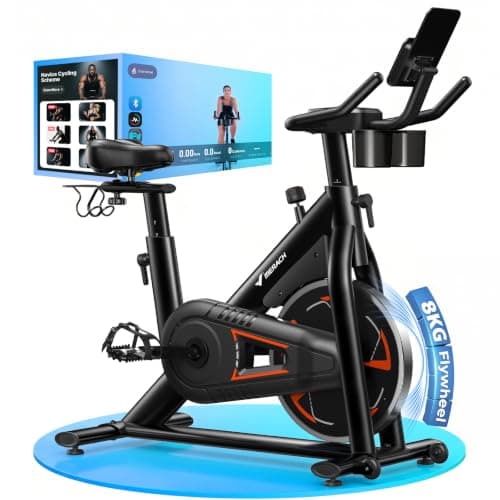
The MERACH H-Frame is a mid-priced magnetic exercise bike built around stability rather than power. It sells for around £259.99 at the time of writing, puts an 8kg flywheel on a reinforced steel H-frame with a four-point base, and rates riders up to 150kg. My verdict: it's a solid, quiet bike for people doing regular moderate cardio who like following app workouts, but its 8kg flywheel and 8 resistance levels are modest for the money, and fitter riders will feel that ceiling sooner than they'd like.
That's the tension running through this whole review. MERACH has clearly spent the budget on the frame and the software ecosystem; it hasn't spent it on the drivetrain. Whether that's the right trade depends entirely on how hard you plan to ride.
How we review
This review is research-based. We worked from MERACH's Amazon UK listing and specifications, compared the bike against the other MERACH and JOROTO bikes we've already reviewed, and looked at recurring owner feedback patterns for MERACH's bike range. We haven't ridden this unit, so specs are reported as MERACH states them, and we flag where the listing leaves gaps.
Merach, FantomFite, Kinomap, Zwift; Google Fit and Apple Health sync
Extras
Dumbbell holder, cage pedals
Dimensions
Approx 108 x 49 x 123cm (L x W x H)
Warranty
12 months
Price
Around £259.99 at the time of writing
Design and build
The H-frame is the selling point, and it's a sensible one. Most budget bikes sit on two stabiliser bars at the front and back, which can let the bike rock side to side when you stand up or spin fast. MERACH's design spreads the load across a wider H-shaped base with four contact points, and the listing claims this cuts forward tipping and frame movement during faster sessions. That's plausible on engineering grounds; a wider base with more support points is simply harder to rock.
A 150kg user limit backs that up. It's lower than the 159kg on the MERACH S29 Pro but well above the 100kg to 120kg you'll see on a lot of sub-£250 bikes, so heavier riders aren't shut out.
The footprint is roughly 108cm by 49cm, which is compact. You won't need a dedicated room.
Comfort details are reasonable for the price: an air-cushioned saddle aimed at reducing pressure on the hips, a seat that adjusts both vertically and horizontally, adjustable handlebars and cage pedals so your feet don't slide off at higher cadence. There's also a dumbbell holder, which is a nice touch if you follow app classes that mix in upper-body work, though it isn't a reason to buy the bike.
Performance: where the compromise shows
Here's the honest part. An 8kg flywheel is light for a £260 bike. MERACH says it delivers "33% more inertia" than standard flywheels, but the listing doesn't say what "standard" means or how that was measured, so I'd treat it as marketing until someone publishes the numbers.
Compare it with what the same money buys elsewhere. The JOROTO X2 has an 18kg flywheel at a similar price, and the S29 Pro uses 10kg. A heavier flywheel carries more momentum through the dead spots at the top and bottom of each pedal stroke, which is why heavy-flywheel bikes feel smoother and more road-like, especially at low cadence or when you're grinding a big gear. On a magnetic bike the magnets set the resistance, so flywheel weight matters a bit less than on a friction bike; 8kg will still feel fine at a steady pace.
The bigger limitation is the 8 resistance levels. Plenty of rivals use stepless knobs or 16 to 32 levels, which gives you both a higher ceiling and finer steps between efforts. With 8 levels, each jump is larger and the top end arrives quickly. If you're a beginner, getting back into exercise or using the bike for easy zone 2 sessions, you probably won't notice. Strong cyclists doing sprint intervals almost certainly will.
For context on what you actually need, the NHS recommends at least 150 minutes of moderate activity a week for adults, and an exercise bike at moderate resistance is one of the easiest ways to bank those minutes at home. A systematic review of indoor cycling found improvements in aerobic capacity, blood pressure and body composition across the studies it covered. You don't need a 20kg flywheel to get those benefits; you need to ride consistently, and that's the job this bike is built for.
Console and apps
The LCD shows speed, distance, time and calories. That's the basics and nothing more: no heart-rate reading or power output on the console itself, and the calorie figure on any bike without a power meter is an estimate.
The apps carry the load. You get MERACH's own app and FantomFite for guided sessions, with Kinomap and Zwift listed as compatible, plus syncing to Google Fit and Apple Health. The listing claims live trainers can increase fat burning "by up to 30%", which isn't backed by any evidence on the page, so ignore it.
One thing to understand before you buy into the Zwift angle: resistance is manual. Apps can log your ride and show you on a virtual course, but they can't turn the resistance up when the road tilts upward. If you want that, you're looking at smart trainers or pricier bikes with automatic resistance.
Noise
Magnetic resistance has no pad rubbing against the flywheel, so these bikes are among the quietest cardio machines you can put in a flat. MERACH describes it as "near-silent" without giving a decibel figure. Realistically, expect the belt, a little frame creak under hard efforts and your own breathing; you should be able to hear the TV at normal volume.
Assembly
MERACH ships it with assembly guidance and the bike arrives partly built, which is standard for this price. MERACH doesn't quote a build time, but bikes of this type usually come down to fitting the stabiliser base, seat post, handlebars, console and pedals with the included tools. The pedals are the usual trip-up: the left one is reverse-threaded, so it tightens anticlockwise. Set your seat height properly once it's built: research on saddle height and muscle activation suggests a saddle level with your greater trochanter (the bony point at the top of your thigh) suits most riders. Our exercise bike seat height guide walks through it.
Who it's for
This bike makes sense for:
Beginners and returners who want steady, low-impact cardio and won't push into hard sprint intervals.
Heavier riders who need a 150kg limit and a stable base, without paying for a premium bike.
People who like app-led workouts and want Zwift or Kinomap access without a subscription bike's monthly fee.
It's a weaker fit if you're already a fit cyclist, if you mainly want HIIT, or if road-like ride feel matters most. In those cases the extra flywheel weight on the JOROTO X2 is worth more than MERACH's app ecosystem.
Genuine cons
The flywheel and resistance range are the main ones, and I've covered them. Beyond those, the 12-month warranty is short; some rivals offer longer frame cover. The console is bare. And the listing leans on unverified claims (33% more inertia, 30% more fat burning) where actual measured figures would be far more useful.
MERACH H-Frame vs the alternatives
Against the JOROTO X2: at a similar price, the X2's 18kg flywheel and smoother ride beat the H-Frame for pure cycling. The MERACH wins on app compatibility and the H-frame base. If you'll mostly ride without a screen, buy the JOROTO.
Against the MERACH S29 Pro: the S29 Pro adds a 10kg flywheel and a 159kg limit but costs more, often around £310 to £370 depending on the week. It's the better buy for bigger or harder-training riders; the H-Frame is fine if you'd rather keep £50 to £100 in your pocket.
Against the cheaper MERACH smart exercise bike: the older MR-S26UK costs less and does the same quiet, app-supported job with a lower 136kg limit. If budget is tight and you don't need the higher weight rating or the H-frame, it's the more sensible spend.
Pros
Reinforced H-frame with a four-point base should stay planted during faster riding
150kg user limit and 150 to 195cm height range cover most adults
Quiet magnetic resistance suits flats and early starts
Works with Zwift, Kinomap and MERACH's own apps, plus Apple Health and Google Fit
Compact footprint of roughly 108 x 49cm
Cons
8kg flywheel is light for a bike at around £260
Only 8 resistance levels, so stronger riders will hit the top quickly
Manual resistance, so apps can't adjust it for you
Basic LCD with no heart-rate or power readout
12-month warranty and some unverified marketing claims
It's worth it if you want a steady, quiet bike for regular moderate cardio and you value app support. At around £260 it's priced against bikes with heavier flywheels, though, so if raw ride feel and a wide resistance range matter more than apps, the JOROTO X2 gives you more bike for similar money.
How many resistance levels does the MERACH H-Frame bike have?
It has 8 levels of magnetic resistance. That's fewer than most rivals, many of which use a stepless knob or 16 to 32 levels. Eight is enough for walking-pace recovery rides through to solid steady efforts, but fit riders doing hard intervals may find the top level runs out of headroom.
What is the weight limit and height range?
MERACH rates it for riders up to 150kg and from 150cm to 195cm tall. The seat moves up, down, forward and back, and the handlebars adjust too, so most adults can find a workable position.
Does the MERACH H-Frame bike work with Zwift?
MERACH lists it as compatible with Zwift and Kinomap, plus its own Merach and FantomFite apps, and it syncs with Google Fit and Apple Health. Resistance is set by hand, so apps can read your ride but won't change the resistance for you on climbs.
Is the MERACH H-Frame exercise bike quiet?
Magnetic resistance means nothing rubs against the flywheel, so the main sounds are the belt, the frame and your breathing. It should sit comfortably below TV volume, which suits flats and early-morning rides, although MERACH doesn't publish a decibel figure for this model.
How big is the MERACH H-Frame bike?
The listing gives dimensions of roughly 108cm long, 49cm wide and 123cm tall. That's a compact footprint for an upright bike, so it fits in a spare room or a corner of a living room without much trouble.
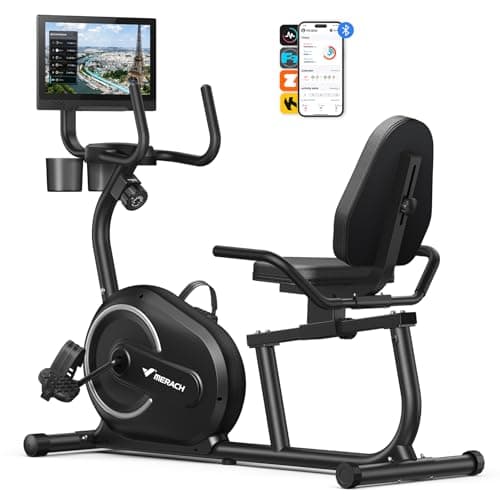
An honest review of the MERACH recumbent exercise bike with a 15.6in HD rotating screen: screen mirroring caveats, 8 resistance levels, fit range and how it compares with cheaper recumbents.
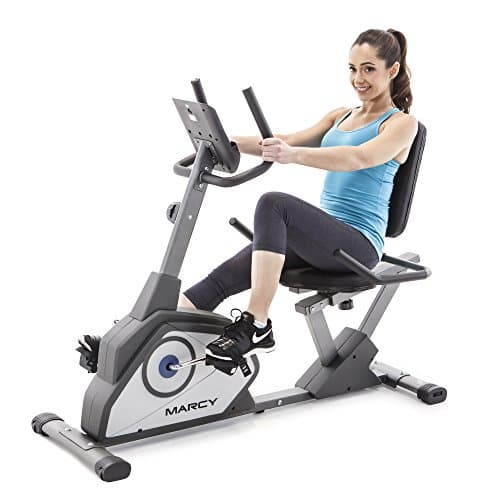
The real benefits of a recumbent bike, from back support and low joint load to easy mounting, plus honest trade-offs, calorie estimates and how to set one up.
The best recumbent exercise bikes in the UK for 2026, from a £183 starter bike to a £1,399 Sole. Honest picks for sore knees, dodgy backs and long TV sessions.
Our Burever exercise bike review: the touchscreen goal console, 0-100% magnetic resistance, 170kg limit, Zwift support without a power meter, and who should buy it.
Best Exercise is a participant in the Amazon EU Associates Programme, an affiliate advertising programme designed to provide a means for sites to earn advertising fees by advertising and linking to Amazon.co.uk. As an Amazon Associate we earn from qualifying purchases. This comes at no extra cost to you and never influences our independent reviews or rankings.