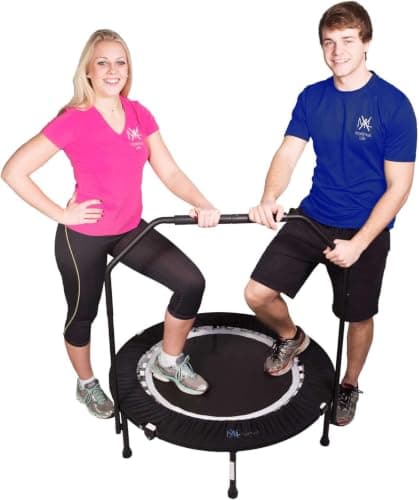
MaXimus Life have been selling this rebounder in the UK for over a decade, and it has picked up more than 2,500 Amazon ratings in that time. The pitch is straightforward: a 40 inch spring rebounder with a stability bar, a folding frame and replaceable parts, aimed at people who want to bounce for years rather than for a fortnight in January. At £230 it costs roughly double the mid-range foldable trampolines and about four times the cheapest ones, so the review question is not whether it works. It is whether the extra £120 buys anything you will feel.
Mostly, it does. The bounce is firmer and more controlled than a cheap trampoline, the frame does not creak under a heavy user, and every wearing part can be ordered separately instead of binning the whole thing. What you are not buying is silence, or the deep sink of a bungee mat.
How we review
This review is based on MaXimus Life's published specifications, the consistent themes across verified UK owner reviews of this model, and the published research on rebounding. We have not run a multi-year durability test on this exact unit, so long-term claims here come from repeated owner reports rather than our own bench data, and we say so where a manufacturer claim cannot be checked.
Who it is for
This suits three sorts of buyer. Someone with cranky knees who wants cardio that does not pound them; someone short on space who needs the workout to fold away between sessions; and older users working on balance and bone loading, where the stability bar earns its keep. It is also a reasonable buy for a personal trainer who needs kit that survives being thrown in a car boot twice a week.
Skip it if you live in a first-floor flat with light-sleeping neighbours, or if you have not yet worked out whether you actually like rebounding. Springs make noise. Our best rebounder UK guide covers cheaper ways to find out if the bounce is for you.
130kg user limit, well above the 100kg to 120kg typical at this size
Every component is replaceable, including springs, mat and legs
Folds in half then into quarters, with a carry bag included
Stability bar supplied rather than sold as a £40 extra
Spring-loaded legs snap out in seconds, so setup is not a chore
Resistance bands clip straight onto the springs for upper body work
Cons
Springs get squeaky with age and are audible through a floor
£230 is a lot when £110 trampolines bounce perfectly well
The bundled DVD is close to useless in 2026
Bungee rebounders give a softer, deeper bounce for similar money
Quarter-folding puts a crease across the mat over time
Assembled height means taller users should check ceiling clearance before jumping
The bounce
Springs and bungees feel genuinely different, and this is the decision that should drive your purchase. The PRO's coiled springs give a firm, responsive bounce with a defined top and bottom to each rep. You feel the mat push back. That suits interval work, jogging patterns and anything where you want to move quickly, and it makes the rebounder feel stable underfoot rather than wobbly.
A bungee mat, by contrast, sinks deeper and returns you more slowly, which is quieter and kinder to sore joints but slightly vague if you like to work hard. MaXimus Life sell both, so the choice is a fair one rather than a compromise forced by budget.
Noise is the honest downside. New springs are quiet enough; after a year of regular use they develop the faint rhythmic creak every spring rebounder eventually gets. A drop of silicone lubricant on the hooks fixes it for a few months at a time.
MaXimus PRO Rebounder key specs
Diameter
40 inches / approx 102 cm
Suspension
Coiled steel springs
Maximum user weight
130 kg
Folding
In half, then into quarters
Folded size
Approx 84 x 40 x 14 cm
Weight
Approx 10 kg
Feet
Non-marking rubber
Included
Stability bar, carry bag, resistance bands, sand weights, workout DVD
Warranty
1 year, with replaceable parts sold separately
Build, folding and the bits in the box
The frame is the reason for the price. It is heavier gauge than the budget trampolines and it does not flex noticeably when a 100kg adult lands off-centre, which is where cheap rebounders start to feel unnerving. The spring-loaded legs deploy with a flick and lock, so getting from bag to bouncing takes under a minute.
Folding into quarters is clever for storage and slightly hard on the mat. Over a few years you will see the fold lines. It has not translated into mat failures in owner reports, but if you have the space to store it folded only in half, do that.
The accessory bundle is a mixed bag. Resistance bands that clip onto the springs are properly useful and turn a leg-heavy session into something closer to full body. The sand weights are fine. The DVD is a relic; a good chunk of buyers no longer own a player, and MaXimus Life's own online content has long since overtaken it. If you want somewhere to start, our mini trampoline exercises guide lays out a session you can follow without a disc.
Does rebounding actually do anything?
More than its reputation suggests. A 12 week mini-trampoline programme in overweight women improved functional capacity and body composition against a control group (mini-trampoline rebounding programme trial), and six weeks of training improved balance, mobility and walking capacity in older adults (mini-trampoline training in older adults). A 2024 scoping review found rebound exercise being used across rehabilitation settings with generally positive results, while noting that study quality is patchy (rebound exercises in rehabilitation). Twenty minutes of steady bouncing comfortably counts toward the NHS guideline of 150 minutes of moderate activity a week.
One caution that rarely appears in rebounder marketing: a 2023 case series described seven patients with mid-thoracic vertebral compression fractures after mini-trampoline use, all of them older women (compression fracture case series). Seven cases is not a reason for a healthy adult to worry. It is a good reason for anyone with osteoporosis or a known low bone density score to talk to their GP before bouncing.
At £230 this is not the rebounder to buy on a whim. The case for it rests on longevity: replaceable springs, mat and legs mean a unit you keep for a decade rather than replace every second year, and the 130kg limit opens it up to users the budget models quietly exclude. Amortised over five years it costs less than a month of most gym memberships.
The case against is equally simple. A BCAN foldable rebounder at around £113 bounces well enough for most people, and if bungee quiet is your priority you should be looking at that style instead. Compare the field in our best rebounder UK guide, or browse the rest of the kit in our home gym section.
If you will bounce three or four times a week for years, yes, because the frame, springs and mat are all replaceable and the thing is built to survive that. If you are testing whether you enjoy rebounding at all, a £60 to £110 trampoline will answer that question first, and you can upgrade later without much regret.
Springs or bungees, which is better?
Bungees give a deeper, softer, quieter bounce and cost more; springs give a firmer, springier bounce with a bit of noise as they age. The PRO uses coiled springs. MaXimus Life sells a bungee model too, the Fit Bounce PRO, and if a silent bounce in a flat with neighbours below matters most, that is the one to look at.
What is the weight limit?
130kg, or about 20.5 stone. That is above the 100kg to 120kg you get on most sub-£100 trampolines, and it holds for bouncing rather than standing, which is the number that actually matters.
Does it fold small enough to store?
It folds in half and then into quarters, coming down to roughly 84 x 40 x 14cm with the legs off, and a carry bag is included. It slides under a bed or behind a sofa. At around 10kg it is a two-hand carry rather than a one-finger one.
Do I need the stability bar?
Not if you are steady on your feet, but it is included, and it makes the first two weeks much less nervy. It also turns the rebounder into a sensible option for older users working on balance, where the bar is the difference between using it and not.
Is the 87 percent impact reduction claim true?
Treat it as marketing. The figure appears across the whole rebounder industry and traces back to old, small studies rather than to independent testing of this specific unit. Rebounding genuinely is far gentler on knees and ankles than road running, but no brand can hand you a precise percentage for your body.
Are adjustable dumbbells worth it? We run the UK numbers on cost and floor space against a fixed hex set, then cover dial, twist and spin-lock types, drop risk and who should skip them.
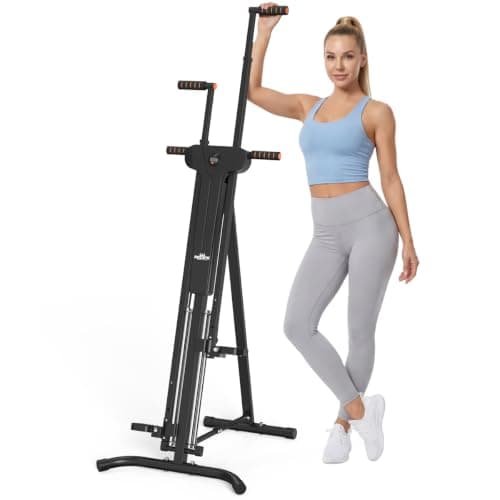
Our Relife vertical climber review covers its 4 guide rails, 150kg limit, 5 step levels and folding frame, and asks whether £516 is fair when rivals cost far less.
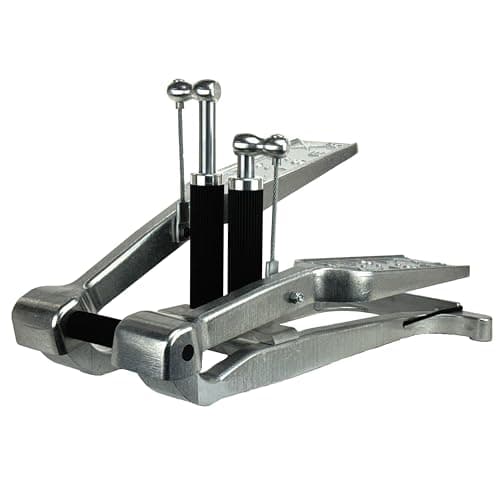
Our Xiser mini stepper review covers the cast alloy build, hydraulic resistance, sprint use and warranty, and explains who should save £500 and buy a cheap stepper instead.
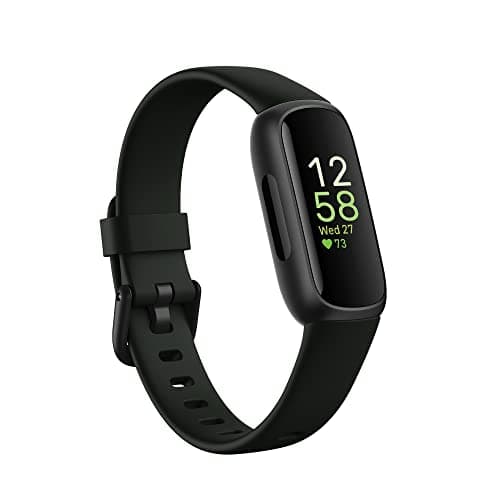
An honest Fitbit Inspire 3 review covering its AMOLED screen, 10-day battery, sleep and heart rate tracking, connected GPS, the Premium paywall and who should buy it.
Best Exercise is a participant in the Amazon EU Associates Programme, an affiliate advertising programme designed to provide a means for sites to earn advertising fees by advertising and linking to Amazon.co.uk. As an Amazon Associate we earn from qualifying purchases. This comes at no extra cost to you and never influences our independent reviews or rankings.