Best Rebounder UK 2026: Mini Trampolines for Home Workouts
By Jack Atkins, Home Gym Equipment Specialist · Updated 16 July 2026
We may earn a commission from qualifying purchases made through links on this page, at no extra cost to you. This never affects our ratings.
A rebounder is a mini trampoline built for exercise rather than for children, and it is one of the few bits of cardio kit that is genuinely low impact without being boring. The mat absorbs most of the landing force, so your knees, hips and ankles take a fraction of what running puts through them, while your heart rate climbs happily. It stores on its side behind a door, and the good ones last years. The decision that matters is springs against bungee cords, and it changes both the price and the feel completely. Here are the rebounders worth buying on Amazon UK.
How we chose
We researched the most popular rebounders and mini trampolines on Amazon UK rather than testing every one ourselves in a long-term hands-on review. We read verified owner reviews, manufacturer specifications and expert round-ups to compare bounce quality, noise, frame build, weight limits and value. Prices, ratings and specs are correct at the time of writing and change often, so check the current details before you buy.
What rebounding actually does
Rebounding attracts more nonsense than almost any other exercise, so it is worth separating what holds up from what does not. The evidence for it as exercise is reasonable. A scoping review of rebound exercise in rehabilitation settings found benefits across lower limb strength, balance, motor performance and aerobic fitness (rebound exercises in rehabilitation: a scoping review). In older women with osteopenia, a mini-trampoline programme improved postural control, functional mobility, gait speed, strength and fear of falling (mini-trampoline training in older women with osteopenia), and a trial in postmenopausal women found mini-trampoline jumping useful against several health risk factors (mini-trampoline jumping in postmenopausal women).
What you should ignore is the marketing about lymphatic drainage, detoxification and rebounding being some multiple more efficient than running. Those claims trace back to decades-old sales material, not research. Treat a rebounder as what it is: an enjoyable, joint-friendly way to bank the 150 weekly minutes of moderate activity the NHS recommends (NHS physical activity guidelines for adults).
1. SereneLife Foldable Fitness Trampoline: Best Overall
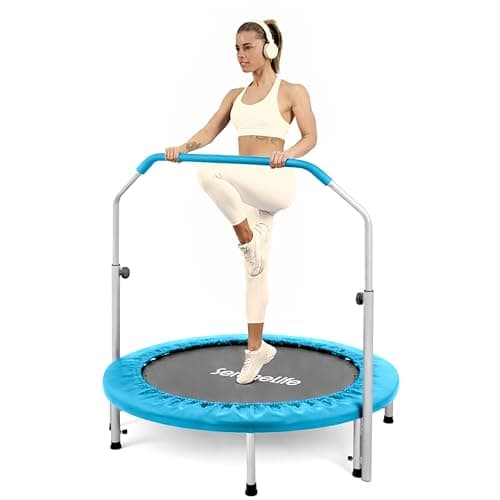
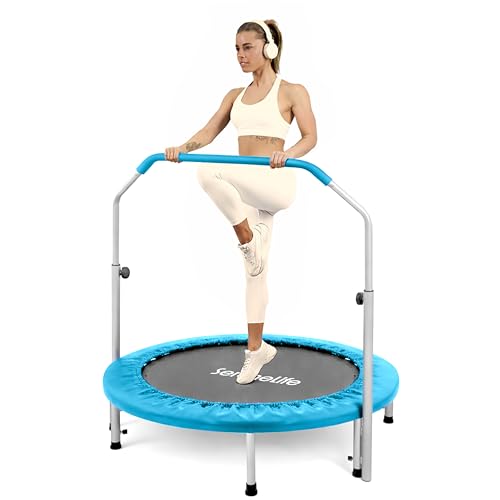
The SereneLife is the rebounder to buy if you want the safest bet for the least money. It carries a 4.4-star average from more than 7,700 ratings, which is far and away the biggest review base in this guide, and at around £65 it sits at a price where a wrong guess does not hurt.
It is a sprung rebounder with a steel frame, a padded spring cover and a removable foam-grip handle, and it folds in half so it slides behind a sofa or under a bed. It comes in two sizes (91cm and 102cm), and the larger one is worth it if you have the floor space, since a bigger mat means a more forgiving landing area. Assembly is straightforward and it arrives mostly built.
The honest limits are the ones every sprung rebounder shares. It is audible, with a rhythmic squeak that develops as the springs bed in, and the bounce is firmer and shallower than a bungee model. Springs also lose tension over years of heavy use. For occasional to regular use, none of that will bother you.
2. MXL FIT Bounce PRO Bungee Rebounder: Best Premium
The FIT Bounce PRO is the one serious rebounders end up buying. At around £399 it is roughly six times the SereneLife, so it needs justifying.
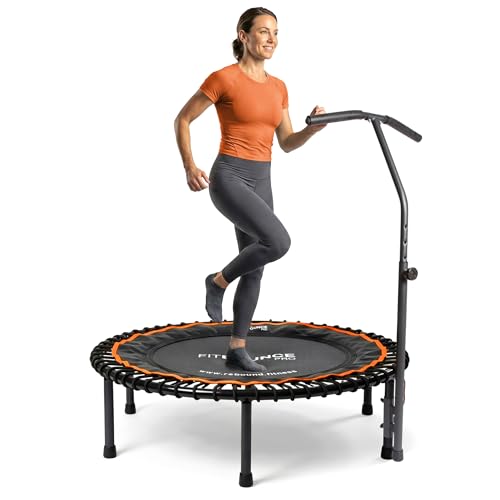
The bungee cords are the whole story. Instead of steel springs snapping you back, elasticated cords let you sink deeper into the mat and return more gently, which produces a soft, deep, almost silent bounce. MXL runs 60 connectors, around twice what most rebounders use, which is what keeps the tension even across the mat. If you have cranky knees, a downstairs neighbour, or you rebound most days, that difference is not a luxury, it is the reason to own this rather than a sprung model. The 40 inch frame is high-grade steel with spring-loaded folding legs, it takes up to 400lb (around 181kg), and it arrives ready assembled and half-folds into the carry bag that comes with it. This version also includes the adjustable stability T-Bar in the box, which MXL otherwise sells separately for around £79, plus a beginner DVD and online access to its workout routines.
The costs are real: the price, the weight (it is not a rebounder you will move often), and the fact that bungee cords need occasional replacement and re-tensioning to keep the bounce even, though MXL does keep spare parts available. Ignore the lymphatic drainage and detox claims in its marketing, for the reasons above, and buy it for the bounce quality, which is what actually justifies the money.
3. HOMCOM Foldable Mini Trampoline with Handle: Best with Handlebar
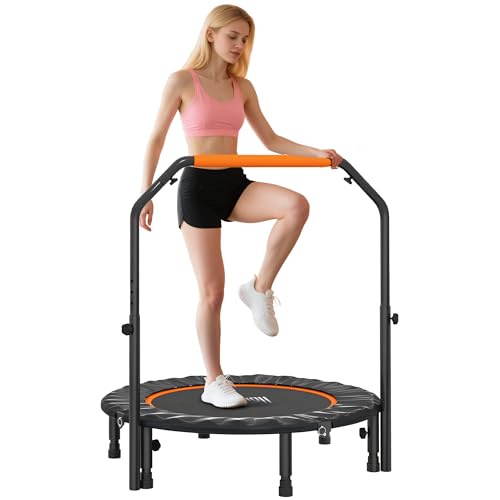
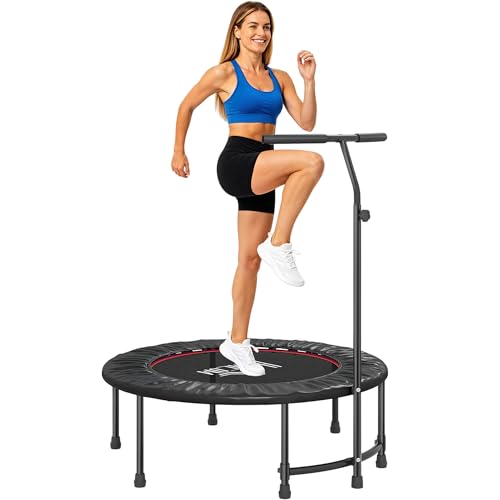
If balance is the thing holding you back, the HOMCOM foldable rebounder is the sensible pick. It has a 4.4-star average from around 175 ratings, comes in 40, 45 and 48 inch sizes, and its adjustable U-shaped foam handle is the reason to choose it: you can set it to your height rather than accepting whatever the box gives you.
The bigger 48 inch mat is the quiet advantage here. More mat means more room for error, which is exactly what you want when you are learning or coming back from injury. The legs fold and the frame is steel, and at around £42 it undercuts most rebounders with a handle.
The review count is modest compared to the SereneLife, and it is a sprung model, so expect the same noise and firmer bounce. The handle is removable once you no longer want it.
4. HOMCOM 40 inch Bungee Rebounder: Best Budget Bungee
This is the compromise option: bungee cords at around £42 rather than £399. It holds a 4.0-star average from roughly 200 ratings, uses elasticated cords rather than steel springs, and includes an adjustable handle.
The value proposition is obvious. You get most of the quietness of a bungee rebounder and a softer landing than any sprung model at this price, which matters if you live in a flat or have sensitive knees but cannot justify the FIT Bounce PRO.
Be realistic about where the money went. The 4.0 rating is the lowest here, the cords and frame are not in the same class as the MXL, and cheap bungee cords stretch and lose their even tension faster. It is a good buy for light to moderate use, not a machine that will still feel right in five years.
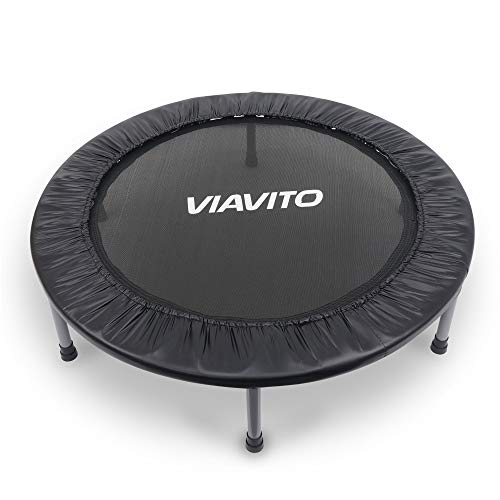
At around £30 the VIAVITO is the cheapest way to find out whether rebounding is for you. It has a 4.2-star average from nearly 250 ratings, a 96.5cm mat and detachable legs so it stores completely flat, which is more than most budget rebounders manage.
For gentle bouncing in front of the television it does the job perfectly well, and the flat storage is genuinely useful in a small flat.
The 100kg weight limit is the thing to check before you buy, as it is lower than every other pick here and it is not a number to push. There is no handle, the springs are audible, and the bounce is firm. Treat it as a trial rather than a long-term machine.
Bungee or spring is the real decision. Springs are cheap, firm and noisy. Bungee is soft, quiet, kinder to joints and expensive. If you have joint pain or neighbours below you, save for bungee.
Check the weight limit properly. Budget rebounders often stop at 100kg, and rebounding briefly multiplies your bodyweight at the bottom of each bounce, so the limit is not a suggestion.
Bigger mats are more forgiving. A 48 inch mat gives you far more margin than a 36 inch one. Buy the biggest that fits your room.
Take the handle if you are unsure. Most are removable. Nobody has ever regretted having one while learning.
Check the spring cover. An exposed spring is a trapped toe. Every pick here has a padded cover, but confirm it on anything else you consider.
Getting more from a rebounder
Rebounding covers cardio and balance well but leaves your upper body and your strength almost untouched. Adding two or three short strength sessions a week is what turns it from a nice habit into a real training plan. A set of resistance bands is the cheapest way to add pulling and pressing, and a pair of adjustable dumbbells covers everything else. Because rebounding hammers your calves early on, a few sets of calf raises will help them keep up, and a foam roller is worth having for the first fortnight while they adapt.
If you want a bigger cardio ceiling than a rebounder can offer, a walking pad or a cross trainer are the usual next steps, and both stay low impact. A stepper machine is the third option and the cheapest of them, though it works a narrower slice of your legs and asks more of your calves.
For most people the SereneLife Foldable Fitness Trampoline is the best rebounder in the UK. It holds a 4.4-star average from more than 7,700 ratings on Amazon UK, costs around £65 at the time of writing, folds in half for storage and comes with a removable handle. If you rebound most days and want a softer, quieter bounce, the MXL FIT Bounce PRO is the better long-term buy at around £399.
Is rebounding actually good exercise?
Yes. A scoping review of rebound exercise in rehabilitation found benefits across balance, lower limb strength, bone health and aerobic fitness, and a trial in older women with osteopenia found improvements in postural control, gait speed, strength and fear of falling. It is genuine low-impact cardio, though claims about lymphatic drainage and detoxing are marketing rather than evidence.
What is the difference between a bungee and a spring rebounder?
Springs are cheaper and give a firmer, snappier bounce, but they are noisier and transmit more jolt through your joints. Bungee cords give a softer, deeper, near-silent bounce that is much kinder to knees and ankles, and they last longer, but they cost considerably more. If you have joint pain or live in a flat, bungee is worth the money.
Are rebounders bad for your pelvic floor?
Rebounding puts repeated downward pressure on the pelvic floor, so it can aggravate symptoms if you already have weakness or leak when you cough or sneeze. It is common after pregnancy. Start with gentle health bounces where your feet stay on the mat, build up slowly, and speak to a GP or a pelvic health physiotherapist before doing high bouncing if you have any symptoms.
Do I need a handlebar on a rebounder?
Get one if you are new to rebounding, older, or at all unsteady on your feet, because the confidence it gives is worth more than the workout you lose. Most handles are removable, so you can take it off once you are settled. If you are already confident and want to swing your arms freely, skip it.
How long should I rebound for?
Start with 5 to 10 minutes, because rebounding uses stabilising muscles you may not have loaded before and calves in particular get sore quickly. Build to 20 to 30 minutes over a few weeks. UK guidance is at least 150 minutes of moderate activity a week, which five 30-minute sessions covers.
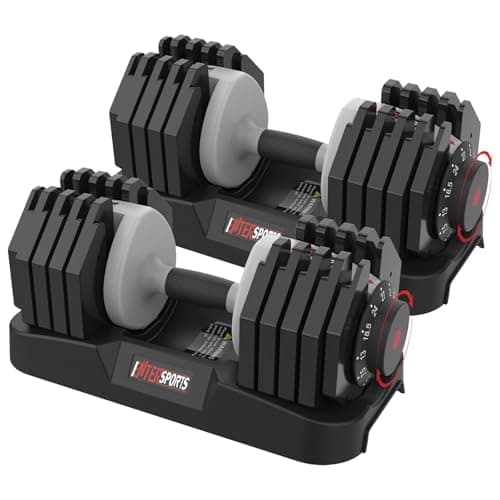
EnterSports 27kg adjustable dumbbells review: 10 settings from 2 to 27kg, uneven 2.5 to 3kg jumps, dial lock, wobble and who should pick it over the 20kg pair.
What a glute ham developer is, how a GHD machine differs from a Roman chair, the exercises it's built for, how to set it up, UK price bands and cheaper substitutes.
Which lat pulldown attachment to use or buy: straight, angled, V-bar, neutral-grip, rope and D-handles explained, plus how to choose a rack-mounted pulldown unit.
What a Roman chair is, how it differs from a hyperextension bench, GHD and captain's chair, 45-degree vs horizontal, how to set the pad height, the best exercises and what to check before you buy.
Best Exercise is a participant in the Amazon EU Associates Programme, an affiliate advertising programme designed to provide a means for sites to earn advertising fees by advertising and linking to Amazon.co.uk. As an Amazon Associate we earn from qualifying purchases. This comes at no extra cost to you and never influences our independent reviews or rankings.