Home Gym
How to Build a Home Gym: A UK Guide to Space, Flooring and Budget
How to build a home gym in the UK: measure your room and ceiling, pick the right flooring, then follow staged builds at roughly £300, £1,000 and £2,500+.

By Jack Atkins, Home Gym Equipment Specialist · Updated 30 October 2026
A lying leg curl machine is a padded bench you lie face down on, with a lever arm and roller pad at the foot end that you curl towards your backside by bending your knees. It isolates the hamstrings through knee flexion, and it only works properly when two things are set right: your knee lined up with the machine's pivot, and the roller pad sitting just above your heels. This guide covers the machine itself, from setup to the types you'll find and what to look for if you want one at home. If you're after the exercise in more detail (muscles worked, rep schemes, cues), our leg curl guide covers that side.
Most people walk up to the machine, lie down wherever their body lands and start curling. That's why so many find it awkward on the knees. Spend 20 seconds on setup instead.
Why the pivot matters
The lever arm rotates around a fixed axis, and your knee rotates around its own. If those two axes don't match, the roller pad drags up or down your leg as you curl, the resistance feels uneven, and the knee takes a shearing load the muscle should be handling. A matched pivot is the difference between a smooth rep and a scratchy one.
With setup done, the movement itself is simple. Curl your heels towards your backside over roughly a second, pause for a beat when your hamstrings are fully shortened, then lower over about three seconds until your legs are almost straight. Stop just before the plates touch so tension stays on the muscle.
Keep your toes pulled up towards your shins. Pointing them lets the calves take over part of the knee bend. And if your hips start to rise off the pad, the set is over, whatever rep you're on.
For sets and reps, 3 to 4 sets of 8 to 15 is a sensible range for most people. When you can do one or two reps beyond your target, add weight. The ACSM's resistance training position stand recommends load increases of 2% to 10% at that point (ACSM progression models in resistance training), which matters more than you'd think on a machine; more on that in the buying section.
Both machines train knee flexion, but they put your hips in different positions, and that changes how long the hamstrings are while they work. Three of the four hamstring muscles cross the hip as well as the knee. Sitting bends the hip, which stretches those muscles before you start; lying flat keeps the hip straight, so they work at shorter lengths.
The best direct comparison is a 2021 study by Maeo and colleagues (seated vs prone leg curl training, Med Sci Sports Exerc). Twenty adults trained one leg on a seated curl and the other on a prone (lying) curl, at 70% of their one-rep max, five sets of 10, twice a week for 12 weeks. MRI showed whole-hamstring volume rose 14% on the seated leg and 9% on the lying leg. The difference came from the muscles that cross both joints; the short head of the biceps femoris, which only crosses the knee, grew about the same either way (10% vs 9%). Both legs ended up similarly protected against muscle damage from a later bout of hard eccentric work.
So if your only goal is maximum hamstring size and your gym has both, seated wins. That doesn't make the lying machine a poor choice. A 9% gain in 12 weeks is a good result, and an EMG study comparing five common lower body lifts found the lying leg curl produced the highest hamstring-to-quadriceps activation ratio of the group, ahead of the Romanian deadlift and hip thrust (hamstring-to-quadriceps activation during strengthening exercises).
For home lifters there's also a practical point: lying leg curl setups are far more common in home kit, because a leg developer bolted onto a flat bench is effectively a lying curl. A seated curl needs its own frame.
The machine you'll see in most commercial gyms. A weight stack sits behind or beside the bench, connected to the lever arm by a cable or belt, and you change resistance by moving a pin. They're quick to adjust and usually have the best pivot alignment and pad design, because the whole machine was built around one movement. They're also big, heavy and expensive, and stacks typically jump in 5kg or so steps, which is a large percentage change on a muscle group that often curls modest weights.
Instead of a stack, you load Olympic plates onto a horn on the lever arm. They're simpler mechanically (no cables to wear out), often cheaper than a selectorised equivalent, and you can add weight in 1.25kg or 2.5kg jumps if you own fractional plates. Many have a humped or angled bench pad that tips your hips into a little flexion, which takes some strain off the lower back and nudges the hamstrings towards a longer working length. The trade-off is footprint: you still need a full-length machine, plus space for plates.
This is how most people end up with a lying leg curl at home. Many flat and adjustable weight benches have an optional leg developer at one end: a short lever with foam rollers that you load with plates. Face up, it's a leg extension; flip over onto your front and it's a lying leg curl. It's the cheapest and most space-efficient option by a wide margin.
The compromises are real, though. The pivot is fixed, so taller and shorter lifters can't always line their knee up with it. The pads are often thin, the load limit on the attachment is usually well below the bench's own rating, and some benches wobble when you curl a heavier load. Home multi-gyms with a leg station have the same pros and cons in a different frame.
Footprint. A standalone lying leg curl is roughly as long as a weight bench, plus the lever arm's swing and room to get on and off. Measure your floor, then add space at the foot end for the arm to travel and, on plate-loaded models, for you to load plates without hitting a wall. Check the manufacturer's listed dimensions rather than guessing from photos.
Weight stack or load capacity. Hamstrings are weaker than quads for most people, so you don't need a huge stack, but you do need small steps. A selectorised machine with 5kg or bigger jumps can stall your progress for weeks once you're curling 20kg to 30kg. Look for half-weight add-on plates, or choose plate-loaded and buy 1.25kg plates. On a bench attachment, check the attachment's own maximum load, which is often listed separately from the bench.
Pad adjustability. The roller pad should adjust in length so it lands just above your heels; if it only has two or three positions, check your height falls within its range. A start-angle adjustment is a bonus. A thick bench pad and padded handles matter more than you'd expect when your face is pressed into the bench for 15 minutes.
Pivot alignment. On a dedicated machine, see where the pivot sits relative to the end of the bench pad. If your knees can't reach it comfortably, the machine will never feel right.
Build and stability. Look at frame steel gauge, whether the frame can be bolted down, and the user weight limit. A lever arm under load puts a twisting force through the whole frame, and a wobbly base gets worse over time.
A machine is a nice to have, not a requirement. Knee flexion is the movement you need, and there are several ways to load it without a lever arm.
The Nordic hamstring curl is the hardest and most effective of the bodyweight options; you just need your ankles anchored, and if you'd rather not jam them under a sofa, a Nordic curl bench does that job properly. Sliding leg curls on a towel or furniture sliders work well for higher reps. Banded leg curls, lying face down with a band anchored low, are a reasonable stand-in for the machine's movement pattern. A stability ball curl adds a balance demand on top.
We've ranked these and a few more in our leg curl alternative guide, including which ones match the lying machine most closely. If you're still deciding what to put in a garage gym, our home gym hub covers benches, racks and multi-gyms, several of which include a leg developer.
If you're using a commercial gym and want to know what the rest of the leg area is for, our guide to leg machines at the gym names and explains each one.
Lie face down with your knees just off the end of the bench pad, so the back of your knee lines up with the machine's pivot point (usually marked by a coloured dot or the axle bolt). Then adjust the roller pad so it sits on the back of your lower leg, just above your heels and below your calf muscle. Grip the handles, press your hips into the pad, and do one light rep to check the pad doesn't slide up your leg.
For pure hamstring growth, the seated machine has the stronger evidence. A 2021 study by Maeo and colleagues trained one leg seated and the other lying for 12 weeks and found whole-hamstring volume grew 14% on the seated side against 9% on the lying side. The lying machine still builds muscle and strength, and it's the one more often found in home kit, so use whichever you have access to.
Yes, though a full standalone lying leg curl is large and heavy, so most home lifters use either a weight bench with a leg developer attachment or a multi-gym with a built-in leg station. A bench attachment is the cheapest and smallest route. Dedicated plate-loaded lying curls exist too, but they take up more floor space than most spare rooms can give.
Pick a weight you can curl for 8 to 15 controlled reps while lowering it over about three seconds, with your hips staying down on the pad. If your hips lift or the weight drops quickly, it's too heavy. Once you can beat your target reps by one or two, add a small amount of weight.
Usually because your hips are lifting off the pad as you curl, which arches your lower back and turns part of the movement into hip extension. Lighten the load, squeeze the handles, and keep your hip bones pressed down. Machines with an angled or humped bench pad put the hips in a slightly flexed position, which many people find easier on the back.
How to build a home gym in the UK: measure your room and ceiling, pick the right flooring, then follow staged builds at roughly £300, £1,000 and £2,500+.
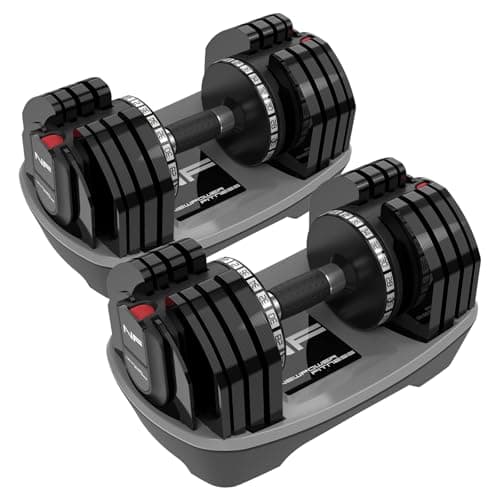
Newpower Fitness 36kg adjustable dumbbells review: 18 settings in 2kg steps, a twist-handle selector, what '36kg pair' means, and who should buy it.
How to choose a cast iron kettlebell: one-piece casting, handle diameter and finish, powder coat vs vinyl, weight tolerance, UK price per kg and which weights to buy first.
How to use a chest fly machine with proper form: seat height, handle position, elbow bend, weight to use, muscles worked, and the UK home machines that do the job.
Best Exercise is a participant in the Amazon EU Associates Programme, an affiliate advertising programme designed to provide a means for sites to earn advertising fees by advertising and linking to Amazon.co.uk. As an Amazon Associate we earn from qualifying purchases. This comes at no extra cost to you and never influences our independent reviews or rankings.