Home Gym
Fitbit vs Apple Watch: Which Should You Buy in 2026?
Fitbit vs Apple Watch for UK buyers: battery, price, Google Health Premium, GPS, accuracy research and apps compared, with a straight answer on which to buy.

By Jack Atkins, Home Gym Equipment Specialist · Updated 27 October 2026
The leg machines you'll find at most gyms are the leg press, hack squat, leg extension, lying and seated leg curl, hip adductor, hip abductor, glute or hip thrust machine, Smith machine, belt squat, calf raise machines and, in better-kitted gyms, the pendulum squat. Compound machines like the leg press and hack squat train the quads and glutes together, while single-joint machines such as the leg extension and leg curl isolate one muscle group. Below, each machine is named with what it trains, followed by a beginner workout and a straight answer on which ones are worth buying for a home gym.
| Machine | Main muscles | Home-gym friendly? |
|---|---|---|
| 45-degree leg press | Quads, glutes, adductors | Yes, as a combo unit (needs space) |
| Horizontal (seated) leg press | Quads, glutes | Partly, via multi gym leg press plates |
| Hack squat | Quads (heavy bias), glutes | Yes, as a combo leg press/hack squat |
| Leg extension | Quads, especially rectus femoris | Yes, as a bench or multi gym attachment |
| Lying leg curl | Hamstrings | Yes, as a bench or multi gym attachment |
| Seated leg curl | Hamstrings | Rarely, mostly commercial |
| Hip adductor | Inner thighs | No, commercial only |
| Hip abductor | Glute medius, outer hip | No, commercial only |
| Glute drive / hip thrust machine | Glutes, hamstrings | Rarely, very expensive |
| Smith machine | Quads, glutes (depends on foot position) | Yes, common in garages |
| Belt squat | Quads, glutes, adductors | Yes, compact plate-loaded versions exist |
| Standing / seated calf raise | Calves (gastrocnemius, soleus) | Partly, many racks and presses double up |
| Pendulum squat | Quads | No, too big and too pricey |
The 45-degree leg press is the plate-loaded sled you sit under and push up a diagonal track. It's the leg machine people mean when they say "do legs", and for good reason: your back sits against a pad, the path is fixed, and you can load it far heavier than you'd ever squat. Foot position steers the work. High and wide on the platform pulls in more glutes and adductors, while low and narrow shifts the load to the quads.
The horizontal or seated leg press does the same job with you sitting upright and pushing a footplate away, usually on a pin-selected stack. It's gentler to get in and out of and common in budget gyms. It can't be loaded as heavily, which makes it a sensible starting point for beginners and for anyone coming back from a layoff. Our full leg press guide covers foot positions and depth.
A hack squat puts you upright on a sloped back pad with shoulder pads on top, and you squat down a fixed track. Because the track holds your torso and your feet sit forward, your knees travel a long way, and that makes it one of the hardest-hitting quad machines in the building. Expect to use much less weight than on the leg press. Our hack squat guide walks through setup and the reverse hack variation.
The Smith machine is a barbell locked into vertical rails with safety catches every few inches. You can squat, lunge, split squat and calf raise on it. Putting your feet a step forward of the bar turns a Smith squat into something close to a hack squat. It's also the safest way to squat heavy alone, since you just rotate the bar onto a hook if you fail. See Smith machine squats for foot placement.
On a belt squat the load hangs from a belt around your hips rather than sitting on your spine. You stand on a raised platform and squat, so your legs work hard while your lower back and upper body barely load at all. It's a great machine for anyone with a cranky back, and it's increasingly common in strength-focused gyms. Our belt squat guide includes home alternatives using a dip belt.
The pendulum squat swings you through an arc on a pivoting arm rather than a straight track. The arc keeps the resistance high at the bottom of the squat, where your quads are most stretched, and lots of lifters find it kinder on the knees than a hack squat. You'll only see one in hardcore or well-funded gyms, because they're huge and cost thousands.
You sit with a padded roller on your shins and straighten your knees. Only the knee joint moves, so the quads do all of it. The leg extension has one quiet advantage over pressing machines: it trains the rectus femoris, the quad muscle that crosses the hip, far more directly. One study measured rectus femoris activity as significantly higher during knee extension than during the leg press, while the other quad muscles didn't differ (Ema et al., 2016). If your leg day is all presses and squats, that muscle is probably undertrained. The leg extension guide has form cues and home swaps.
Both curl the pad towards your backside to train the hamstrings, but they're not equal. On the lying (prone) curl your hips are straight, which shortens the hamstrings. On the seated curl your hips are bent, so the hamstrings work from a longer, more stretched position. In a 12-week trial where people trained one leg on each machine, the seated curl grew the whole hamstrings by 14% against 9% for the lying curl (Maeo et al., 2021). If your gym has both, prioritise the seated version. More on technique in our leg curl guide.
These are the two machines where you sit with pads against your knees. On the adductor you squeeze your legs together, which trains the inner thighs. The abductor is the reverse, pushing your knees apart against the pads to work the glute medius and the outer hip. The adductors are bigger and more useful than their reputation, since they help you out of the bottom of every squat. Our hip adductor machine guide explains how to set the range so you don't strain a groin.
A hip thrust machine lets you do barbell hip thrusts without the faff of rolling a loaded bar over your lap. You sit under a padded belt or lever, push your hips up and squeeze. It loads the glutes hardest at the top of the movement, which complements squats and presses that load them at the bottom.
Gyms usually have a standing calf raise, where you push up with pads on your shoulders, and a seated calf raise, where a pad sits on your knees. Keep the knee straight and you bias the gastrocnemius, the bigger calf muscle you can see. Bend it and the soleus underneath takes over. Do both if you can. Plenty of leg presses also let you do calf raises on the bottom edge of the platform.
The NHS recommends strength work for all the major muscle groups, legs and hips included, on at least two days a week. This session covers everything below the waist in about 45 minutes. Run it twice a week with at least two days between sessions.
Rest 90 seconds to two minutes on the leg press and about a minute on the rest. Each set should finish with two or three reps still in the tank. When you hit the top of the rep range on every set, add the smallest weight jump the machine allows.
After six to eight weeks, swap the leg press for the hack squat or belt squat on one of the two days. The change keeps you progressing and teaches you a second big movement.
Machine setup takes 20 seconds and saves your knees
Line the machine's pivot point up with your knee on leg extensions and leg curls; most have a coloured dot on the frame to show where. Set the seat so the roller sits just above your ankle, not on your foot. A pivot that's a few centimetres off is the most common reason these machines feel awkward.
Most gym leg machines are pin-loaded steel monsters that often weigh a couple of hundred kilos, and they only do one job. You don't need them. For a home gym, three routes give you machine-style leg training without filling the garage.
A leg extension and curl attachment. Many adjustable weight benches take a bolt-on leg developer: a padded roller arm you load with plates for extensions and lying curls. It's the cheapest way to get both isolation machines, usually a small add-on cost compared with buying a separate machine. The trade-off is a fixed, slightly awkward range on budget versions, and you'll be swapping plates between moves. Multi gyms do the same job on the weight stack, which is quicker. The DKN Studio 7400, for example, has a leg curl station that handles both extensions and curls off its 80kg stack. We've covered it in our DKN Studio 7400 review and compared alternatives in the best multi gyms UK roundup. The DKN is hard to find in stock right now, so if you want a stack gym with a leg extension station today, look at the Marcy HG3000.
Check the Marcy HG3000 on AmazonA combined leg press and hack squat. These plate-loaded units switch between a 45-degree press and a hack squat by flipping the shoulder pads and footplate, so you get the two best compound leg machines in one footprint. Plan for roughly 2 metres by 1.5 metres of floor and a lot of plates.
A stack gym with a leg press station. If plates aren't for you, some selectorised multi gyms bolt a seated leg press onto the usual pulldown, press and leg extension stations. The stack caps how hard you can push your legs, but it saves a second machine; our SportsRoyals home gym leg press review covers one with a 68kg stack.
A Smith machine or belt squat. If you already squat in a rack, a Smith machine adds guided squats, split squats and calf raises with built-in safety. Compact plate-loaded belt squat stations are another good fit for anyone whose back doesn't love loaded barbells.
What we'd skip at home: the hip adductor and abductor, the seated leg curl, the glute drive and the pendulum squat. They're expensive and bulky, and each one only does a single job. A resistance band does a decent adductor and abductor workout for a few pounds, and a hip thrust works fine with a barbell and a bench.
For the rest of your setup, browse our home gym equipment reviews.
Most commercial gyms have a leg press, a leg extension, a lying or seated leg curl, a hip adductor and abductor, a Smith machine and a standing or seated calf raise. Better-equipped gyms add a hack squat, a hip thrust or glute drive machine, a belt squat and a pendulum squat. Between them they cover the quads, hamstrings, glutes, inner and outer thighs and calves.
The leg press is the best first leg machine for most beginners. Your back is supported, the path is fixed and you can start with a light load, so you learn to push through your whole foot without worrying about balance. Pair it with a leg curl and a leg extension and you've trained the whole thigh.
For building muscle, a well-chosen set of machines works as well as free-weight squats for most people, because muscle growth depends on hard sets taken close to failure rather than on balance. Squats build more coordination and carry over better to sport. Machines win when you want to train hard with less fatigue, protect a sore back or isolate one muscle.
The most practical options are a leg extension and curl attachment on a weight bench, a multi gym with a built-in leg developer, or a combined leg press and hack squat machine if you have the space and budget. A belt squat or Smith machine also fits a garage. Full-size gym pieces like the pendulum squat and pin-loaded adductor are rarely worth it at home.
Four or five is plenty. Pick one compound machine such as the leg press or hack squat, then one machine each for the hamstrings, the quads and the calves. Add an adductor or glute machine if you have time. Doing every machine in the gym spreads your effort too thin.
Fitbit vs Apple Watch for UK buyers: battery, price, Google Health Premium, GPS, accuracy research and apps compared, with a straight answer on which to buy.
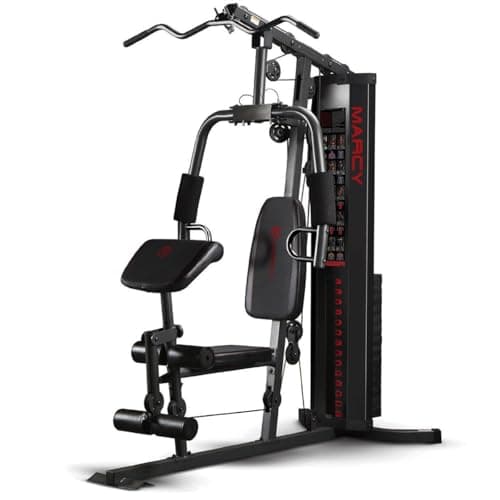
Our Marcy HG3000 multi gym review: the 68kg stack versus the 90kg claim, pec dec, preacher pad, leg extension, 210cm height, £599 price and who it suits.
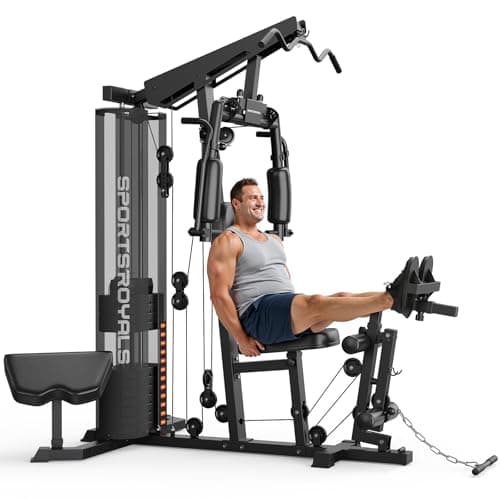
SPORTSROYALS home gym review: the 68kg stack, leg press and chest fly stations, 191 x 131cm footprint, 142kg build, £759.99 price and who it suits in the UK.
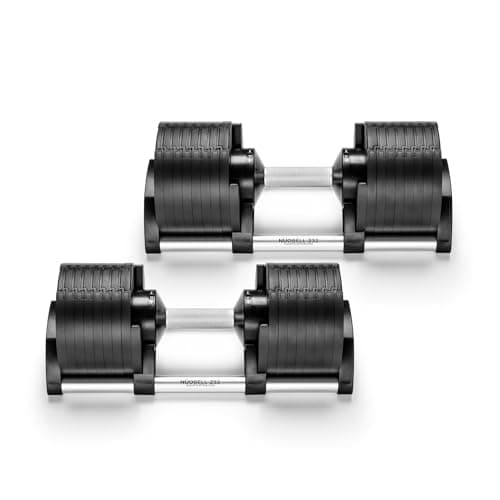
The best adjustable dumbbells in the UK for 2026, from quick-dial sets to heavy 40kg and 50kg options. Budget to premium picks researched and ranked.
Best Exercise is a participant in the Amazon EU Associates Programme, an affiliate advertising programme designed to provide a means for sites to earn advertising fees by advertising and linking to Amazon.co.uk. As an Amazon Associate we earn from qualifying purchases. This comes at no extra cost to you and never influences our independent reviews or rankings.