Home Gym
Fitbit vs Apple Watch: Which Should You Buy in 2026?
Fitbit vs Apple Watch for UK buyers: battery, price, Google Health Premium, GPS, accuracy research and apps compared, with a straight answer on which to buy.

By Jack Atkins, Home Gym Equipment Specialist · Updated 8 August 2026
We may earn a commission from qualifying purchases made through links on this page, at no extra cost to you. This never affects our ratings.
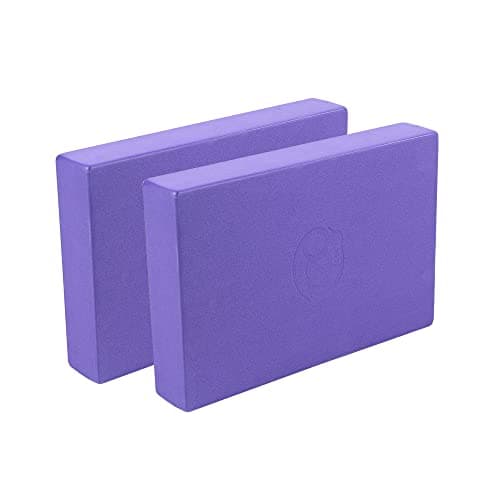
A yoga block is a brick that makes the floor closer. That sounds trivial until you have spent six months failing to reach the ground in triangle pose, then bought a pair of blocks and found the pose available on the first try. Blocks are the cheapest piece of kit that meaningfully changes what your body can do, and they cost less than a single studio class. The catch is that "yoga block" covers soft foam bricks that dent, dense EVA blocks that last, and cork blocks that outlive the mat. This guide sorts the ones worth owning on Amazon UK.
How we chose
We researched the most popular yoga blocks on Amazon UK rather than running our own long-term hands-on test of every set. We compared manufacturer specifications, stated materials and dimensions, and the recurring themes in verified owner reviews, weighing density, size, grip and value. Prices and specs were correct at the time of writing and change often, so check the current listing before you buy.
Everything else is detail. Foam blocks, almost always EVA, weigh around 120g each, cost under £12 a pair and are comfortable to kneel or sit on. High-density EVA is the important phrase; low-density foam squashes under a hand press and never fully recovers.
Cork blocks weigh roughly 500g each, cost £15 to £21 a pair, grip better when your palms are damp and will not compress at all. They are also unforgiving. Drop one on a toe and you will remember it. Sit on one for a long restorative hold and the edges dig in. If your practice runs hot and sweaty, or you are heavier and want zero give under load, cork wins. Otherwise foam is the more pleasant daily block.
The NHS's guide to yoga makes the point that yoga is a safe way to build strength, flexibility and balance for most people, and props are the standard route to getting there without forcing range you do not yet own. The evidence for yoga in chronic low back pain specifically is more modest than the marketing suggests: a Cochrane review found low to moderate certainty evidence of a small improvement in back function at three months compared with no exercise, with no clear advantage over other forms of exercise (Cochrane, yoga for chronic non-specific low back pain). Useful, then, but not magic.
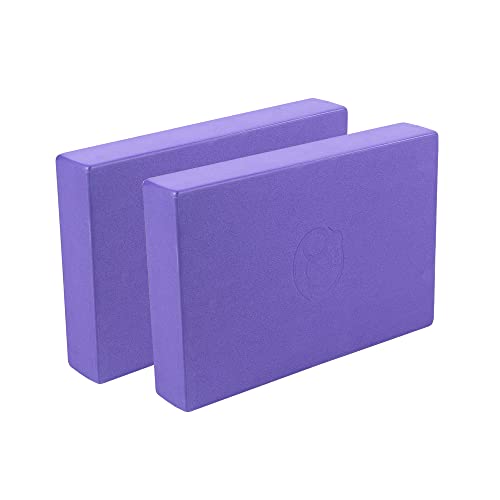
Yoga-Mad is part of the Mad Group, a UK supplier that has been shipping kit to studios and gyms for years, and this is the set we would point most people to first. The blocks measure 30 x 20 x 5cm, which is the larger flat format rather than the standard brick. That matters more than it sounds: the wider face is genuinely stable to sit on for pigeon or a supported bridge, and the 5cm depth is a comfortable low height for hands in a forward fold.
The foam is high-density EVA with a textured, non-slip surface, and it holds its shape under a full hand press rather than pillowing. It also will not scuff a wooden floor the way a wooden brick does. The trade-off is the shape itself. Because the block is 5cm thick rather than 7.5cm, you lose the tallest brick orientation, so if you need maximum height under your hands in half moon or triangle, a standard brick suits you better. At around £12 a pair, that is the only real complaint.
Check price on Amazon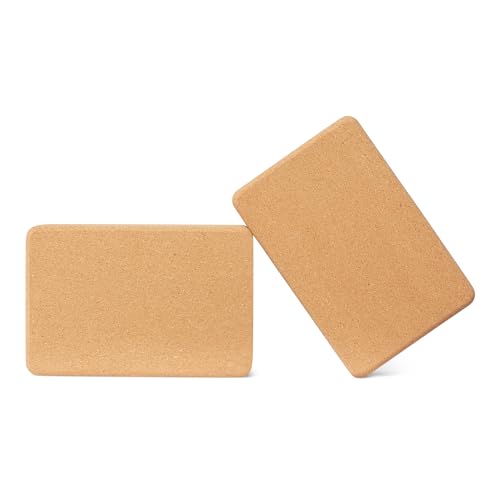
If you want cork and do not want to think about it, buy these. They are 23 x 15 x 8cm, the standard brick shape, which gives you three usable heights depending on which face you rest on. The cork is FSC certified, which is a real supply chain claim rather than a green-sounding adjective, and the rounded edges take the worst of the bite out of the material.
Cork's advantage shows up in two places. It does not compress, so a heavy hand press lands on something that behaves like a solid object rather than a sponge. And it grips better than foam once your palms are sweaty, which is the whole argument for cork in a hot room. The downsides are weight and comfort: at roughly half a kilo each these are not travel blocks, and kneeling on one is a very different experience to kneeling on EVA. At around £15 a pair they are also priced below most cork sets, which is unusual for Amazon's own-brand kit going head to head with specialists.
Check price on Amazon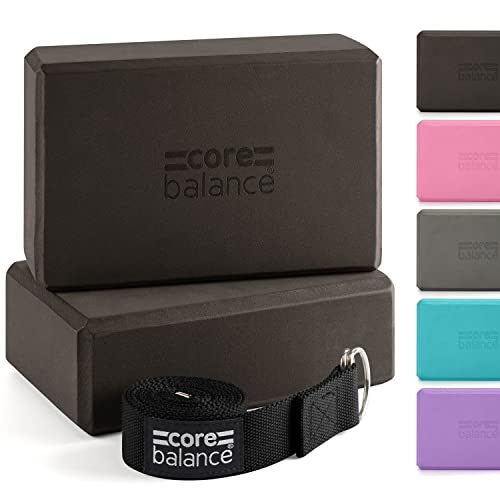
Buying a strap separately is the classic beginner mistake, because you almost always want one within a fortnight of buying blocks. This Core Balance set bundles two EVA foam blocks at 22.8 x 14.9 x 7.6cm with a 183cm cotton strap and a heavy-duty metal D-ring, all for roughly the price of the blocks alone elsewhere.
The blocks are the standard brick size with bevelled edges, each weighing about 124g, so they are light enough to throw in a bag for a class. The strap is where the value sits. A metal D-ring holds tension properly under load, unlike the plastic buckles on the cheapest straps, which slip exactly when you need them not to. Webbed cotton rather than nylon means it will not dig into the arch of your foot in a seated forward bend. If we are picking holes: the foam is softer than the Yoga-Mad blocks, so it dents more readily under a hard hand press, and the black colourway is the only one consistently in stock.
Check price on Amazon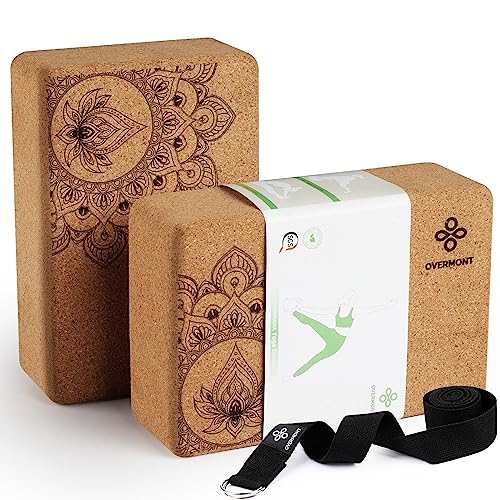
The same bundle logic as the Core Balance set, but in cork and with a longer strap. You get two natural cork blocks at 9 x 6 x 3 inches, the standard brick shape, plus an 8ft strap. The extra strap length is worth having if you are tall or use it for shoulder work, where a 6ft strap runs out fast.
The blocks themselves are dense, high-grip cork with a laser-etched lotus on one face, which you will either like or ignore. At around £21 the set costs more than the Amazon Basics cork pair, and you are paying that difference for the strap. If you already own a strap you do not need this. If you are kitting out from scratch and want cork, it is the tidiest single purchase on this list. Same cork caveats apply: heavy, hard, and not something you want to kneel on for a ten minute hold.
Check price on Amazon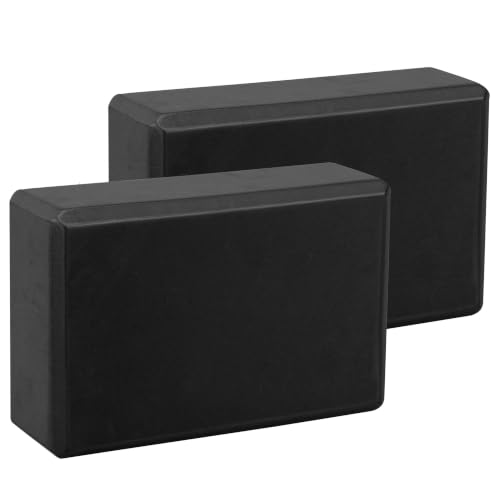
Under £10 a pair, and honest about what it is. The Exerz blocks are 23 x 15 x 7.5cm high-density EVA with a textured surface, which is the standard brick spec at the lowest sensible price. They do the job: stable enough under a hand in triangle, light enough to carry, textured enough not to skate on a wooden floor.
What you give up against the Yoga-Mad and Core Balance sets is a bit of foam density and finish. The edges are less crisply bevelled and the surface picks up marks. For a beginner who is not sure whether they will still be practising in six months, or for a second pair to leave at the office, this is exactly the right amount of money to spend. Just note the listing usually shows a dispatch delay rather than same-day Prime stock, so it is not the one to order the night before a class.
Check price on AmazonDensity over brand. The failure mode of a cheap block is compression: it dents, stays dented, and stops being a reliable height. Listings that state "high-density EVA" and give a per-block weight above about 100g are the ones that hold up.
Buy a pair. Half the useful poses need two.
Size to your hands and height. Standard bricks at roughly 23 x 15 x 7.5cm give three heights and suit most people. The larger 30 x 20 x 5cm flat block is better for sitting on and for taller practitioners, but it loses the tallest orientation.
Bevelled edges. A hard 90 degree edge under a palm gets uncomfortable inside a minute. Rounded edges are not a luxury feature.
Get a strap at the same time. Look for a metal D-ring and at least 183cm of webbing. The bundled sets above cost barely more than blocks alone.
If you are building a home setup around this, the block is the cheap part. A proper yoga mat matters more for joint comfort, a foam roller covers the soft tissue work blocks cannot, and a set of resistance bands fills the strength gap. Blocks are also quietly useful for goblet squat heel elevation and as a depth target for press-ups, so they earn their place in the home gym even if you never roll out a mat.
For most people the Yoga-Mad EVA Yoga Block set of 2 is the best buy. It is a full-size 30 x 20 x 5cm block from an established UK supplier, the high-density EVA holds its shape better than the cheap soft foam that squashes flat, and a pair costs around £12 at the time of writing. If you want firmer support and do a lot of hot yoga, switch to the Amazon Basics cork blocks instead.
Foam if you want light, cheap, forgiving blocks you will sit and kneel on. Cork if you want maximum stability under load, better grip when your hands are sweaty, and a block that will not compress over years of use. Cork weighs roughly three to four times more and is noticeably less comfortable under a bare knee, which is the trade-off nobody mentions.
The two common shapes are the standard brick at roughly 23 x 15 x 7.5cm and the larger flat block at around 30 x 20 x 5cm. Bricks give you three distinct heights when turned on different faces and suit smaller hands. The larger flat block is more stable to sit on and better if you are tall or use blocks for restorative work. Buying a pair matters more than the exact size.
Two. Plenty of poses need one under each hand, and the moment you own a single block you will discover half of them. Nearly every set on Amazon UK ships as a pair anyway, and the price difference over a single block is usually a couple of pounds.
Yes, and this is where they earn their keep in a home gym. They work as a depth marker for press-ups, a knee squeeze for glute bridges, a heel prop for squat mobility work, and a support under the hips for stretching. A cork block also makes a serviceable low step for calf raises.
The £8 to £12 EVA sets are fine and most people never need more. What separates them from the very cheap ones is foam density: soft low-density blocks compress under bodyweight and go permanently dented within a few months. Look for a stated high-density EVA and a weight of at least 100g per block.
Fitbit vs Apple Watch for UK buyers: battery, price, Google Health Premium, GPS, accuracy research and apps compared, with a straight answer on which to buy.
Every common leg machine at the gym named and explained: what each one trains, a beginner leg machine workout, and which leg machines make sense for a home gym.
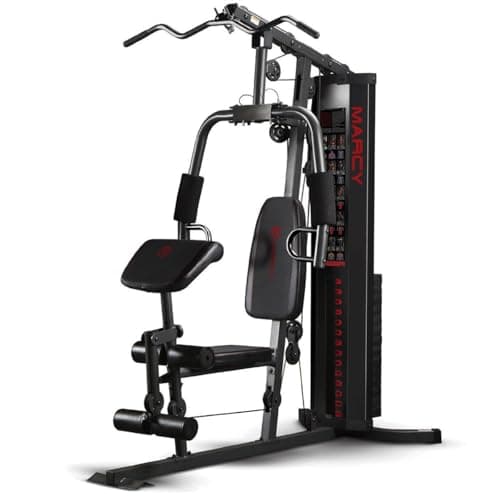
Our Marcy HG3000 multi gym review: the 68kg stack versus the 90kg claim, pec dec, preacher pad, leg extension, 210cm height, £599 price and who it suits.
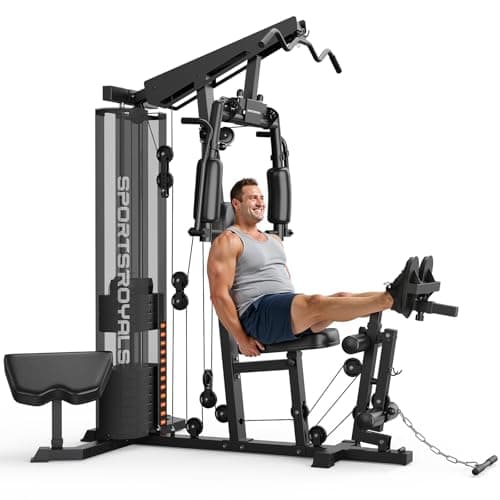
SPORTSROYALS home gym review: the 68kg stack, leg press and chest fly stations, 191 x 131cm footprint, 142kg build, £759.99 price and who it suits in the UK.
Best Exercise is a participant in the Amazon EU Associates Programme, an affiliate advertising programme designed to provide a means for sites to earn advertising fees by advertising and linking to Amazon.co.uk. As an Amazon Associate we earn from qualifying purchases. This comes at no extra cost to you and never influences our independent reviews or rankings.