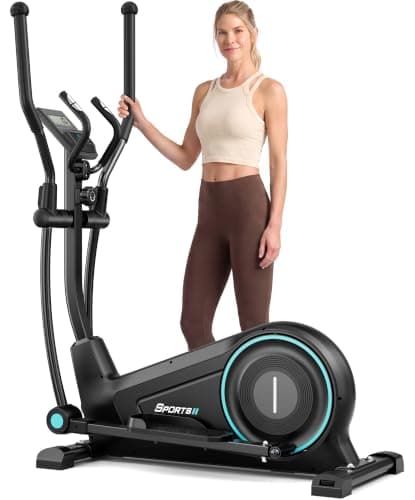
Cross Trainers
THERUN Cross Trainer Review: Rear-Drive and 8kg Flywheel, but a 38cm Stride
THERUN cross trainer review: 8kg flywheel, 16 magnetic levels and rear drive for £269.99, plus its short 38cm stride, 120kg limit and doubtful 20dB claim.

By Paul Kendrick, Cardio & Endurance Editor · Updated 14 October 2026
Pick a cross trainer if you want a full-body, weight-bearing workout and have the room for a tall machine; pick an exercise bike if you have knee trouble, a small flat, neighbours below or a taste for hard intervals. Cross trainers burn a little more energy at the same effort because your arms and your bodyweight join in. Bikes win on almost everything practical: they're smaller, quieter, cheaper for the same quality and easier on a bad knee. If you can't decide, most people will get more use out of the bike.
That's the short version. Below are the details that should swing it one way or the other, plus the machines we'd look at first in each camp.
The quick verdict
Cross trainer: full-body cardio, bone-friendly weight-bearing, slightly higher calorie burn, needs a 2m by 1.5m patch of floor and good ceiling height. Exercise bike: knee rehab, small rooms, flats, sprint intervals, lowest price for a decent machine.
| Cross trainer | Exercise bike | |
|---|---|---|
| Muscles | Legs, glutes, plus chest, back, shoulders and arms via moving handles | Quads, glutes, hamstrings and calves; upper body barely involved |
| Calorie burn at the same effort | A little higher | A little lower (recumbent lowest) |
| Weight-bearing | Yes | No, you're seated |
| Joint impact | Low | Very low |
| Typical footprint | About 112 to 150cm long, 55 to 76cm wide, 150 to 170cm tall | About 98 to 122cm long, 54 to 58cm wide, 114 to 130cm tall |
| Noise | Quiet, but more pivots to squeak | Quietest cardio machine you can buy (magnetic) |
| Decent model from | Roughly £300 to £500 | Roughly £200 to £350 |
| Hard intervals | Workable, but clumsy at very high cadence | Excellent |
| Flat or upstairs room | Possible, check ceiling height | Ideal |
The footprint ranges come from the manufacturer dimensions in our own reviews, from the compact 112cm Aeriflo M100 up to the 170cm-tall Viavito Sina on the cross trainer side, and from the 98cm Toputure folder to the 122cm Sunny magnetic bike on the bike side.
This is where the cross trainer earns its keep. Push and pull the moving handles properly and your chest, shoulders, upper back and arms do real work alongside your legs. That matters if cardio is the only exercise you'll realistically do, because a bike leaves the top half of your body almost idle. Our cross trainer muscles worked guide covers it in more detail, including why pedalling backwards loads the glutes and hamstrings harder.
The leg action differs too. A study comparing the two found the elliptical pattern looked more like normal walking than cycling did, though neither was a perfect match (comparison of elliptical training, stationary cycling and walking). A bike is quad-dominant: the front of your thighs takes most of each pedal stroke, with the glutes chipping in more as you stand up or raise the resistance.
Neither builds much muscle on its own. If strength matters to you, the NHS advice to do muscle-strengthening work on at least two days a week applies whichever machine you buy (NHS physical activity guidelines for adults).
Effort decides calorie burn far more than the machine does, but at equal effort the cross trainer comes out slightly ahead. A 2024 study put 30 recreationally active men in their early forties through 12-minute bouts on seven indoor machines, both at a hard self-chosen pace and flat out. Energy expenditure ranked treadmill first, then stair climber, then elliptical, with spin, upright and recumbent bikes behind it (energy expenditure on seven indoor cardio machines).
The reasons are simple enough: you're holding your own bodyweight up on a cross trainer, and the arms add working muscle. On a bike the saddle carries you. It's one group of middle-aged men, so don't treat the ranking as gospel for everyone, and the authors themselves point out that the machine you enjoy is the one you'll keep using.
Ignore the console numbers on both. Cross trainer displays in particular have a habit of flattering you, and neither machine knows your weight unless you tell it. A chest strap and heart rate zones will tell you much more. If weight loss is the main goal, our piece on whether an exercise bike is good for losing weight runs through the realistic numbers.
Both machines are low impact, and both are a big step down from running. Your feet never leave the pedals on a cross trainer, so there's no landing. That said, you're still standing, so your hips, knees and ankles carry your full weight for the whole session.
A bike goes one better. You sit, the saddle takes your bodyweight, and you can drop the resistance to almost nothing, which is why physios hand out stationary cycling so often after knee surgery and for knee arthritis. A 2026 study of 56 cyclists, 19 of them with knee osteoarthritis, found cycling built up less cumulative knee load than running and no more than walking; in the frontal plane, people with arthritis showed raised loading when walking and running but not when cycling (knee joint load in cycling, walking and running).
So for a sore or recovering knee, start on the bike. If your knees are healthy and you want the bone-loading benefit of standing exercise, the cross trainer is the better long-term pick. Bad backs are less clear-cut: some people find the upright posture of a cross trainer easier than a hunched spin position, and a recumbent bike with a backrest is the gentlest option of all.
An exercise bike fits where a cross trainer won't. A typical upright or spin bike needs a patch of floor about the size of a dining chair and a half, while a cross trainer wants something closer to a single bed once you add clearance. The MERACH long stride machine we reviewed, for example, measures 148.8cm by 56.6cm by 165.3cm and needs roughly 2m by 1.5m of clear floor.
Height catches people out. You stand on pedals that lift you 30cm or more off the floor at the top of the stride, so a tall user in a loft room or under a low ceiling can run out of headroom. Bikes don't have that problem. They also fold far more often: our best folding exercise bike picks will tuck behind a door, whereas folding cross trainers tend to compromise on stride length.
For a flat, the bike is the safer call. Magnetic resistance is quiet on both machines, but a cross trainer has more joints, rails and rollers that can start to squeak or knock as they wear, and the rocking, standing action sends more vibration through the floor. On a bike you're seated and the motion is smooth and circular, so very little reaches the flat below. A thick rubber mat helps with either.
Bikes cost less for the same quality. Around £200 to £350 gets you a solid magnetic bike with a reasonably heavy flywheel, and our best exercise bike under £200 guide shows how far a smaller budget stretches. Cross trainers get expensive because stride length costs money: anything under about 40cm feels short and choppy for most adults, and machines with a proper 45cm-plus stride tend to start around £400 to £500.
The bike is the better interval tool. You can go from easy spinning to an all-out 20-second sprint and back in a heartbeat, resistance changes are instant, and nothing about the movement gets sloppy at high cadence. That's why most published sprint-interval research uses bikes. Our exercise bike HIIT workout gives you sessions to start with.
You can do intervals on a cross trainer, and the full-body demand makes them brutal. But very fast strides on a budget machine with a light flywheel feel jerky, and it's harder to hold good form when you're blowing. It suits longer, steady-hard efforts better than flat-out sprints; see our cross trainer workout for structured sessions.
Buy a cross trainer if you want one machine to work your whole body, your knees are healthy, you like the idea of weight-bearing cardio, and you have the floor space and ceiling height for it. Our best cross trainer UK ranking is the place to start. If stride length is your priority, the MERACH long stride model offers 47cm and runs without mains power, which lets you put it anywhere; read our MERACH long stride cross trainer review before you buy.
Check the MERACH long stride cross trainer on AmazonBuy an exercise bike if you're recovering from a knee problem, live in a flat, have a small room, want sharp interval sessions or have a tighter budget. The best exercise bike UK guide covers the field. For bigger riders, the MERACH S29 Pro is rated to 159kg with a 10kg flywheel at around £310; our MERACH S29 Pro review goes through the fit range and app support.
Check the MERACH S29 Pro exercise bike on AmazonStill torn between other machines? We've also compared the elliptical against the treadmill, the rowing machine against the cross trainer and the rowing machine against the spin bike. Or browse every review in our cross trainers and exercise bikes hubs.
Slightly, if you work at the same effort. Standing up and moving your arms costs more energy, and a 2024 study of 30 men found the elliptical burned more than spin, upright or recumbent bikes at the same perceived effort. The gap is modest, though, and the machine you use most often will do more for your weight than the one with the higher ceiling.
Both are low impact, but the bike is usually the safer starting point after a knee injury or with knee arthritis. You're seated, your bodyweight isn't on your legs, and you can set the resistance very low. A cross trainer is weight-bearing, which is good for bones but asks more of a sore knee and of your balance.
Yes, if you use the moving handles and actually push and pull them. Your chest, shoulders, back and arms then share the work with your legs. Hold the static handles or let your arms go along for the ride and it becomes a legs-only machine, much like a bike.
An exercise bike, by a clear margin. Most upright and spin bikes are around 100cm to 122cm long and 54cm to 58cm wide, while cross trainers run about 112cm to 150cm long and up to 170cm tall. Folding bikes shrink further still, and very few cross trainers fold well.
A magnetic exercise bike is usually the quieter option. Both use magnetic resistance at most price points, but a cross trainer has more pivots and linkages that can squeak or knock, and the standing, rocking motion sends more vibration into the floor. On a bike you're seated, so very little reaches the people below.
THERUN cross trainer review: 8kg flywheel, 16 magnetic levels and rear drive for £269.99, plus its short 38cm stride, 120kg limit and doubtful 20dB claim.
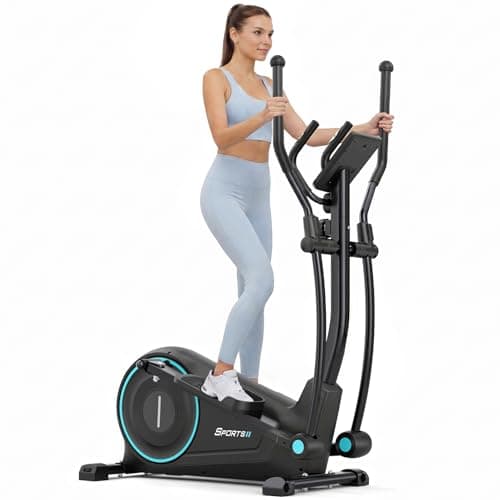
An honest Dripex cross trainer review: the 38cm stride, 8kg flywheel, 16 magnetic levels, 120kg limit, the quiet claims and who this £230 elliptical suits.
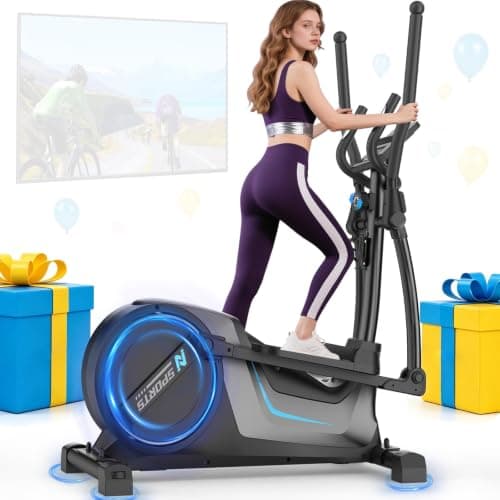
Our Neezee 3-in-1 cross trainer review: 16 magnetic resistance levels, the 8kg flywheel, Kinomap and Zwift support, 150kg limit, footprint and what the listing leaves out.
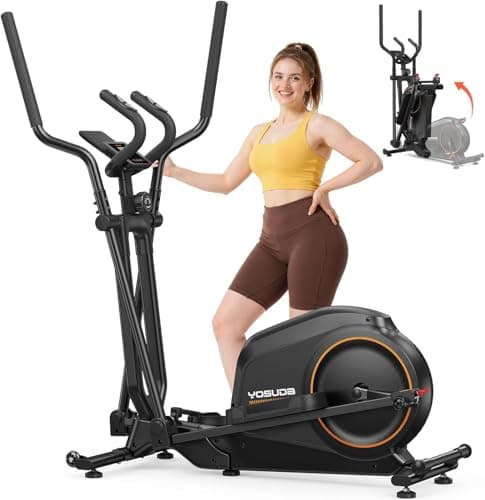
An honest YOSUDA foldable cross trainer review covering the 2 sq ft folded footprint, 38cm stride, 5.5kg magnetic flywheel, 16 resistance levels, the 175cm height guidance and the noise claim we don't believe.
Best Exercise is a participant in the Amazon EU Associates Programme, an affiliate advertising programme designed to provide a means for sites to earn advertising fees by advertising and linking to Amazon.co.uk. As an Amazon Associate we earn from qualifying purchases. This comes at no extra cost to you and never influences our independent reviews or rankings.