Cross Trainer Workouts: 5 Sessions for Beginners and Beyond
By Paul Kendrick, Cardio & Endurance Editor · Updated 22 September 2026
A cross trainer is the most underused machine in most home gyms, and the reason is simple: people step on, pedal at one steady speed for 30 minutes, get bored and stop. The machine itself isn't the problem. Changing resistance, stride direction and effort over a session turns the same cross trainer into a very different workout, and the five sessions below cover everything from your first week to hard intervals.
The case for doing them at all is low impact. Your feet stay on the pedals, so there's no landing shock, and a study measuring weightbearing on an elliptical found the foot took roughly 70 to 81 percent of body weight even at higher resistance and incline (study on elliptical trainer parameters). Running loads the leg with several times body weight on every stride. That's why cross trainers turn up in rehab: a trial adding elliptical sessions to physiotherapy after hip replacement found better knee extensor strength, balance and walking speed than walking alone at one and three months (elliptical training after hip arthroplasty).
Form before workouts
Stand tall with your hips over your feet, not leaning forward onto the handles. Keep your whole foot on the pedal; lifting your heels at the back of the stride is the most common cause of numb toes after 20 minutes. Push and pull the moving handles with your arms rather than just holding them, and keep a slight bend in your knees throughout.
Resistance should feel like something. If the flywheel is spinning so freely that you're bouncing, add two or three levels. A cadence of roughly 120 to 160 strides per minute suits most sessions, though consoles count differently, so learn what the numbers mean on your machine.
The effort scale used below
We use effort out of 10 rather than resistance levels, because level 8 on one machine is level 12 on another. 3/10 is easy chatting pace, 5 to 6/10 means you can talk in short sentences, and 8/10 or above means a few words at most.
Workout 1: the beginner 20
For your first two to three weeks, three times a week.
3 minutes at 3/10, low resistance, getting used to the motion.
14 minutes at 5/10. Pick a resistance you can hold the whole time.
3 minutes at 3/10 to cool down.
Once you can finish this without the last five minutes feeling like a struggle, add five minutes to the middle block each week until you reach 30.
Workout 2: steady 30 for base fitness
Thirty minutes at 5 to 6/10. This is the session that builds your aerobic base, and the NHS counts it as moderate activity; five a week meets the full adult physical activity guideline of 150 minutes. Put something on to watch. Consistency matters far more than intensity here.
Workout 3: 1:1 intervals
Twenty-five minutes total, once or twice a week, not on consecutive days.
5 minutes warm-up building from 3/10 to 5/10
8 rounds of 1 minute at 8/10 (add four or five resistance levels) then 1 minute at 3/10 (drop back)
4 minutes easy
The hard minutes should be genuinely hard. If round eight feels the same as round one, raise the resistance next time rather than pedalling faster.
Workout 4: the resistance ladder
Thirty minutes, and it works your legs more like a strength session.
Start at a moderate level for 5 minutes. Then add two resistance levels every 3 minutes while keeping your stride rate as steady as you can, until you reach a level where you can only just hold the cadence. Spend 3 minutes there, then come back down the ladder in the same steps. On a 16-level machine that usually means peaking around level 13 to 15.
Workout 5: forwards and backwards
A 30 minute session that changes the muscle emphasis.
5 minutes forwards at 4/10
4 rounds of 3 minutes forwards at 6/10, then 2 minutes backwards at 6/10
5 minutes forwards, easy
Pedalling in reverse feels awkward for the first minute and noticeably harder on the quads. Keep your weight back through your heels and let go of the handles for 20 seconds at a time if you want to test your balance.
Common mistakes
Leaning on the handles. It feels easier because it is easier: your arms take weight off your legs. Stand upright and hold the handles lightly.
Never changing resistance. Doing the same level at the same pace for months means your body stops adapting. Change one variable every week.
Trusting the calorie counter. Consoles typically estimate from time and resistance with a guessed body weight. Use it to compare your sessions with each other, not as a food budget.
Going too hard, too often. Two interval sessions a week is plenty. The rest should be steady.
Start with 20 minutes three times a week. The NHS recommends 150 minutes of moderate activity or 75 minutes of vigorous activity a week, so five 30 minute moderate sessions or three 25 minute interval sessions both hit the target. Beginners should build up over three or four weeks rather than starting at 45 minutes.
Is the cross trainer good for losing weight?
It's a good tool for it because you can do a lot of it without joint pain, and total weekly volume is what burns calories. The number on the console is usually an overestimate, though. Treat it as a rough guide and judge progress by your weight and waist over a month, not by the calorie count on a single session.
Is 30 minutes on a cross trainer a good workout?
Yes. Thirty minutes at a pace where you can talk but not sing counts as moderate intensity, and five of those a week meets the NHS guideline on its own. Add resistance or intervals to one or two of them each week so the machine keeps challenging you.
Should I use the handles on a cross trainer?
Use the moving handles for most sessions, pushing and pulling actively so your upper body contributes. Let go for short blocks to force your core and legs to do the balancing. Avoid gripping the fixed handles and leaning on them, which takes load off your legs and makes the session easier than the console suggests.
Is going backwards on a cross trainer better?
It shifts the emphasis rather than being better. Pedalling in reverse tends to load the quads and glutes differently and feels harder at the same resistance. It's a useful variation for one block of a session, not a replacement for forward pedalling.
Cross trainer or treadmill?
Cross trainer if you have knee, hip or back problems, because your feet never leave the pedals and there's no landing impact. Treadmill if you're training for running races, because nothing replaces the specific impact and rhythm of running.
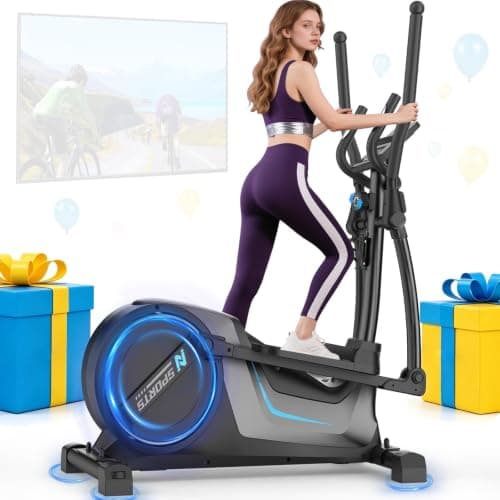
Our Neezee 3-in-1 cross trainer review: 16 magnetic resistance levels, the 8kg flywheel, Kinomap and Zwift support, 150kg limit, footprint and what the listing leaves out.
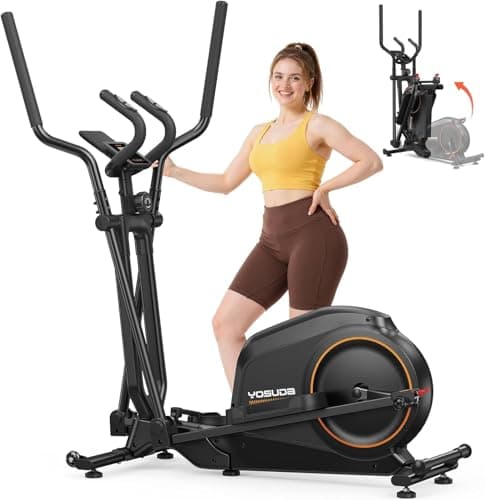
An honest YOSUDA foldable cross trainer review covering the 2 sq ft folded footprint, 38cm stride, 5.5kg magnetic flywheel, 16 resistance levels, the 175cm height guidance and the noise claim we don't believe.
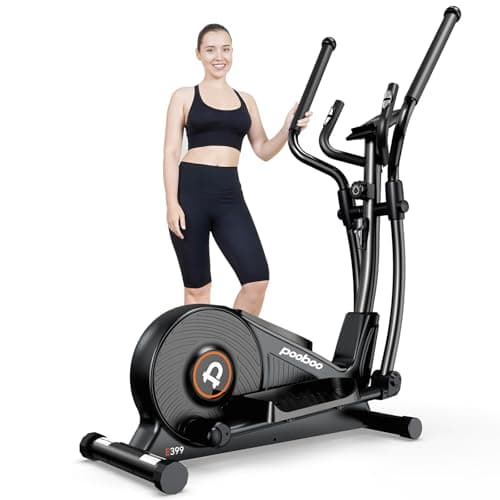
An honest pooboo foldable elliptical cross trainer review covering the 39cm stride, 7.3kg flywheel, 16 magnetic levels, folding frame, Kinomap support and the weight capacity figures that don't agree.
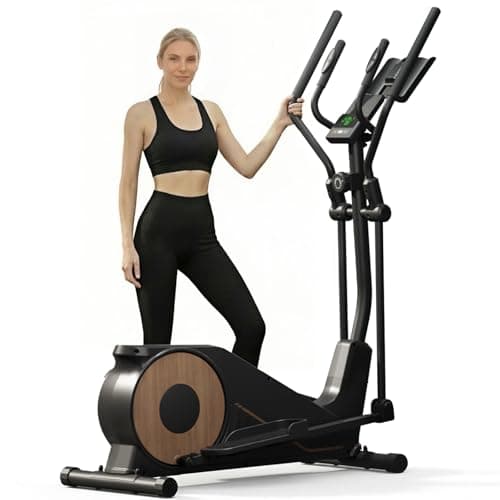
An honest Aeriflo M100 elliptical cross trainer review covering the 42cm stride, 8kg flywheel, 16 magnetic levels, 150kg capacity, Kinomap and Zwift support and who it suits.
Best Exercise is a participant in the Amazon EU Associates Programme, an affiliate advertising programme designed to provide a means for sites to earn advertising fees by advertising and linking to Amazon.co.uk. As an Amazon Associate we earn from qualifying purchases. This comes at no extra cost to you and never influences our independent reviews or rankings.