Treadmills
Neezee Treadmill Review: 20% Incline, 18km/h and a Fold-Flat Deck for £350
An honest Neezee treadmill review: 0 to 20% auto incline, 18km/h, a 46 x 115cm belt, 150kg rating and 5-year warranty for £350, plus the claims we doubt.

By Paul Kendrick, Cardio & Endurance Editor · Updated 25 October 2026
We may earn a commission from qualifying purchases made through links on this page, at no extra cost to you. This never affects our ratings.
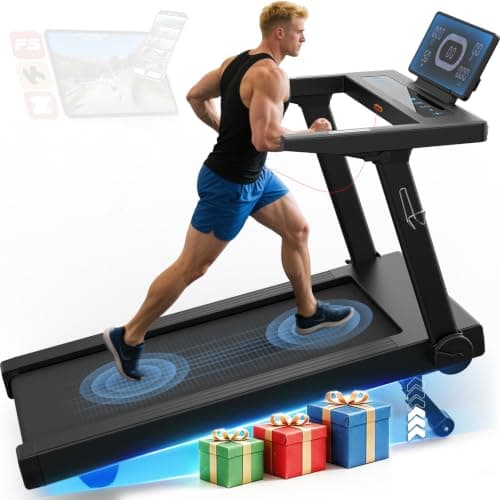
The Cowmew foldable treadmill costs £424.99 on Amazon UK and lists a motorised 20% incline, a 20km/h top speed, a 130 x 48cm running deck and a 180kg user rating. That combination is rare under £450. Most 20% incline machines at the budget end, like the CURSOR FITNESS 20% incline treadmill, are walkers with short belts and 14km/h ceilings; the Cowmew is pitched as something you can run on as well.
Our view: it's a good treadmill wrapped in some silly marketing. The spec sheet that matters (deck size, speed, incline, weight) is genuinely strong for the money, while the "7HP" motor, "under 40 dB" noise and "200% calorie burn" claims are numbers you should ignore.
How we review
This review is based on Cowmew's Amazon UK listing and images, the dimensions and weight Amazon records for the machine, published research on incline walking, and patterns we've seen across budget folding incline treadmills. We haven't used this model ourselves. It's a fairly new listing from a young brand, so there's no long-term reliability data yet, and where a claim doesn't make physical sense we say so.
Stock looked thin when we checked (Amazon showed only a handful left), so the price and availability may move quickly.
Two groups get the most out of it. If you want steep incline walking, the 20% ramp gives you more gradient than the 12% or 15% you'll find on most home treadmills, which matters if you've outgrown the popular 12-3-30 routine. And if you also want to jog or run, the 130cm deck and 20km/h speed mean you aren't buying a walking pad that happens to tilt.
Heavier users should take note too. A 48cm belt width is a few centimetres wider than the 40cm to 42cm common at this price, and a 55kg frame is a more believable partner for a 180kg rating than the 35kg machines that claim the same.
It's less suited to small flats. At roughly 157 x 74cm assembled it takes real floor space, and while it folds, it won't slide under a bed. If space is the main constraint, look at our best fold flat treadmill UK picks instead.
| Incline | Motorised, up to 20% |
|---|---|
| Top speed | 20 km/h |
| Running deck | 130 x 48 cm |
| Max user weight | 180 kg |
| Motor (claimed) | 7HP brushless, likely a peak figure |
| Machine weight | Approx 55 kg (Amazon record) |
| Assembled size | Approx 157 x 74 x 137 cm |
| Programs | 36 presets plus body fat mode |
| Extras | Handrail heart rate, Bluetooth speakers, safety key, bottle holder |
| Warranty | 2 years |
| Price | £424.99 at time of writing |
The deck is the headline. A 130cm length is the point where most people stop feeling cramped when jogging, and it's a big step up from the 107cm on the CURSOR FITNESS or the 115cm on the GEOTECH incline treadmill. That extra length matters at incline too, because people tend to lengthen their stride and drift backwards on a steep slope.
Cowmew mentions an "eight-layer" cushioned belt. We can't verify the layer count, and cushioning on folding treadmills is mostly modest elastomer pads under the deck, but a longer, wider deck does help you land in the middle rather than near the motor hood.
A UK 13A socket supplies around 3kW, which works out to roughly 4HP. A motor can't draw 7HP (about 5.2kW) continuously from a household plug, so the figure has to be a peak or a marketing number. That doesn't make the motor weak. A 20km/h top speed and a 20% ramp still point to a motor sized above a walking pad's, but judge it by those, not by the HP sticker.
40dB is roughly a quiet library. The brushless motor alone may be fairly hushed, but footfall on a belt, the belt running over the deck and the incline motor all add noise. Expect it to be audible in the next room and through a floor, especially if you're running. Our guide to running a treadmill on carpet covers mats and placement that help.
There's no baseline attached, so "up to 200%" can't be tested. The underlying idea is sound, though. A study of obese adults in Medicine & Science in Sports & Exercise found that walking slower up a moderate incline produced similar moderate-intensity effort to faster flat walking while cutting peak knee loads by about a fifth. That's the real case for an incline treadmill: comparable effort, gentler on the joints. Just don't expect a multiplier on your calorie readout.
Most people will spend the bulk of their time somewhere between 8% and 15%. The 12-3-30 routine (12% grade, about 4.8km/h, 30 minutes) became popular for a reason, and a 2025 study in the International Journal of Exercise Science found that, matched for total energy expenditure against self-paced running, it took longer but used a higher share of fat for fuel. The extra headroom to 20% is useful once 12% feels easy, or for short, hard hill intervals.
A few practical notes. Keep your hands off the rails at steep grades if you can, because hanging on cuts the work you're doing. Build up gradually, as calves and Achilles tendons take most of the extra load. And for weekly targets, the NHS physical activity guidelines suggest 150 minutes of moderate activity, which brisk incline walking easily counts towards. If you want structure, our treadmill HIIT workout can be adapted to hill intervals rather than speed.
Cowmew says the treadmill arrives about 95% assembled and takes one person around 10 minutes to finish. That's typical for folding treadmills that ship with the deck and upright pre-attached; you'll mainly be bolting the console arms and connecting a cable. At 55kg, though, getting the box indoors is a two-person job.
The 2-year warranty is reasonable for the price and longer than some rivals' parts cover. What we can't tell you is how well Cowmew handles claims, because the brand doesn't have years of UK owner history behind it. Keep your order details and register the warranty straight away.
Lubricant comes in the box, and you should use it. Belt and deck friction is one of the main reasons budget treadmills start slipping or straining, so follow our how to lubricate a treadmill guide every few months.
Against the cheaper 20% option, the CURSOR FITNESS at around £240, the Cowmew costs £185 more but gives you a 23cm longer, 8cm wider belt and an extra 6km/h of top speed. If you only ever walk, the CURSOR does the uphill job for less. If anyone in the house wants to jog, the Cowmew is the far better machine.
The GEOTECH at around £300 sits in between, with a 15% incline and a 115 x 42cm belt. It's a fine walker and light jogger, but it can't match the Cowmew's gradient or deck. For the wider field, our best incline treadmill UK roundup and best treadmill under £500 guide cover the alternatives.
Check the Cowmew price on Amazonaround £425On paper it's one of the better-specified treadmills under £450 on Amazon UK. You get a motorised 20% incline, a 20km/h top speed, a 130 x 48cm deck, a 180kg user rating and a 2-year warranty. The weak spots are marketing claims that don't add up and a brand with no long-term reliability record yet.
Not as a continuous rating. A UK 13A socket can supply about 3kW, which is roughly 4HP, so a motor can't run at 7HP for long on a household plug. Treat 7HP as a peak figure. What matters more is how the motor copes at steep incline under load, and the 20km/h top speed suggests it's sized for running, not just walking.
Yes, more comfortably than most folding treadmills at this price. The 130cm belt length is the usual minimum we'd suggest for running, and 48cm of width gives you room to drift. It tops out at 20km/h, which is faster than most home runners will ever use.
Amazon records the unit at about 55kg, and the assembled footprint at roughly 157 x 74cm. That's a sensible mass for a 180kg rating, and noticeably heavier than the 35kg to 40kg budget incline walkers, but you'll want two people to move it up stairs.
The '200%' figure has no stated baseline, so we wouldn't plan around it. Incline does raise energy cost a lot at the same walking speed, and steep slow walking can match brisk flat walking for effort, but your actual burn depends on your weight, speed and how long you stay on the slope.
An honest Neezee treadmill review: 0 to 20% auto incline, 18km/h, a 46 x 115cm belt, 150kg rating and 5-year warranty for £350, plus the claims we doubt.
Our Toputure 12% incline walking pad review: manual 1/6/12% incline, 115cm handrail, 12km/h, 130kg limit and a 40x100cm belt, for £239.99 on Amazon UK.
Are walking pads worth it? Who they suit, the step and calorie gains from treadmill desk research, cost per use, noise, spec limits and when to buy a treadmill.
Can you run on a walking pad? Mostly no: most cap at 6km/h with short belts and no rails. Which 2-in-1 pads allow a light jog, and when to buy a real treadmill.
Best Exercise is a participant in the Amazon EU Associates Programme, an affiliate advertising programme designed to provide a means for sites to earn advertising fees by advertising and linking to Amazon.co.uk. As an Amazon Associate we earn from qualifying purchases. This comes at no extra cost to you and never influences our independent reviews or rankings.