Treadmills
Treadmill Speed to Pace: km/h to min/km Chart (5 to 20 km/h)
Convert treadmill speed to pace per km and per mile. Full km/h and mph chart with 5k and 10k times, the simple formula, and why treadmill pace feels easier.

By Paul Kendrick, Cardio & Endurance Editor · Updated 13 October 2026
We may earn a commission from qualifying purchases made through links on this page, at no extra cost to you. This never affects our ratings.
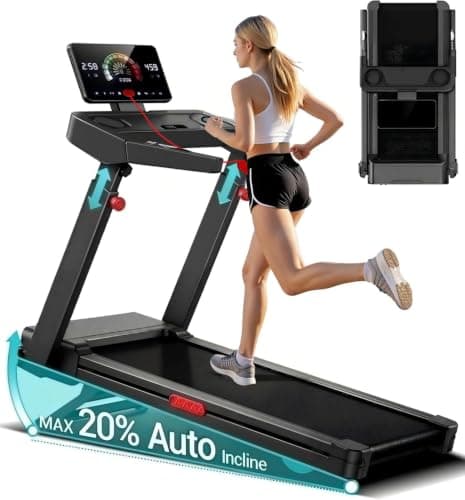
Twenty per cent is steep. Most budget folding treadmills stop at 12% or 15%, yet the CURSOR FITNESS foldable treadmill lists a motorised 2 to 20% incline for around £240 at the time of writing, alongside a 14km/h top speed and a 180kg user rating. On price per degree of slope, nothing else on Amazon UK comes close.
Our verdict: it's a strong buy for people who want high-incline walking on a tight budget, and a poor buy for anyone who wants to run. The belt is the reason, and the folding method and a light frame are the other things to know before you order.
How we review
This review is based on CURSOR FITNESS's Amazon UK listing, the dimensions and weight Amazon records for the machine, published research on incline walking, and comparison with similar folding incline treadmills we've already covered. We haven't used this treadmill ourselves. It's a recent listing, so there's no long-term reliability record to lean on, and where a spec looks optimistic we say so rather than repeat it.
If the steep incline is the main thing you're after, check the current price first, since budget treadmills move around a lot.
Check price on Amazonaround £240High-incline walkers on a budget. If your plan is 30 to 45 minutes at 4km/h to 6km/h with the deck set somewhere between 10% and 20%, this machine covers it for less money than any rival we've reviewed. It also suits people who want to follow the 12-3-30 workout, which asks for 12% at about 4.8km/h, with room to go steeper as you get fitter.
It isn't for runners, tall users who want a long stride, or anyone who wants to fold the treadmill away daily without reaching for a screwdriver. Heavier users can use it, but we'd want them walking rather than jogging, for reasons covered below.
| Speed | Up to 14km/h |
|---|---|
| Incline | 2 to 20%, motorised |
| Motor | '3.5HP' (manufacturer claim, likely peak) |
| Running area | 107 x 40cm |
| Max user weight | 180kg (manufacturer claim) |
| Console | LED touch screen: speed, time, distance, incline, calories, heart rate |
| Controls | Touch screen plus handrail speed and incline buttons |
| Size (Amazon data) | About 135 x 65cm footprint |
| Machine weight | About 35kg |
| Folding | Fully folds after removing a few screws; transport wheels |
| Assembly | Listed as 90% pre-assembled |
A steep treadmill lets you work hard at walking pace, and the research on this is surprisingly direct. Researchers at Longwood University matched 20% grade walking against level jogging at the same calorie burn for 20 minutes; oxygen uptake, heart rate and total calories came out almost identical, at roughly 170kcal each (International Journal of Exercise Science, 2024). The one catch: participants enjoyed the jogging more. Steep walking is hard going, and you'll feel it in your calves.
A follow-up study at the same 20% gradient found that incline walking produced lower foot and sacrum accelerations than level jogging at matched effort, which the authors read as a lower-impact but equally demanding alternative (International Journal of Exercise Science, 2025). For people with sore knees or anyone carrying extra weight, that's the real argument for a machine like this over a flat budget treadmill.
Gradient also does more for energy cost than you might guess. A biomechanics study of walking at 0%, 5% and 10% found incline and leg-muscle activity together explained 96% of the rise in metabolic cost (Journal of Biomechanics, 2012). Adding slope is a cheaper route to intensity than adding speed, especially on a short belt where speed is the thing you can't safely push.
Half an hour of brisk uphill walking five days a week would also tick off the NHS target of 150 minutes of moderate activity (NHS physical activity guidelines), and plenty of people find that more sustainable than running.
The 180kg user rating is the one we'd question first. Amazon records the machine at roughly 35kg, which makes it the lightest treadmill in this price band we've looked at, and lighter than both the GEOTECH (about 40kg, also rated 180kg) and the Wenoker (about 45kg, rated 160kg). A light frame isn't automatically weak, but five times its own weight in user, at 20% incline, is a lot to ask of a folding deck. Treat 180kg as a ceiling.
"3.5HP" almost certainly describes peak output. Budget folding treadmills typically run motors in the 2HP to 3HP continuous range, and CURSOR FITNESS doesn't publish a continuous rating. For walking up steep gradients at low speed, that's usually enough, but expect the motor to work hard (and get louder) near the top of the incline range with a heavy user on board.
The belt is "upgraded" according to the listing, yet 107 x 40cm is smaller than every incline rival we've reviewed. That's adequate for walking at an ordinary stride. Jogging at 8km/h to 10km/h on 107cm, though, means a tall runner's foot can land close to the front of the deck, and 14km/h is a number we wouldn't use at all on this length. Our guide to treadmill running form explains why overstriding on a short belt is a bad habit to fall into.
The listing also promises 24/7 after-sales support but gives no warranty term. Ask the seller before you buy, because the motor controller is the part most likely to fail on a cheap treadmill.
Most budget folding treadmills use a hydraulic strut: lift the deck, it clicks upright, done. This one is different. The listing says it folds fully by "removing just a few screws", so think of it as a treadmill you set up in a corner and leave there, with folding reserved for moving house or occasional storage.
Amazon's data puts the footprint at about 135 x 65cm, plus the clear space you need behind the deck for safety. At 35kg and with transport wheels, it's easy to shift around a room. The listing says it arrives 90% assembled, which, if accurate, means attaching the uprights and console rather than building it from scratch.
The handrail controls are a genuinely useful touch at this price. On a steep climb you want to hold the rails occasionally and change the incline without stretching for the console, and these let you do that. The three-position handlebar height is unusual for a cheap treadmill and helps shorter users get a natural arm position on the slope. Just try not to hang off the rails at 20%; it takes most of the work out of the session.
Against the GEOTECH 15% incline treadmill at around £300, the CURSOR FITNESS gives you 5% more gradient for about £60 less. The GEOTECH has a roomier 42 x 115cm belt, a quick hydraulic fold and a stated 3-year frame warranty, so it's the better all-rounder if you'll jog as well as walk.
The KITOPA 18% incline treadmill at around £470 costs nearly double. For that you get a 48 x 120cm belt, a 20km/h top speed, app support and longer parts cover. If you want a single machine for steep walking and steady jogging, the KITOPA is the more sensible long-term spend.
The Wenoker sits in between at around £370 with a 15% incline and Kinomap support, but its 40 x 110cm belt is nearly as cramped as this one, and the CURSOR FITNESS beats it on both incline and price.
For walking only, then, the CURSOR FITNESS is the value pick. Want to run too? Spend more on a longer belt.
Prices and stock on budget incline treadmills shift quickly, so check today's figure before you compare.
Check the CURSOR FITNESS price on Amazonaround £240For steep incline walking it's very good value at around £240. You get a motorised 2 to 20% incline, a 14km/h top speed and a 180kg user rating. It's a weak choice for running because the 107cm belt is much shorter than most runners need, and the listing doesn't state a warranty term.
No. The listed incline range is 2% to 20%, so the lowest setting is a gentle 2% slope rather than 0%. For walking that barely matters, and many people set a treadmill to 1% or 2% anyway, but you can't run perfectly flat on it.
The running area is 107 x 40cm. That's fine for walking at a normal stride, but it's short for jogging and running, where 120cm to 130cm or more is more comfortable, and 40cm is on the narrow side for heavier or wider-gaited users.
CURSOR FITNESS rates it for 180kg, but Amazon records the machine at about 35kg, which is very light for that load. We'd treat 180kg as the absolute ceiling rather than a comfortable everyday figure, and heavier users should keep to walking pace on a solid, level floor.
Not as easy as most. The listing says it folds fully once you remove a few screws, so it's a tool job rather than a quick lift-and-latch. It has transport wheels, but if you need to put it away after every session, a hydraulic-fold treadmill will be less hassle.
Convert treadmill speed to pace per km and per mile. Full km/h and mph chart with 5k and 10k times, the simple formula, and why treadmill pace feels easier.
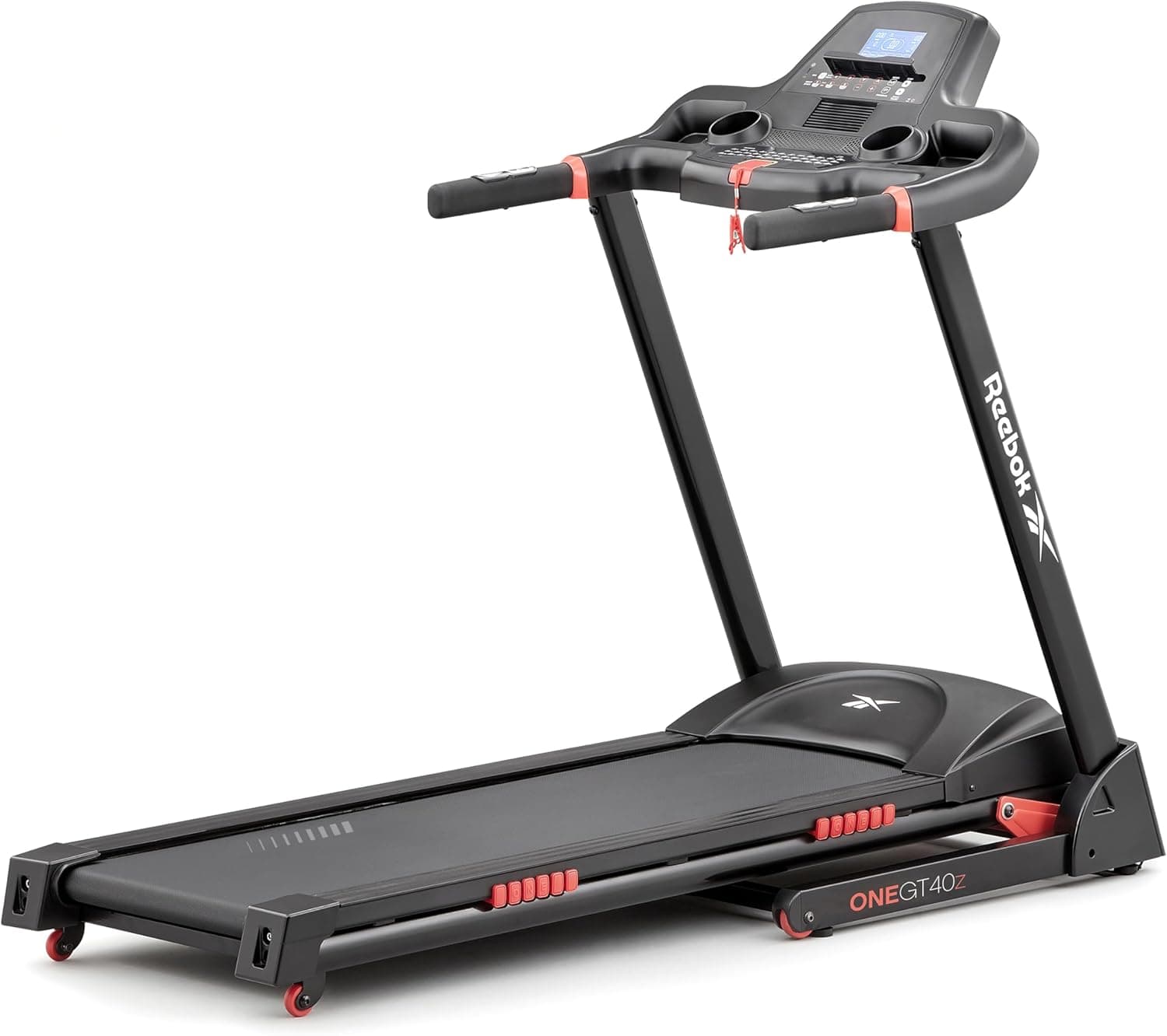
An honest Reebok GT40z treadmill review: 2.0HP motor, 18km/h, 12 incline levels, a 130 x 45cm deck, Zwift and Kinomap support, and the 110kg limit.
StairMaster vs treadmill compared honestly: Compendium MET values for calorie burn, joint impact, glute and quad work, the incline walking middle ground, and realistic home options.
How to lubricate a treadmill belt in 10 minutes: which 100% silicone lube to use, how often, signs it's dry, step-by-step instructions and mistakes to avoid.
Best Exercise is a participant in the Amazon EU Associates Programme, an affiliate advertising programme designed to provide a means for sites to earn advertising fees by advertising and linking to Amazon.co.uk. As an Amazon Associate we earn from qualifying purchases. This comes at no extra cost to you and never influences our independent reviews or rankings.