Nutrition
Are BCAAs Worth It? What the Evidence Says in 2026
Are BCAAs worth it? For most people eating enough protein, no. Here's what the research shows, the few cases where they help, and what to buy instead.

By Paul Kendrick, Cardio & Endurance Editor · Updated 10 November 2026
We may earn a commission from qualifying purchases made through links on this page, at no extra cost to you. This never affects our ratings.
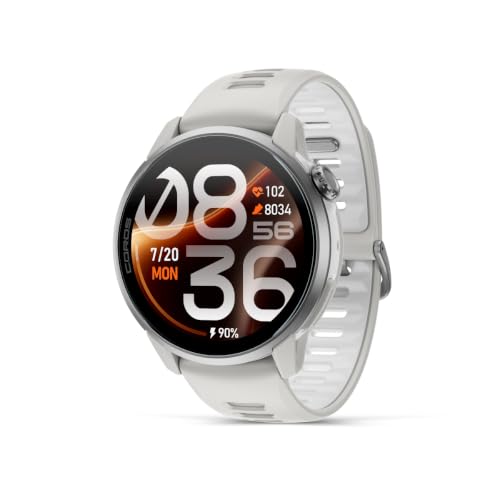
The PACE 4 Pro is the watch COROS should probably have launched instead of the original PACE Pro. It keeps the light, long-lasting formula and swaps in the materials owners kept asking for: a titanium bezel, sapphire glass over a 1.47 inch AMOLED that peaks at 3,500 nits, and a battery that COROS rates at 60 hours of GPS. All of that weighs 43 grams on a nylon band.
At around £389 at the time of writing (10 November 2026), though, it's no longer the bargain that made COROS famous. You're now paying Garmin Forerunner 570 money for a watch that still has no contactless payment and no Spotify. Whether that's a good deal depends on how much you value the screen and the battery over the ecosystem.
How we review
This review is research-based. We worked from COROS's official PACE 4 Pro product and specification pages, the Amazon UK listing, and our own write-ups of the PACE 4 and the original PACE Pro. We haven't run a long-term test of this watch ourselves, so we report what the specifications and documented features show, and we say where a manufacturer figure depends on settings you'll probably change.
Runners and triathletes who train a lot outdoors, want a screen they can read in harsh sun, and are tired of scratched lenses. The sapphire glass and titanium bezel are aimed squarely at trail runners and anyone who catches their wrist on walls, gates and rock. The 60 hour GPS figure also makes it a serious option for ultra distances without stepping up to the chunkier APEX or VERTIX lines.
If you mostly run roads and want the cheapest way into COROS's training platform, the COROS PACE 4 does the same training job for about £160 less and weighs 11 grams less. And if your watch doubles as a wallet or a Spotify player, no COROS is the right answer yet.
The original PACE Pro had a bright 1.3 inch screen behind mineral glass, and the recurring owner complaint was how readily that lens marked. The PACE 4 Pro answers it directly. COROS's own comparison puts the two side by side: 1.3 inch AMOLED, mineral glass and a plastic bezel on the PACE Pro, against a 1.47 inch AMOLED, sapphire glass and a titanium bezel on the new watch (COROS PACE 4 Pro overview).
Brightness more than doubles, from 1,500 nits to a 3,500 nit peak, and auto-brightness drops as low as 2 nits at night so it won't light up a dark bedroom. The LTPO panel shifts its refresh rate between 60Hz and 1Hz, which is how COROS squeezes more battery out of a bigger screen: smooth when you're panning a map, nearly idle when you're not touching it.
The size is the trade. At 47.6 x 47.6 x 11.8mm it's a larger watch than the PACE 4, and 51g on the silicone band is no longer featherweight. The nylon band brings it down to 43g, and the case alone is 38g. Smaller wrists should check those case dimensions before ordering.
| Display | 1.47 inch LTPO AMOLED touchscreen, 466 x 466, up to 3,500 nits |
|---|---|
| Lens and bezel | Sapphire glass, Grade 5 titanium alloy bezel |
| Dimensions | 47.6 x 47.6 x 11.8mm |
| Weight | 43g with nylon band, 51g with silicone band |
| Daily use battery | Up to 21 days, 7 days with always-on display |
| GPS battery, All Systems | Up to 60 hours, 45 with always-on display |
| GPS battery, dual frequency | Up to 40 hours, 30 with always-on display |
| Satellites | GPS, GLONASS, Galileo, BeiDou, QZSS, dual frequency |
| Storage | 32GB for maps and music |
| Maps | Downloadable global maps with trail and street names, topo layer |
| Audio | Speaker and microphone: calls, spoken alerts, voice notes |
| Water rating | 5 ATM, not for diving |
| Charging | USB-C, about 1.5 hours |
| Price | Around £389 at the time of writing |
COROS's figures come from its PACE 4 Pro specification sheet, and the headline 60 hours is in All Systems mode with the always-on display switched off. Turn that on and you get 45 hours. Switch to dual-frequency for better accuracy among tall buildings and tree cover and it's 40 hours, or 30 with always-on. Daily use runs 21 days, falling to 7 with the always-on display, so that one setting is the biggest single decision you'll make about charging.
Compared with the family, that's a clear step up. The PACE 4 is rated at 41 hours of All Systems GPS and 19 days of daily use; the PACE Pro at 38 hours and 20 days. In practice, 40 hours of dual-frequency tracking covers a 100 mile ultra for all but the slowest finishers, and a marathon training block on one or two charges is realistic.
Music is the big drain. COROS quotes 17 hours of All Systems GPS and 15 in dual frequency with offline music playing, so if you run long with headphones, plan around those numbers rather than the 60.
The 32GB of storage holds downloadable global maps with trail and street names, a topographic layer and points of interest. COROS lists turn-by-turn navigation, back-to-start, checkpoints, deviation alerts and touchscreen map control. It also says the PACE 4 Pro pairs its fastest processor with double the RAM for the quickest mapping it has shipped on a watch. On COROS watches, turn-by-turn guidance follows a route you've planned in the app or imported, rather than working out a new route to a point you tap on the watch, so treat it as route-following rather than sat-nav.
The bigger 1.47 inch screen matters more for maps than for anything else. Reading a junction on a 1.2 inch display is fiddly; on this one it's comfortable. That, plus the Action Button for jumping to the map mid-activity, is the practical reason a trail runner would pay the extra over the PACE 4.
The training side is the same COROS platform as the rest of the range: Effort Pace, EvoLab for training load, recovery, VO2 max and race prediction, structured workouts, training plans and a running form test. It syncs to Strava, TrainingPeaks, Stryd, Komoot and Apple Health among others. Runners coming from Garmin often find it calmer, with fewer scores competing for attention.
COROS fitted a new multi-channel optical sensor, and the PACE 4 Pro adds an electrical heart rate sensor for HRV and wellness checks. That's still wrist-based measurement during runs, though, and the research on wrist devices is consistent. One 2025 validation study found a wrist-worn sports watch averaged 6.41 bpm of error against an ECG chest strap, with accuracy varying a lot by activity, while an arm-worn sensor stayed within about 1.4 bpm (JMIR Cardio, 2025). If you train by heart rate zones, a chest strap is still worth adding.
The speaker is the most useful new feature in daily use. Alerts for pace, distance and heart rate play out loud, so you don't need to glance down during a tempo run, and with a paired phone you can take a call from the watch. The microphone handles voice commands, training notes and Voice Pins, which drop a spoken note at a point on your route.
Here's how we'd split them. Buy the PACE 4 if you run mainly on roads, want the lightest watch, and would rather keep £160. Buy the PACE 4 Pro if you want the bigger sapphire screen, titanium, the speaker and the extra 19 hours of GPS. The original PACE Pro is only worth it now if you find it heavily discounted, since the new model beats it on every spec COROS publishes except weight.
The awkward comparison is with Garmin. At £389 the PACE 4 Pro sits close to the Garmin Forerunner 570, which brings contactless payment, streaming music and a far bigger app store. COROS still wins on battery by a distance and on lens toughness. Garmin wins on everything that happens away from a run. And if you want a tougher, button-led outdoor watch, the COROS APEX 4 sits at a similar price.
See today's COROS PACE 4 Pro priceThe Pro has a bigger 1.47 inch screen (the PACE 4 is 1.2 inches), sapphire glass instead of mineral glass, a titanium bezel, a speaker for hands-free calls and spoken alerts, and more battery: 60 hours of GPS against 41, and 21 days of daily use against 19. The PACE 4 is lighter at 32g with a nylon band versus 43g, and costs around £160 less.
Only if the screen or the build bothered you. The PACE 4 Pro moves from a 1.3 inch, 1,500 nit display behind mineral glass to a 1.47 inch, 3,500 nit display behind sapphire, and from a plastic bezel to titanium. GPS battery rises from 38 to 60 hours in COROS's All Systems mode. If your PACE Pro works and the lens is unscratched, keep running in it.
COROS quotes up to 21 days of daily use (7 with the always-on display), 60 hours of GPS in All Systems mode (45 with always-on) and 40 hours in dual-frequency mode (30 with always-on). Playing offline music cuts those GPS figures to 17 and 15 hours. Charging takes about 1.5 hours over USB-C.
COROS doesn't list NFC or payments anywhere on the PACE 4 Pro spec sheet, and no COROS watch has offered contactless so far. If you want to buy a coffee with your wrist after a long run, look at Garmin's Forerunner range instead.
It is rated to 5 ATM, which COROS describes as suitable for surface water activities but not for diving. Pool and open water swimming are fine, and there's a dedicated triathlon mode. Leave it off for scuba and high-speed water sports.
Yes. It has a speaker and a microphone, so with your phone paired over Bluetooth you can take hands-free calls from the watch. The same speaker reads out pace, distance and heart rate alerts, and the microphone records voice notes and Voice Pins on your route.
Are BCAAs worth it? For most people eating enough protein, no. Here's what the research shows, the few cases where they help, and what to buy instead.
A bro split trains one muscle group per day, five days a week. Get the classic template with sets and reps, the research on frequency, and who it suits.
The best chin up alternatives, sorted by your problem: can't do one yet, no bar at home, or elbow and shoulder pain. Keeps the underhand biceps bias.
The best deadlift alternatives sorted by why you need one (no barbell, lower back pain, hip issues, more hamstring or glute) and by the kit you actually own.
Best Exercise is a participant in the Amazon EU Associates Programme, an affiliate advertising programme designed to provide a means for sites to earn advertising fees by advertising and linking to Amazon.co.uk. As an Amazon Associate we earn from qualifying purchases. This comes at no extra cost to you and never influences our independent reviews or rankings.