Nutrition
Best Greens Powder UK 2026: Super Greens and Vegetable Powders Compared
The best greens powders in the UK for 2026, from budget super greens to premium all-in-one vegetable powders, plus an honest look at whether they actually work.

By Declan Hallwood, Nutrition & Supplements Editor · Updated 7 August 2026
We may earn a commission from qualifying purchases made through links on this page, at no extra cost to you. This never affects our ratings.
Iron is the supplement people most often take blindly, and it is also the one where guessing wrong causes the most misery. Too little and you drag yourself through sessions wondering why your legs feel like they belong to someone else. Too much of the wrong form and you spend a fortnight constipated and queasy for no benefit at all. Getting it right comes down to two decisions: whether you actually need it, and which chemical form your gut will put up with.
This guide covers the iron supplements worth buying on Amazon UK right now, sorted by who they suit rather than by which brand shouts loudest. Every pick was checked as in stock at the time of writing.
How we chose
We researched the most popular iron supplements on Amazon UK rather than running our own hands-on trial. We compared the iron form used (bisglycinate, fumarate, sulphate or naturally occurring), the elemental dose per serving, cost per day, added vitamin C and the patterns that show up repeatedly in owner reviews. Prices and formulations change, so check the current label before you buy. Iron is not a supplement to take on a hunch: if you suspect deficiency, ask your GP for a blood test first (NHS guidance on iron deficiency anaemia).
Start here, because the answer changes everything. The NHS reference intake is 8.7mg a day for men over 19 and women over 50, and 14.8mg a day for women aged 19 to 49, with the warning that doses above 20mg can bring on constipation, nausea and stomach pain (NHS iron guidance). Most people eating meat regularly hit that without trying.
The groups who genuinely tend to run short are women with heavy periods, vegans and vegetarians relying on plant iron that absorbs poorly, blood donors, and endurance athletes. That last one matters more than most people realise. A 2025 systematic review in the Journal of Sport and Health Science found that iron deficiency measurably dents endurance performance in female athletes, and that the size of the drop tracks the severity of the deficiency (Journal of Sport and Health Science review). You can be low enough to lose fitness while your haemoglobin still reads normal, which is why ferritin is the number to ask about.
If you tick none of those boxes and you feel fine, skip iron and spend the money on creatine or protein instead.
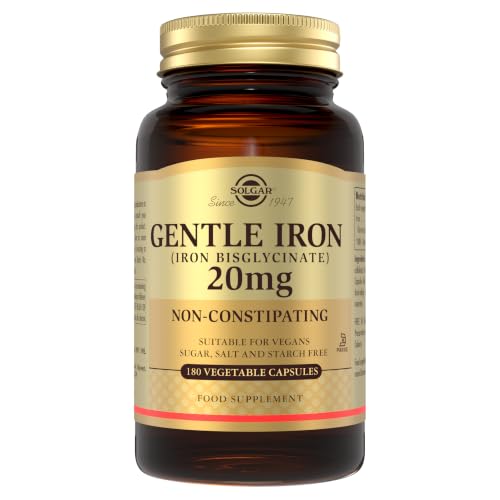
Solgar has been making this one for years and it still sets the standard for what a sensible iron supplement looks like. The iron is bisglycinate, a chelated form where each iron atom is bound to two glycine molecules, and that structure is why so many people who gave up on ferrous sulphate can stomach this. There is no metallic aftertaste, no black-tar constipation for most users, and the capsules are small enough to swallow without ceremony.
Twenty milligrams of elemental iron per capsule is a proper therapeutic dose rather than a token sprinkle, and at 180 capsules a tub lasts six months on one a day. It is vegan, free of the usual allergens, and Solgar's quality control is about as reliable as the supplement industry gets.
The catch is that 20mg sits right at the threshold where the NHS warns side effects become more likely, so if you are only topping up rather than correcting a deficiency, the 14mg options below make more sense. A few reviewers also find the capsule shell splits in humid bathrooms; keep the tub in a cupboard.
Check price on Amazon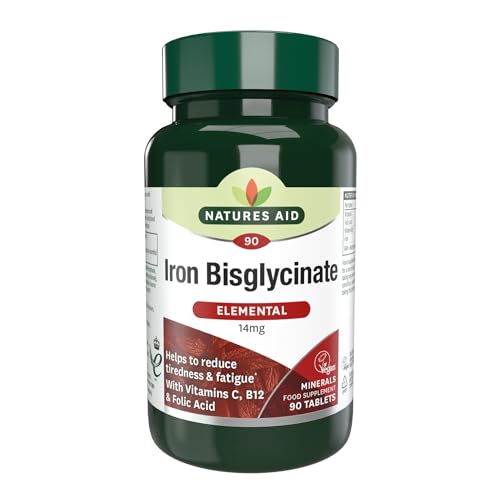
Fourteen milligrams is not an arbitrary number. It is almost exactly the daily reference intake for women aged 19 to 49, which makes this the right dose for topping up rather than treating. You get the same gentle bisglycinate form as the Solgar, in a small vegan tablet, from a British brand that has been going since 1981.
Ninety tablets for under six pounds is the cheapest credible iron on this list by a distance. Nothing about it is clever and nothing needs to be. If your diet is mostly there and you just want insurance during heavy training blocks or heavy periods, this is the one to buy.
The obvious limitation: at 14mg it will correct a genuine deficiency slowly, and there is no added vitamin C, so take it with juice or fruit. The tablets are also uncoated, which a handful of owners find slightly chalky.
Check price on Amazon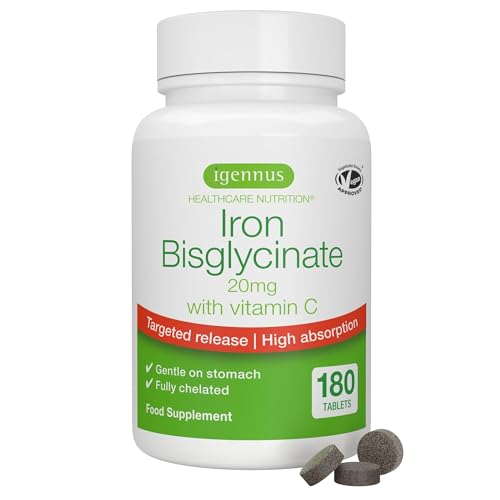
Vitamin C is the single cheapest way to get more out of a non-haem iron supplement, and Igennus builds it in rather than leaving you to remember the orange juice. The pairing is straightforward chemistry: vitamin C keeps iron in the ferrous state your small intestine absorbs most readily, so the same 20mg dose does more work.
Igennus is a Cambridge company that leans harder on formulation detail than most Amazon supplement brands, and the tablets are small, unflavoured and easy to split if you want to start at half a dose while your gut adjusts. A 180 tablet pot at under fourteen pounds is genuinely good value for a combination product.
Downsides are minor. The tablets are film coated with a slight sheen that puts off some buyers, and if you already take a separate vitamin C supplement you are paying for something you have.
Check price on Amazon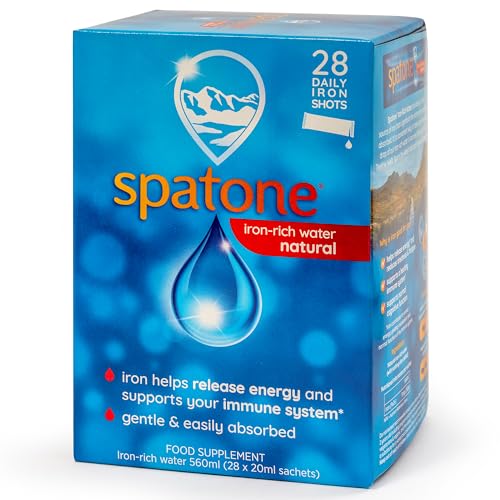
Spatone is iron-rich spa water from Trefriw in North Wales, filtered and sealed into single-serve sachets. It is not a tablet in any sense, and that is the entire point. The iron dose per sachet is small compared with a standard tablet, and it arrives already dissolved, which is why people who have thrown up every other iron supplement tend to get on with this one. Pregnant women and anyone with a sensitive gut are the classic Spatone customers.
You tip a sachet into juice or water and drink it. The taste is faintly metallic and mineral, more like slightly odd tap water than medicine, and mixing it with orange juice masks it and helps absorption at the same time.
Two honest drawbacks. It is expensive per day compared with tablets, and the low dose means it is a maintenance product rather than a fix for a diagnosed deficiency. If your GP has told you your ferritin is on the floor, Spatone alone will take a very long time.
Check price on Amazon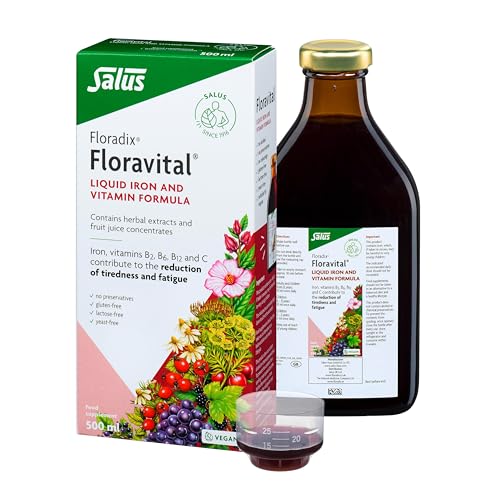
Floravital is the vegan, gluten free, yeast free version of the better known Floradix tonic, and it is the one to reach for if the standard formula is off limits. It is a herbal liquid built on fruit juices with added B vitamins and vitamin C, measured out in 10ml doses from a 500ml bottle.
People like it for two reasons: it is easy on the stomach, and it tastes closer to a dark fruit cordial than a supplement, which matters when you are taking something twice a day for months. The B vitamins and vitamin C alongside the iron are a sensible combination for anyone whose main complaint is fatigue.
The trade-offs are the price per day, which is high, and the shelf life once opened, which is short enough that you need to keep taking it rather than let a bottle sit around. It also needs shaking and measuring, so it loses to a tablet on convenience.
Check price on Amazon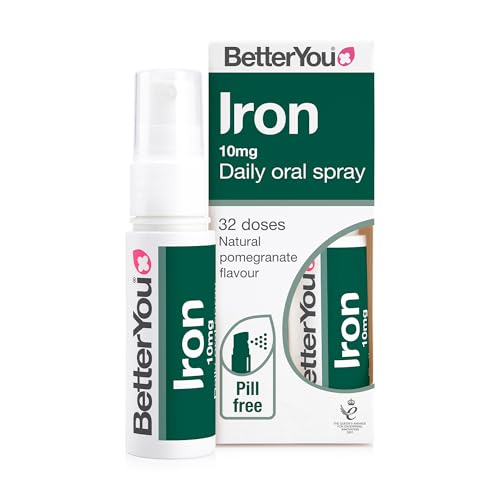
Some people cannot swallow capsules, and some people simply will not keep taking them. BetterYou's answer is an oral spray you apply to the inside of the cheek, bypassing the swallow entirely and, the company argues, the worst of the gut side effects too.
It is quick, portable, has a mild berry flavour and takes about two seconds. As an adherence tool it works, and adherence is most of the battle with iron because the timescale is measured in months.
Be realistic about what it is. Buccal absorption claims for minerals are less well evidenced than the manufacturer suggests, the dose is modest, and a 25ml bottle does not last long relative to a 180 tablet pot. Treat it as a top-up for people who would otherwise take nothing at all rather than as a replacement for a proper therapeutic dose.
Check price on AmazonTiming and pairing change how much you absorb, sometimes dramatically.
And a warning worth repeating: iron is one of the few supplements where more is genuinely worse. Do not stack an iron supplement on top of a multivitamin that already contains iron without checking the labels (our multivitamin comparison flags which picks contain iron and which, like the Inessa, don't), and keep the tubs well away from children.
If fatigue is your main complaint and you are not sure iron is the culprit, our guides to vitamin D and magnesium cover the other two deficiencies that most often masquerade as tiredness in UK adults. Anyone topping up vitamin D through a British winter should also look at cod liver oil capsules, which carry it alongside a modest omega 3 dose in one tablet.
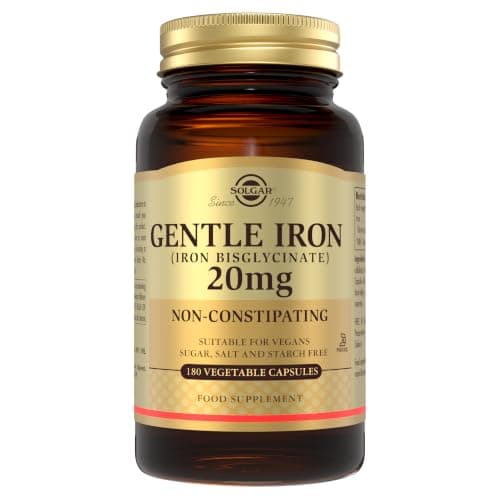
For most people it is Solgar Gentle Iron 20mg. It uses iron bisglycinate, the chelated form that tends to cause far less constipation and stomach upset than cheap ferrous sulphate, and a 180 capsule tub works out at pennies a day. If your stomach has rejected iron tablets before, Spatone sachets or the Floravital liquid are kinder still.
Iron bisglycinate, sometimes sold as gentle iron or chelated iron, is the form most people tolerate best. The iron is bound to the amino acid glycine, which changes how it travels through the gut and reduces the constipation and nausea that ferrous sulphate is notorious for. Liquid iron products such as Spatone and Floravital are also well tolerated because the dose per serving is lower.
The NHS puts the reference intake at 8.7mg a day for men over 19 and for women over 50, rising to 14.8mg a day for women aged 19 to 49. Heavy periods, a vegan or vegetarian diet and high training volumes all push your needs up. Supplements above 20mg a day are more likely to cause side effects, so do not exceed the label dose without medical advice.
Yes, if you are taking a non-haem iron supplement, which covers every product on this list. Vitamin C helps convert dietary iron into the form your gut absorbs most readily, which is why several products bundle it in. A glass of orange juice does the same job. Tea, coffee and calcium go the other way and blunt absorption, so leave an hour either side.
Energy levels often lift within two to four weeks, but rebuilding depleted iron stores takes months rather than weeks. A GP treating iron deficiency anaemia will usually recheck your bloods after two to four months and may keep you on iron for another three months after your levels normalise. Do not judge a supplement on a fortnight.
You can, but you should find out where you stand first. Low ferritin without full anaemia is common in female endurance athletes and it does drag performance down, yet loading up on iron when your stores are already healthy is pointless and can be harmful. A simple full blood count and ferritin test from your GP settles it.
The best greens powders in the UK for 2026, from budget super greens to premium all-in-one vegetable powders, plus an honest look at whether they actually work.
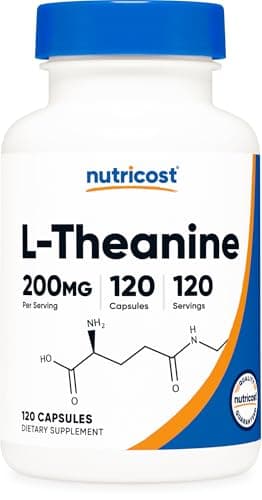
The best L-theanine supplement for UK buyers in 2026: five capsules ranked on dose and cost per day, what the research shows about sleep and caffeine, and the dose worth taking.
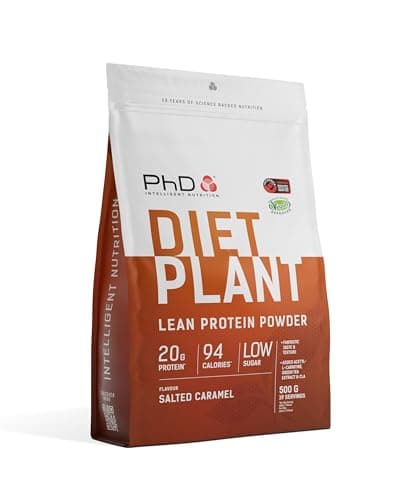
The best protein shakes for weight loss in the UK, and how to spot the healthiest protein powder for a diet: low-calorie, high-protein picks to curb hunger, plus how to use them.
Active calories vs total calories explained: what Apple Watch, Garmin, Fitbit and Whoop count, how accurate they are, and how many to eat back for weight loss.
Best Exercise is a participant in the Amazon EU Associates Programme, an affiliate advertising programme designed to provide a means for sites to earn advertising fees by advertising and linking to Amazon.co.uk. As an Amazon Associate we earn from qualifying purchases. This comes at no extra cost to you and never influences our independent reviews or rankings.