The Amazfit Active 3 Premium is the cheapest way to get a sapphire screen, offline maps and contactless payments on a running watch in the UK right now, and at £146.49 on Amazon it undercuts Garmin's Forerunner 165 Music by about £60 while doing more on paper. It's aimed at people starting to run seriously or mixing runs with gym work, and for that buyer it's very good value. What you give up is dual-band GPS, a lighter case than its predecessor, and the depth of Garmin's training software.
Amazfit launched it in February 2026 as the successor to the Active 2 Premium, and the changes are mostly the right ones: a brighter screen, four physical buttons instead of two, a bigger battery and a speaker and microphone for taking calls. The 45mm stainless steel frame is bigger than before, which suits average and larger wrists better than small ones.
How we review
We haven't worn the Active 3 Premium ourselves. This review is built from Amazfit's published specifications and launch material, third-party spec listings, owner feedback and published reviews, plus direct comparison with the Amazfit and Garmin watches we've already covered. Battery and GPS figures are Amazfit's own claims, and where reviewers report something different we say so.
Who it's for
Beginner and intermediate runners who want proper structure without paying Garmin prices. Amazfit pitches it at people "starting structured running and hybrid training" in its launch announcement, and the feature list backs that up: Zepp Coach plans from 5K up to the full marathon, running power, lactate threshold, ground contact time, VO2 Max, HYROX race modes and automatic recognition of 25 strength exercises. Someone running three times a week and lifting twice gets everything they'll realistically use.
It's the wrong watch if you race in cities and care about pace accuracy between tall buildings, because there's no dual-band GPS. It's also not the pick for ultra runners who need two days of tracking, or for anyone already invested in Garmin Connect's training load and recovery tools, which are better than anything in the Zepp app.
Sapphire glass and a 3,000 nit AMOLED at under £150
Offline maps with turn-by-turn directions and automatic rerouting
Up to 12 days typical battery and 24 hours of GPS (claimed)
4GB storage for maps and podcasts, plus NFC payments
Four physical buttons, so you can run without touching the screen
Syncs with Strava, Runna, TrainingPeaks and Intervals.icu
Cons
Single-band GPS, so expect wobble in dense city centres
38g without strap is about 6g heavier than the Active 2 Premium
Zepp app is clear but shallower than Garmin Connect
No USB-C cable in the box, only the magnetic charging head
No flashlight, unlike the Balance 3
Design, screen and buttons
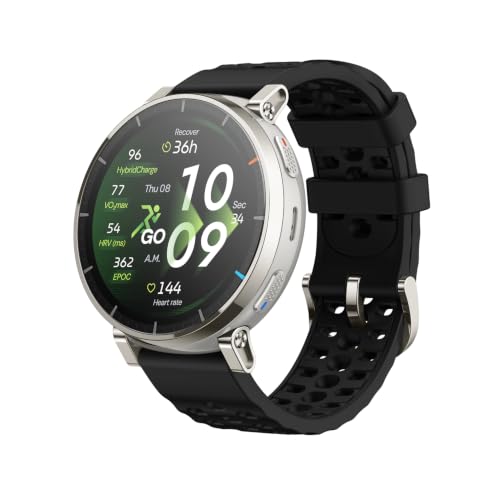
The screen is the reason most people will choose this over a Garmin at the same money. It's a 1.32in AMOLED at 466 x 466 pixels (353 ppi), peaking at 3,000 nits, under sapphire glass with an anti-glare, anti-fingerprint finish. Sapphire is harder to scratch than the tempered glass on most watches at this price, and 3,000 nits means you can read pace on a bright summer morning without cupping your hand over your wrist. The Active 2 Premium topped out at 2,000 nits, so this is a real jump rather than a spec sheet tweak.
The case is a stainless steel frame with fibre-reinforced polymer, 45mm across and 11mm thick, on a 20mm strap. At 38g without the strap it's still light for a watch with a metal bezel, but it's not the featherweight the Active 2 Premium was (around 31.65g). If you wear a watch to bed for sleep tracking, you'll notice the difference less than the extra 1mm of case width.
Four buttons replace the Active 2's two, and for runners that matters more than it sounds. Starting, lapping and pausing a run with sweaty fingers on a touchscreen is miserable; with four buttons you can do all of it by feel, and in the rain.
Amazfit Active 3 Premium key specs
Display
1.32in AMOLED, 466 x 466 (353 ppi), up to 3,000 nits
Bluetooth 5.3, NFC (Zepp Pay), speaker and mic for calls
Sports modes
170+, including HYROX race mode
Battery and GPS
Amazfit claims up to 12 days of typical use, 7 days of heavy use and 4 days with the always-on display switched on. For GPS it quotes 24 hours of continuous tracking and 76 hours in power-saving mode. That's a few hours more than the Active 2 Premium's 21 hours of GPS, thanks to a battery that's grown from 270 mAh to 365 mAh, and it's comfortably ahead of the 19 hours Garmin quotes for the Forerunner 165 Music.
Treat the GPS figure as a ceiling. At least one published review found GPS runtime shorter than advertised, which is common: maps, navigation, the always-on display and podcast playback all pull it down. For someone running four or five times a week for under an hour, that still means charging roughly once a week, which is the number that actually matters.
The GPS itself is the main compromise. Amazfit's own materials don't state the band count, and third-party spec listings mark multi-band as absent. (The launch announcement also calls it a six-satellite system while the spec listings say five, which is a small inconsistency we couldn't resolve.) Single-band receivers are perfectly good on open roads, towpaths and parks. They struggle more under heavy tree cover and between tall buildings, where signal reflections make the track drift and the instant pace jumpy. If most of your running is in central London or Manchester, that's a reason to spend more on the dual-band Amazfit Balance 3.
Training features and heart rate
Zepp Coach builds adaptive plans for 5K, 10K, half and full marathon, and the watch tracks the running metrics you'd expect from a more expensive model: running power, lactate threshold, ground contact time and balance, VO2 Max and a posture reading. HYROX race and training modes are there for hybrid athletes, and the watch automatically recognises 25 strength movements, so your gym sessions log reps and sets without you tapping through every exercise. There's also Zepp Flow, a voice assistant for starting workouts and changing settings by speaking to the watch.
The heart rate comes from Amazfit's BioTracker optical sensor, and the honest view is the same one we give for every wrist-based watch. Optical sensors are accurate at rest and on steady runs, and they get worse as intensity and arm movement rise. A study of wrist-worn Amazfit trackers against a 12-lead ECG during incremental treadmill exercise found errors stayed within 10% at each stage, with the best accuracy at low intensity and validity dropping as the stages progressed (Ibrahim et al., 2024). Those were older models, not the Active 3, but the pattern holds across brands. A 2025 study comparing several wearables against a Polar H10 chest strap found agreement was excellent at rest but fell sharply during burpees, while upper-arm placement tracked better than the wrist (Moghaddam et al., 2025).
So if you do intervals, HIIT or HYROX and train by zones, pair a strap. Reviewers report that the Active 3 Premium connects to external Bluetooth heart rate monitors, including Garmin and Polar straps. The Amazfit Helio Strap is another option: it sits on the upper arm, broadcasts heart rate over Bluetooth, and adds Whoop-style recovery tracking for £99.99. Our heart rate zone training guide explains how to set zones once you've got data you trust.
Maps, payments and everyday use
Offline maps are the feature that separates this watch from the Forerunner 165. You get turn-by-turn navigation, automatic rerouting when you go off course, point of interest search and point-to-point route planning, all stored on the 4GB of internal memory. For exploring a new area on a long run, or following a race route you've loaded in advance, that's a proper tool rather than a breadcrumb trail.
NFC payments run through Zepp Pay, which depends on your bank supporting it, so check before you count on leaving your phone at home. The built-in speaker and microphone handle Bluetooth calls from the wrist when your phone's nearby. Health tracking covers sleep, HRV, stress, SpO2, skin temperature, respiration and menstrual cycles, and Amazfit doesn't charge a subscription for any of it.
What's missing is worth knowing. There's no Wi-Fi, no cellular option, no ECG, no fall detection and no emergency SOS, so it isn't a safety device for solo runners in the way some Garmin and Apple models are. There's no flashlight either, which the Balance 3 has.
Against the alternatives
The Amazfit Active 2 Premium is the obvious comparison at around £129. It has the same 1.32in sapphire AMOLED and offline maps, but it's dimmer at 2,000 nits, has two buttons, quotes about 21 hours of GPS and weighs roughly 6g less. For £17 more, the Active 3 Premium's buttons and brighter screen are worth it for runners. If you mostly want a smartwatch with fitness tracking and like a lighter, smaller watch, the Active 2 Premium is the better buy.
The Garmin Forerunner 165 Music at around £205 is the Garmin to beat. It has a better training platform, daily suggested workouts, Garmin Coach and a stronger resale market, but no maps and 19 hours of GPS. If you value software and plan to stay in an ecosystem for years, the Garmin is worth the extra. If you want the most hardware for your money, the Amazfit wins clearly.
Stepping up to the Amazfit Balance 3 at £369.90 gets you dual-band GPS, 41 hours of accurate tracking, a bigger 1.5in screen, a 10 ATM rating and a flashlight. That's a lot more money, and only worth it if you run in cities or do long events. The Cheetah 2 Pro is Amazfit's dedicated racing watch, and our COROS PACE 4 review covers the strongest non-Amazfit value pick.
At around £146, yes. You get a 1.32in 466 x 466 AMOLED under sapphire glass with 3,000 nits peak brightness, offline maps with turn-by-turn directions, 4GB of storage, NFC payments, Bluetooth calling and up to 12 days of typical battery. Garmin's nearest rival, the Forerunner 165 Music, costs around £205 and has no maps.
What's the difference between the Active 3 Premium and the Active 2 Premium?
The Active 3 Premium has a larger 45mm case (against roughly 44mm), four buttons instead of two, a brighter 3,000 nit screen (up from 2,000), a bigger 365 mAh battery and a quoted 24 hours of GPS against about 21 hours. It also weighs more, 38g without the strap against about 31.65g. The Active 2 Premium is around £129, so the upgrade costs roughly £17.
Does the Active 3 Premium have dual-band GPS?
No. Amazfit doesn't state the band count, but third-party spec listings and published reviews describe it as single-band. It uses multiple satellite systems (GPS, Galileo, GLONASS, BeiDou and QZSS), which is fine on open roads and parks. If you run in a city centre with tall buildings, the dual-band Balance 3 or Cheetah 2 Pro will track more cleanly.
How long does the battery last?
Amazfit quotes up to 12 days of typical use, 7 days of heavy use, 4 days with the always-on display, 24 hours of continuous GPS and 76 hours in power-saving GPS mode. Some reviewers have found GPS runtime falls short of the 24 hour claim. A USB-C cable isn't included, only the magnetic charging head.
Can you swim with the Active 3 Premium?
Yes. It's rated to 5 ATM, which covers pool swimming and showering. It doesn't have a diving mode, so it's not for snorkelling or freediving beyond surface swimming.
Does it work with Strava and Runna?
Amazfit's launch announcement lists TrainingPeaks, Strava, Runna and Intervals.icu as integrations through the Zepp app. Reviewers also report that it pairs with external Bluetooth heart rate straps, which is worth doing for interval sessions.
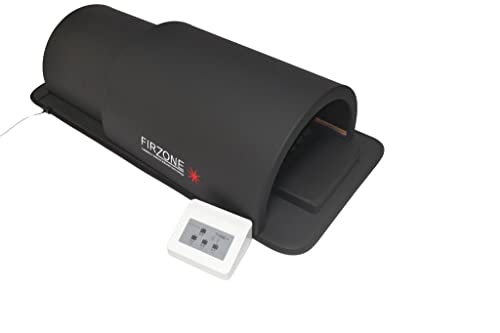
An honest Firzone ProZERO FZ-TD1 infrared sauna dome review covering the 1000W split-zone heating, heated mat, 178cm length and storage design, plus the tourmaline and zero EMF claims and how it compares with sauna tents and boxes.
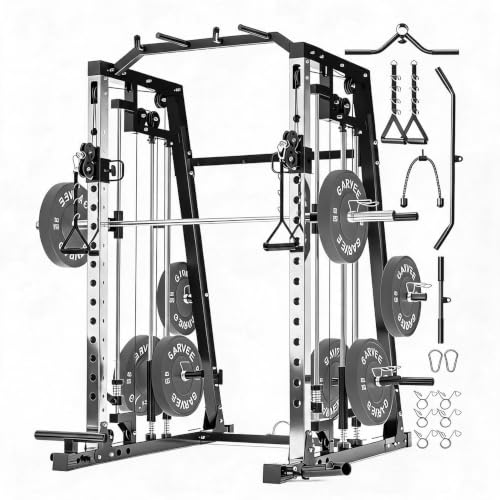
Our Garvee Smith machine review: 2x2in steel, a linear bearing Smith bar, dual 15-level pulleys and a 360° landmine, plus the specs Garvee contradicts and the £1,542 UK price.
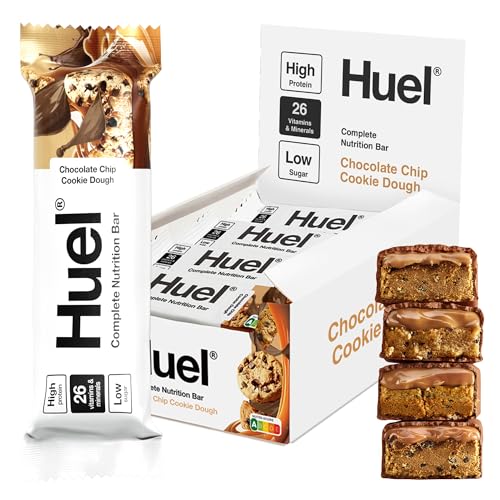
Our Huel bar review: about 14g plant protein, 7g fibre and 2g sugar in a vegan 55g bar for roughly £2.05 to £2.55. Is it a meal replacement, a snack or a protein bar?
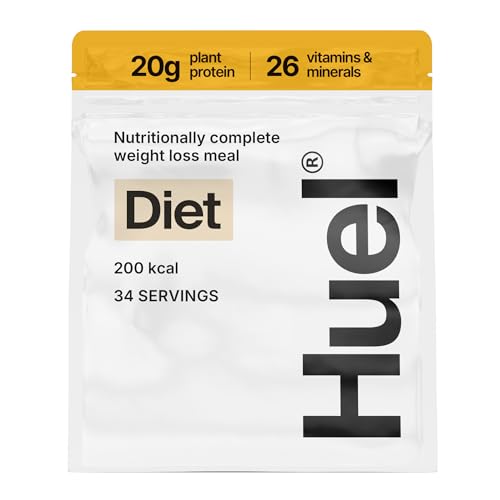
Our Huel Diet review: 200kcal, 20g plant protein and 5g fibre per 52g shake, 34 meals a bag, sucralose-sweetened. UK price, the meal replacement rules it follows, and whether a 100% Huel diet is safe.
Best Exercise is a participant in the Amazon EU Associates Programme, an affiliate advertising programme designed to provide a means for sites to earn advertising fees by advertising and linking to Amazon.co.uk. As an Amazon Associate we earn from qualifying purchases. This comes at no extra cost to you and never influences our independent reviews or rankings.