Nutrition
Huel Bar Review: Complete Nutrition Bar, Snack or Meal?
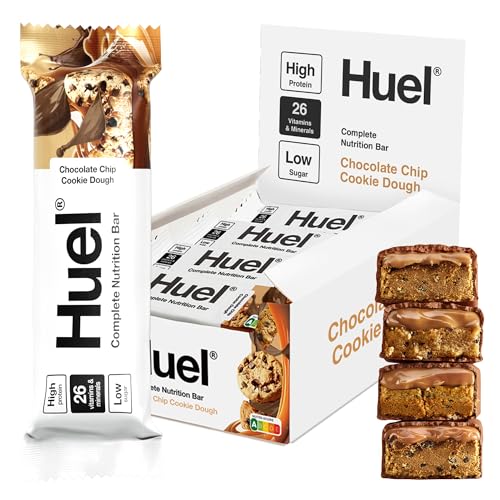
Our Huel bar review: about 14g plant protein, 7g fibre and 2g sugar in a vegan 55g bar for roughly £2.05 to £2.55. Is it a meal replacement, a snack or a protein bar?

By Declan Hallwood, Nutrition & Supplements Editor · Updated 18 November 2026
We may earn a commission from qualifying purchases made through links on this page, at no extra cost to you. This never affects our ratings.
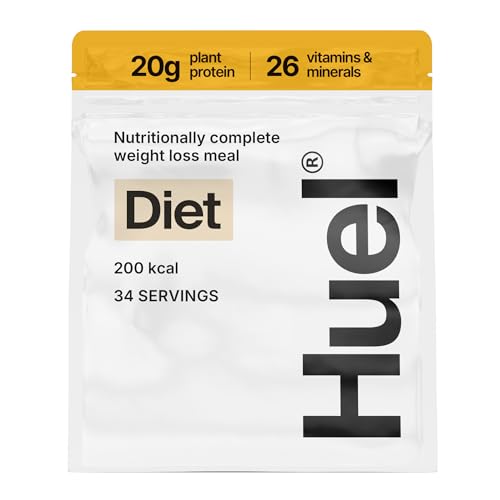
Huel Diet is a good, inexpensive tool for one specific job: replacing one or two meals a day while you're in a calorie deficit. Each 52g shake gives you 200kcal, 20g of plant protein, 5g of fibre and all 26 essential vitamins and minerals according to Huel, and it costs about £1 to £1.17 a meal depending on where you buy it. What it isn't is a full diet. Drinking nothing but Huel Diet would put most adults on a very low calorie diet, and that's something to do with a GP, not a shaker.
Below we cover what's in the bag, what the UK meal replacement rules say, how it compares with half a scoop of regular Huel, and the "100% Huel" idea.
How we review
This is a research-based review. Calorie, protein, fibre, serving and bag figures come from Huel's Huel Diet product page and the Amazon UK listing for the Banana flavour, both checked on 18 November 2026. We haven't run our own taste or weight loss trial of Huel Diet, so comments on taste and fullness reflect patterns in owner feedback and how the product is built. Health and regulatory claims link to peer-reviewed research or the legislation itself.
Huel calls it "a high-protein, low-calorie meal replacement shake", and that's an accurate description. It's essentially a half-size Huel meal that has been reformulated so the 200kcal serving still carries a meal's worth of vitamins and minerals. You add one level scoop (52g) to 500ml of cold water, shake for about 20 seconds and drink it.
The base is oat flour and pea protein, with ground flaxseed, brown rice protein and faba bean protein, a micronutrient blend, natural flavouring, xanthan gum, sunflower oil powder and sea salt. The sweetener on the Amazon UK ingredient list is sucralose, unlike the stevia in Black Edition (see our Huel review). One oddity: the Banana listing's ingredients include "Cocoa Powder (8%)", which looks copied from the chocolate flavour, so check your own bag for exact details.
Huel currently sells six flavours on its site (Mixed Berry, Mango, Vanilla Matcha, Chocolate, Banana and Vanilla). The site marks at least one flavour as containing caffeine; Vanilla Matcha is the obvious candidate, but the product page doesn't make clear which.
| Energy | 200 kcal |
|---|---|
| Protein | 20 g (40% of calories) |
| Fibre | 5 g |
| Vitamins and minerals | 26 essential vitamins and minerals |
| Serving | 1 level scoop (52 g) in 500 ml cold water |
| Meals per bag | 34 (1.77 kg bag on Amazon UK) |
| Protein sources | Pea, brown rice, faba bean |
| Sweetener | Sucralose (per Amazon UK ingredient list) |
| Allergens | Contains oats; no soy per Huel |
| Dietary | Vegan |
| Price per meal | £1.00 subscribed, £1.11 one-off (huel.com); about £1.17 on Amazon UK |
Huel's product page doesn't currently show the full nutrition panel for Huel Diet, so we couldn't verify the carbohydrate, sugar, fat, saturated fat or salt figures for a serving. We've left them out rather than guess. Huel also doesn't state on the page whether Diet is gluten-free; the Amazon listing gives oats as the allergen, so if you're coeliac, check the pack.
The protein figure is the one that matters most on a diet. Twenty grams in 200kcal means 40% of the calories come from protein, or 10g per 100kcal. That's the same protein density as Black Edition (40g in 400kcal) and better than standard Huel Powder (30g in 400kcal). Five grams of fibre is about a sixth of the 30g a day the NHS recommends, which is respectable for a 200kcal drink.
This is the question nobody on page one answers properly, so here's what we can and can't confirm.
The UK has two separate categories. A total diet replacement is a product formulated to be your entire diet for weight control, usually supplying 800 to 1,200kcal a day, and it's covered by its own specific legislation. Huel Diet isn't sold as one. Huel describes it as a meal replacement for one or more meals, not a whole-day plan.
A meal replacement for weight control is different. Products in this category can carry an authorised health claim, and Huel uses it word for word on the Diet page: "Substituting two daily meals of an energy restricted diet with meal replacements contributes to weight loss." The legislation behind that claim, Regulation (EU) 2016/1413 as retained in UK law, sets conditions a product must meet to use it. Each meal has to provide 200 to 250kcal, with 25% to 50% of its energy from good quality protein, no more than 30% from fat, at least 30% of the reference intake for most vitamins and minerals, and set minimums for sodium and potassium.
Huel Diet clearly hits the energy band (200kcal) and the protein band (40%). Because Huel uses the authorised claim, it's presenting the product as meeting the rest of the conditions too. We couldn't check fat percentage, sodium, potassium or the individual vitamin and mineral levels ourselves, because the full panel isn't on the product page. That's a gap in Huel's own information rather than a red flag, but it's worth knowing that our confirmation stops at calories and protein.
We haven't tasted it, so this section reflects what owners report and what the formula suggests.
The oat base means Huel Diet behaves more like original Huel than like a whey shake: thicker, a little grainy, and best very cold. Sucralose is sweeter and cleaner tasting than stevia to many people, so if Black Edition's aftertaste put you off, Diet may suit you better. The reverse also applies if you avoid artificial sweeteners.
Fullness is the honest weak point. A 200kcal drink is a small meal however well it's built, and plenty of people find a liquid lunch leaves them hungry by mid-afternoon. The 20g of protein and 5g of fibre help, and drinking it slowly rather than in one go makes a difference, but if you already struggle with hunger on a diet, a 400kcal Huel meal at lunch might keep you on track better than two 200kcal shakes.
A fair question: why not just make a half-size Black Edition shake? Half a 90g serving gives roughly 200kcal and 20g protein, and at about £1.99 a full meal on Amazon, half costs about £1.
The difference is the micronutrients. Huel formulates a 400kcal meal to deliver a set share of your daily vitamins and minerals, so half a serving gives you half of that. Huel Diet packs the full meal-sized dose into 200kcal, which is exactly what the meal replacement rules require. If you're eating plenty of fruit, vegetables and wholegrains elsewhere in the day, half a scoop of Black Edition is a perfectly reasonable shortcut. If you're replacing two meals a day for weeks, Diet is the better-designed product.
Compared with Huel's other light option, Huel Lite is a ready-made bottle at 190kcal with 25g of protein. It's more convenient and higher in protein, but it costs around three times as much per meal.
Huel publishes a summary of a five-week 100% Huel experiment, and people often assume it applies to Huel Diet. It doesn't. That project used standard Huel Powder, with four core participants eating between 1,800 and 2,600kcal a day. It was small, run by Huel, and reported a rise in uric acid in all four, which led Huel to advise caution for anyone susceptible to gout and to say that using Huel for one or two meals or snacks a day is preferable. The later peer-reviewed four-week study of Huel-only eating, which we discuss in is Huel good for you?, also used regular Huel, had 20 finishers and was funded by Huel (PMC9315961).
Living on Huel Diet is a different proposition. Four shakes a day is 800kcal, which puts you in very low calorie diet territory. That approach does have strong evidence behind it in the right setting: the DiRECT trial, published in The Lancet, put people with type 2 diabetes on an 825 to 853kcal formula total diet replacement for three to five months, and 46% were in remission at 12 months, against 4% of the control group. But DiRECT ran through GP practices with structured support, and diabetes and blood pressure medication was withdrawn at the start under supervision. If you're on those medicines and cut to 800kcal on your own, that's where things can go wrong.
So our position is simple. Use Huel Diet for up to two meals a day alongside one proper meal. If you're considering a shakes-only plan to lose a lot of weight, or to put type 2 diabetes into remission, speak to your GP first, who can tell you whether a supervised programme is available locally.
On the evidence for meal replacements in general, yes, modestly. A 2019 systematic review and meta-analysis of 23 trials found diets that included meal replacements led to about 1.4kg more weight loss at one year than comparison diets, and around 6kg more when combined with extra support. Huel Diet itself hasn't been tested in a published trial, and the benefit comes from portion control and structure, not anything special in the powder.
In practice the two-shake approach looks like this: Huel Diet for breakfast and lunch, a normal balanced dinner, and a piece of fruit or yoghurt in between. That's around 400kcal from shakes and leaves 800 to 1,200kcal for food depending on your target. It's easy to follow, which is the whole point.
Check Huel Diet Powder price on Amazonaround £39.69Buy it if you're trying to lose weight and the meals you most often get wrong are breakfast and lunch. It suits people who'd otherwise skip a meal and overeat later, and anyone who wants a fixed 200kcal portion with decent protein and no weighing or logging. It's also good value against diet shakes from the supermarket.
Skip it if 200kcal leaves you starving; a standard 400kcal Huel or a protein-rich whole-food lunch will serve you better. Skip it too if you want to avoid sucralose, or if you're looking for a medically structured total diet replacement, which this isn't. Anyone who is pregnant, under 18, has kidney disease or diabetes, takes regular medication or has a history of disordered eating should speak to a GP before using meal replacements regularly.
If you want more food per meal, Huel Black Edition at 400kcal and 40g protein is our pick in Huel's range. For a grab-and-go 190kcal option, see our Huel Lite review. If you're open to other brands or cheaper options, our Huel alternatives guide compares diet-style powders like Protein Works Diet Meal 360, and our best protein shakes for weight loss covers lower calorie shakes that aren't full meals.
For more meal replacement and protein guides, browse our nutrition hub.
Huel Diet is a lower calorie version of Huel's powdered meal. One level 52g scoop in 500ml of cold water gives 200kcal, 20g of plant protein, 5g of fibre and all 26 essential vitamins and minerals, according to Huel. A bag holds 34 meals. It's oat and pea protein based, and the ingredients listed on Amazon UK use sucralose as the sweetener.
It can, because it makes a calorie deficit easy to hit. Huel uses the authorised UK claim that substituting two of the main daily meals of an energy restricted diet with meal replacements contributes to weight loss. A 2019 meta-analysis of 23 trials found diets using meal replacements produced about 1.4kg more weight loss at one year than comparison diets. You still need the rest of your day's food to fit your calorie target.
We wouldn't, at least not on your own. Four shakes is 800kcal, which is a very low calorie diet; the clinical version of that (as in the DiRECT trial) is run with GP and dietitian support, often with medication changes. Huel's own five-week 100% Huel experiment used standard Huel Powder at normal calorie intakes, not Huel Diet, and Huel itself prefers people use it for one or two meals or snacks a day.
Two is the number the weight loss claim is built on: two Huel Diet shakes replacing two main meals, plus one normal balanced meal and some snacks. That gives roughly 400kcal from shakes and leaves room for real food. Going above two or three a day without medical advice isn't something we'd recommend.
At the time of writing, Huel's own site is slightly cheaper: £37.80 one-off (£1.11 a meal) or £34 on subscription (£1.00 a meal) for 34 meals. Amazon UK lists the Banana flavour at around £39.69, about £1.17 a meal, which can still make sense if you want Prime delivery or don't want a subscription.
Huel Diet if you want small, ready-portioned 200kcal meals with the full micronutrient dose packed into each one. Black Edition if you'd rather have one 400kcal, 40g protein meal that keeps you full for longer. Both work for weight loss; the difference is portion size and how hungry you get.
Our Huel bar review: about 14g plant protein, 7g fibre and 2g sugar in a vegan 55g bar for roughly £2.05 to £2.55. Is it a meal replacement, a snack or a protein bar?
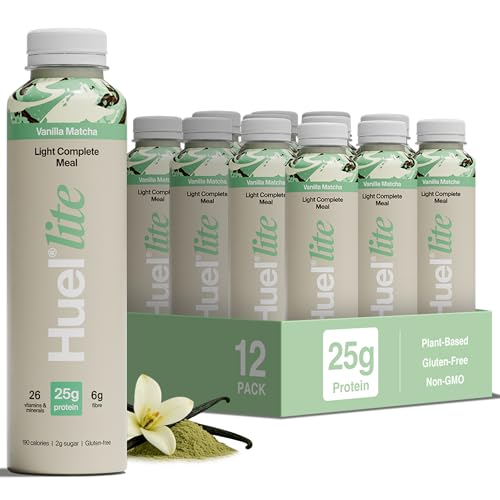
Our Huel Lite review: 190kcal, 25g plant protein, 5.7g fibre and under 2g sugar per 500ml bottle. Ingredients, stevia, caffeine, UK price and how it compares with Huel RTD and Huel Diet.
Looking for a Huel alternative? We match the best options to your reason for leaving, from cheaper and lower calorie shakes to milk-based drinks and a DIY recipe.
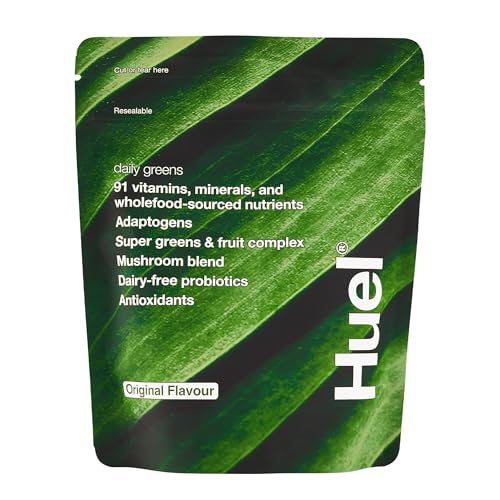
Our Huel Daily Greens review covers the 91-ingredient formula, probiotic doses, vitamin levels, taste and price per serving, plus what greens powders can't do.
Best Exercise is a participant in the Amazon EU Associates Programme, an affiliate advertising programme designed to provide a means for sites to earn advertising fees by advertising and linking to Amazon.co.uk. As an Amazon Associate we earn from qualifying purchases. This comes at no extra cost to you and never influences our independent reviews or rankings.