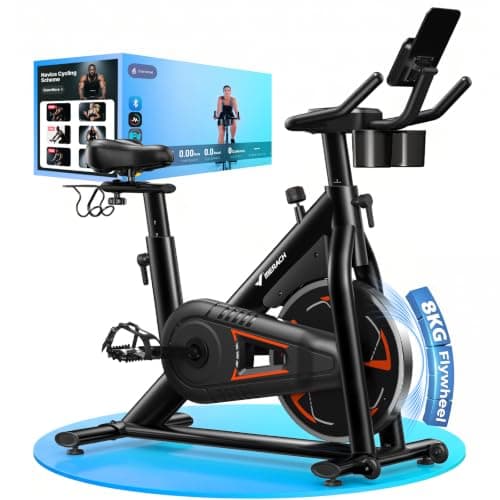
Exercise Bikes
MERACH H-Frame Exercise Bike Review: Stable, Quiet, Modest Resistance
Our MERACH H-Frame exercise bike review: 8kg flywheel, 8 magnetic levels, 150kg limit, apps and Zwift support, and who should buy it at around £260.

By Jack Atkins, Home Gym Equipment Specialist · Updated 6 October 2026
We may earn a commission from qualifying purchases made through links on this page, at no extra cost to you. This never affects our ratings.
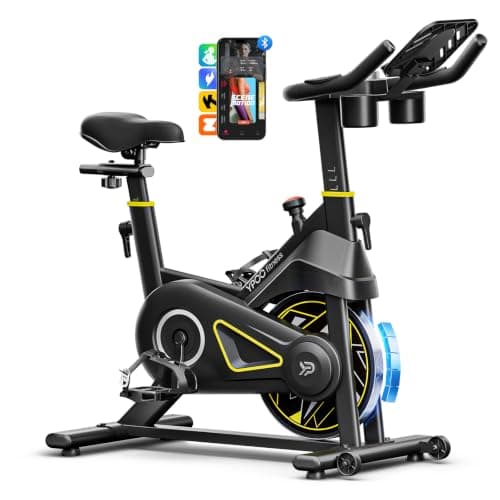
YPOO's X3 is a magnetic, belt-driven indoor bike that sells for around £140 and goes after people who want quiet cardio at home without paying smart-bike money. It pairs a near-silent drivetrain with a free app, an oversized tablet holder and a seat that adjusts four ways, so one machine can suit a whole household. Owners rate it 4.4 out of 5 across 273 reviews, which is strong for a brand most UK buyers have never heard of. The short verdict is that it offers a lot of usable bike for the money, provided you read its "100 resistance levels" and its app watts as rough guides rather than real figures. Anyone chasing controllable virtual resistance or race-ready data should spend more.
What you get at this price is a sensible set of compromises. The frame is a dual-triangle H shape that stays planted during steady riding, resistance comes from a knob rather than buttons, and the console is a basic LCD that the app is meant to compensate for. None of that is unusual under £200. Where YPOO pull ahead is fit and finish: the ride is genuinely quiet, the tablet shelf is big enough for a proper iPad, and the seat range is wide enough to matter.
How we review
This review draws on YPOO's published listing for the X3 (model BC710), the recurring themes in verified owner reviews, and our experience of what separates good from bad bikes in the sub-£200 bracket. We have not run this exact unit for a year, so comments on durability reflect repeated owner reports rather than our own long-term data. Where a manufacturer claim cannot be checked, we say so.
This is a bike for regular, moderate cardio at home: 20 to 45 minute sessions in front of a screen, a few times a week, at an effort where you can still talk. It fits returning exercisers, anyone whose knees have had enough of running, and families where one bike has to serve a 5ft partner and a 6ft one. The low noise is the clincher for flats and shared houses.
It is the wrong bike for structured interval work against a power target, and the wrong bike for racing in Zwift. There is no power meter, so every watt reading is a guess. If controllable virtual resistance is the whole point for you, our best smart exercise bike UK guide covers the machines that actually deliver it.
Check the YPOO X3 price on Amazon£142.49Magnetic resistance works by moving magnets nearer a spinning flywheel, so nothing rubs and nothing wears out. That is why this bike should still be quiet in three years while a friction-pad spin bike is squealing for new felt. The knob sweeps through a wide band of load, and YPOO badge it 0 to 100, which sounds precise and is not. There are no detents and no meaningful numbers on the console, so "my usual setting" ends up being a mark on the dial rather than a figure you can repeat. Every bike at this price does the same thing, but it is worth knowing before you plan intervals around it.
The pedalling itself is smooth and slightly light at the top end. Because YPOO never publish a flywheel weight, you cannot judge the momentum on paper, and strong riders will find themselves spinning out before their legs give in, especially out of the saddle. For the endurance riding this bike is built for, the range is plenty.
Fit is the real strength. The four-way seat post and the adjustable handlebars let a shorter and a taller rider share the bike without either of them perching awkwardly, which is rare at any price and almost unheard of near £140. YPOO fit an oversized, softly padded saddle, which helps, though saddle comfort is always personal; if it does not suit you, padded shorts or a gel cover fix it for under a tenner.
| Model | BC710, sold as the X3 |
|---|---|
| Resistance | Magnetic, manual knob, 0 to 100 scale |
| Drive | Belt, maintenance-free |
| Flywheel | Weight not published |
| Maximum user weight | 136 kg (300 lb), per the Amazon listing |
| Rider height range | About 1.42 m to 1.85 m (4ft 8in to 6ft 1in) |
| Adjustment | 4-way seat, height-adjustable handlebars |
| Console | LCD: time, speed, distance, calories |
| Connectivity | YPOOFIT app, plus Kinomap and Zwift ride-along |
| Quoted noise | Under 25 dB |
| Dimensions | 108 cm long, 49 cm wide, 112 cm tall |
| Machine weight | 18 kg |
| Assembly | About 80 percent pre-assembled, roughly 30 minutes |
YPOO's own app, YPOOFIT, pairs over Bluetooth and records duration, distance, estimated calories and heart rate from a chest strap, then pushes the data to other fitness apps. For someone who would otherwise stare at a wall, that structure is often the difference between a bike that gets ridden and one that becomes a clothes rail. The bike also connects to Kinomap and Zwift, which adds scenery and classes, but keep your expectations straight: with no power meter and no controllable resistance, those platforms cannot change the load for you, and any watt figure is an estimate derived from speed and knob position. Treat the numbers as a consistency check between your own sessions, not as truth.
The console is the obvious cost-saving. It is a small LCD that shows the basics and little else, so the app is doing the heavy lifting on anything that matters. That is a reasonable trade at this money, as long as you are happy to prop a phone or tablet on the (admittedly excellent) holder.
The dose itself is simple. The NHS asks for at least 150 minutes of moderate activity a week, which this bike turns into five easy half-hour rides, and riding a bike is listed there as a moderate activity. The payoff is worth the saddle time: the NHS notes that regular activity can cut the risk of heart disease, stroke and type 2 diabetes and lower the risk of early death by up to 30 percent. A quiet bike in the corner that you will actually use beats a clever one that intimidates you into leaving it folded.
See today's YPOO X3 priceAt roughly £140 the YPOO X3 lands in the busiest, most cut-throat part of the market, and it holds its own. Drop to £100 or so and bikes tend to swap the belt for a noisier drive, trim the user limit to 100 kg or 120 kg, and narrow the seat range so shorter and taller riders are quietly priced out. The X3 keeps the belt, the 136 kg limit and the wide fit, which is where the extra money goes. One caveat on that limit: YPOO's own product page quotes 330 lb while the Amazon listing says 300 lb, so take the lower figure as the one to trust.
Spend upward instead and the next genuine step is a bike with a proper console and a heavier, declared flywheel at around £350 to £450, or a full smart bike with controllable resistance from £700. Little in between is worth the jump. To see where the X3 sits against the field, our best exercise bike UK roundup has the full list, the best spin bike guide covers more aggressive riding positions, and the closest rival on paper is the app-led MERACH smart exercise bike. When you want to put it to work, our exercise bike HIIT workout is a good first session.
For steady home cardio at around £140, yes. You get magnetic resistance, a quiet belt drive, a wide fitting range and a free app, which is a lot of usable bike at the price. It is not the one to buy if you want controllable virtual resistance or real power data, because it has neither.
Quiet. Magnetic resistance means nothing touches the flywheel, so the only sounds are the belt and your breathing. YPOO quote under 25 dB, which is optimistic once a rider is pedalling, but the practical answer is that you can watch television at a normal volume and hold a conversation over it, which makes it fine for a flat.
It connects to both through the YPOOFIT app, but only as a ride-along. There is no power meter and no controllable resistance, so Zwift and Kinomap cannot adjust the load for you and the watt figures are estimates. You can follow a class and match the effort by feel, but it is not a substitute for a true smart bike.
The Amazon listing states a 300 lb (about 136 kg) user limit, while YPOO's own product page quotes 330 lb (150 kg) for the X3, so treat 136 kg as the safe number. The four-way seat and adjustable handlebars suit riders from roughly 1.42 m to 1.85 m (4ft 8in to 6ft 1in), which is wide enough for most households.
YPOO do not publish a flywheel weight, which is a fair criticism of the listing and makes the bike hard to judge on paper. In use the pedal stroke is smooth but a touch light at the top of the range, so strong riders will spin out before they run out of legs.
No. It arrives about 80 percent built, so you are fitting the pedals, seat, handlebars, console and stabiliser feet. Tools are included and most people finish in around 30 minutes by following the video rather than the printed sheet.
Our MERACH H-Frame exercise bike review: 8kg flywheel, 8 magnetic levels, 150kg limit, apps and Zwift support, and who should buy it at around £260.
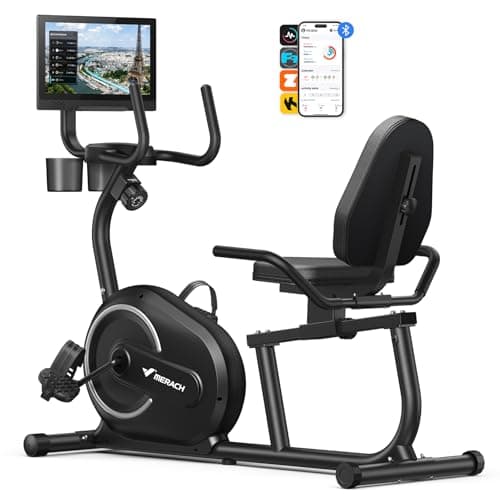
An honest review of the MERACH recumbent exercise bike with a 15.6in HD rotating screen: screen mirroring caveats, 8 resistance levels, fit range and how it compares with cheaper recumbents.
The real benefits of a recumbent bike, from back support and low joint load to easy mounting, plus honest trade-offs, calorie estimates and how to set one up.
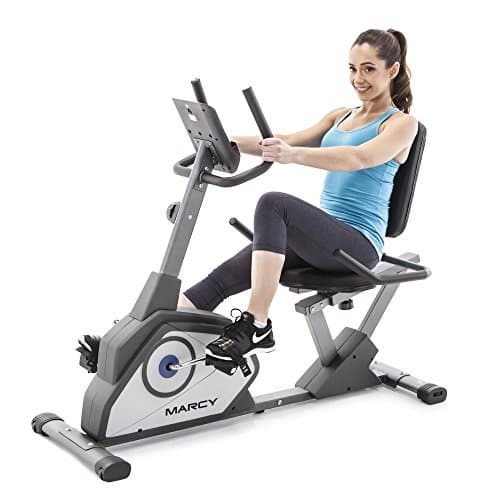
The best recumbent exercise bikes in the UK for 2026, from a £183 starter bike to a £1,399 Sole. Honest picks for sore knees, dodgy backs and long TV sessions.
Best Exercise is a participant in the Amazon EU Associates Programme, an affiliate advertising programme designed to provide a means for sites to earn advertising fees by advertising and linking to Amazon.co.uk. As an Amazon Associate we earn from qualifying purchases. This comes at no extra cost to you and never influences our independent reviews or rankings.