Rowing Machines
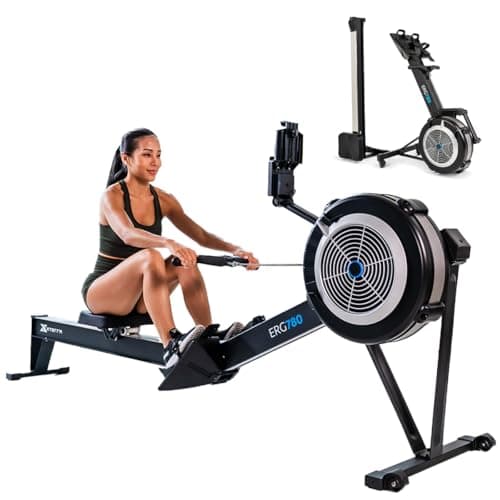
Xterra ERG780 Review: A Folding Air Rower at Half Concept2 Money
Our Xterra ERG780 air rower review covers the 10-level damper, Bluetooth FTMS app support, noise, monitor accuracy, folding storage and how it compares with a Concept2.

By Paul Kendrick, Cardio & Endurance Editor · Updated 18 October 2026
We may earn a commission from qualifying purchases made through links on this page, at no extra cost to you. This never affects our ratings.
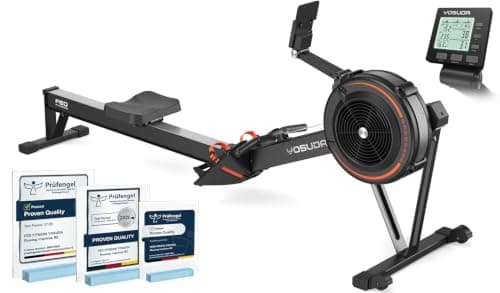
The YOSUDA R2 is an air rowing machine at £399.99, and it's a more serious bit of kit than the magnetic rowers YOSUDA is better known for. The listing describes a 32-blade fan, a 10-level damper, an extended and thickened aluminium rail for tall users, a 158kg weight limit, a self-powered backlit monitor, Bluetooth and a 3-year warranty. My verdict is that the frame and fan look well judged for the money, while the monitor is where the savings show. If you want honest air resistance at home and don't care about comparing your 2k with anyone on a gym Concept2, it's a fair buy.
One practical warning first. When we checked, Amazon showed only two units left in stock, so availability may be patchy.
How we review
This review is based on the YOSUDA product listing, published specifications and a study of owner feedback, set against the other air rowers we've covered. We haven't had a YOSUDA R2 in for long-term hands-on testing, so every spec below is a listing claim unless we say otherwise, and we've avoided guessing at things the listing doesn't state.
Tall rowers on a budget are the obvious audience. Short rails are the classic failing of cheap rowers, and YOSUDA's own magnetic rowing machine tops out around 6ft 2in, so a longer aluminium rail is a real reason to step up. The R2 also suits anyone who has rowed on a fan machine at the gym and found magnetic resistance a bit dead by comparison.
Who should skip it? Flat dwellers with neighbours below, because air rowers are loud under load. And if your training revolves around Concept2 logbook rankings or racing friends on matching machines, save up for the real thing.
Check the YOSUDA R2 price on Amazon£399.99The 32-blade fan is the part that matters most, and it's the same blade count used by the MERACH R50 Pro. Fan resistance behaves the way water does on a boat: pull lazily and the handle feels light, drive hard with your legs and the load climbs with you. That self-scaling resistance is why air rowers suit interval work so well, since you never have to fiddle with a setting between sprints.
The "10-level air resistance" on the listing needs translating. It's a damper, a vent on the fan housing that controls how much air gets in. A higher number makes each stroke feel heavier and slower, a bit like a lower gear on a bike, but it doesn't turn a gentle session into a hard one on its own; your effort does that. People who crank the damper to 10 tend to end up rowing slowly with a sore lower back. Our rowing machine resistance levels guide explains why most adults do better somewhere between 3 and 6.
Your legs should be doing the bulk of that work, too. A 2026 study of 26 trained rowers found muscle oxygen saturation in the thigh (vastus lateralis) fell from about 74% at rest to under 8% at maximal power, while the biceps only dropped to about 29% (Sports Medicine, 2026). That gap is a decent reminder that a good stroke starts at the footplate, and it's worth checking your form against our rowing machine technique guide before you blame the machine for a sore back.
YOSUDA calls the rail "extended and thickened" aluminium and pitches the R2 at tall users, with adjustable non-slip foot pedals and an ergonomic seat. It doesn't quote a maximum inseam or user height, which is a shame, because that's the number tall buyers actually need. The 158kg user limit is a good sign of a stiff frame, and it's higher than the 150kg on the Xterra ERG780.
| Resistance | Air, 32-blade fan |
|---|---|
| Damper | 10 levels |
| Rail | Extended, thickened aluminium |
| Max user weight | 158 kg |
| Monitor | Self-powered, backlit, rotatable |
| Metrics | Distance, calories, strokes, power, heart rate |
| Connectivity | Bluetooth (app not named) |
| Storage | Folds upright |
| Dimensions (in use) | Approx 240 x 62 x 103 cm |
| Warranty | 3 years |
| Price at time of writing | £399.99 |
Folding is the R2's other trump card. The listing promises "one-second" folding for vertical storage, which is marketing talk, but upright storage on a rower this long genuinely frees up a corner of a spare room. In use you'll still need roughly 2.4 metres of floor length, so measure before you order.
A self-powered monitor takes its energy from the spinning fan, so there are no batteries to swap and no cable trailing across the floor. YOSUDA says the backlit screen shows distance, calories, stroke count, power and heart rate, and the holder rotates for a better viewing angle. The listing doesn't say how heart rate is picked up, so if that matters to you, ask the seller whether it pairs with a chest strap.
Here's where you need realistic expectations. This is a budget monitor with its own calibration, not a Concept2 PM5, and there's no drag factor readout in the listing. On a Concept2, drag factor tells you what a damper setting really means on that machine; on the R2, a "5" is just a position on the lever. The R2's metres and watts won't match a PM5's, so you can't log them in Concept2's online rankings or compare them fairly with someone's gym times.
Even the benchmark isn't perfect. A study comparing rowing power meters against a lab reference system found the Concept2 Model D under-read mean power by about 11 to 15% (Holt et al., 2021). Treat the R2's numbers as a personal progress log on one machine and they're perfectly useful.
The Bluetooth app gets no name in the listing, only a promise of synced data and "professional training courses". If app classes are the main reason you're buying, check compatibility first.
The Concept2 RowErg costs around £990, more than double the R2. For that you get the PM5, drag factor, a proven flywheel, spare parts going back decades and resale value that holds up for years. It doesn't fold, though it does split in two. If you row seriously or care about standardised data, it's still the one to buy.
The Xterra ERG780 at around £499 has the same damper arrangement, folding storage and named Bluetooth FTMS support for XTERRA+ and Kinomap, which makes it the better pick if app training matters. The MERACH R50 Pro, at roughly £500, has a 32-blade fan too, plus a monitor that reports watts and drag factor and a rail specified for a 1,200mm inseam. That's the stronger machine on paper, and it costs about £100 more.
So where does that leave the R2? It's the cheapest of the folding air rowers here, with the highest user limit and a 3-year warranty, but the thinnest monitor and app details. If £100 matters more than drag factor, it makes sense.
At £399.99 the R2 lands well below most fan rowers, and the 3-year warranty is a meaningful step up from the single year on YOSUDA's cheaper magnetic model. YOSUDA has been selling home fitness kit in the UK for years, which counts for something on spares and support, though it's no substitute for Concept2's parts network. For a broader look at the options, our best rowing machine UK guide and the full rowing machines hub cover magnetic, water and air models at every budget.
Rowing is also an easy way to tick off the NHS recommendation of at least 150 minutes of moderate activity a week (NHS physical activity guidelines), because it works your legs, back and arms at once without impact on the joints.
See today's YOSUDA R2 priceFor £399.99 it's a reasonable home air rower. You get a 32-blade fan, a 10-position damper, an extended aluminium rail aimed at tall users, a 158kg user limit and a 3-year warranty. The compromises sit in the monitor and app rather than the frame, and stock was very low (two units) when we checked.
On an air rower the 10 levels are a damper, a vent that changes how much air reaches the fan. It alters the feel of each stroke (lighter and quicker at low settings, heavier and slower at high ones), but the main driver of resistance is how hard you pull. Most adults train best somewhere around 3 to 6.
No, and at well under half the price it doesn't need to be. The Concept2 has the PM5 monitor, a drag factor readout, decades of spare parts and strong resale value. The R2 gives you the same basic fan resistance and folds for storage, which the Concept2 doesn't.
Don't expect them to. The R2's self-powered monitor uses its own calibration, so its distance, calories and power figures aren't comparable with a PM5, and you can't post them to Concept2 rankings. Use them to track your own progress on this machine.
The listing's dimensions work out at roughly 240 x 62 x 103 cm, so plan on about 2.4 metres of floor length while you row. It folds upright for storage, which cuts the footprint considerably between sessions.
Our Xterra ERG780 air rower review covers the 10-level damper, Bluetooth FTMS app support, noise, monitor accuracy, folding storage and how it compares with a Concept2.
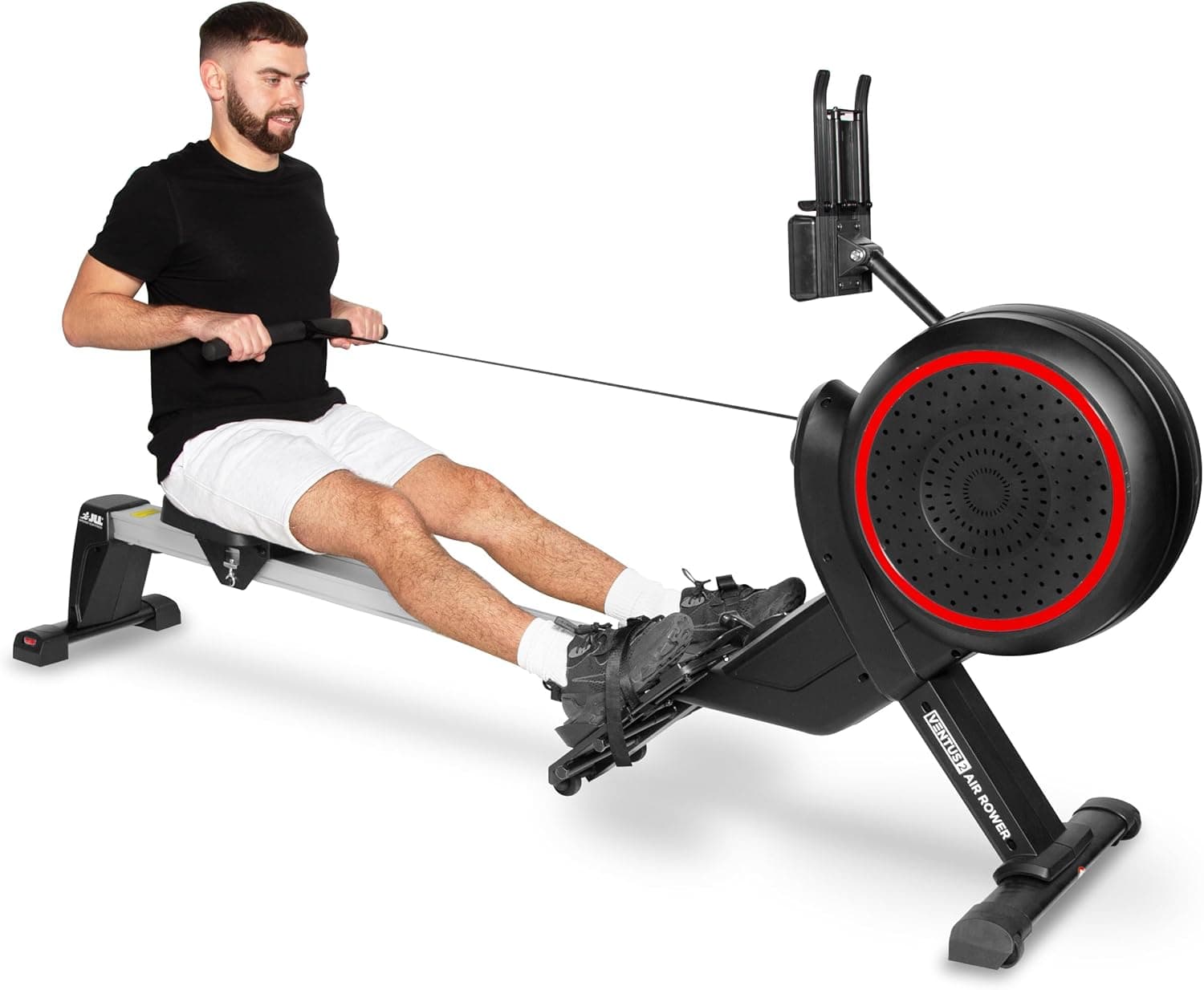
The best foldable rowing machines in the UK for 2026, compared on folded footprint, rail length and weight limit. Picks from JLL, DMASUN, YPOO, Viavito and MERACH for every budget.
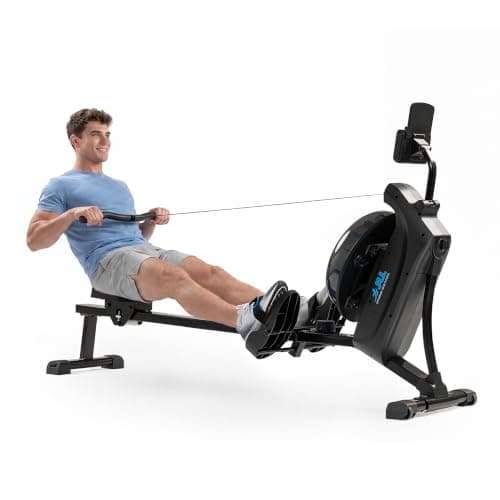
An honest JLL water rowing machine review of the dual resistance rower: the 60 degree tank, 16 magnetic levels, 130cm rail, 150kg capacity, SunnyFit app and who it suits.
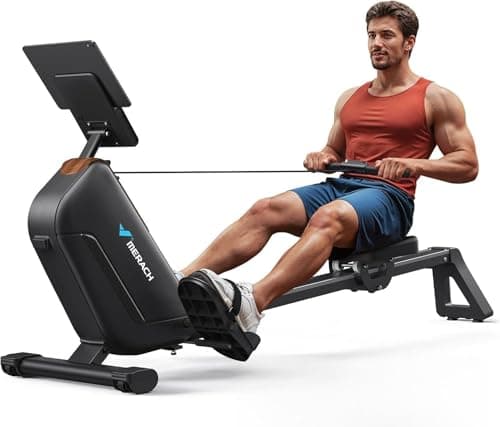
An honest MERACH R15 Pro review: 40kg peak electromagnetic resistance, 16 levels adjusted from the handlebar, a 130cm rail, 158kg capacity and who this £300 rower suits.
Best Exercise is a participant in the Amazon EU Associates Programme, an affiliate advertising programme designed to provide a means for sites to earn advertising fees by advertising and linking to Amazon.co.uk. As an Amazon Associate we earn from qualifying purchases. This comes at no extra cost to you and never influences our independent reviews or rankings.