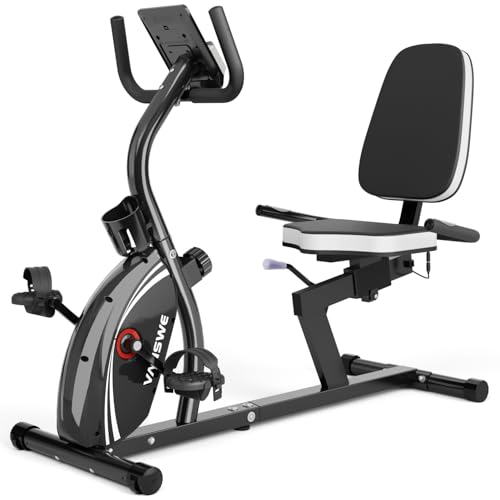
Vanswe is a US brand, and this magnetic recumbent is the bike most people know it for. On paper it ticks the boxes that matter to recumbent buyers: a seat that slides to any position on its rail rather than clicking into a few fixed holes, 16 levels of magnetic resistance, a 380lb (roughly 172kg) user limit and Bluetooth that talks to Kinomap and Zwift. The problem is what Amazon UK wants for it. At £457.04, and "usually dispatched within 4 to 5 days", it sits well above rival recumbents that cover most of the same ground for around £300.
So this review is less about whether the Vanswe is a decent bike (it looks like one) and more about whether it's worth the premium over cheaper options already on sale here.
How we review
We haven't ridden this bike. This review weighs Vanswe's published specifications and Amazon UK listing, recurring themes in owner feedback, and comparisons with the other recumbent bikes we've covered. Where the listing doesn't confirm something, such as flywheel weight, we say so rather than guess.
Recumbents get bought by people who want to move more without punishing their joints. If you're in your sixties or older, coming back from an operation, carrying a knee that complains on a treadmill, or simply hate upright saddles, the reclined seat and backrest make regular cycling far easier to stick with. You sit in a chair rather than perch on a saddle, which also makes getting on and off less of a balancing act.
The evidence supports the idea that you aren't giving much up. In a small study of 10 men who weren't regular cyclists, peak activity in the four leg muscles tested didn't differ significantly between recumbent and upright ergometers at a moderate workload, and the recumbent actually drew more from the hamstrings and shin muscles. The same researchers point out that the low frame gives easier access for people with mobility problems. For older riders specifically, a 2026 systematic review in BMC Geriatrics pooled 47 studies of stationary bike interventions in adults aged 60 and over and found improvements in aerobic capacity, mobility and quality of life. It also found that riders using virtual scenery or apps tended to do better on several measures, which is a point in favour of the Vanswe's Kinomap support.
The NHS asks adults aged 65 and over to get at least 150 minutes of moderate activity a week, alongside strength and balance work on two days, and to speak to a GP first if you haven't exercised for a while. Five 30 minute rides on a bike like this would cover the aerobic part. It won't replace the strength and balance work, though.
Who shouldn't buy it? Fit riders chasing hard intervals will want an upright or spin bike instead, and our recumbent vs upright bike guide explains why. Anyone on a tight budget should also look elsewhere first.
Pros
Slider seat adjusts to any point on the rail, so you can set exact leg extension instead of choosing the nearest hole
16 magnetic resistance levels with 10 neodymium magnets, double the 8 levels on several rivals
380lb (about 172kg) user limit is high for a home recumbent
Bluetooth with Kinomap and Zwift support plus a free logging app
Tablet holder and transport wheels
Wide padded seat (about 33 x 42cm) with a full backrest
Cons
£457.04 is roughly £130 to £160 more than comparable recumbents on Amazon UK
Slow dispatch of 4 to 5 days, and the listing gives no flywheel weight
Basic LED monitor rather than a proper screen
No confirmation that apps can change resistance for you
The UK listing title and colour field disagree (yellow or silver), so check what you're actually ordering
Seat, frame and set-up
The slider seat is the feature Vanswe leans on hardest, and it's a fair thing to shout about. Most budget recumbents use a pop pin and a row of holes, which means riders between two settings end up either overreaching or cramped. On the Vanswe you slide the seat along the rail and lock it where your knee has a slight bend at full extension. Vanswe recommends an inseam of 29 to 37 inches (about 74 to 94cm), which suits most adults, though very short riders should measure carefully.
The seat cushion measures 13in deep by 16.5in wide, around 33 x 42cm, with a padded backrest behind it. Owner feedback on comfort tends to be positive; it's the kind of seat you can sit on for 40 minutes, which is the whole point of a recumbent. Amazon lists the bike at 53lb, so roughly 24kg, with dimensions of about 45 x 20 x 40 inches (roughly 114 x 51 x 102cm). That's a light frame for a 172kg rated bike. It's easy to wheel around, but you'd want to see how steady it feels with a heavier rider before trusting that limit fully.
Expect some assembly. Recumbents usually arrive in a few big pieces, and having a second person to hold the seat rail while you bolt it on makes life easier.
Vanswe recumbent exercise bike key specs
Resistance
Magnetic, 16 levels, 10 neodymium magnets
Flywheel
External magnetic flywheel (weight not listed)
Drive
Dual-belt drive with needle roller bearing
Seat adjustment
Slider rail, infinite adjustment
Recommended inseam
29 to 37in (approx 74 to 94cm)
Max user weight
380lb (approx 172kg)
Seat cushion
13 x 16.5in (approx 33 x 42cm) with backrest
Monitor
Backlit LED: heart rate, speed, distance, time, calories
Connectivity
Bluetooth, Kinomap, Zwift, free fitness app
Bike weight
53lb (approx 24kg)
Dimensions
Approx 45 x 20 x 40in (114 x 51 x 102cm)
Extras
Tablet holder, transport wheels
Resistance, noise and the ride
Sixteen levels is generous. The JLL recumbent we reviewed has eight, as does MERACH's cheaper model, so the Vanswe gives you finer steps between "easy spin" and "this is actually work". For rehab, that matters more than it sounds: small increments let you progress week by week without a sudden jump that leaves a knee sore the next morning.
Vanswe pairs those magnets with an external flywheel, a dual-belt drive and a needle roller bearing, and claims a smoother, quieter ride as a result. Magnetic resistance has no friction pads, so it should be close to silent apart from the belt and your breathing, and owners generally agree. What we can't tell you is how heavy the flywheel is, because the UK listing doesn't say. A heavier flywheel carries momentum and feels more like a road bike, while a light one feels jerkier at low cadence. Recumbent riders working at moderate effort rarely notice the difference, but stronger riders might find the top levels plateau sooner than they'd like.
Monitor and apps
The monitor is a backlit LED unit showing heart rate, speed, distance, time and calories. It's bright and simple, which suits riders who don't want to fiddle. Vanswe doesn't spell out how heart rate is measured, and on bikes at this price calorie figures are estimates at best, so use them for comparing one ride with the next rather than as hard numbers.
Bluetooth support for Kinomap and Zwift is the more interesting extra. The listing doesn't confirm that either app can control resistance, so think of it as scenery and ride logging rather than a smart trainer. Still, given that review finding about virtual aids and older riders, having something to watch beyond a wall may well keep you riding through the winter. The tablet holder means you can do that without propping an iPad on a chair.
Price and how it compares
This is where the Vanswe struggles. At £457.04 it costs more than the MERACH recumbent we reviewed at £329.99 and the JLL recumbent at £298.99. Both of those have app support, magnetic resistance and adjustable seats. What the Vanswe adds is double the resistance levels, the slider seat and a much higher weight limit than most.
The closest like-for-like is the pooboo recumbent with arm exerciser, which also has 16 levels and a high (204kg) limit for £499.99, plus moving arms for upper-body work. Against that, the Vanswe looks fairer, as it's cheaper and adds Bluetooth. Against the MERACH and JLL, it's hard to justify unless you need the 172kg rating or have legs that fall between pin positions on other bikes.
Then there's the dispatch time. Four to five days isn't a disaster, but it suggests the bike isn't held in quantity in UK stock, so returns and parts may take longer too. Keep the box until you're sure.
Is the Vanswe recumbent exercise bike worth it in the UK?
Only if you specifically want its slider seat, 16 resistance levels and 172kg user limit and can't find them cheaper. At £457.04 it costs roughly £130 to £160 more than the MERACH and JLL recumbents we've reviewed, and those both come with an app too. If the price drops towards £300, it becomes a much easier recommendation.
What height does the Vanswe recumbent bike suit?
Vanswe recommends an inside leg (inseam) of 29 to 37 inches, which is about 74 to 94cm. That covers most adults between roughly 5ft 2in and 6ft 3in, though leg length matters more than height. Measure your inseam before ordering, because riders at either end of that range are the ones who report reach problems on recumbents.
What is the weight limit on the Vanswe recumbent bike?
The listing gives a 380lb maximum user weight, which works out at roughly 172kg. That's comfortably above the 100kg to 136kg limits common on budget recumbents, and it's one of the better reasons to choose this bike.
Does the Vanswe recumbent bike work with Zwift?
Vanswe says the bike has Bluetooth and is compatible with Kinomap and Zwift, plus its own free fitness data app. The listing doesn't say whether resistance changes automatically in those apps, so assume you'll adjust the 16 levels by hand and treat app support as a way to log rides and watch scenery.
Is a recumbent bike good for bad knees or a bad back?
For many people, yes. The backrest supports your spine and the low seat means you don't have to swing a leg over a high saddle. Research shows recumbent pedalling works the main leg muscles about as hard as an upright bike at moderate effort. If you have a diagnosed joint or back condition, check with your GP or physio first, as the NHS advises.
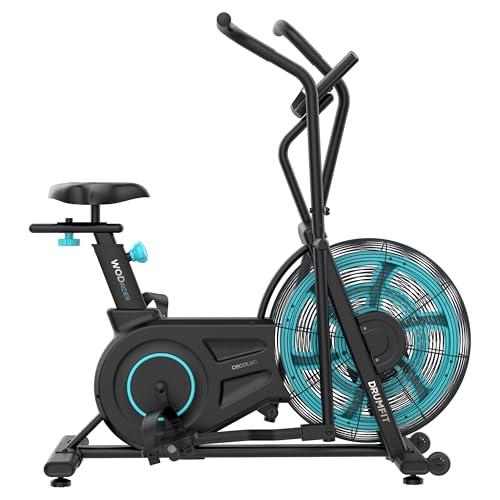
Our Cecotec air bike review: the WOD Rider 2000 Eolo PRO's 480mm fan, belt drive, watts readout, 135kg limit and 31.6kg frame, plus how its UK price compares.
The best Peloton alternative depends on what you value. We cost four UK routes over two years, from a cheap bike plus the Peloton App to Zwift and free YouTube.
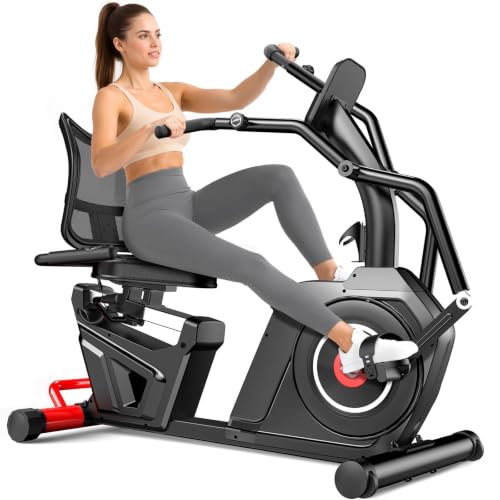
An honest pooboo recumbent exercise bike review: arm exerciser, 16 magnetic levels and 204kg capacity, but no app, no flywheel figure and a £499.99 price.
Recumbent bike vs upright bike compared on comfort, back support, calorie burn, muscles worked, space and price, with a clear verdict for every type of rider.
Best Exercise is a participant in the Amazon EU Associates Programme, an affiliate advertising programme designed to provide a means for sites to earn advertising fees by advertising and linking to Amazon.co.uk. As an Amazon Associate we earn from qualifying purchases. This comes at no extra cost to you and never influences our independent reviews or rankings.