Treadmills
Are Walking Pads Worth It? An Honest UK Verdict
Are walking pads worth it? Who they suit, the step and calorie gains from treadmill desk research, cost per use, noise, spec limits and when to buy a treadmill.

By Paul Kendrick, Cardio & Endurance Editor · Updated 15 October 2026
Most walking pads have a weight limit of 100kg to 120kg if you're buying at the budget end, 120kg to 136kg for mid-range models and 150kg to 180kg for genuine heavy-duty pads. Whichever band you shop in, buy a machine rated 15 to 20% above your body weight. A pad that is being run near its ceiling every day wears out faster, and a pad being run over it can leave you with no warranty when it does.
That headline number hides a lot, though. Two pads both rated at 120kg can be built very differently, and the specs that tell you which will last longer under a heavier user are rarely the ones printed in large type on the box.
These are the bands you'll see on UK listings. The pounds figures are rounded, because that's how most manufacturers quote them.
| Budget walking pads | 100 to 120kg (220 to 265lb) |
|---|---|
| Mid-range pads and desk treadmills | 120 to 136kg (265 to 300lb) |
| Heavy-duty walking pads | 150 to 180kg (330 to 400lb) |
| Recommended headroom | 15 to 20% over your body weight |
Here's how the walking pads we've reviewed line up, using the limits stated in each review:
The X21 is a useful warning. Price doesn't predict the weight limit: the X21's double-fold frame has to be light and thin, so it tops out at 110kg, while the MERACH heavy-duty pad costs well under half as much and is rated at over 180kg. If your weight is anywhere near 110kg, check the limit before you look at anything else.
A walking pad's maximum user weight isn't a single test of whether the frame snaps. It's the manufacturer's judgement of the load every part of the drive system can carry repeatedly without failing early. Three components set it.
The motor. Every step you take drags the belt slightly against the motor, and the heavier you are the more friction there is between belt and deck. The motor has to push through that at a steady speed for an hour or more, which is why the continuous rating matters far more than the peak figure (more on that below).
The deck. The board under the belt flexes with every footstrike. A thin deck on a light frame flexes more, and that flex increases friction, heat and wear on the belt's underside. Walking pads have thinner decks than full treadmills almost by definition, because they're designed to fold and slide away.
The rollers and bearings. The front and rear rollers carry the belt and the full load on it. Small rollers have to turn faster for a given belt speed and they concentrate that load into a smaller contact area, which shortens bearing life.
It's also worth knowing that your feet put more than your static body weight through the deck. Research on walking biomechanics found that adults with obesity produced much higher absolute ground reaction forces and knee loads than normal-weight adults, and that those forces dropped as walking speed came down (Browning and Kram, Medicine and Science in Sports and Exercise). The machine feels those forces as well as your joints do.
Most of the time nothing dramatic happens. You step on, it starts, it works. The problems show up over months.
The belt is usually first. More load means more friction against the deck, and a belt under constant strain stretches, starts slipping on the rear roller or wanders off centre. The motor runs hotter too, and the controller boards on budget pads are often protected by a thermal cutout, so you may find the pad stopping mid-session or throwing an error code. Rollers and bearings start to click or squeak.
Then there's the warranty. Most treadmill warranties exclude damage caused by misuse, and using a machine above its stated maximum user weight is about the clearest example of misuse a manufacturer can point to. Walking pads often come with short cover in the first place: the C2 and Z1 both carry a single year. Losing even that is a poor trade for saving £50 on a lower-rated model.
Safety is the last reason, and the least likely, but a deck or frame that's been overloaded for a long time can crack. Walking pads have no handrail in most cases, so there's nothing to grab if something gives.
The 15 to 20% rule is simple to apply. Multiply your weight by 1.15 and 1.2 and buy a pad rated at or above that range:
If you're losing weight and expect to be lighter in six months, it's still better to size for the weight you are now. You'll do most of your walking in the first few months, and that's when an overloaded pad will be wearing fastest.
Add anything you carry, too. A 10kg weighted vest on a 100kg walker is 110kg on the deck.
A printed limit is only as good as the hardware behind it, and some listings quote high limits on machines that are built like any other budget pad. These are the specs to check.
Continuous motor rating, not peak horsepower. Many walking pads quote a peak horsepower figure that the motor can only produce briefly. Our X21 review is a good illustration: the listing quotes 918W, while the marketing describes a 3.75HP motor, and 918W is roughly 1.2HP of actual continuous power. Look for a continuous rating, sometimes written as CHP, or a wattage figure. If a listing only gives peak HP, treat it as a marketing number. Brushless motors also tend to run cooler and quieter, which helps under sustained load.
Belt width of 40cm or more. That same biomechanics study found that adults with obesity walked with a wider step width. On a 38cm belt, a wider gait puts your feet close to the side rails, and you'll find yourself concentrating on foot placement rather than walking. The Z1, C2 and UREVO all have 40cm belts, the X21 has 46cm, and most heavy-duty pads are 40cm or wider. Don't go narrower if you're a heavier user.
The machine's own weight. A heavier frame usually means a thicker deck, sturdier side rails and bigger rollers. The pads we've covered range from about 23kg for the Z1 to 25kg for the C2, 30kg for the UREVO and 37kg for the X21. A pad claiming a 180kg user limit that weighs under 20kg itself deserves some scepticism.
Roller size. Few budget listings publish roller diameter at all. When a heavy-duty model does, it's a good sign the manufacturer is confident in the drive system, and larger rollers spread the belt load and reduce bearing wear.
Shock absorption. Elastomers or silicone cushions under the deck soften each footstrike for both you and the frame. The UREVO quotes 12 points of shock absorption, for example. More cushioning isn't a substitute for a higher rating, but it helps a heavier user's knees and the deck alike.
Quick check before you buy
Look for three things on the listing: a maximum user weight at least 15% above yours, a belt width of 40cm or more, and a continuous (not peak) motor figure. If the listing can't give you all three, look at another pad.
A walking pad that suits your weight is the starting point. How you use it decides how long it lasts, and how your joints feel at the end of the week.
If you're under about 85kg, almost any reputable walking pad has enough headroom, and you can choose on belt size, noise and folding. Our best walking pad UK guide covers the shortlist.
Between roughly 90kg and 110kg, rule out the 100kg and 110kg pads (the C2, Z1 and X21 included) and look for a rating of 120kg or more. Above about 115kg, the mainstream pads don't give you enough margin, and you're better off with a 136kg desk treadmill like the UREVO or a dedicated heavy-duty pad. The MERACH heavy-duty pad's 400lb (about 181kg) rating at £239.99 makes it one of the cheaper ways into that bracket; our MERACH walking pad review looks at whether the rest of the machine lives up to the number.
If you're still deciding whether a walking pad suits you at all, our piece on whether walking pads are worth it weighs them against a full treadmill and simply walking outdoors. And if you need more belt, more power and a handrail, the treadmills hub covers conventional machines, most of which start at 120kg and go well beyond.
Most budget walking pads are rated for 100kg to 120kg (roughly 220lb to 265lb). Mid-range pads usually sit between 120kg and 136kg, and a smaller group of heavy-duty models are rated at 150kg to 180kg. The KingSmith WalkingPad C2 is rated at 100kg, the WalkingPad Z1 and X21 at 110kg, and the UREVO 4-in-1 at 136kg.
Aim for a rated limit 15 to 20% above your body weight. If you weigh 95kg, that means a pad rated around 110kg to 115kg at minimum, and a 120kg model is the comfortable choice. The rating is a ceiling for the machine, not a target to run it at every day.
It usually won't fail on the spot. What happens is faster wear: the motor runs hotter, the belt stretches and slips sooner, the deck flexes more and the rollers and bearings take extra load. Using a pad above its stated limit is also a common reason for a warranty claim to be refused, so you could be paying for those repairs yourself.
Yes, though they're less common than standard pads. Heavy-duty walking pads rated at 150kg to 180kg exist, and the MERACH heavy-duty walking pad we cover is rated at 400lb, about 181kg. Check the continuous motor rating, belt width and the machine's own weight as well as the headline limit.
Yes. The rated figure is the total load on the deck, so a weighted vest, a rucksack or a toddler on your hip all count. If you plan to walk with a weighted vest, add its weight to your body weight before working out your headroom.
Are walking pads worth it? Who they suit, the step and calorie gains from treadmill desk research, cost per use, noise, spec limits and when to buy a treadmill.
Can you run on a walking pad? Mostly no: most cap at 6km/h with short belts and no rails. Which 2-in-1 pads allow a light jog, and when to buy a real treadmill.
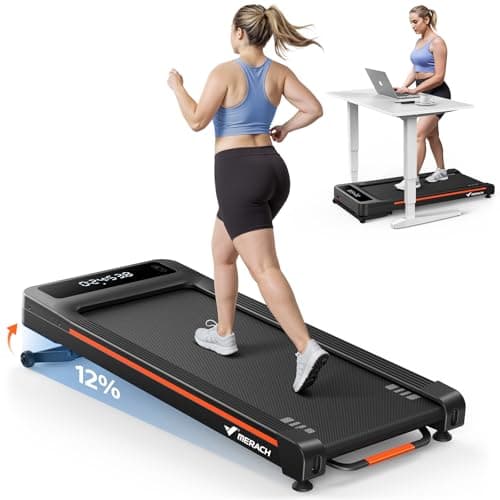
An honest MERACH 12% auto incline walking pad review: 400lb limit, 42cm belt, 6km/h top speed, no fold, no handrail, and why the sprint claims don't hold up.
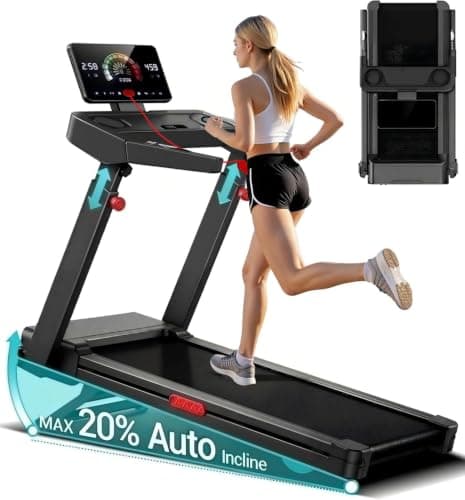
An honest CURSOR FITNESS treadmill review: 2 to 20% auto incline, 14km/h, a 40 x 107cm belt and a 180kg rating for £240, plus the claims we'd treat with care.
Best Exercise is a participant in the Amazon EU Associates Programme, an affiliate advertising programme designed to provide a means for sites to earn advertising fees by advertising and linking to Amazon.co.uk. As an Amazon Associate we earn from qualifying purchases. This comes at no extra cost to you and never influences our independent reviews or rankings.