Treadmills
Can You Run on a Walking Pad? Speeds, Belt Size and Safety
Can you run on a walking pad? Mostly no: most cap at 6km/h with short belts and no rails. Which 2-in-1 pads allow a light jog, and when to buy a real treadmill.

By Paul Kendrick, Cardio & Endurance Editor · Updated 15 October 2026
Walking pads are worth it if you sit at a desk most of the day and would otherwise stay sitting, or if you'll genuinely walk on one most days. For those people a £150 to £350 pad turns dead time into 3,000 to 8,000 extra steps a day for very little effort. They aren't worth it for runners, for anyone who wants proper incline training without checking the spec first, or for people over the weight limit of the budget models. If you'd use it twice a month, put the money towards a good pair of walking shoes instead.
That's the short answer. The rest of this guide covers what the research says you'll gain, what the machines can't do, and how to tell which camp you're in before you spend anything.
The case for a walking pad rests on one thing: it replaces sitting with slow walking during hours you'd have spent at a desk or on the sofa anyway. It doesn't ask you to find extra time, which is why it works for people who never get round to going out for a walk.
Worth it for:
Probably not worth it for:
The most useful number comes from a 2021 meta-analysis of 13 treadmill desk studies. In lab conditions, walking at a treadmill desk burned about 105 kcal per hour more than sitting (Oye-Somefun et al., BMC Public Health, 2021). An earlier Mayo Clinic study of office workers with obesity found a similar figure: 72 kcal per hour sitting against 191 kcal per hour walking at a self-chosen 1.1mph (about 1.8km/h), an increase of 119 kcal (Levine and Miller, Br J Sports Med, 2007).
So two hours a day at a gentle desk pace is worth roughly 200 to 250 extra calories. That's real, but it's about the size of a chocolate bar, and it only counts if you don't eat it back.
Real-world results are smaller than the lab maths suggests, mainly because people don't walk as much as they plan to. In a one-year trial where 36 office workers had their normal desks replaced with treadmill desks, average weight loss was 1.4kg, rising to 2.3kg in participants with obesity. Daily sedentary time fell from 1,020 minutes to 929 minutes at six months, then drifted back up to 978 minutes by 12 months (Koepp et al., Obesity, 2013). Work performance didn't suffer.
That drift is the most honest signal in the research. The novelty wears off, and the people who get value long term are the ones who build the pad into a routine, such as walking through every call or the first hour of email.
At 3km/h you cover about 3km an hour, which is roughly 4,000 steps for an average stride. Typing pace is often slower, around 2km/h, which gives you something like 2,500 to 3,000 steps an hour. Two hours a day of desk walking is enough to take many sedentary workers from 3,000 steps to 9,000 or 10,000 without a single dedicated walk.
If you want a plan for building up gradually, our guide to using a walking pad under your desk covers desk height, typing speeds and a week-by-week build from 30 minutes.
Prices on Amazon UK run from around £120 for no-name pads to £300 to £450 for established brands and incline models. The maths only works if you use it.
| Price | Use pattern | Sessions in year one | Cost per session (year one) |
|---|---|---|---|
| £150 | 5 days a week, 48 weeks | 240 | about 63p |
| £300 | 5 days a week, 48 weeks | 240 | £1.25 |
| £300 | Twice a week, 48 weeks | 96 | about £3.13 |
| £300 | Twice a month | 24 | £12.50 |
Spread over three years of daily use, even a £300 pad works out at about 40p a session, which is cheaper than almost any other kit you could buy for the same amount of movement. Used twice a month, it's an expensive coat rack. Running costs are small: motors draw much less at 2 to 4km/h than their peak rating, though it's worth checking the power figure on the spec plate if electricity costs matter to you.
Manufacturers usually quote motor noise somewhere between 45dB and 65dB at walking pace. Brushless motors on pads like the KingSmith WalkingPad C2 are generally quiet enough for calls, but the motor is rarely the problem. Footfall is. On a suspended timber floor in a flat, the thud of each step carries into the room below more than the hum does.
A rubber treadmill mat, soft-soled trainers and a slower pace all help. If you share walls or floors and work late, factor a mat into the budget from day one.
Walking pads are much smaller than treadmills, but "slim" in the listings doesn't always mean they'll slide under a bed. Typical figures:
Folding pads such as the WalkingPad Z1 halve their length, but the folded height (often 13 to 14cm) means they're usually stood on end against a wall rather than slid under furniture. Measure the gap under your bed or sofa before relying on that.
This is where most disappointed buyers go wrong. Walking pads share a set of limits that come from keeping them low, light and cheap.
Top speed. Most stop at 6km/h. That's a brisk walk, not a jog. 2-in-1 models with a folding rail reach 10 to 12km/h, but short belts make running on them awkward. We go into this in more detail in can you run on a walking pad.
Weight limit. Budget pads are commonly rated for 100kg to 120kg. Running close to the limit every day wears the motor and belt faster, so leave a margin of 10 to 20kg. Our guide to walking pad weight limits explains how to read the ratings and which pads go higher.
Belt size. Expect around 100 to 120cm long and 38 to 42cm wide. That's fine for a short desk stride, but tall walkers and anyone with a long, quick stride can feel cramped, and a narrow belt makes it easy to clip the edge if you drift while typing.
Incline. Most pads are flat. A few offer a modest incline, and models like the MERACH incline walking pad push this further, but always check whether the incline is powered or manual, what the maximum really is, and whether it works at the speeds you'll use.
No handrail. Fine at 3km/h, less so if you have balance problems or want to push the pace.
Warranty. One year is common at the budget end. A known brand with UK support is worth a little more if you plan to walk on it for hours every day.
Buy a proper treadmill from our treadmills hub if any of these apply:
A treadmill costs more and takes up more space, but it's built for training. A walking pad is built for adding easy movement to sedentary hours. Treating one as the other is the most common reason people feel short-changed.
If you've decided a walking pad fits, these are the checks that matter most, roughly in order:
Our best walking pads in the UK round-up compares current models against these points across budgets.
A walking pad is one of the few pieces of home fitness kit that pays off without asking for willpower, because it fits into time you're already spending. For a desk worker who'll use it most days, it's worth the money and then some. For a runner, an incline fan who hasn't checked the spec, or someone who already walks plenty, it isn't, and a treadmill or nothing at all is the better call.
Quick test before you buy
Look at last week's step count and your calendar. If you had at least five hours of desk time each day and fewer than 6,000 steps, a walking pad is likely to earn its keep. If you were already over 8,000 steps, the gains will be small.
They can help, but expect modest results. Lab studies put the extra burn at roughly 100 to 120 kcal per hour of slow walking compared with sitting, and a year-long workplace trial found average weight loss of 1.4kg. If you walk two hours a day and don't eat more to compensate, that adds up. If you use it twice a week, it won't move the scales much.
At a typical desk pace of 3km/h you cover about 3km an hour, which works out at roughly 4,000 steps for most adults. Slower typing speeds of 2km/h give you closer to 2,500 to 3,000. Two hours of desk walking can get many people most of the way to a 10,000 step day.
Most walking pads top out at 6km/h, which is a brisk walk, and have no handrail, so no. Some 2-in-1 models fold up a rail and reach 10 to 12km/h, which allows a light jog, but the short belts and small motors make them a poor substitute for a proper running treadmill.
The motor is usually quiet at walking pace, often quoted between 45dB and 65dB. The bigger noise is your footfall, which travels through floorboards and into the room below. A treadmill mat and a slower pace help a lot if you live in a flat.
Only if your goal is easy walking while you work or watch TV. A walking pad is cheaper, lower and easier to store. A treadmill is better for running, incline training, heavier users and anyone who wants a longer, wider belt and a handrail.
With sensible use and regular belt cleaning, lubrication and re-centring, a decent walking pad should give several years of desk walking. Budget pads with one year warranties and no UK parts support are the bigger gamble, so check the warranty and who handles repairs before buying.
Can you run on a walking pad? Mostly no: most cap at 6km/h with short belts and no rails. Which 2-in-1 pads allow a light jog, and when to buy a real treadmill.
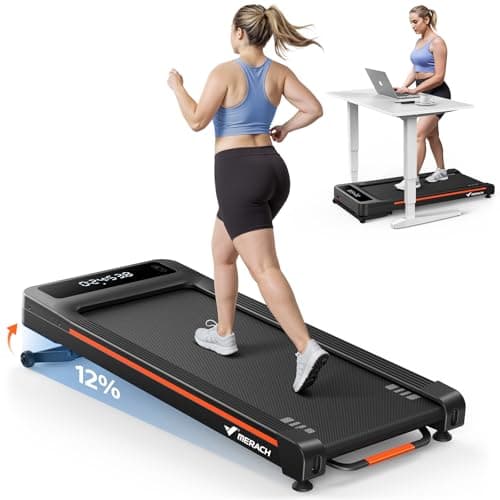
An honest MERACH 12% auto incline walking pad review: 400lb limit, 42cm belt, 6km/h top speed, no fold, no handrail, and why the sprint claims don't hold up.
Most walking pads take 100 to 120kg, mid-range models 120 to 136kg and heavy-duty pads 150 to 180kg. What the limit covers and how much headroom to leave.
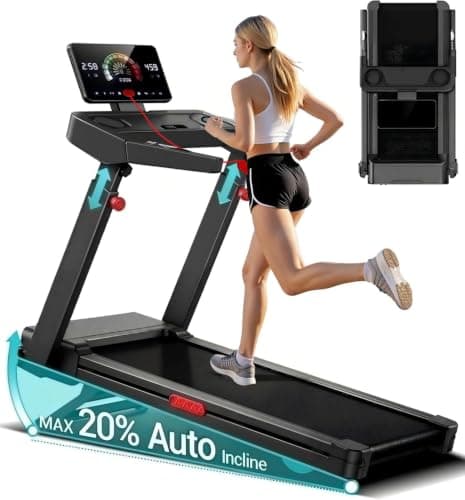
An honest CURSOR FITNESS treadmill review: 2 to 20% auto incline, 14km/h, a 40 x 107cm belt and a 180kg rating for £240, plus the claims we'd treat with care.
Best Exercise is a participant in the Amazon EU Associates Programme, an affiliate advertising programme designed to provide a means for sites to earn advertising fees by advertising and linking to Amazon.co.uk. As an Amazon Associate we earn from qualifying purchases. This comes at no extra cost to you and never influences our independent reviews or rankings.